
Caravan cleaning: All you need to know
Whether you’re taking the caravan out for the first time or it’s just in need of a spruce up, our guide will show you how to get it looking good as new
Why caravan cleaning is important
Most caravan owners will consider changing their unit at some time in the future and shabby bodywork and interior will wipe hundreds of pounds or more off the caravan’s value.
With that in mind, keeping up appearances will enhance the long-term value and give you continuing pleasure of ownership.
Throughout the year you’re up against acidic rainfall, dust, grit particles and road grime acting on your bodywork. Then there are tree resins and bird droppings further adding to the array of factors to degrade your bodywork.
Regular use of your caravan with activities concentrated in such a small area rather than spread throughout a house ensures the interior fabric is likely to suffer more than at home.
What caravan cleaning products to use
The choice of products for applying the cleaning agents is also very important, especially for external bodywork.
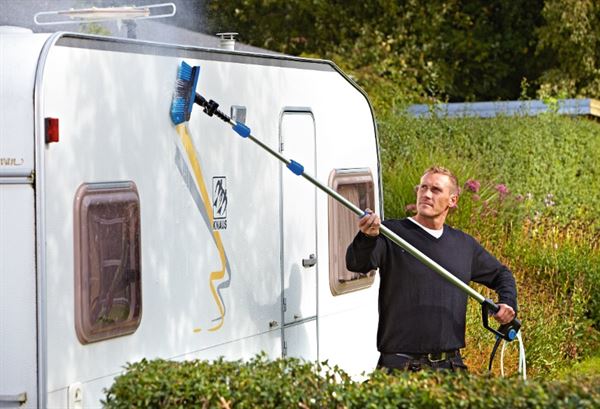
A brush with a soft wraparound head on a long extending handle is useful and it will safely reach the upper parts of your caravan. Alternatively, use an open-textured sponge or a microfibre wash pad or mitt.
The aim is to use products which allow dust and grit to work into the applicator fabric rather than remain on the surface and grind into the paintwork.
On this score, it’s worth considering fitting a grille at the bottom of your wash bucket to allow detritus washed off the bodywork to fall through the grille and avoid it being picked up again by your brush or sponge.
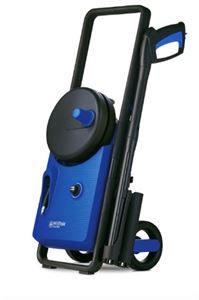
One cleaning aid not recommended is a portable power washer. They are easy to use and very effective in shifting dirt, but usually too powerful for delicate materials, including sealants. If you do use one, you must always use the gentle setting.
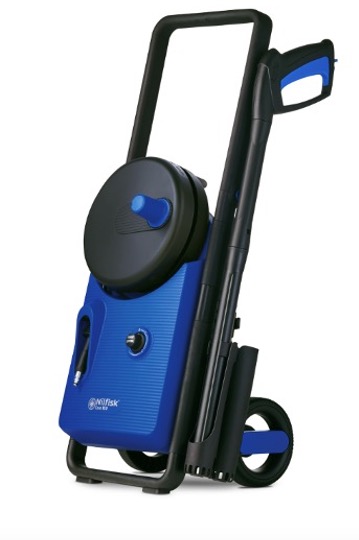
Some products, including the Nilfisk range of pressure washers can be utilised using the long-reach cleaner to access hard-to-reach areas, such as the roof, using the brush, which means there is no actual high pressure.
You can also attach the brush directly to the lance of the pressure washer to easily wash lower areas.
It’s worth noting that some manufacturers stipulate what cleaning devices cannot be used as this can affect the warranty, so do check.
Your mucky towcar or mountain bike will benefit from a deep pressure washer clean if you have been driving or riding in more rugged, muddy areas.
Caravan cleaning kit
Domestic cleaning products can vary between acidic and alkaline agents. Those agents which occupy extreme ends of the pH scale usually result in products which can clean really well, such as acids and bleach.
As a first rule, never use domestic cleaning products unless you’re sure they’re safe to use. Ideally, choose products which are marketed specifically for caravans and motorhomes and have been created with a relatively neutral pH and with cleaning agents which are safe on the materials likely to be found on a caravan.
Clearly, buying cleaning products produced by the likes of Thetford and Dometic for cleaning their own products is ideal in that you know they won’t harm the materials used by that manufacturer in their products.
Are caravan covers a good idea?
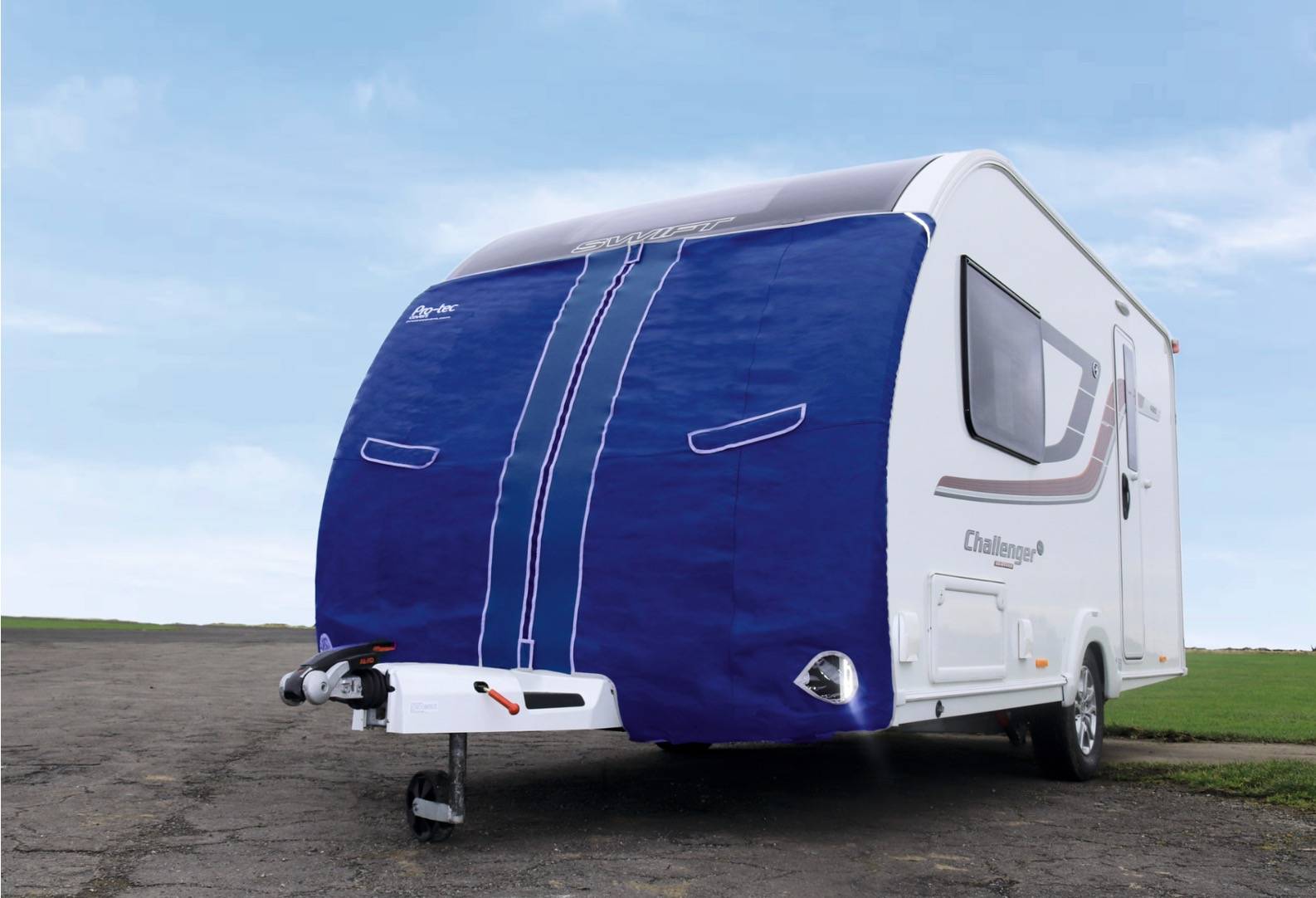
(Photo courtesy of Protec)
Using a cover means you can keep your exterior cleaning to an absolute minimum. However, before fitting a cover, it’s essential to give the bodywork a good clean, even with a well-fitted quality soft-lined cover, as there will always be an element of movement in windy conditions.
One factor against using a cover throughout the season is the likely reduction in life of a fabric cover when exposed to the sun. If your caravan is stored in an exposed location then better the cover takes the UV hammering rather than the caravan.
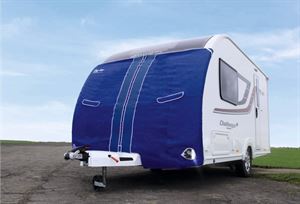
Towing covers that protect the caravan when it’s in transit can be a great investment, protecting against road dirt and grime. Companies such as Protec offer ones that fit your exact model.
Caravan cleaning brushes
There are a wide range of brushes available made specifically for cleaning caravans. Telescopic brushes are particularly popular as these allow you to reach up high (though you may still need a step ladder).
As a general rule, it's best to exercise caution when making your purchase as you want to ensure you don't scratch the bodywork. Having said that, a soft toothbrush, as we'll explore later, can be a great item to keep in your kit.
Caravan awnings
If you’re wanting to clean your awning, choose a good sunny day and use a product designed for the task such as Fabsil Awning Cleaner – this not only cleans but revives the water repellency.
You simply spray it on and work in with a brush or sponge before rinsing in clean water.
Washing down exterior bodywork
(Photo courtesy of Nilfisk)
Before washing, always hose down the body to rinse off surface dust and grit, and this will also wet up more stubborn deposits, which come off better when softened with water. Apply your cleaning solution by spray, sponge or brush and leave for 30 seconds or so to let deposits soak and soften before agitating the surface with gentle movement.
There are two schools of thought about whether to start washing from the bottom and working up or working from top to bottom. The theory about washing from bottom up is that, although dirty water will stream down over the cleaned areas, these areas will remain wet. The top to bottom persuasion work on the basis that water flowing from the top will help soften or swill away heavier deposits of road grime along the lower body.
Whichever way you go, the important thing to obtaining a good finish is that, when you rinse off the washing solution, the surface must still be wet, otherwise some of the dirt you’ve loosened will have dried back on the bodywork.
For the same reason, avoid washing on a hot, breezy day as the dirty washing solution will soon dry on the bodywork before you get to rinse it down, thus leaving dirty streaks behind. Wash relatively small panels at a time where you can rinse before the washed surface dries.
Use an old toothbrush to clean away the build-up of algae around windows and locker doors. Don’t forget your retractable steps – a build-up of grime can clog the mechanism. For stubborn squashed insects, place a cloth soaked in warm cleaning solution over them for five minutes or so and then try washing off again.
If you have any stubborn black streaks on body panels, you can buy specialist black streak remover. Some enthusiasts like to apply wax at this stage to provide extra protection and shine, but it’s more work.
Sometimes waxes can cause problems over time as they are soft, and stains can become engrained in the wax layer and as solid layers of wax degrade they become dull and grey.
Caravan roofs
Whichever way you wash, always start with the roof as this is where the greatest dirt deposits are likely to be found and they are likely to flow off the roof down the side panels in a random way.
Complete the full cycle of wash and rinse on the roof before commencing the walls. Don’t forget the roof-mounted solar panel, a good clean will help it to work efficiently.
Acrylic windows
Acrylic windows are excellent at providing lightweight clear glazing but they are sensitive to crazing from exposure to various chemicals and, being a soft material, they are easily scratched.
Because of the danger of scratching the acrylic when cleaning, some advocate wiping the window over with your hand rather than a sponge.
Wheels
(Photo courtesy of Nilfisk)
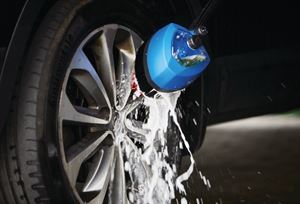
Steel wheels are easily dealt with using normal body cleaning solutions on the plastic trims. Alloy wheels look good, although I sometimes wonder whether the extra work needed to keep them looking good is worthwhile.
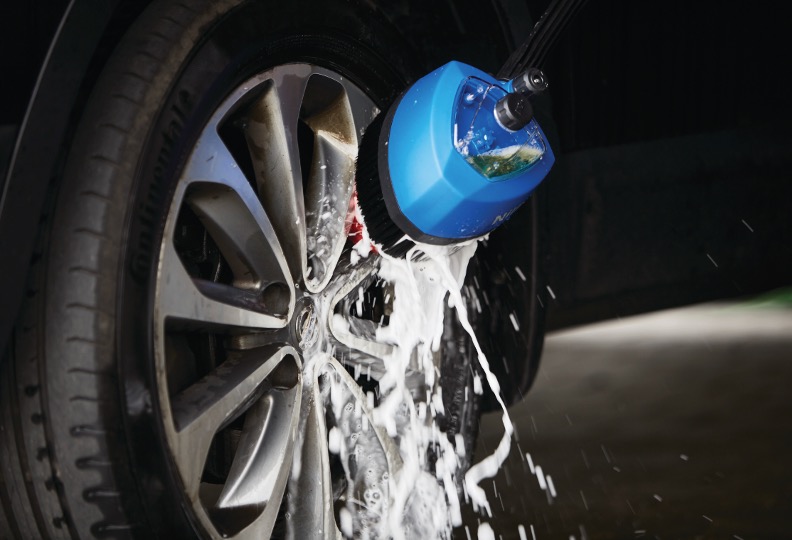
Using a specialist brush makes cleaning between the spokes of an alloy less of a chore. Around the rims, particularly at the base of the spokes, brake dust tends to accumulate.
Because of this high-maintenance element of alloys, its worth considering applying a product like Simoniz or Autoglym’s Wheel Protector.
Interior cleaning
(Photo courtesy of Nilfisk)
Dust and grit accumulating on soft furnishings will tend to abrade the fabric so a regular vacuum is worthwhile.
To remove ingrained dirt and stains you need a specialist fabric cleaner and here you may need to use a non-leisure product, but always refer to the manufacturer’s instructions.
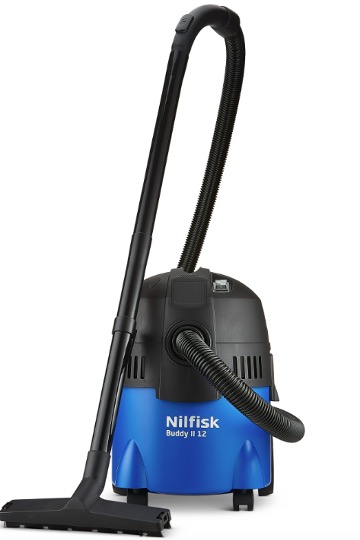
One of the simplest things you can do is invest in a multifunctional vacuum with both wet and dry capabilities. We’ve tried a few different models and would recommend the Nilfisk Buddy II 12 , which does all the jobs you could wish for, including picking up anything from broken glass (ideal if you’re sharing a caravan with someone accident prone!) to even dried leaves that gather inside the door and, should there be a spillage, it’s easy to clean that up quickly.
With its 12-litre capacity, you won’t have to empty it too often, either. Included are the floor nozzle, crevice nozzle and hose storage hooks. We tried it down the sides of the sofas in the lounge and it swallowed up all the crumbs from numerous bags of crisps.
It also has a blow function so can be used to inflate items such as kayaks and air beds.
Cleaning blinds and flyscreens
Start by removing any loose debris from the blinds by using a soft brush, then fill a bucket with warm water and add a small amount of very mild detergent.
Dip the cloth into the solution, wring until damp, and, starting at the top, wipe both sides and work your way to the bottom, rinsing the cloth at regular intervals.
Once you've finished cleaning the blinds, wipe them dry with a clean, dry cloth, or leave them to air dry. You can keep on top of the dirt by dusting with a soft cloth regularly.
The kitchen
Clean your refrigerator and freezer interiors with a solution of bicarbonate of soda, using one teaspoon to a litre of warm water.
The solution will clean and deodorise the fridge interior without damaging the plastic interior lining. Don’t forget to leave the fridge/freezer doors ajar when not in use to prevent mould.
The bathroom
Up to now, cleaning has been largely about the look of the caravan but, for the washroom, hygiene is also a consideration.
I always use Thetford Bathroom Cleaner, but Dometic has its Sanitation Cleaner. Thetford’s Bathroom Cleaner is claimed to be safe on all plastics.
How to clean a caravan cassette toilet
Both the toilet cassette tank and the grey waste tank should be cleaned from time to time to avoid nasty smells building up. Thetford, Dometic and third-party companies like Fenwick’s produce products for cleaning these tanks.
Usually, it’s a matter of filling the cassette tank with a solution of cleaner and leaving it overnight. Similarly, when you have a part-filled grey waste tank, pour in a warm solution of tank cleaner and go for a short drive before draining to remove any build-up of deposits.
When pouring in the solution, spread it out over all the waste points – shower, washroom and kitchen sink – to help clean the waste pipes which are usually corrugated pipes that accumulate grease.
If you have a sensor in the waste tank for the full gauge then regular cleaning should help prevent the sensor being incapacitated.
The toilet cassette has several rubber seals which, after cleaning, will benefit from an application of lubricant. Thetford has a product – Seal Lubricant.
Cassette toilets which have their own flush water reservoir sometimes suffer from black bits in the flushed water. Filling the tank with a solution of Fenwick’s Waste Pipe & Tank Cleaner and flushing out after a soak should eliminate this problem.

Join the Out & About Live family
Get the latest news and exclusive offers direct to your inbox
Discover your inner outdoors with Out & About Live. For over 20 years we have provided the very best advice to motorhomers, campervanners, caravanners and campers – whether you are looking for travel advice, the very best so sign up to our FREE email newsletters so you don’t miss out any longer.


