

The ultimate guide to caravan layouts
Layouts
Aside from the fundamental consideration of how many adults and children will be sleeping in your caravan, the layout is one of the most important features to make your caravan the perfect tourer for you.

Types of caravan layouts
There are so many fabulous types of caravan layouts from each caravan manufacturer; the layouts to consider are two-berth; four-berth; five to six-berth. Quite often the lounge area is at the front of the caravan with the kitchen and its appliances in the centre, over the axle to encourage even weight distribution.
Lounges can be U-shaped or L-shaped (on some of the newer models). Layouts encompass so many different styles, so it’s really down to finding the one that works for you.
Caravan floorplans
Caravan floorplans are the perfect way to choose the caravan layout that suits you. Quite often, though, a floorplan gives you the initial idea, but it’s best to go inside an actual caravan to see if the space is what you imagined it to be.
Be prepared to hear the terms: berth; dinette; fixed bed; island bed; French bed; transverse island bed; washroom; L-shaped lounge; U-shaped lounge.
Two-berth caravan
Twenty years ago, couples bought two-berth caravans. They all largely had the same layouts. Then two things changed. The advent of the separate shower saw a drop in the number of combined toilet/shower compartments and, with it, this signalled the end of nylon shower curtains and confined washing spaces. Caravan showering became rather luxurious.
The second change was the arrival of the fixed double bed, which then shifted the whole dynamic of caravans for couples.
Today you can get some very cool and quirky designs in this range. Take a look at the Adria Action 361 and the Freedom Carpento 310. Then there are models such as the Campod Ocean Breeze and the luxury of the Coachman VIP 460. Proving that size isn’t everything, these are great models.
Four-berth caravan
Four-berth caravans are some of the most popular, and for that reason there is so much choice out there. Whether you are a couple or a family, there’s a four-berth model to suit you. Almost all layouts with double beds have four-berth capability and, although lots are bought by couples, the front settees can be used as single beds (depending on the length of the settees and the sizes of the children).
It’s a great layout for occasional visitors – grandchildren, perhaps. And, of course, the lounge can be transformed into a double bed.
A good example of this is the Buccaneer Bermuda, another layout choice is the Elddis Affinity 550.
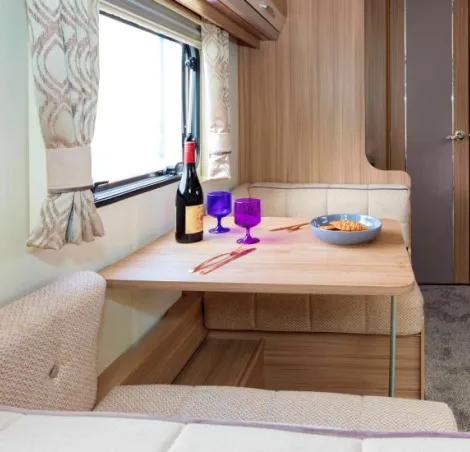
There are also four-berth caravans with side dining areas that can be changed into bunks. These can be ideal for families with young children, and also for occasional visitors. When the visitors aren’t there, you have a permanent dining area.
The top bunk base hinges up from the wall. The mattress is provided in sections and is usually stored under a settee. The lower bunk is created from the two facing seats plus a centre section, which is either wooden slats, linked by webbing, or the table that is removed from its clip on the wall, its leg folded and then positioned on two ledges on the edges of the seating bases. A ladder gives easy access to the top bunk. The result is two bunks, which make an ideal children’s ‘bedroom’ with a curtain that tracks around the area. Kids love bunks – often for no other reason than it’s different from home and so they regard them as fun.
Something to consider when assessing whether a side dining area bunk arrangement is ideal for your family is the ages, and therefore the heights and weights, of your children. Most top bunks have an upper weight limit stated on a notice on the side of the bunk. Bunks are narrower than domestic-sized single beds and many are shorter, too – so are ideal for younger children. A good example of a fixed bunk caravan layout is the Eriba Touring 560.
If you are buying new, bed sizes are available on manufacturer websites, so you can do your detailed research before you begin. If you are looking at used caravans, take a tape measure.
Five/six-berth caravan
There’s a good choice of five-berth layouts. Which you prefer will largely depend on the ages of your children and whether a caravan with a bed area that’s well separated from the rest of the caravan will work best for you.
A really popular five-berth layout has bunk beds in the rear nearside corner with a dining area opposite. This dining area converts into either a single bed or a single with a fold-up bunk above it (much like those in side dining area layouts), making a sixth berth. The Adria Altea Avon is a good example of this.
Another very popular family layout is one with a double bed in the nearside corner and a dining area that converts into bunks amidships, on the offside.

Caravan bed layouts
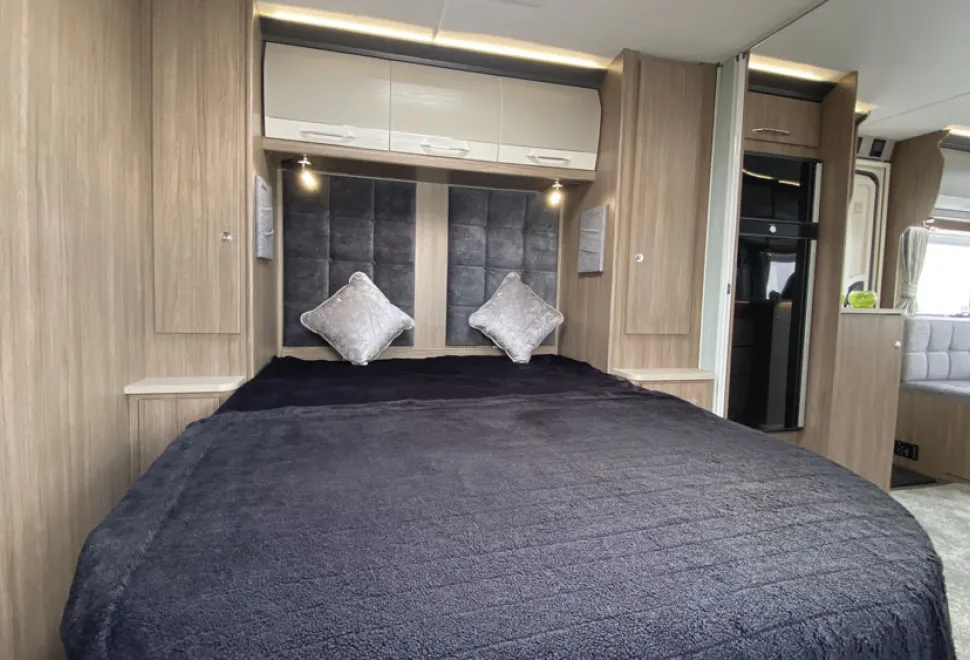
There are so many to choose from. The key is understanding your party/family size and whether you are looking for a fixed bed. One of the most desirable layouts is the rear island bed layout. It is highly practical as you don’t need make the bed up every night, and it offers a level of privacy.
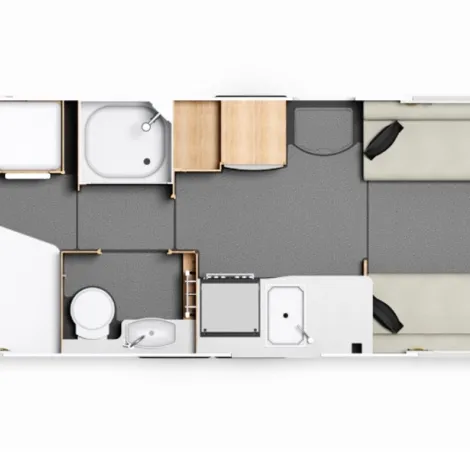
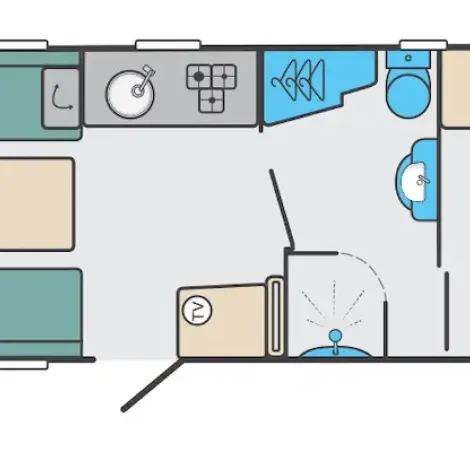
Having a washroom in the centre of the caravan means that no one has to walk through the private bedroom to use the toilet or shower.
Island bed layout
Caravans with double beds that you can walk around on three sides have island bed layouts. The bed head is against the rear or side wall.
With the bed against the rear wall, the shower room is in the centre, with the shower on one side and the toilet and washbasin opposite. Where the bed runs across the caravan, you'll find washrooms at the rear.
Fixed bed layout
Fixed rear double bed configurations can feature either a corner or central island design. Bed placement impacts washroom positioning. This configuration will appear in a four-berth and above and has its pros and cons.
With a fixed corner rear bed (French bed), there is usually a corner missing off the bed to aid access, so if you or your partner are tall this may not be the best option for you.
Transverse bed layout
A transverse island bed is a double bed which is placed against the caravan's side but it's not a private bedroom. This is a good option for families with young children so they can be close to them at night and the bed can also be used by the children during the day to relax on.
The downside is that, with a rear washroom, sleep could be disturbed at night when walking past the bed.
Fixed French bed layout
A fixed French bed runs lengthwise against the caravan wall, requiring individuals to climb over each other for restroom access.
This arrangement might not suit everyone, but one advantage of French beds includes ample under-bed storage space.
Bunk bed layout
Fixed bunk bed layouts tend to suit families with smaller children, the downside being that, as the children start to grow up, these beds may not be suitable.
This means a caravan upgrade may be necessary as the children grow.
Caravan washrooms
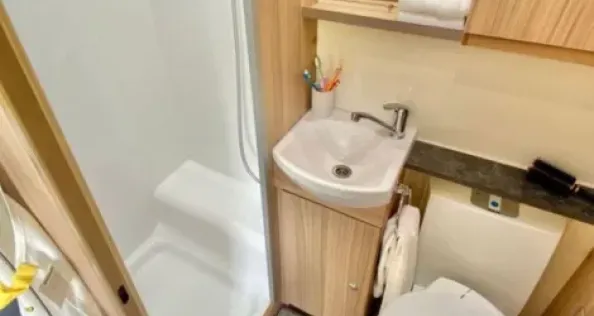
Some of the most popular caravan washrooms boast larger spaces. In newer models these are much more luxurious than some older models. They can either be as part of the main bedroom, or, more popular, in the centre of the caravan.
Everybody loves to feel pampered and the manufacturers have embraced that and moved away from cramped, unsightly washrooms to those that resemble a high-end home en suite.
Final thoughts
There is such a wide range of caravan layouts from both the UK and European manufacturers, the choice is yours. The best advice we can offer is decide on a few key things you are looking for; ie a fixed bed, large washroom or lots of living space. Armed with that, go to a caravan dealer that can help show you what each different model is like.
Online you can look at caravans and almost all feature caravan layout diagrams that make it easier to have an overview of what you are looking for. Shopping for a new caravan is fun – do your research and buy a caravan that will suit your lifestyle both now and into the future.
Latest caravan articles



Explore our magazines
Enjoy expert tech help, travel and campsite inspiration, buying advice, reviews, and more with our best-selling magazines and guides.

Buying Your Perfect Caravan
Buying Your Perfect Caravan is the ultimate guide to finding your ideal caravan. From layouts and storage to finance, insurance, and essential kits, it has everything you need to make your dream caravan adventure a reality.

Caravan magazine
Caravan magazine is perfect for caravan enthusiasts. Make the most of your caravan lifestyle with expert advice, unforgettable road trips, must-see attractions and top maintenance tips to keep your ‘van adventure ready.


