
Caravan chassis: all you need to know
A caravan chassis is a skeletal frame that runs from front to back, supporting the body and linking the entire structure to the axle or axles
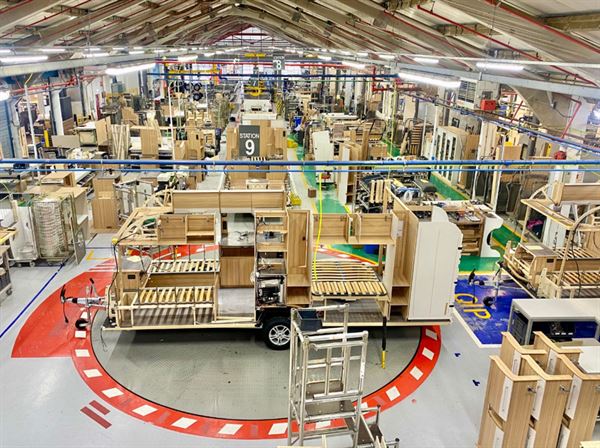
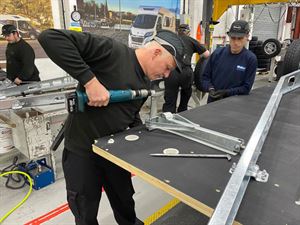
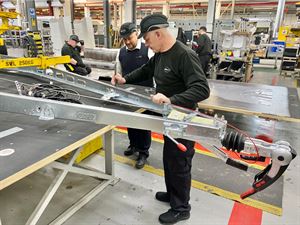
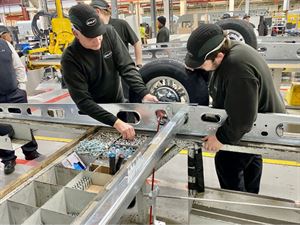
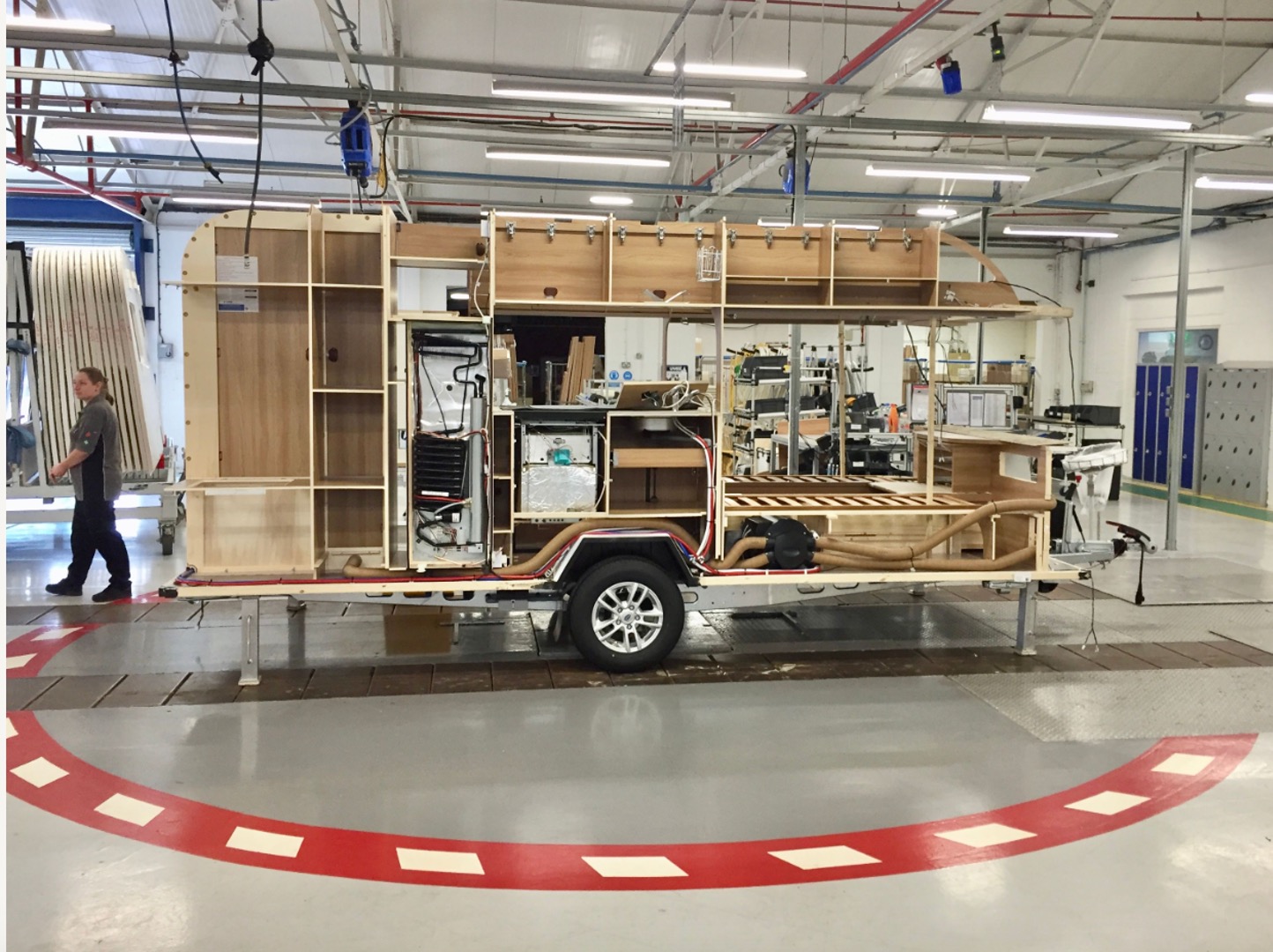
During a recent visit to the Bailey of Bristol production facility, where I spent the day on most of the workstations, the chassis was the bedrock for each caravan build.
Often fitted and forgotten, I’ll explain the importance of a good chassis, how it should be looked after, and what chassis-related accessories are available.
Words by Lee Davey
What is a caravan chassis?
(Photo courtesy of Lee Davey)
Many older caravans used a ladder-like structure that supported every part of a relatively thin plywood floor. Build and design progressed over the years, and a shift in how a caravan chassis was constructed came with a change in bodyshell design.
With the bodyshell and floor removed, the chassis and axle unit resemble the letter A, thanks to long supports that attach to the axle before they meet in a point-like structure at the front of the chassis. The hitch head, jockey wheel, handbrake and breakaway cable are fixed here.
Caravan chassis manufacture
Most UK and European caravans are built on an Al-Ko or BPW chassis. Al-Ko’s parent company, DexKo, purchased BPW, so much of the caravan chassis market is under the roof of a single company.
The modern caravan chassis will be galvanised, which helps prevent corrosion. This involves the steel components being hot-dipped to achieve a hardy zinc coating, which resembles a silver-grey coating of fish-like scales. This minimises chassis care, as the main galvanised components require little maintenance beyond an occasional clean, especially if the roads have been salted.
Caravan chassis numbers
Since 1992, caravans have been issued with a VIN number, which is a unique set of letters and numbers assigned to a specific caravan. Many of us will have noticed these numbers on caravan windows, but did you know they are also etched on the chassis?
During the manufacturing process, an engraver is clamped to a chassis leg, permanently etching the VIN into the metalwork.
Like a car’s V5 document, the caravan’s CRiS document lists this VIN, keeper details, etc. If you’re looking to buy a caravan, it’s worth getting on your hands and knees, finding this number, and checking it against the details recorded on the CRiS document.
Types of caravan suspension

(Photo courtesy of Lee Davey)
Caravan suspension systems differ from those fitted to most cars, with a few exceptions. My first car, a VW Beetle, had torsion suspension, and a similar design is fitted to many caravans.
The axle on a caravan chassis utilises rubber torsion suspension, and this axle is bolted to the main chassis legs.
This rubber cushions the caravan against bumps and imperfections, with optional or model-specific shock absorbers damping the torsion system.
Weight plate upgrades
Each caravan chassis will have a weight limit. If the caravan’s maximum weight, or MTPLM, is less than this maximum weight, it may be possible to upgrade the weight-carrying capacity.
For example, the Bailey Phoenix GT75 762 has an MIRO of 1,456kg and an MTPLM of 1,636kg, giving it a payload of 180kg. However, because the 762 is based on a twin-axle 1,800kg chassis, the weight plate upgrade would increase the payload to 344kg.
Why aren’t caravans automatically plated at the maximum weight? Using the Bailey Phoenix GT75 762 as an example, having an MTPLM of 1,636kg instead of 1,800kg gives the caravan a plated weight that fits with a wider variety of towcars. Before B+E entitlement was automatically granted to B licence holders, the lower weight helped to keep outfit weights below 3,500kg.
Caravan chassis accessories
- ATC: Al-Ko’s Automatic Trailer Control is designed to apply the brakes should the unit’s electronic brain detect a snaking movement. Retrofitting such a system is possible, although it’s more cost-effective to specify it from new if it’s available as an option.
- Shock absorbers: Shocks, or dampers, are designed to reduce the ‘springing’ or ‘bouncing’ sensation that can be felt with a non-damped suspension set-up. Kits are available, and fitment is commonplace. Certain caravan models may have them fitted as standard.
- Motor movers: Think of a gizmo that turns a caravan into a remote-controlled device, and that’s a motor mover. Driving the wheels on either side, it allows caravanners to pitch quickly and precisely via a handheld unit.
- Jacking points: Al-Ko sells jacking points that can be used with its side lift jacks. This eliminates doubt when jacking up a caravan, making life easier when changing a wheel, etc.
- Automatic levelling systems: At the push of a button, hydraulic legs automatically level the caravan, eliminating the need for levelling ramps and a spirit level.
- Al-Ko AKS: These caravan stabilisers are fitted to many new caravans. They have two levers—one to couple the car and caravan and another that presses brake pad-type discs against the towball. The friction between the discs and the towball helps to stabilise the outfit.
Maintaining your caravan chassis

(Photo courtesy of Lee Davey)
Aside from periodic cleaning, a caravan chassis, including the axle, is largely maintenance-free. The brakes should be inspected annually during the prescribed servicing regime, threads from the jockey wheel and corner steadies should be lubricated, and any grease nipples should be dealt with accordingly.
The tyre pressure should be checked regularly if you have a chassis-mounted spare wheel. If it hasn’t been removed for some time, it may be worth removing it to lubricate any moving parts, such as the sliders.
FAQ
Can I jack up a caravan by placing a jack under the chassis rails?
Although strong, caravan chassis rails should not be used as jacking points. Instead, fit jacking points or place a jack under the axle.
Where is the chassis number on a caravan?
In addition to windows or VIN Chip decals, the VIN will be stamped into the chassis rail.
How is a caravan body attached to the chassis?
This method differs between manufacturers, but they are generally bolted, with some being bolted and bonded.
What are the different types of caravan chassis?
In general terms, caravan chassis types are either single-axle or twin-axle. The manufacturer may vary, with Al-Ko and BPW having the market share in the UK and Europe.
How much weight can a caravan chassis carry?
This will depend on the chassis' maximum weight-carrying capacity. A weight upgrade may be possible if a caravan chassis can carry more weight than the caravan’s MTPLM.
Final thoughts
The chassis is the backbone from which your caravan has been built. It is strong and designed for many miles of trouble-free service, yet the design makes it relatively lightweight. Periodic maintenance should be carried out, but this is limited to cleaning and the servicing of key components.
Additional items can be fitted to make touring safer and more accessible, and with the fitment of such items becoming increasingly popular, venturing further afield with increased confidence has never been easier
Watch our latest video
Join the CaravanTV family
Caravan TV is your first port of call for all you need to know about caravanning - from caravan reviews to demonstrations and instructional videos, Caravan has over 90 years of expertise.
We bring you the very latest in caravan news as well as new tech and reviews.


