

Caravan weights and payloads: a quick guide
Technical advice
Caravan weights and payloads: a quick guide
One of the most important things to consider when choosing a caravan is the caravan weight. It’s not daunting once you know the basics. It’s all down to getting the maths right and understanding the terminology
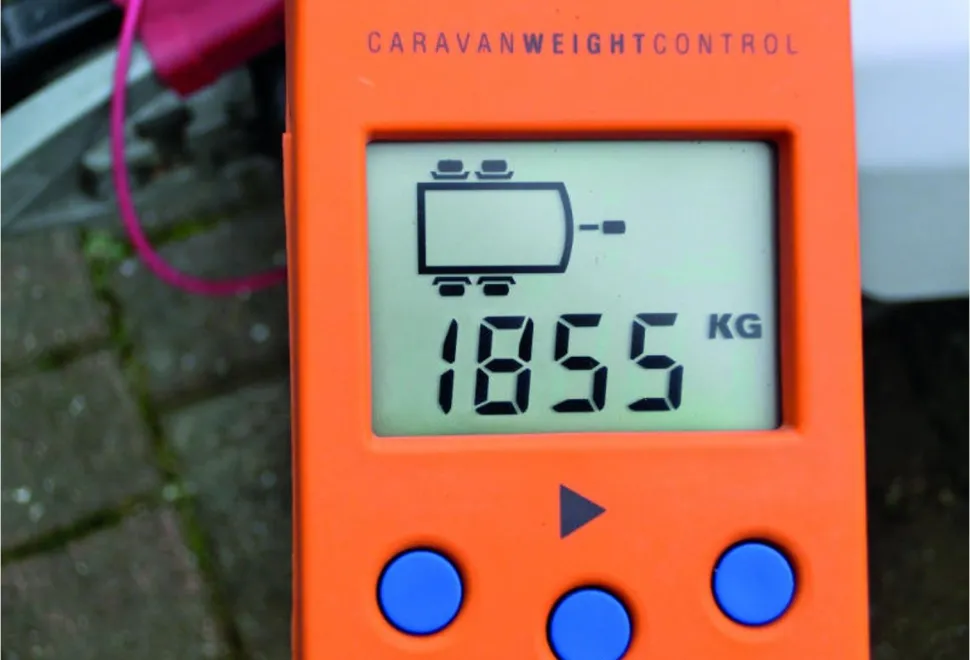
What you need to know about caravan weights
If you are new to caravanning, the main thing you need to know is that the fully laden weight of the caravan should be no heavier than 85% of the kerbweight of the towing car. The kerbweight of your car will be on its V5 document. It sounds complicated, but it really isn’t.
Let us start to break it down for you, along with a little of the terminology that you’ll see in the caravanning world. The three main weights to understand are MIRO, MTPLM and noseweight.
How much does a caravan weigh?
Generally, caravan weights differ depending on the size of the touring caravan. You will find the weight listed in the owner’s handbook and on the weight plate near the door frame. If you are buying a new or used caravan from a dealer, this will also be on the specifications.
Caravan weights can vary between 1000kg (smaller two and four-berth caravans) and 2000kg (larger four to six-berth). A simple guide is that the caravan’s weight tends to increase with the number of berths or beds, as larger and luxury accommodations require more space.
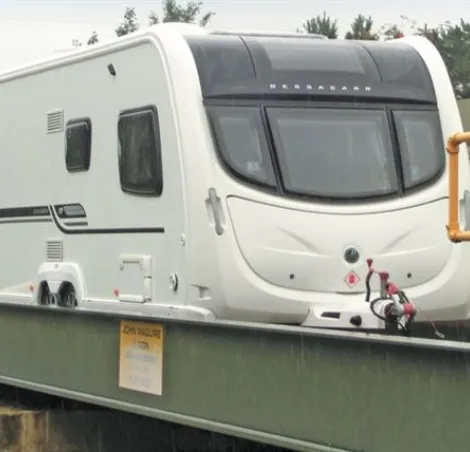
How to calculate caravan weight
There are two areas to look at here; the actual caravan weight and the maximum weight that it can be when towing. This is where the specialised terminology becomes relevant.
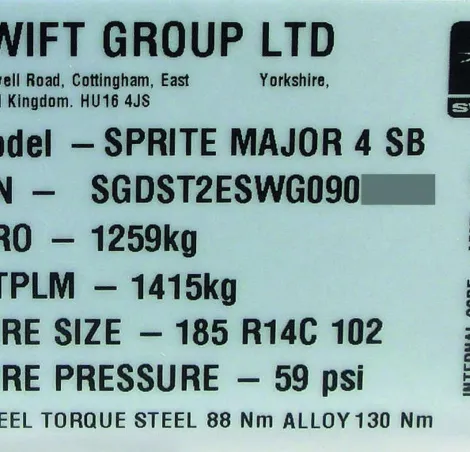
MIRO represents the caravan's weight and is quantified in kilograms.
The subsequent value to consider is MTPLM, which signifies the maximum technically permissible laden mass. Essentially, this is the utmost total weight that the caravan can effectively carry.
Once you grasp these two key measurements, the process of finding a caravan that suits your needs becomes significantly more straightforward. Both of these weights can be found on the caravan weight plates.

Join the Out & About Live family
Get the latest news and exclusive offers direct to your inbox
Discover your inner outdoors with Out & About Live. For over 20 years we have provided the very best advice to motorhomers, campervanners, caravanners and campers – whether you are looking for travel advice, the very best campsites, help with choosing a new ‘van, news, shows, what’s on and much more – it’s all on Out & About Live.
We would love to welcome you to the family so sign up to our FREE email newsletters so you don’t miss out any longer.
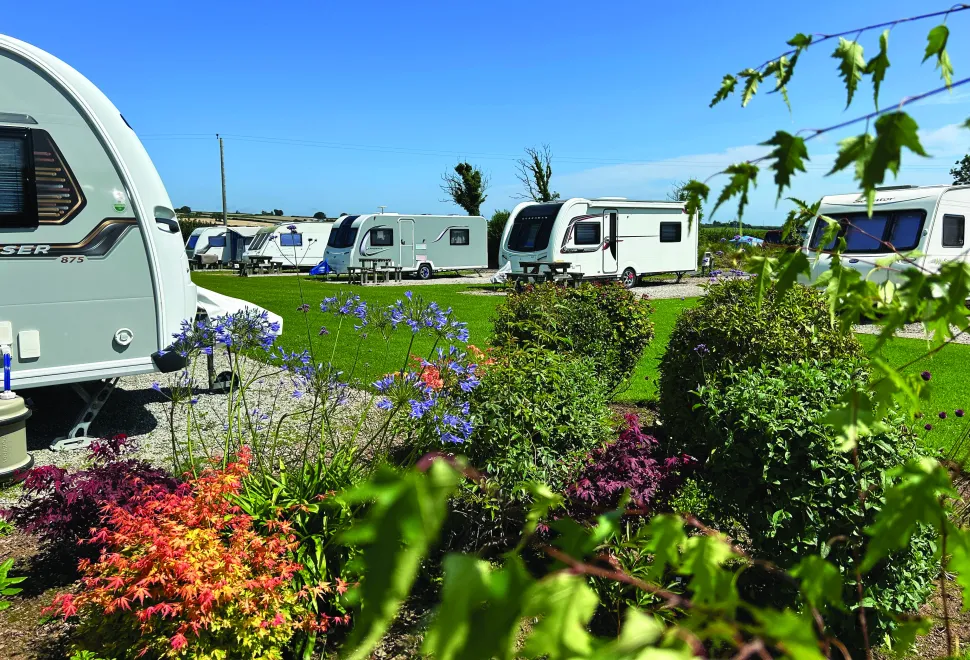
MIRO and MTPLM
What is included in MIRO weightings
MIRO
The MIRO (mass in running order) is the stated weight of the caravan as it leaves the factory. MIRO weightings include an allowance for gas cylinders, water in the water heater, toilet flush water, and water in an on-board tank in caravans that have these.
MIRO weightings don’t include a leisure battery, which may seem strange given that this is an essential item. It’s generally assumed that this anomaly has its origins across the Channel, where most caravans do not have leisure batteries because they are only ever used with hook-ups.
What is the MTPLM of my caravan?
MTPLM
The MTPLM (maximum technically permissible laden mass) is the maximum weight to which a caravan can be safely loaded; this is determined by the manufacturer. It’s listed amongst the tech specs on manufacturers’ websites and is exhibited on the weight plate beside the caravan’s door (on modern caravans).
It’s really important that you don’t load your caravan beyond its stated MTPLM. Doing so could invalidate your insurance. The MTPLM is based on factors including the weight rating for the caravan’s axle and the load rating of the tyres.
Noseweight
The noseweight of a caravan is the weight exerted by the caravan’s hitch point on the car’s towball. In general, caravans adhere to a noseweight range of 5% to 7% of the MTPLM. Most UK caravans have a maximum noseweight capacity of 100kg.
The best way to measure noseweight is to buy a noseweight gauge. The Milenco Precision Noseweight Gauge 130kg is a good example. These averagely cost between £40 and £50.
If you don’t have one to hand, you could use bathroom scales! Here’s how: raise the corner steadies, place a piece of wood inside the hitch cup and turn the jockey wheel handle to lower the front of the caravan until the piece of wood is firmly resting on the scales.
Caravan payloads
The difference between MIRO and MTPLM is defined as payload. That is the weight of all of the equipment and accessories you can put in your caravan – and it needs careful watching!
Pots and pans, a kettle, hook-up cable, tableware, clothing, shoes, bedding, television, toilet chemicals, waste and fresh water containers and a whole lot more, all come into play. It’s easy to overload a caravan but it’s equally easy to avoid it by calculating the weight of your caravan’s contents and packing it correctly.
For example, the Bailey Alicanto Grande Porto has a MIRO of 1,687kg and an MTPLM of 1,847kg – this means the payload for this particular caravan is 160kg.
When you factor in items like motor movers, awnings, solar panels, etc, those kilos can quickly be eaten up.
Caravan loading
When loading your caravan, ensure an even distribution of contents to avoid imbalance. Place heavier items close to the axle and at a lower point, while lighter belongings can occupy higher spaces.
After your initial towing experience, achieving this balance will become quite manageable.
Caravan weight plates
Caravan weight plates are where you’ll find the MIRO and MTPLM figures as well as make, model and tyre pressure information.
Caravan weight plate upgrades
If you think you might need a bigger weight allowance in your caravan, manufacturers can increase the MTPLM specification.
Manufacturers set MTPLM values to show that a specific caravan can be towed by a broader range of vehicles. This means that there is wiggle room to upgrade the weight plate in some cases, and, once done, this will increase your payload. Just ask the supplying dealer if a plate upgrade is possible on your particular caravan.
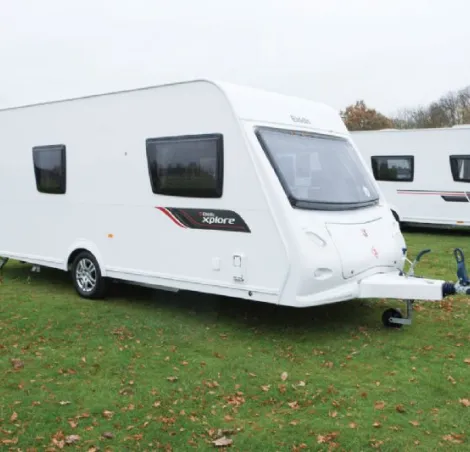
Admin charge
Sometimes there is an admin charge to do this, so check prices first with your manufacturer or dealer, although the Erwin Hymer Group, which makes Elddis, Compass, Xplore and Buccaneer, does not currently charge for upgrading a weight plate.
For example, on an Elddis Avanté 868, a weight plate upgrade takes the MTPLM from 1,725kg to 1,800kg, giving you an extra 75kg of payload, and on an Xplore 304, which has a standard MTPLM of 1,043kg, you get an additional 57kg of payload. When you consider the increases, a weight plate upgrade could be worth doing, especially in a bigger caravan that will be housing more people.
Final thoughts
Owning a caravan offers an excellent avenue for exploration. Regardless of whether you're a family, couple, or wanderlust-driven nomad, grasping caravan weight dynamics simplifies the process.
Now you understand caravan weights and payloads, all you need to do is choose a caravan that suits your lifestyle and your vehicle's towing capacity.
Latest caravan articles
Explore our magazines
Enjoy expert tech help, travel and campsite inspiration, buying advice, reviews, and more with our best-selling magazines and guides.

Buying Your Perfect Caravan
Buying Your Perfect Caravan is the ultimate guide to finding your ideal caravan. From layouts and storage to finance, insurance, and essential kits, it has everything you need to make your dream caravan adventure a reality.

Caravan magazine
Caravan magazine is perfect for caravan enthusiasts. Make the most of your caravan lifestyle with expert advice, unforgettable road trips, must-see attractions and top maintenance tips to keep your ‘van adventure ready.


