
A week camping in St Ives, Cornwall
By Iain Duff
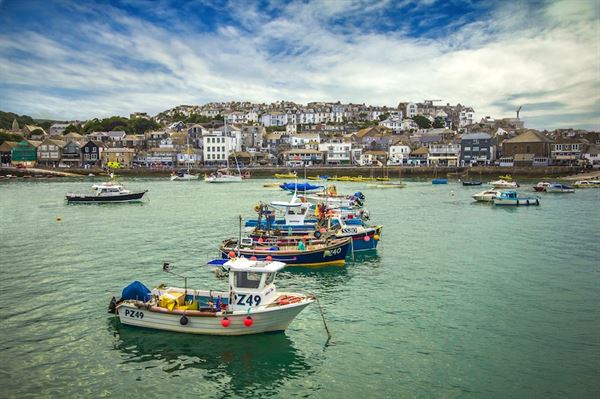
St Ives is a wonderful location to enjoy Cornwall. It’s full of captivating old streets and boasts a superb harbour and magnificent beaches.
It is quaint and lovely and is a quintessential beach town which has both charm and character. Often referred to as ‘the dazzling jewel in Cornwall’s crown’, it is easy to see why as you wander around the narrow cobbled streets and take in the picturesque harbour with its fishermen’s cottages.
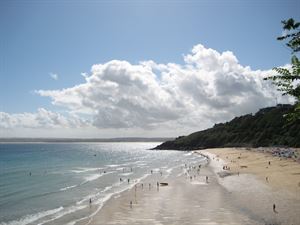
There are four superb beaches to choose from and St Ives is reputed to have one of the UK’s mildest climates.
Tourists flock here in their thousands and return year after year to experience it all over again. On a sunny day, with the beaches looking golden and the sea an azure blue colour, you can easily believe you are on the south coast of France, not the southwest corner of England!
Water sports enthusiasts are well catered for and the Blue Flag rated Porthmeor Beach is a surfer’s paradise. Add to this the interesting shops and great food and you have all you need for a great holiday.
This pretty town is utterly unmissable if you like fine art, and not only because it houses the Tate St Ives. Its winding streets also have plenty of private galleries selling paintings and crafts to tourists. We like sculptor Barbara Hepworth’s house and garden and the insights you get into the artist’s life.
The Leach Pottery, a 10-minute walk out of town, is the spiritual home of studio pottery in the UK. It’s not all about the art, though. St Ives has a lovely atmosphere and is buzzing on summer days.
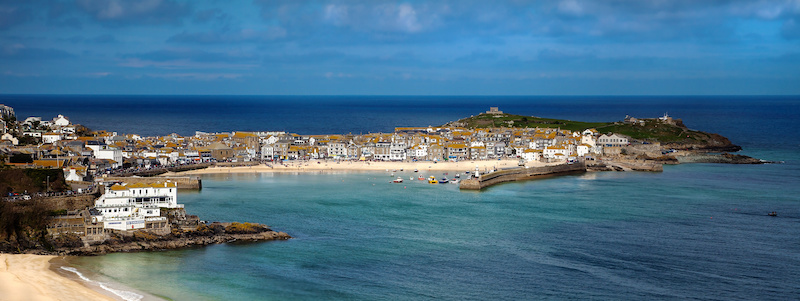
(Photo courtesy stock.adobe.com)
A week camping in St Ives
# Day 1: Hit the beach
Start your holiday by spending a sunny day on one of the sensational local beaches.
Our shortlist would be: Porthminster Beach, Porthmeor Beach, Porthgwidden Beach or the handy little strand at the harbour, which has been voted one of the 10 best in Europe.
# Day 2: Follow the pilgrims
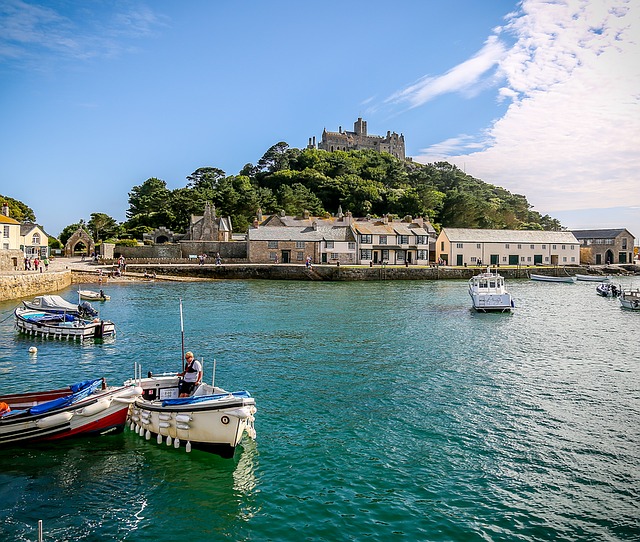
Iconic is an overused word, but St Michael’s Mount certainly merits that description. A 20-minute drive from St Ives (or a pleasant 12-mile walk in the footsteps of pilgrims), it’s a tiny island packed with history, crowned with a medieval castle, and makes for a lovely day out.
Stroll across the granite causeway at low tide or take a boat or ferry to the picturesque harbour. Take in the beauty of the stunning gardens with pathways that wind their way up to the main entrance of the mount through carefully planted slopes that feature many subtropical species.
You can listen to live music on the village green and enjoy fresh local food at one of the island’s two good bistros. Take home a souvenir from one of the gift shops to remember your visit.
(Photo courtesy of Pixabay)
# Day 3: The Lizard Peninsula
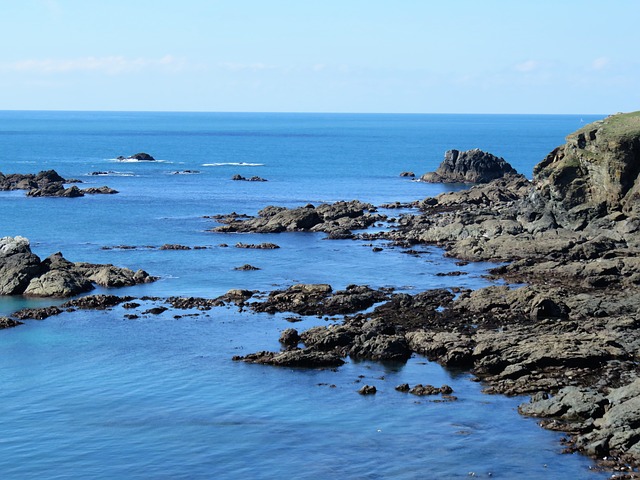
The Lizard is the most southerly tip of England, a peninsula that has some of the most secluded beaches in Cornwall – and one of the county’s unique assets: serpentine rock.
One of the most magical places on the Lizard is Cadgwith, a tiny fishing port where boats are hauled up from the water over the shingle beach.
Seafood landed here finds its way into restaurants all over Cornwall and beyond – and you can buy fish here, too, from an ancient fish cellar by the shore.
(Photo courtesy of Pixabay)
# Day 4: The art of St Ives
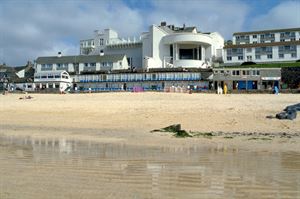
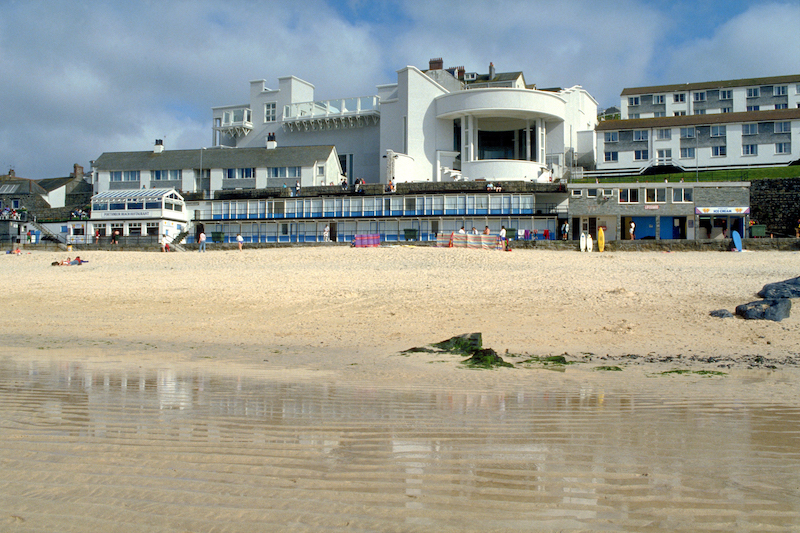
We don’t know much about art but we know what we like, and we certainly like Tate St Ives. Possibly the best thing about it is its amazing building overlooking the lovely Porthmeor Beach.
Apparently, it is the Cornish light that makes art created in St Ives so distinctive and walking around in those dazzling white rooms really allows you to appreciate the effect.
Exhibitions change all the time and the permanent collection includes work by Barbara Hepworth, Ben Nicholson, naive painter, Alfred Wallis, and others. It has a good coffee bar, too, which is always important.
If that’s not enough culture for you, St Ives also has a separate museum and garden devoted to the sculptor, Barbara Hepworth. There are lots more galleries, too. Our favourites are: Anima Mundi, the Alexandra Dickens Gallery, both in St Ives, and the Tremenheere Sculpture Gardens, in the nearby town of Penzance.
(Photo courtesy of VisitBritain)
# Day 5: Seal watching
If you’re all cultured out, take a boat trip to Seal Island to see the seal colony there.
These dog-friendly, one-hour excursions take up to 12 passengers aboard Dolly P, for the three-and-a-half-mile trip to the island, which lies west of St Ives.
Don’t forget to take your binoculars and a camera with a long lens (150mm+) if you have one, because you’ll definitely want a permanent record of an experience like this.
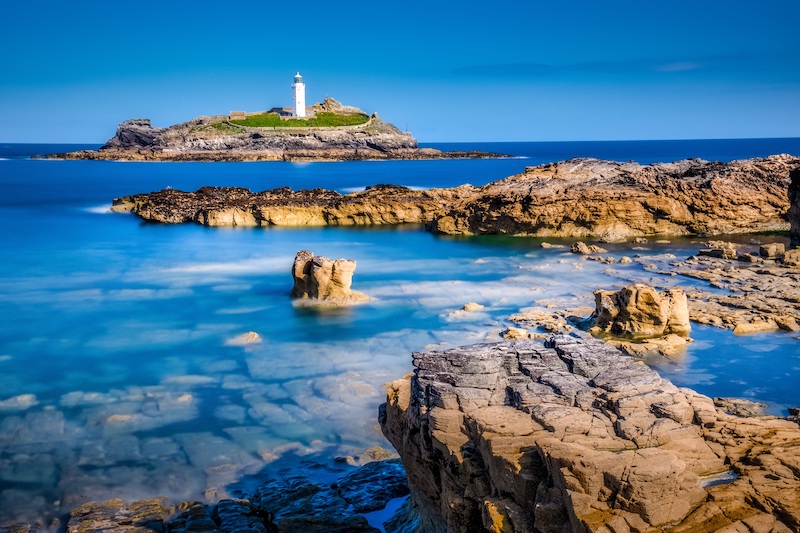
You can also take a cruise aboard Dolly P to see Godrevy Lighthouse, whose octagonal tower was made famous by Virginia Woolfe in her novel, To The Lighthouse. Back on dry land, do some beachcombing, keeping an eye out for seaglass, cuttlefish and crab skeletons.
(Photo courtesy of Pixabay)
# Day 6: Walk the coast
The six-mile walk along a rocky stretch of the South West Coast Path, from St Ives to the historic village of Zennor, is officially one of Britain’s most popular hikes, being voted 24th in an ITV poll to find Britain’s Favourite Walk.
The route takes you along some challenging but stunning coastline, followed by lunch at the Tinners Arms and a bus back. It is a classic, if fairly demanding, day out but well worth the effort.
Unlike most of the South West Coast Path, it feels really remote here, but if that’s a problem, the wild and rugged landscape makes up for it. There’s fantastic coastal scenery the whole way, with beautiful beaches and delightful coves and dramatic cliffs.
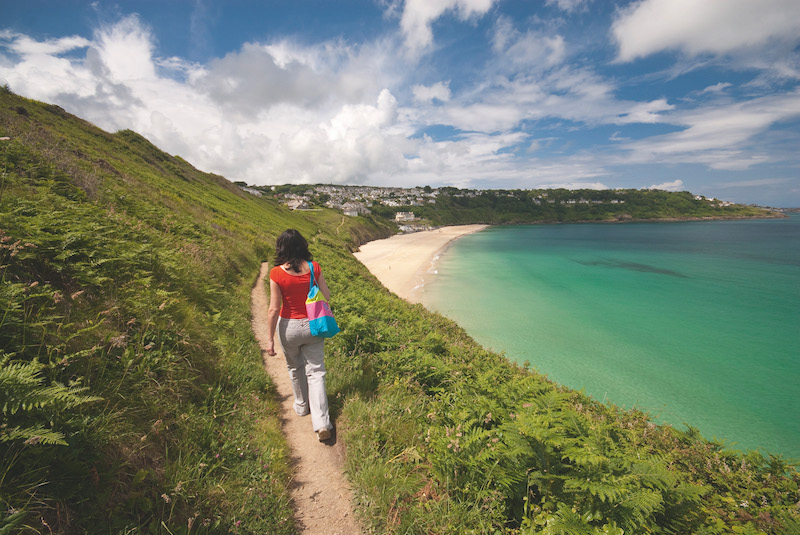
(Photo courtesy of Visit England)
# Day 7: Go birdwatching
The dramatic clifftop pathways around the Godrevy headland, near Hayle, provide glorious ocean views and are a wonderful spot to watch the local birdlife.
Look out for the guillemots, razorbills, fulmars and cormorants that make their home on the cliffs.
Godrevy Head is a sandy beach surrounded by cliffs with miles of walks over grasslands and heathland at its rear. Surfers love this beach but it is just as good swimming in the sea, building sandcastles or simply chilling out in the sunshine.
One to visit in St Ives
Carbis Bay Beach is a privately owned beach that can be accessed by the public. A few miles out of town makes it less crowded, and the beach rarely has any surf so makes for an ideal spot for families.
The beach is equipped with lifeguards, toilets, pay and display parking and beach rental equipment. Mediterranean-style delights are on offer at the hotel’s impressive restaurant overlooking the beach.
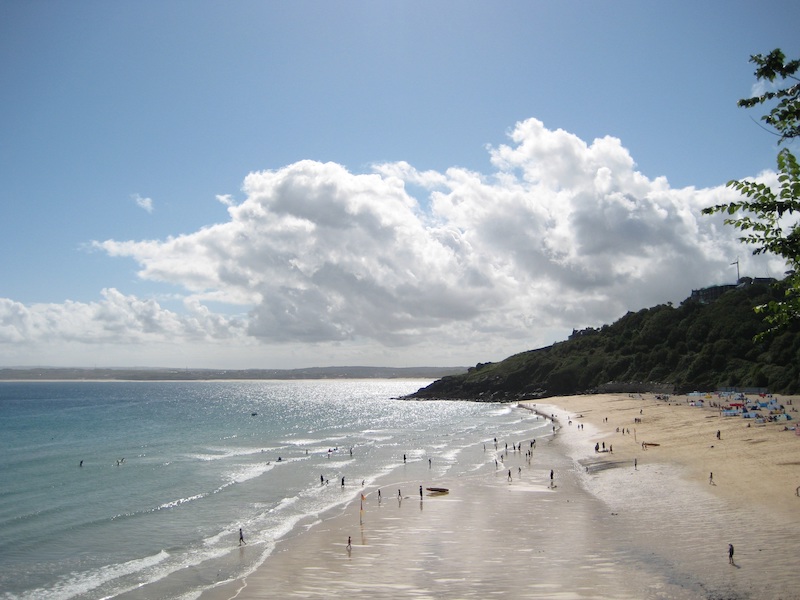
(Photo courtesy of Pixabay)
Where to eat in St Ives
• Porthmeor Beach Café
St Ives, Cornwall TR26 1JZ
01736 793366
porthmeor-beach.co.uk
This is the ideal spot to have a meal and watch the sunset. The food’s great, too, and well priced. Go on, treat yourselves..
What to see in St Ives
• St Michael’s Mount
Marazion, Cornwall TR17 0HS
01736 710265
stmichaelsmount.co.uk
• Tate St Ives
Porthmeor Beach, St Ives, Cornwall TR26 1TG
01736 796226
tate.org.uk
• Barbara Hepworth Museum and Sculpture Garden
Barnoon Hill, St Ives, Cornwall TR26 1AD
01736 796226
tate.org.uk
• Seal spotting
RNLI Lifeboat Station, Wharf Rd, St Ives, Cornwall TR26 1LF
07773 008000
stivesboats.co.uk
• The Tinners Arms
Zennor, St Ives, Cornwall TR26 3BY
01736 796927
tinnersarms.com
• Godrevy
Gwithian, near Hayle, Cornwall TR27 5ED
01872 552412
nationaltrust.org.uk
Helping you choose the best place to camp in the UK
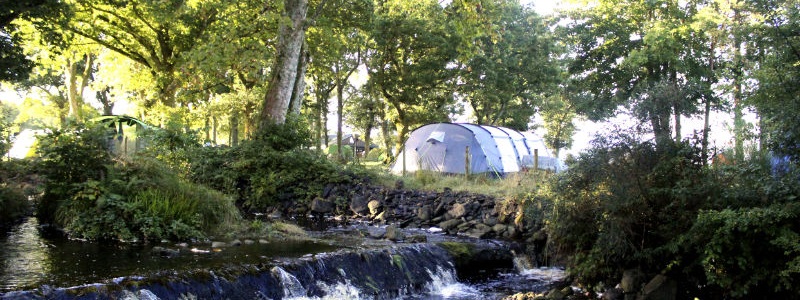
Camping in the UK gives you freedom, adventure and the chance to get closer to nature, whether it is a night on the Cornwall coast or a week's holiday in the Highlands of Scotland.
Home is where the heart is, and that's espewcially true when it comes to camping in the UK. Sometimes we forget just how much there is explore in the UK.
And with the disruption to travel by coronavirus and Brexit, the one thing that seems certain is that more people will be holidaying at home.
Expert information for picking where to camp
Family holidays are so important and we want to help you choose the right destination for your next camping trip. To give you inspiration, we’ve hand-picked some of our favourite UK camping destinations.
Some, like the Lake District, Cornwall and the Scottish Highlands, are obvious. Others are maybe less well-known, but they are all magnificent and should definitely be on your camping bucket list.
Expert camping advice to your door!
Camping magazine has been the voice of campers for 60 years.
It is the only magazine in the UK dedicated to the wonderful world of tents and life under canvas. Every issue features travel ideas in the UK and further afield, as well as top sites to stay on, plus tent and gear tests to ensure you are properly equipped for all your camping adventures!
Why not treat yourself to a subscription today?
Don't go camping without it!
Next Shows

The Big Land Rover Fest 11th - 12th July 2026
Experience The Big Land Rover Fest – a weekend of off-roading, live music, club displays and family fun at Newbury Showground, 11–12 Ju...

The Norfolk Motorhome & Campervan Show 17th - 19th July 2026
Join The Norfolk Motorhome & Campervan Show, 17-19 July 2026, for the Out & About Live Summer Party! Explore motorhomes, live demos, an...

Retro Festival 7th - 9th August 2026
Retro Festival celebrates timeless hits, vintage vehicles, fashion shows, and fairground fun.