
The most common motorhome problems solved
Motorhome advice
Top 10 motorhome problems solved
Motorhomes are unique in the motoring world. These vehicles, based on commercial vans, do relatively low miles each year and are packed with domestic-style equipment like heating, washing and cooking systems.
It’s common for a motorhome to last 30 or more years, but only if they are looked after well and problems sorted quickly. Here we reveal the solutions to the 10 most common motorhome problems our experts at MMM magazine - Britain's best-selling motorhome magazine - have been asked to solve.
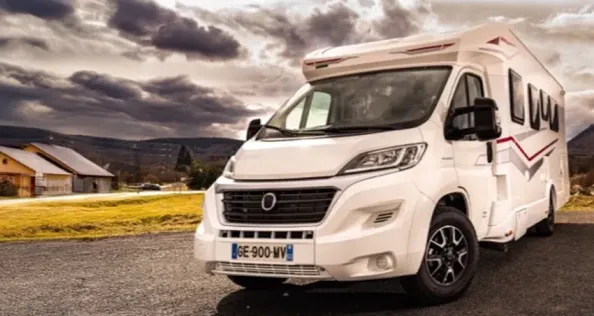
It's fair to say that while Ford has been gaining ground with the Transit as the most favourite base vehicle, the most prolific on the new and used market is still the Fiat Ducato. That's probably why Fiat Ducato motorhome problems are the most common.
Mileages are generally lower on motorhomes, with many only clocking up 2-3,000 per year. However, some are more well travelled; it is much rarer for them to be over the 100k mark, but if they are, check the service history very carefully. We'd also check the maintenance schedule on lower-mileage motorhomes as regular servicing for vehicles that stand idle a lot of the time is also important.
Time and time again, people ask us what the most reliable brand of motorhome is and there is no easy answer. We keep a log on complaints and the numbers are quite even across the board. Bailey Alora motorhomes recently had a problem with heating systems that involved a change to the electrical system, so if you have experienced this talk to your Bailey dealer.

Rachel Scholes Content Editor: Motorhomes
Rachel Scholes Content Editor: Motorhomes
#1 Engine management lights come on
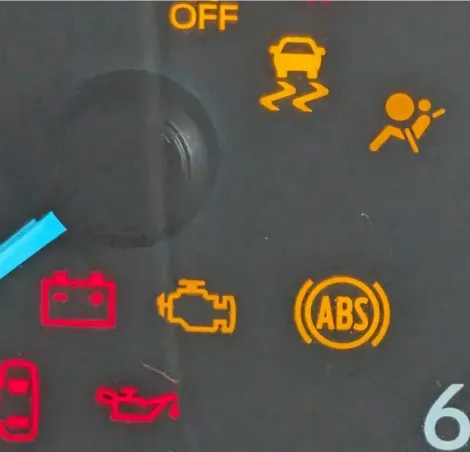
The EML (engine management light) is misunderstood. By definition, it indicates that there is something connected with the engine that is not functioning as it should and could affect the emissions of the vehicle, ranging from a potential MoT failure to something that disappears the next time you start the engine.
If the latter does not transpire, though, you need to get this checked without delay and, at the very least, you need to get fault codes read to find clues as to what is wrong.
On some vehicles the EGR (exhaust gas recirculation) valve and associated pipework becomes clogged with oil and residues. To remove an EML warning, pipework can be blocked off with metal plates or replacement pipes. This is cheating and will affect the running of the engine and its emissions, but, as a temporary remedy, it can be effective on some engines, most notably Ford/PSA engines.
If you have an EGR-related fault on a Fiat engine, the chances of it actually being the EGR or pipes nearby is almost nil as these engines remain exceptionally clean and modifying the pipework will have a drastic effect on efficiency and emissions.
It is much more likely that a throttle body or EGR solenoid valve is at fault and replacing them with updated items will often dramatically improve driveability and even fuel economy, while also ensuring that emissions are as intended.
#2 Electrical warning light comes on
The Fiat Ducato motorhome, since 2006, has had many minor electrical faults, so, to keep this short, before you buy a new alternator, battery or start pulling your wiring looms apart, check the earth strap between the gearbox and the chassis under (just behind) the air filter. The earth straps fitted by Fiat are poor and do deteriorate.
This leads to many faults, mainly because the voltage available to the ECU during start-up is too low to ensure that pre-starting checks can be completed properly. This can also lead to the ECU thinking that the alternator is not providing enough power, which is sometimes demonstrated by the engine idle speed increasing to compensate.
So just check it, replace it or add a second earth strap.
Otherwise, the usual suspect is the vehicle alternator, which you don't necessarily need a mechanic for. Disconnect the battery's negative connection and secure it safely away, then disconnect each connection (one by one) to the alternator and make sure it is clean and bright and a tight fit to ensure a good electrical connection.
The particular connection monitored by both the fridge circuit and the vehicle warning light circuit is annotated D+ on the alternator. With the battery negative reconnected, an electrician could measure the voltage on this D+ terminal on the alternator to check that it is near zero volts when the engine is off and jumps up to around 14V when the engine is running. That is the pivotal test.
#3 Motorhome fridge doesn't work
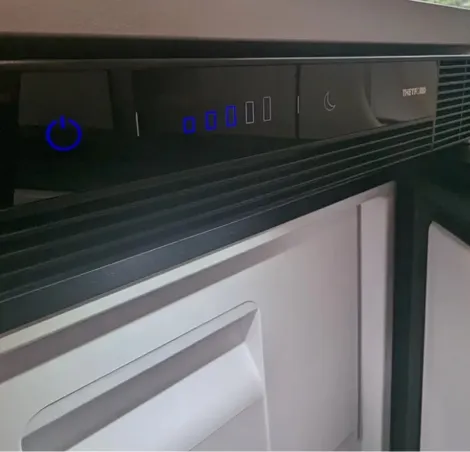
If a fridge is not working on gas (but is on 12V on mains), one possible problem is when the coating inside the burner feed pipe starts to flake off after a few years. Just one flake is enough to blow up into the gas jet and partially block it. The gas will still light and the flame may look OK, but it will not be sufficient to cause the fridge to operate correctly.
A burner dismantle should find the culprit, and, after cleaning all the bits and reassembling, normality should be returned. If you do this, then never force anything into the gas jet; it will become enlarged and your burner will quickly soot up.
On reassembly it should be checked by a qualified gas professional.
If a fridge does not work on 12V while the engine is running, it could be a problem with the feed from the vehicle battery and the alternator D+ terminal. This is the time to be using your digital multimeter.
With the meter set to DC volts and with the negative meter lead connected to vehicle chassis (battery negative), you need to measure the voltage at the point where the starter battery positive enters the EC500 and also where the alternator D+ connection enters the EC500. Both voltages should be around 14V when the engine is running.
There will quite likely be fuses associated with these supplies near the vehicle starter battery and these may be corroded. There are also fuses mounted in the remote EM40 interface unit, fuses six and eight being associated with fridge operation. Also check the four-way connectors for soundness of connection. These are the supplies used to power the fridge when driving.
If all is well, you probably need a replacement control PCB.
#4 Electrical steps stop working
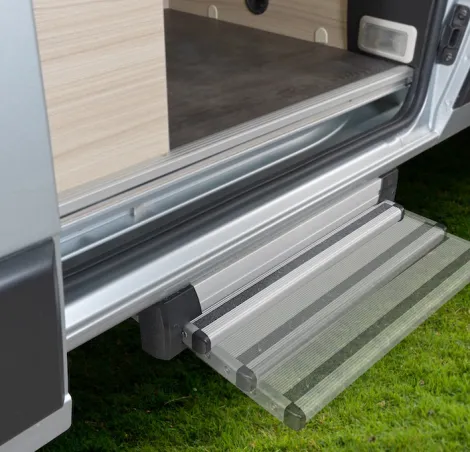
Motorhome steps are exposed to a lot of dirt and grunge from roads. This can cause problems with the electric operation and is one of the most common motorhome fails.
Use a multimeter (one of the most essential tools for motorhomes) and measure the volts between terminals three and four of the step switch. This should be the voltage of your leisure battery. If it is not then you need to trace the wiring to find that fuse and any intermediate connections.
You must correct this first. Then isolate the two wires from the step motor and extend them. Then apply the two wire ends to a 12V supply to see if your step moves. The step direction will reverse when you reverse the wires.
Check that the step is mechanically free to move fully in both directions and that the step retract limit switch is mechanically operated. Do not hold the wires on the 12V supply once the step has stopped moving as the current is much more when the motor is stalled.
After proving that the motor and the mechanics are OK then restore the original wiring and electrically link together the two wires of the retract limit switch. The step should extend. If it does then the internals of the retract limit switch are likely damaged and you need a replacement.
#5 Motorhome water pump problems
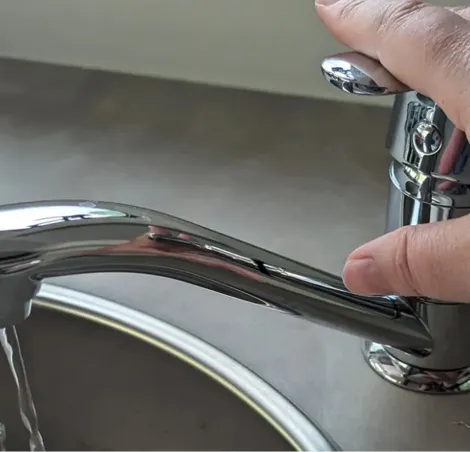
Most motorhomes use one of two kinds of water pump. Pressure-activated pumps are switched on when their pressure sensor detects a drop in water pressure when a tap is opened or the loo flushed. These are often external to the fresh water tank and the pressure sensor is adjustable.
They’re generally reliable but be aware that, if you have a water leak, they can activate automatically and pump water out of any hole or detached hose connector. Draining down over winter, and switching the water pump off when it’s not in use can prevent this.
The tell-tale sign of a water leak (or a failing water pump pressure switch) is if the pump keeps switching on and off when no taps are open. If a water pump does this, try adjusting the pressure valve to see if it stops the pump actuating. If it doesn’t and you’ve checked for any leakage, then suspect the pressure switch.
The other common type of water pump is one triggered by on/off microswitches located in each tap. These can be either mounted externally near the water tank or submersed in the tank itself.
Water pumps are generally reliable, but the microswitches on the taps can fail. If the water pump works on the kitchen tap, but not on the washroom basin, then it suggests the washroom tap has failed or has a wiring issue.
It’s easy to check if a microswitch tap works with a multimeter. Set the multimeter to its continuity setting and connect its probes to either end of the two wires coming out of the tap. If the meter doesn’t beep or indicate a connection when the tap is opened, the microswitch has failed and the tap will need replacing. Taps are generally easy to replace, but this depends on the access underneath them.
There could be a loose electrical connection to the pump as each time the pump starts it moves on its mounts and temporarily disconnects its 12V supply. As soon as it stops the pump moves back and the connections remake and that is how it continues. Check all the immediate and any nearby connections for cleanliness and tightness.
Many installations include a surge damper in the plumbing system to reduce the on-off frequency. The plastic retaining clip for the surge damper could be broken and the damper is laid on its side. The air comes out, it fills with water and becomes ineffective.
#6 Motorhome control panel stops working
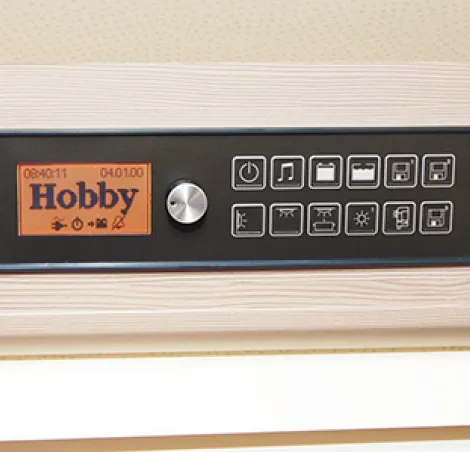
It is possible that your motorhome system has had a software lock-up, so disconnect the leisure battery for a couple of minutes then reconnect it. You may find that everything now works.
The control panel is coupled to the main 12V electrical lump with a data cable and it is possible that this cable connector has become displaced at either end.
And, yes, it could simply be a fuse, so it’s worth finding your fusebox/boxes and check the fuses.
The last resort would be a replacement motorhome control panel. It’s worth a phone call to a specialist spares supplier, as it can advise about the return possibilities if the replacement panel does not cure your problem. If it’s a direct replacement, you should be able to plug the new panel in and everything should work.
However, you have to ensure the part number matches your part exactly, otherwise there may be compatibility issues even if all the connections look the same. If it’s a more complicated job, it’s best to get a specialist motorhome electrics technician involved.
#7 Motorhome battery failure
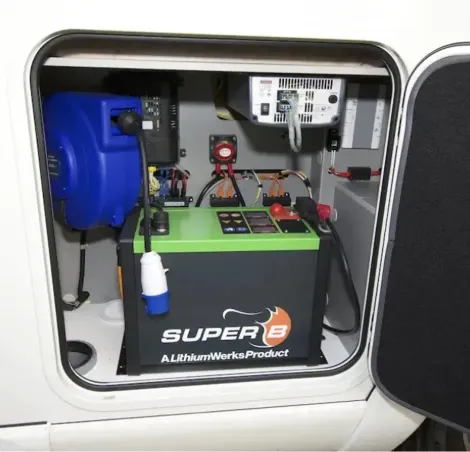
Motorhomes have two different batteries, the vehicle battery that powers the cab, starter motor and alternator (smart versions in many modern vehicles) and the leisure battery that provides juice for the appliances and lights in the motorhome itself.
Unless properly charged, both of these batteries can run out of power quite easily. You can top up by staying plugged into the mains, or use solar to trickle charge the system. It is worth checking how your charging routine is set up. Most systems will only provide a trickle charge to the engine battery once the leisure battery is fully topped up.
If you have space for a second motorhome leisure battery, though, you could double your amount of electrical independence with solar panels. There are limits on what a solar panel will deliver in winter with limited daylight hours.
Let’s say you fit solar panels rated at 120W. That is what you might get in midsummer at midday with a clear sky on the equator. In the UK midwinter, with limited daylight hours and mostly overcast, it’s another matter.
We would have no worries on panels rated 80W and above being able to sustain the load of a tracker during the winter.
If the charging system is fine, but the batteries keep discharging fully, then its worth doing some investigations – knowing where and what is drawing power is a particularly handy thing. If an appliance is drawing too much, then you can start to track down the problem.
It is also worth knowing that standard lead acid batteries fitted to motorhomes can only be 50% discharged before needing to be topped up. Lithium (LiFePO4) batteries have a much greater capacity to be discharged, allowing to you use more of the available power before being topped up. So if you want electrical independence away from mains hook-up, these batteries are a good option.
#8 Motorhome gas supply issues
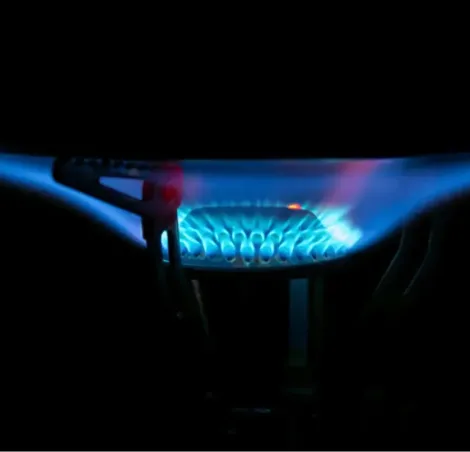
LPG for cooking and heating is very common in motorhomes and campervans, and many (whether standard fitment by the manufacturer or an aftermarket customer upgrade) now have refillable LPG tanks or cylinders instead of exchange bottles. When LPG fuel for trucks and cars was more popular, the LPG refilling options across the UK and Europe were numerous.
However, the use of LPG fuel is much less common, which means LPG nozzles on fuel forecourts are being phased out in places. LPG accounts for just 0.2% of UK road fuel demand and yet there were over 1,000 LPG outlets operating in the UK in 2022.
There are a few outlets specifically selling LPG without the added road fuel duty and these are likely to continue. Marquis has manned refill facilities for refillable cylinders and underslung LPG tanks used for cooking and heating at Exeter, Surrey and Durham branches.
The myLPG.eu app shows LPG filling stations in the UK as well as mainland Europe, but, especially here in the UK, we would always phone the garage first to be certain that it is still offering LPG before setting off.
#9 Spare parts supply
There has always been a problem with motorhome body panel spares and other such components, with longer than expected lead times for replacement parts. This was exacerbated by the supply chain issues during the pandemic, but this is returning to normal. Depending on the original supply this can range from days to months.
There’s also a problem of parts no longer being available at all when models are declared obsolete, despite being as recent as 2014/15. As for European-built motorhomes, the problem is compounded by Brexit and red tape.
If this is part of an insurance claim, then it’s worth asking the policy and claims team to chase up the spares for you, or even investigate the options of a temporary repair. Obsolete body panels may need repairing rather than replacing, anyway.
Temporary repairs will allow you to use your motorhome while waiting for the new parts to arrive.
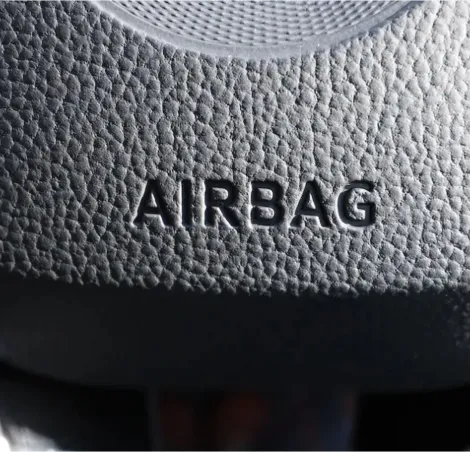
#10 Motorhome airbag warning lights come on
Airbag warning lights are a pain and seem to be more common in motorhomes. They can be caused by any fault, however temporary, originated by any device connected to the airbag control unit. These naturally include airbags, but also seatbelt pretensioners and seat occupation sensors.
Something as simple as moving the driver’s seat back or forward can disturb the wiring connections; and this is the most common cause of a warning light of this nature on any vehicle so equipped.
The airbag control module failing is a more common Fiat Ducato motorhome problem as it seems to be particularly sensitive to moisture, and this is more frequently found in motorhomes than in commercial vans.
The first thing to do would be to rule out anything completely obvious, so check for coolant leaks into the cab. If the matrix inside the heater unit is going to leak, it will deposit coolant straight onto the airbag unit, which is located behind the lower dash in the middle of the cab floor. If your coolant seems low and there is evidence of leaking on the floor, this will need to be sorted out.
Check under the seats for anything that has been stowed away and has come into contact with the wiring for the seatbelt pretensioners and sensors.
In most cases, though, getting the vehicle plugged into a diagnostic system that can read codes from the airbag system will provide at least clues as to what is wrong. You may see a particular device named and, initially, the wiring to that device would need to be checked before assuming that the device is faulty. They are often not.
If, on the other hand, the diagnostic unit cannot communicate with the control unit or it does but describes internal faults, then it will need to be repaired or replaced.
There are people out there advertising their ability to repair airbag control units, but the costs may end up being very similar to that of purchasing a new one and having it installed and programmed by a Fiat workshop. It will come with a warranty, too.
Tips for maintaining your motorhome
Regular servicing:
An annual service of both the motorhome engine, running gear and living systems is the easiest way to ensure all the components stay in tip-top condition. If your motorhome is out of warranty this can be carried out anywhere, but while the warranty is still valid you will probably need to return to the dealer you bought it from each year.
Use your motorhome regularly:
No vehicle likes being stood unused for long periods of time. Engines and brakes can seize, oils and lubricants can degrade and there's a bigger chance of damage from nesting animals and the dreaded damp and moisture that can build up.
Take your vehicle out for a run regularly in winter if it doesn't get used all year round – and that's not just popping to the shops, it needs to be a good run with the opportunity to get the engine revs up.
Check tyres:
This is the only contact you have with the road, so regularly check the motorhome tyre tread depth, condition and tyre pressures. Read our motorhome wheels and tyres article for more information on this topic.
GIve your motorhome a clean:
By cleaning a motorhome properly, inside and out, you are essentially checking every inch of the body and problems may reveal themselves during this process. Make sure to use the right chemicals and tools as the plastics used in windows, vents and the motorhome itself can be damaged by harsh products.
While you might think jet washers can be handy for the bigger surfaces of a motorhome, they, too, can impact on seal integrity and cause water ingress issues, so use very carefully – hosepipes attached to extendable brushes can be a viable alternative.
And don't forget to clean the roof...
Check our article for more motorhome cleaning tips
FAQ
-
What is high mileage for a motorhome?
Most motorhomes clock around 2-3k miles a year. Anything over 100k miles is rare and much higher than the average motorhome.
-
What is the average life of a motorhome?
It is typically around 200,000 miles or 20 years, whichever comes first but this can vary on a variety of factors.
-
What is the most reliable brand of motorhome?
There is no right answer for this and it depends on lots of factors. It is always important to check the service history when buying any brand of motorhome.

Join the Out & About Live family
Get the latest news and exclusive offers direct to your inbox
Discover your inner outdoors with Out & About Live. For over 20 years we have provided the very best advice to motorhomers, campervanners, caravanners and campers – whether you are looking for travel advice, the very best campsites, help with choosing a new ‘van, news, shows, what’s on and much more – it’s all on Out & About Live.
We would love to welcome you to the family so sign up to our FREE email newsletters so you don’t miss out any longer.
Latest motorhome articles


Explore our magazines
Enjoy expert tech help, travel and campsite inspiration, buying advice, reviews, and more with our best-selling magazines and guides.

Buying Your Perfect Motorhome
Buying Your Perfect Motorhome is the ultimate guide to turn your motorhome adventure into reality. From models starting at £20k to luxury options, layouts, finance, insurance, and a dealer directory, it has everything you need to find your dream motorhome.

MMM magazine
MMM is the UK’s best-selling motorhome magazine and your key to unforgettable trips, both in the UK and overseas. Packed with expert reviews, advice and maintenance tips to help you make the best choices and keep your motorhome roadworthy.


