
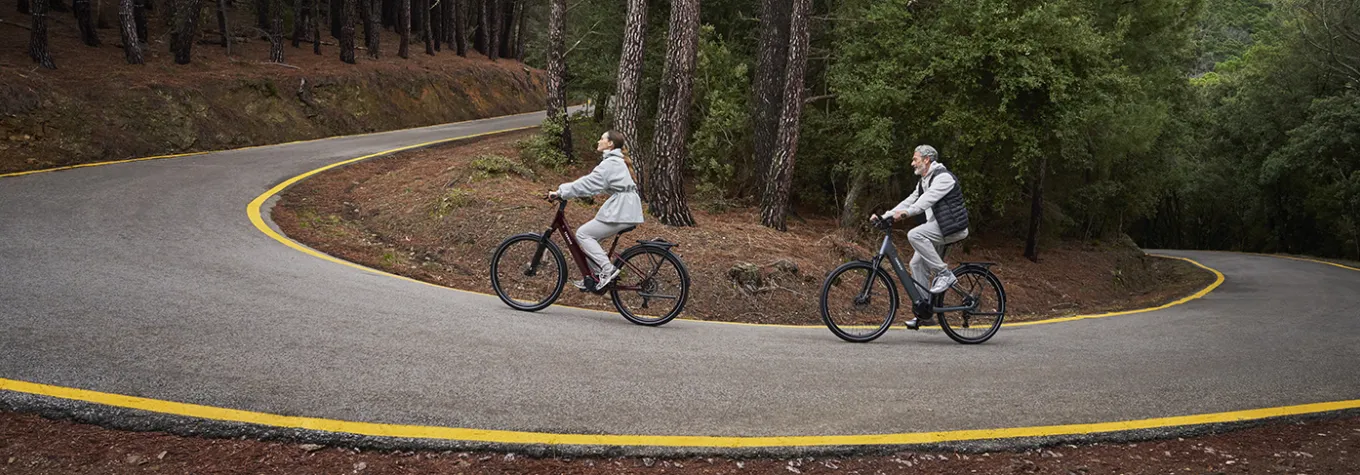
Electric Bikes For Motorhomes
Inspiration
It’s fair to say electric bikes, or e-bikes, have become one of the most must-have accessories in motorhomes in recent years.
They bridge the gap between using pedal power and travelling around with a car on the back. You may want to stay active, but need help with hills and longer distances, or you may just need this as an option to exploring more around your campsite of choice.
Whatever the reason, the electric bike is a great accessory to pack on board. However, before you rush out and buy, there are a few things to check and the odd measurement or two to take and consider.

Rachel Scholes Content Editor: Motorhomes
Rachel Scholes Content Editor: Motorhomes
Browse Motorhomes for Sale
If you're in the market for a motorhome, you need to explore the huge range of motorhomes listed here on Out & About Live! Use the advanced search to filter by budget, berths, manufacturer and much more, then save your favourites to your profile.
Motorhomes and Electric Bikes: What You Need to Know
First of all, the basics: what is an e-bike?
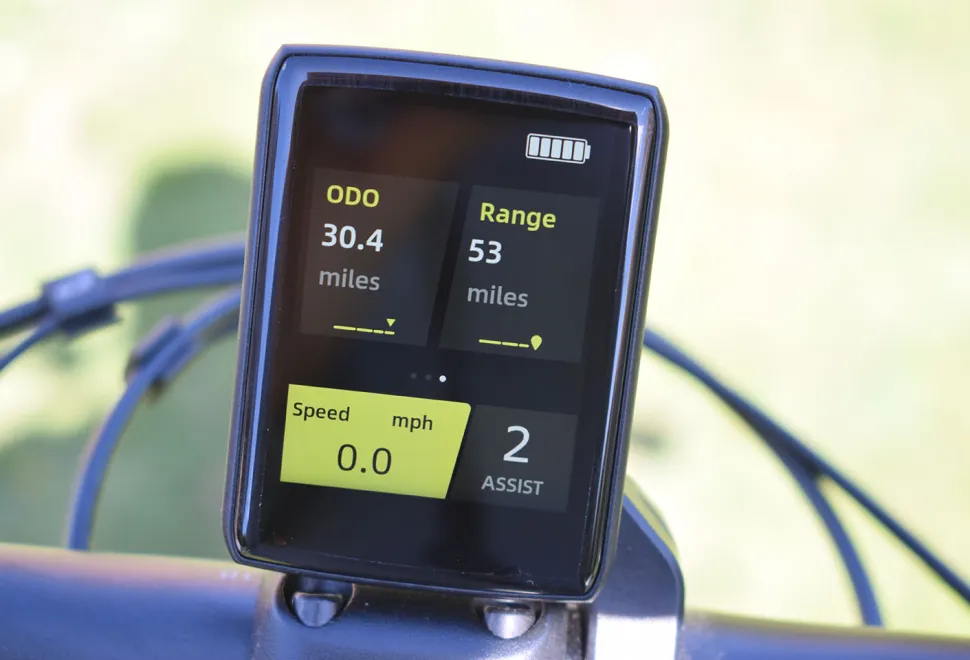
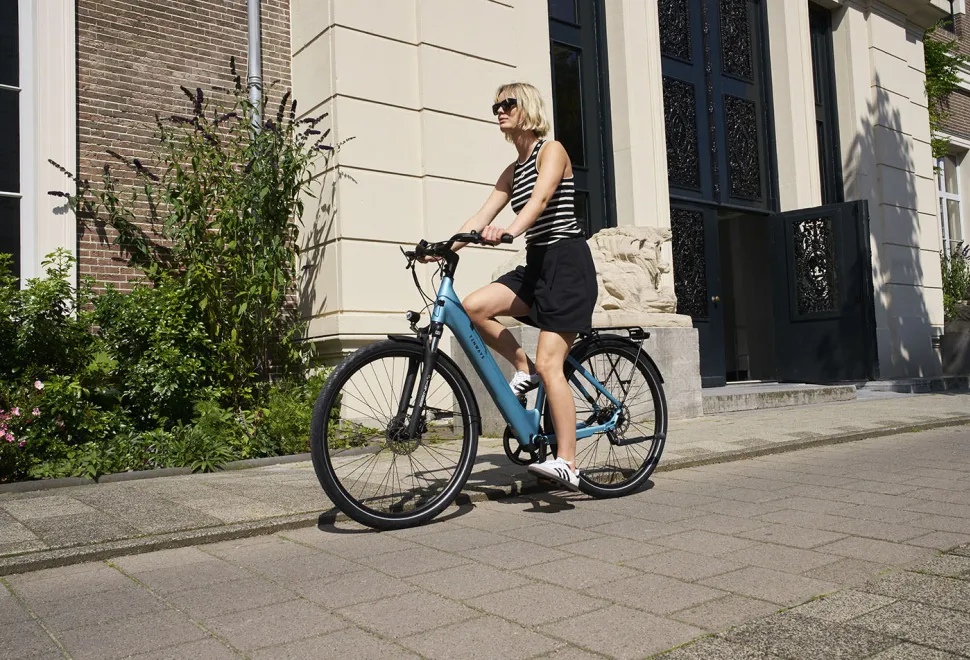
Well, an electric bike – or e-bike for short – looks like a regular bicycle but packs a battery embedded into the frame. You can choose to turn the power on or off and, when turned on, it gives you an extra boost, with assistance available up to the legal limit of 15.5mph.
The important point there, though, is that you do need to pedal – these are not motorbikes and you will still be getting active! For some extra help getting up hills and to make cycling more leisurely, an e-bike is an increasingly popular option.
Can a Motorhome Carry Electric Bikes?
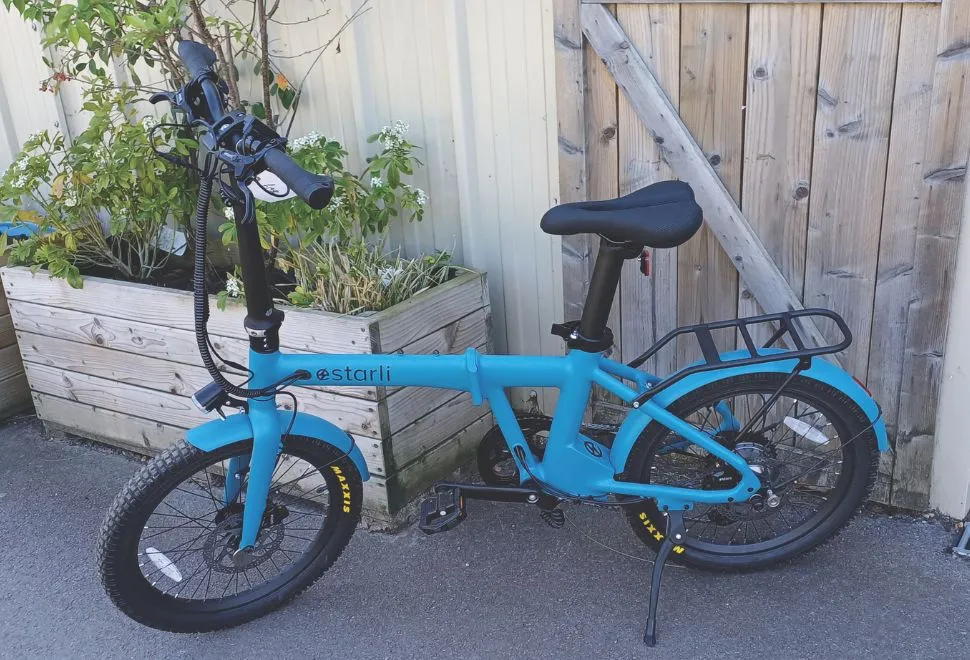
The answer is yes, but it all depends on the motorhome you have and this might define the bike you buy, too. If you have a large storage space under the bed, not only should you measure the height of the space available, you need to be aware of the door size, too.
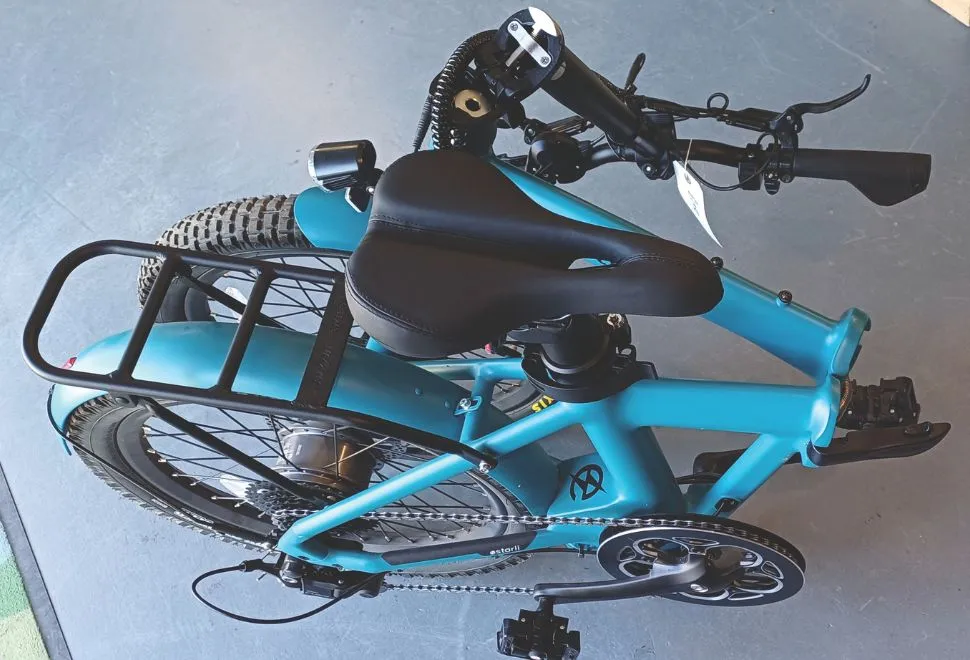
You may be able to physically store the bike in the space, but if the door requires you to remove wheels, etc, to store, then that’s not particularly useful. A folding or more compact design might be the best option. Also, make sure you have lashing-down points to make sure the bikes are secure.
If the bikes are joining a space filled to the brim with other accessories, it’s worth weighing everything to make sure the e-bikes (and the batteries) don’t take you over your limit for this storage space.
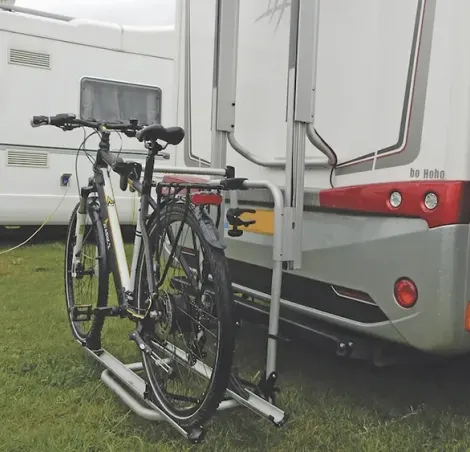
For models without such storage areas, a bike rack is the only option – there are a couple of options here, too, but the key for such accessories is the weight of the bike – electric bikes are generally heavier than normal, even if the battery is removed – those motors and a more substantial frame and fittings are often the cause.
A pedal bike will weigh around 15kg and an e-bike around 25kg. Obviously, these weights can vary widely due to the bike construction and the equipment fitted.
If the rack is mounted on a towbar or chassis extension, check that the weight of the rack and the bikes don’t exceed stated maximums.
If the bikes are on a door-mounted or rear wall rack, make sure you are happy to lift the extra weight of those bikes onto the rack, which is often set higher, although there are racks that lower for ease of acess. All racks also have weight limits so check that, too.
And always check the mounting point weight limit – a dealer should be able to find this out for you. While rear bike racks can be rated for more, manufacturer fitted mounting points may only be able to take 50kg – and that needs to include the rack as well as the bikes.
Looking to Get More from Your Motorhome?
Whether you want to travel further, discover new destinations or make every stop more enjoyable, MMM: The Motorhomers' Magazine is packed with expert advice, clever ideas and inspiring stories to help you make the most of life on the road.
From e-bikes and essential accessories to touring tips and practical know-how, discover even more in MMM for just £1.
Can You Charge an Electric Bike from a Motorhome?
Yes, you can, but we’d recommend never leaving the battery unattended while charging.
Good-quality lithium-ion batteries are perfectly safe if you follow a few simple steps but, when things go wrong, particularly during charging, they can go spectacularly wrong.
Statistically, e-bike battery fires are still very rare events – two specialist e-bike insurers have stated that e-bike fires are no more likely than car fires.
Note e-bike lithium-ion batteries are different from the LiFePO4 lithium iron habitation batteries used in motorhomes.
London Fire Brigade recommends the following good practice to reduce the risks of fire when charging lithium batteries:
- Don't block your exit with charging batteries
- Never leave your batteries to charge when you are out or are sleeping
- Make sure your battery and charger meet UK safety standards
- Use the correct charger for your battery and make sure to buy it from a reputable seller
- Let your battery cool before charging it
- Batteries should always be charged on hard flat surfaces where heat can dissipate
- Batteries can also pose a risk if they have been damaged, so try to ensure they are not getting knocked around while in use or while being carried. Do not continue to use a damaged battery
- Batteries should also never be exposed to extremes of temperature
- Unplug your charger once the battery has charged
- Fit smoke alarms in the area where you charge your batteries
- Look out for signs of heat, bulging, smells or noise, smoke or a lack of performance; all can indicate a failing battery that could be a fire hazard.
It’s also worth noting that battery fires are often associated with the bargain basement end of the market and very cheap electric scooters and conversion kits sold virtually anonymously online.
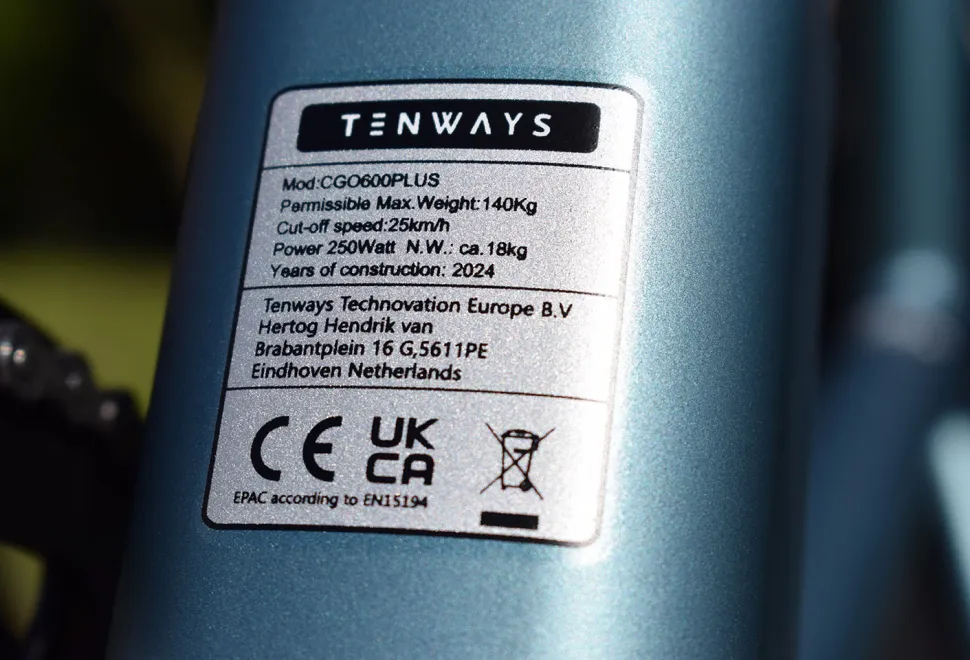
In addition you should also ensure your e-bike is certified to EN 15194 standards and legally it must have a sticker or plate (usually on the frame) to that effect.
How to
Maximise E-Bike Battery Range and Charge
If they fail, e-bike batteries can be an expensive option to replace, and some are built in to the e-bike frame, so finding a direct replacement could be tricky. So, there are four easy ways you can maximise the life of your e-bike battery.
- Charge properly – try to avoid leaving batteries fully empty or fully charged. Don’t top up unnecessarily. Good-quality chargers should monitor the battery levels and not overcharge – for this reason we would always buy the right chargers from the original manufacturer if you need a replacement
- Discharge moderately – taking the battery down to empty only to fully charge it back up to 100% each and every time will shorten the battery life
- The right temperature – batteries do not cope with extreme heat, so try to keep them stored in moderate temperatures – and we would recommend removing them from the e-bike when travelling if you use a rack
- Proper storage – make sure they are securely fastened down or can’t roll about in transit – knocks can affect the cells inside
An extra point to note is that e-bike motor drive systems vary dramatically in efficiency. High-quality e-bikes use super-efficient electrical technology including high-quality, efficient motors, torque sensors and high-quality battery cells to ensure maximum range from your battery, whatever its capacity.
Do I Need to Upgrade My 12V System?
-
Do you mainly use campsites and plug into the hook-up?
Charging your e-bike batteries will not pose any problems as you will be able to use the mains charger as at home.
A mains battery charger controls the charge into the battery, to improve a battery’s performance. If you spend a lot of time wild camping, consider battery-to-battery chargers. If you are electrically minded, you may be able to fit this device yourself.
If your motorhome has an ‘intelligent alternator’ that converts braking energy into electrical energy to fast charge the starter battery then your motorhome may have a B2B unit already installed.
For the latest advice on motorhome electrics and more details on all the topics below, check out our electrics article.
-
Do you like to wild camp or use smaller sites without mains or facilities?
Then you’ll need to give significant thought to power.
An inverter will be needed at the least, along with high-capacity batteries, solar and B2B chargers. As one motorhomer found out, retrofitting such a system to a motorhome or campervan can be tricky, not impossible, but the set-up will vary from one model to another as electrical systems are very complicated these days.
A mains battery charger controls the charge into the battery, to improve a battery’s performance. If you spend a lot of time wild camping, consider battery-to-battery chargers. If you are electrically minded, you may be able to fit this device yourself.
If your motorhome has an ‘intelligent alternator’ that converts braking energy into electrical energy to fast charge the starter battery then your motorhome may have a B2B unit already installed.
Take a look at all the points below...
-
Will an inverter help?
If you want to charge your e-bike without being hooked up, you’ll need an inverter. These inverters generate a ‘mains’ AC voltage and the more expensive pure sine wave variants also match the shape of the mains voltage. The cheaper quasi-sine wave units may not work with all equipment, so check before buying.
Typically, inverters are used for powering phone and laptop chargers, where a 150W unit should be sufficient. If you’re charging electric bikes then look at a 600W inverter. But using an inverter takes a lot of energy from a battery, so you’ll likely need at least two batteries for the habitation area – remember if you’re off-grid then the 12V for the fridge (even if on gas it still needs a tiny amount to run and compressor fridges purely run on 12V), lights, charging device, etc, will also need to be factored into your calculations.
-
Do I need a second battery?
Using an inverter takes a lot of energy from a battery, so you’ll likely need at least two batteries for the habitation area – remember if you’re off-grid then the 12V for the fridge (even if on gas it still needs a tiny amount to run and compressor fridges purely run on 12V), lights, charging device, etc, will also need to be factored into your calculations.
-
Can solar panels help?
Solar panels are ideal if you have the roof space and the budget (decent panels are not cheap but prices have come down a lot in recent years and prices continue to fall as panels become more efficient). They are a great way of ensuring your batteries are always charged to optimum.
Fit the biggest you can. Make sure you have the appropriate MPPT (maximum power point tracking) solar regulator to maximise the panel’s output and match the battery technology and, if required, a regulator that can charge both leisure and starter batteries.
-
Is a lithium habitation battery the answer?
Lithium batteries are a popular upgrade. These are lighter, charge faster, offer higher efficiency and last far longer – costs are higher, but prices are quickly becoming more affordable. Don’t get confused with the lithium-ion batteries in devices such as phones and tablets, as well as electric bikes, as the ones powering motorhomes use iron, and are called LiFePO4 or lithium ferrous.
Other advantages provided by lithium ferrous batteries are the ability to discharge regularly to 90% without seriously compromising the battery life. If you factor in the general advice not to discharge a lead acid battery below 50%, then a 50Ah lithium ferrous battery can provide the same amount of usable energy as a nominal 100Ah lead acid battery.
Parts of an Electric Bike
If you're thinking about buying an e-bike for using with a motorhome, you're far from alone – they're becoming very popular and more versions are popping up all the time.
These are the things you need to watch out for to get the best deal!
E-Bike Motors
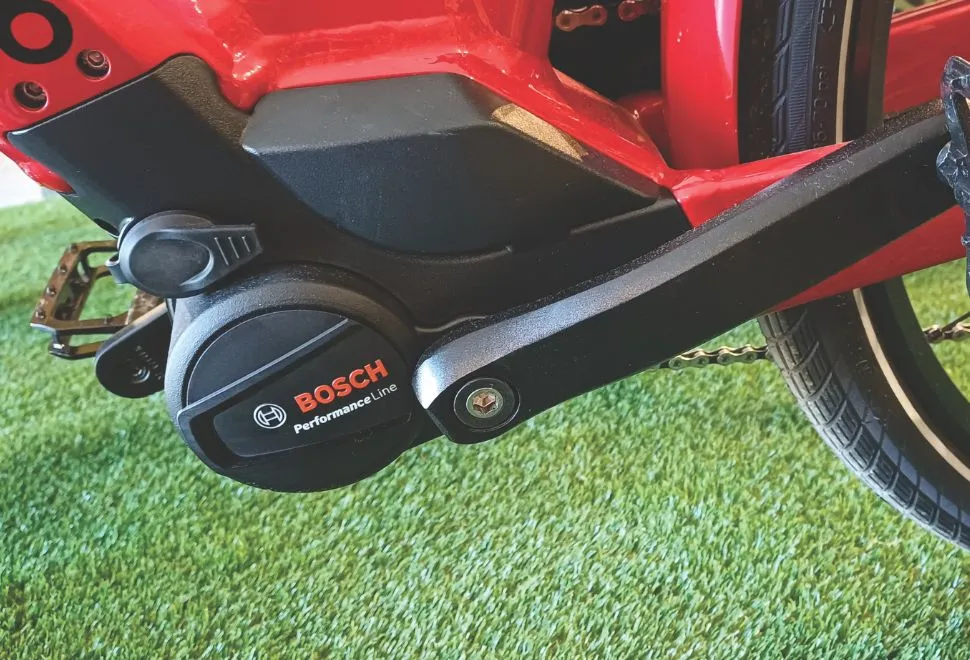
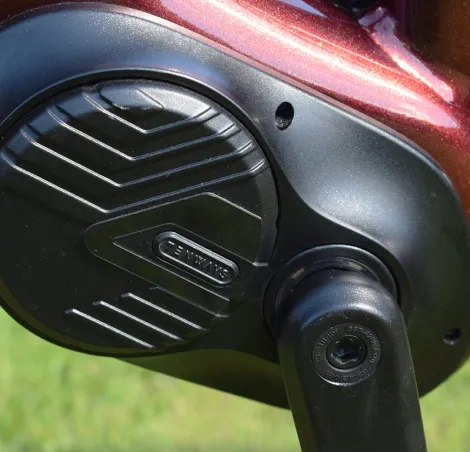
There are two main types of motor related to their location.
Crank motors tend to offer a higher torque than hub motors and the low-down position provides a low centre of gravity for the bike. Hub motors are usually located on the rear wheel because most of the rider’s weight is here, thus giving better traction than with a hub motor fitted to the front wheel.
Bikes with motors giving high levels of torque, say, over 65Nm, may feel powerful, but some riders could be more comfortable with a lower torque for a smoother ride. Whilst hub motors tend to have less torque, they can have a similar power output and can be lighter and more affordable than crank motors.
E-bike Batteries
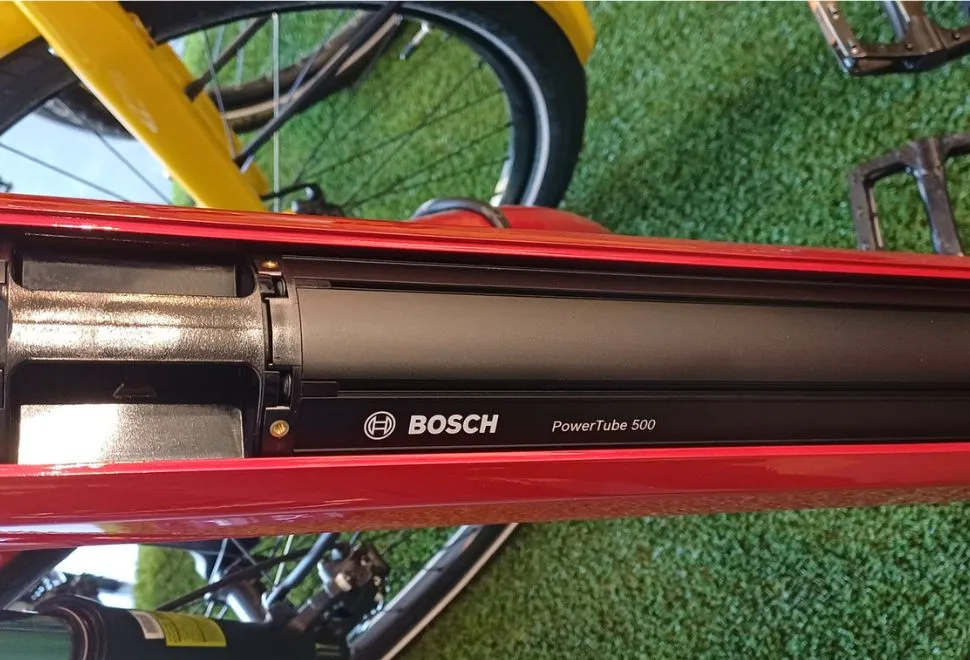
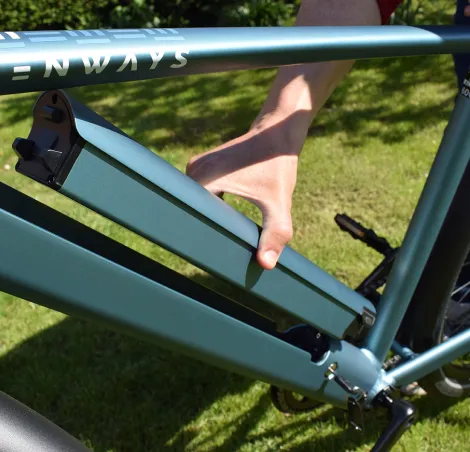
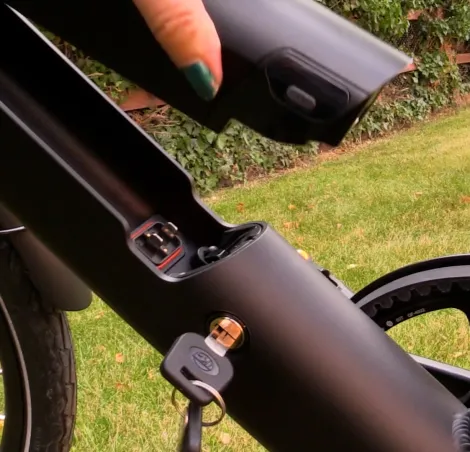
Batteries come in internal and external forms. Internal (or integrated) batteries will be located inside the bike frame and may be removable or not for charging. It’s often more convenient to charge a battery off the bike and it can be helpful to be able to remove the battery when travelling if you’re close to the bike carrier weight limit.
Battery capacity indicates how much power a battery can hold measured in Watt hours (Wh). The higher the Wh figure, the longer the battery will run before exhaustion and hence the greater the range.
The weight of an e-bike battery is a substantial part of the weight increase over a similar pedal bike, hence a lighter bike may have a 250Wh-rated battery, and a heavier bike with greater range has 500Wh.
Brakes, Gears and Suspension
E-bike brakes
Because e-bikes are heavier than pedal cycles and capable of faster speeds, they need powerful brakes, hence many are fitted with hydraulic disc brakes, which are very effective. They do have the disadvantage of not being as easy to maintain than conventional cable brakes.
E-bike gears
Most bikes will offer derailleur gears, but hub gears are also available. As with anything, you get what you pay for. So, even with the derailleur brand leader, Shimano, there are different levels of gear systems to choose from.
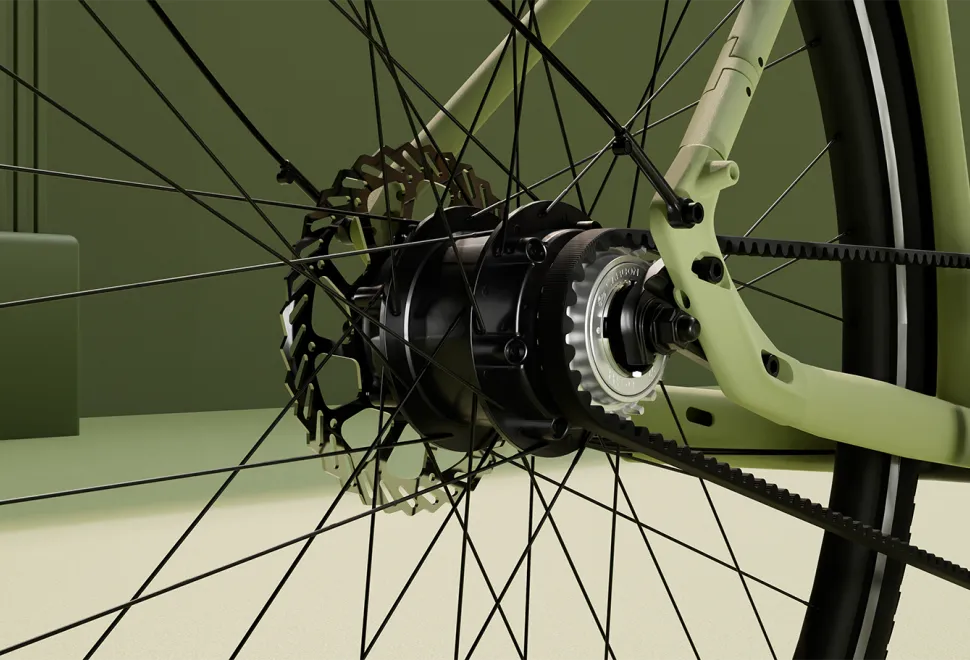
Belt drives are a very low maintenance option and several models on the market use the high-quality Gates Carbon system.
Hub or internal gear hub systems have some advantages, such as less maintenance and being less vulnerable to physical damage. They are also capable of permitting changing of gear when stationary, which is useful for those riders who tend to stop at junctions in too high a gear.
E-bike suspension
Front suspension forks are now largely the norm for many bikes, but they do mean more weight. So, unless you regularly ride on rough tracks, this is something you can do without if weight is critical. Rear suspension is found less frequently and sensitivity to uneven tracks can be overcome to some extent by a suspension seat post.
E-Bike Tyres and Wheels
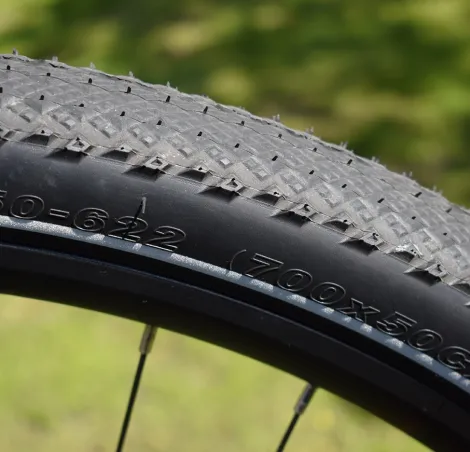
Tyres come in a variety of tread patterns designed for specific terrain and wheel sizes. Tyres made for city roads tend to be smoother and narrower than off-road tyres to provide for less rolling resistance, whereas tyres intended for trails are usually wider and have a more prominent tread pattern for better traction.
For many motorhomers, a hybrid bike will be ideal – a bike suited to roads but also gravel tracks, but not necessarily having the sturdiness (or weight) of a mountain bike.
If you’re going to ride off-road, even on the likes of disused railway tracks, you will be better off going for the larger size of wheels, which are more able to cope with moderate potholes and unevenness.
However, if a compact or fold-up bike is your priority then your choice is likely to be limited to a small-wheeled bike.
FAQs
-
Can a motorhome carry electric bikes?
Yes, most motorhomes can carry electric bikes, provided the bike rack and rear axle are rated to handle their extra weight.
-
Can you put electric bikes on a motorhome?
Yes, electric bikes can usually be carried on a motorhome, but you should always check the weight limit of your bike rack and the motorhome’s rear axle capacity first.
-
Are electric bikes legal?
Yes, In the UK, e-bikes are legal up to 15.5mph, though the bike must have both working pedals and no more than a 250W motor.
-
Do you need a licence for an electric bike?
No, you do not need a licence to ride a legal electric bike in the UK.
Latest motorhome articles
Explore our magazines
Enjoy expert tech help, travel and campsite inspiration, buying advice, reviews, and more with our best-selling magazines and guides.

Buying Your Perfect Motorhome
Buying Your Perfect Motorhome is the ultimate guide to turn your motorhome adventure into reality. From models starting at £20k to luxury options, layouts, finance, insurance, and a dealer directory, it has everything you need to find your dream motorhome.

MMM magazine
MMM is the UK’s best-selling motorhome magazine and your key to unforgettable trips, both in the UK and overseas. Packed with expert reviews, advice and maintenance tips to help you make the best choices and keep your motorhome roadworthy.


