
Buying An A-Class Motorhome: What You Need To Know
Are you dreaming of upgrading your touring adventures to the pinnacle of luxury?
An A-class motorhome is often seen as the type of vehicle you aspire to – something you will perhaps purchase as your third or fourth motorhome as you move upmarket, having gained experience with conventional coachbuilts.
However, navigating the market for used A-class motorhomes can be daunting.
From understanding unique European layouts to avoiding costly mechanical and payload traps, this comprehensive guide will help you find affordable motorhomes that deliver luxury without the headache.
Browse motorhomes for sale
If you're in the market for a motorhome, you need to explore the huge range of motorhomes listed here on Out & About Live! Use the advanced search to filter by budget, berths, manufacturer and much more, then save your favourites to your profile.
What are A-class motorhomes?
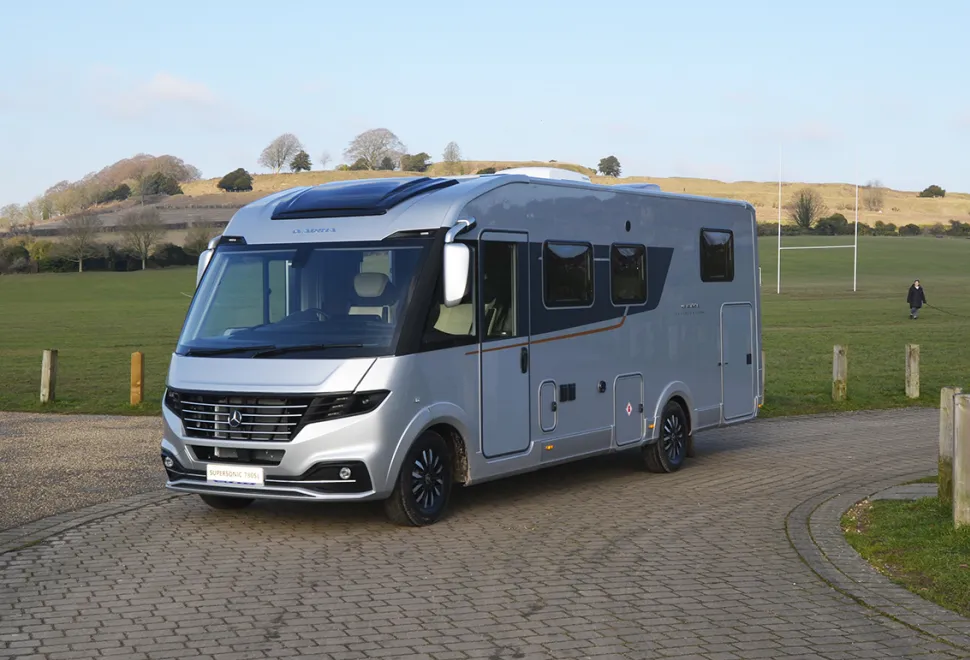
First, we should explain what an A-class actually is. Unlike standard coachbuilts, these motorhomes start with a ‘chassis-cowl’ – just a bare frame with its engine exposed, seat bases, and dashboard out in the open air. This is normally supplied by Fiat (Ducato), Mercedes-Benz (Sprinter), or Iveco (Daily) for the largest models.
Because there is no external bodywork from the base vehicle, all the exterior bodywork is manufactured by the motorhome company. This means an A-class looks more like it was designed from the ground up to have a leisure role, rather than being an adaptation of a light commercial vehicle. The body will be the same width all along the sides, not wider behind the cab as with a low-profile or overcab coachbuilt.
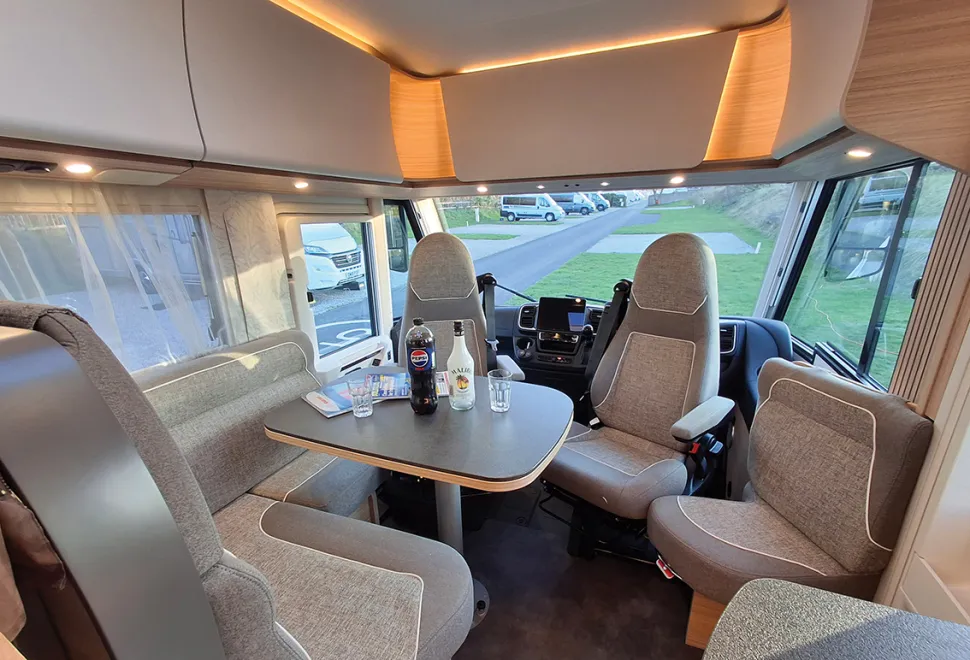
Inside, the cab area is wider and feels like an integral part of the living space, allowing the front seats to swivel much more easily.
General layouts, however, are similar to the rest of the motorhome market. Layout is the key decision before choosing an A-class, so check out our Motorhome Layouts advice first if you haven’t narrowed this down.
Why buy an A-class motorhome?
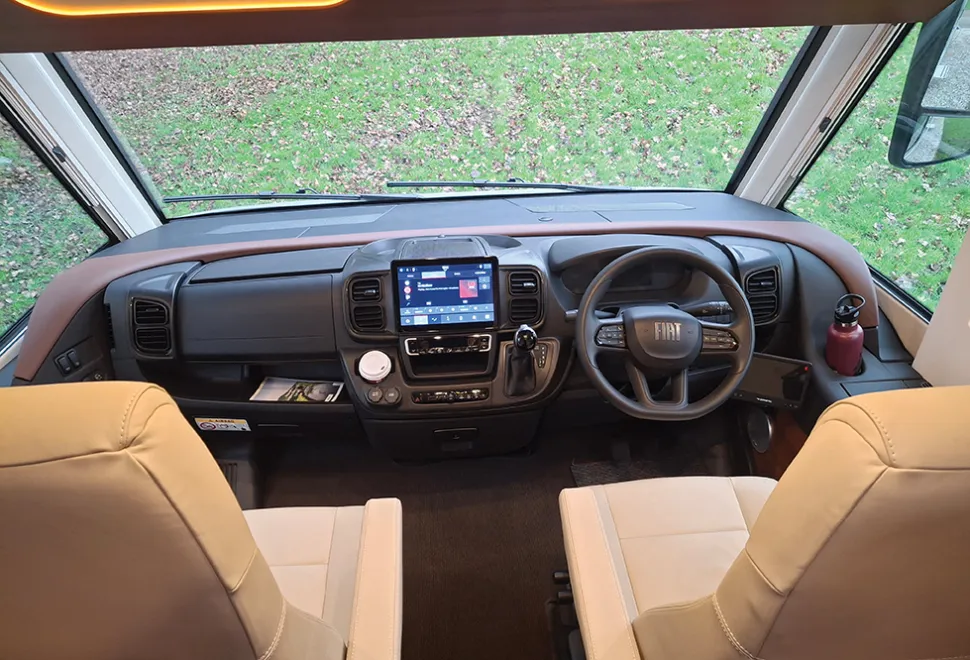
Epic views and easy drives: Buyers may find the idea of driving an A-class daunting but, once you’ve got used to one, the fact that the width is the same all the way along the flanks can actually make life easier. And, if you’re travelling through stunning scenery, the huge windscreen will make for epic views out.
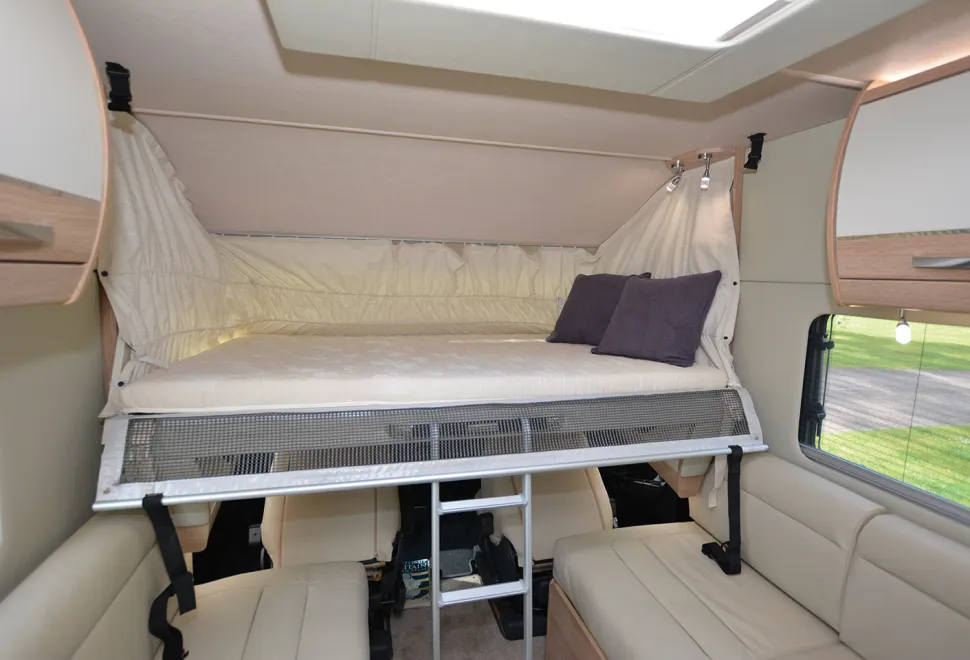
Drop-down beds: Above the cab, there’s typically a drop-down bed that lowers over the cab seats. This does not interrupt the rest of the lounge at night, which can be a big plus over low-profiles that have a drop-down bed – the bed often means the lounge seats are unusable.
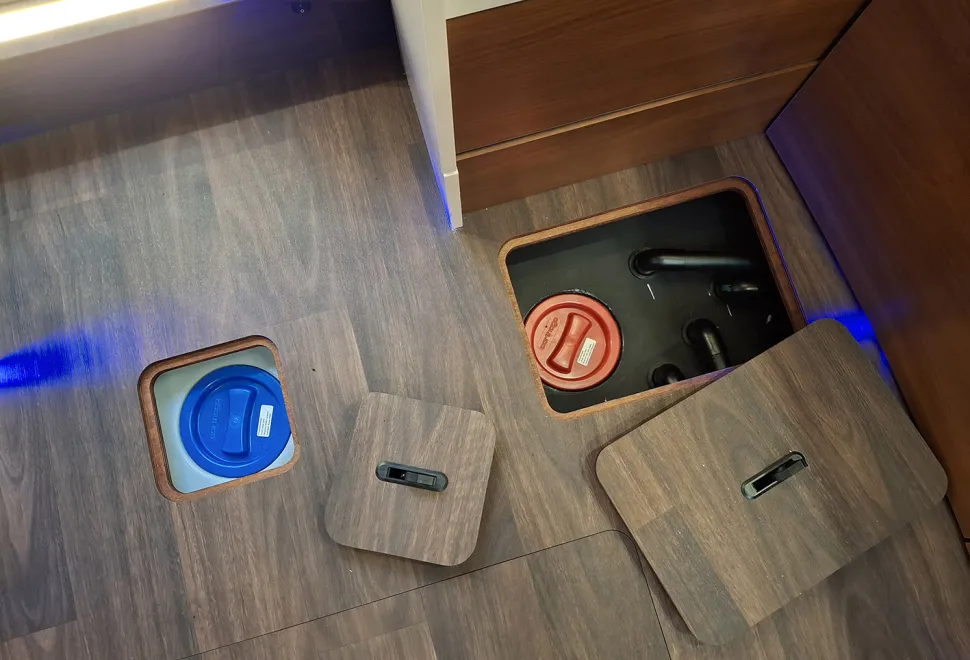
Four-season touring: Most bigger and pricier models feature a double floor. This provides superior winterisation and useful basement storage. If you are investing in an A-class, you are likely planning long trips and expecting to tour in all seasons. Some more budget models will offer a form of this that just contains the plumbing and water tanks – but double-check all pipes are within the inner cavity.
£18,999 to £169,995
Hymer
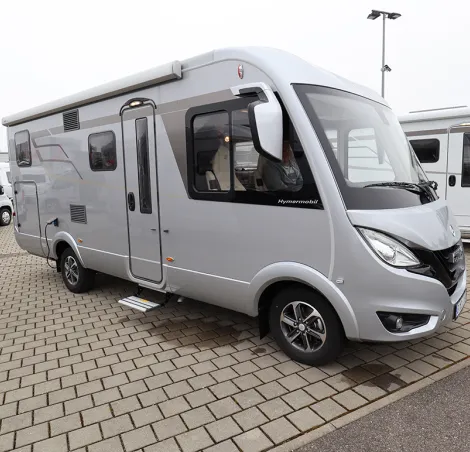
Hymer pretty much invented the European A-class – its first fully integrated motorhome appeared in 1972.
This means there is sure to be a model for all budgets from the very early classics to more modern day used A-class Hymer motorhomes.
£56,995 TO £189,950
Carthago
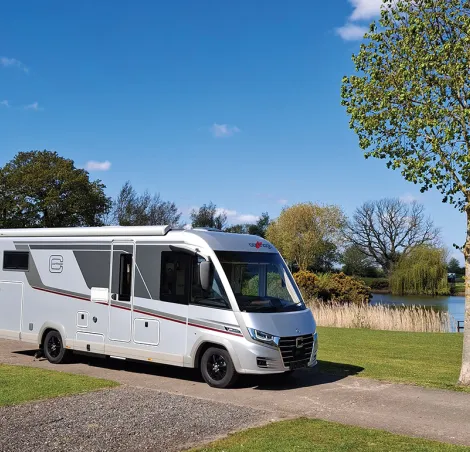
Another big player in A-class motorhomes, there is sure to be plenty of choice available for used Carthagos. This company highlights it’s shorter downward sloping dashboard that improves forward road visibility.
The Chic C-line is one of its longest running ranges, with E-line, S-plus and Liner for two (rear lounge) models also worth a look.
Check out the sister brand Malibu, too, although this has only been making A-classes for around 10 years, so secondhand options may be rarer.
£24,995 TO £179,995
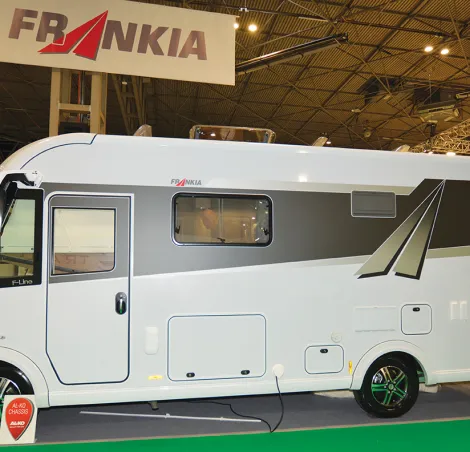
Frankia
Another German brand, it specialises in larger models (Mercedes RWD) and rear lounges.
Look for drop-down beds in the cab that allow you to sleep lengthways – both occupants have easy access in and out of the bed without having to climb over one or the other.
It's been in the UK for a while, so stocks of used Frankia A-classes should be out there.
£16,950 TO £67,995
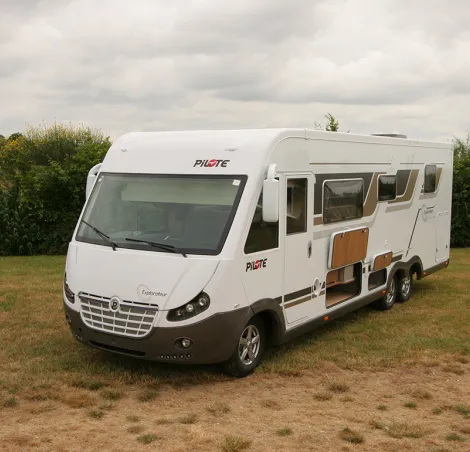
Pilote
Another one to look out for if you want a used A-class motorhome for under £20k as this French company’s A-class models have been sold in the UK since the 1980s.
There are more modern used Pilote A-class motorhomes, too.
Other key brands to look out for
There are other key brands. Look out for the:
Adria Sonic (Fiat), Supersonic (Mercedes), Vision
Auto-Sleeper: Mirage/Luxor (made in Europe with small numbers in the mid-2000s)
Auto-Trail: Grande Frontier (UK-made A-class still in production), but limited numbers available
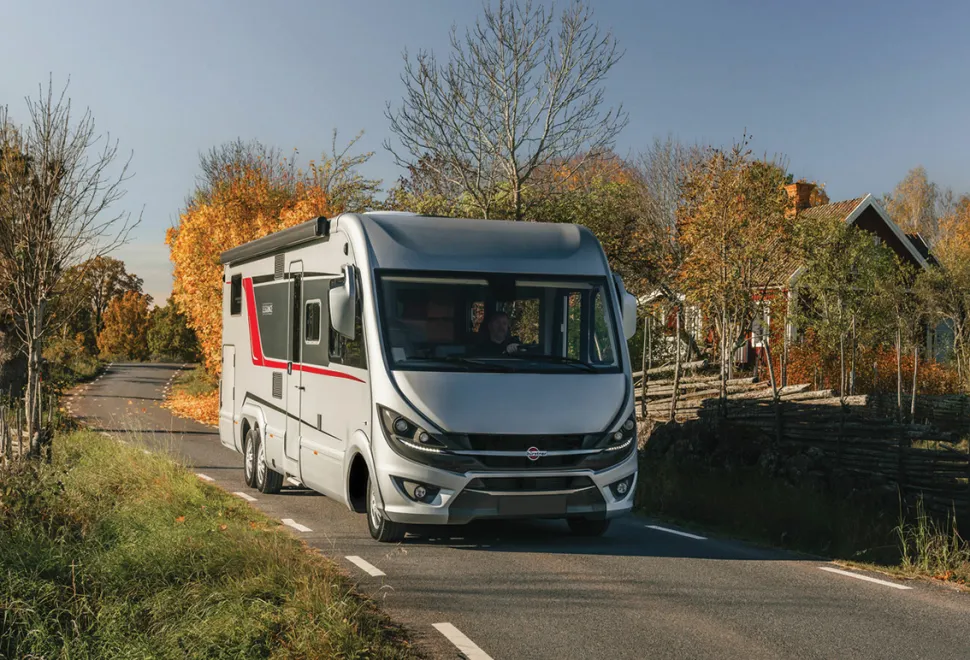
Bürstner: Lyseo I and Elegance, Aviano, Viseo, Grand Panorama. Browse the Bürstner A-class ranges
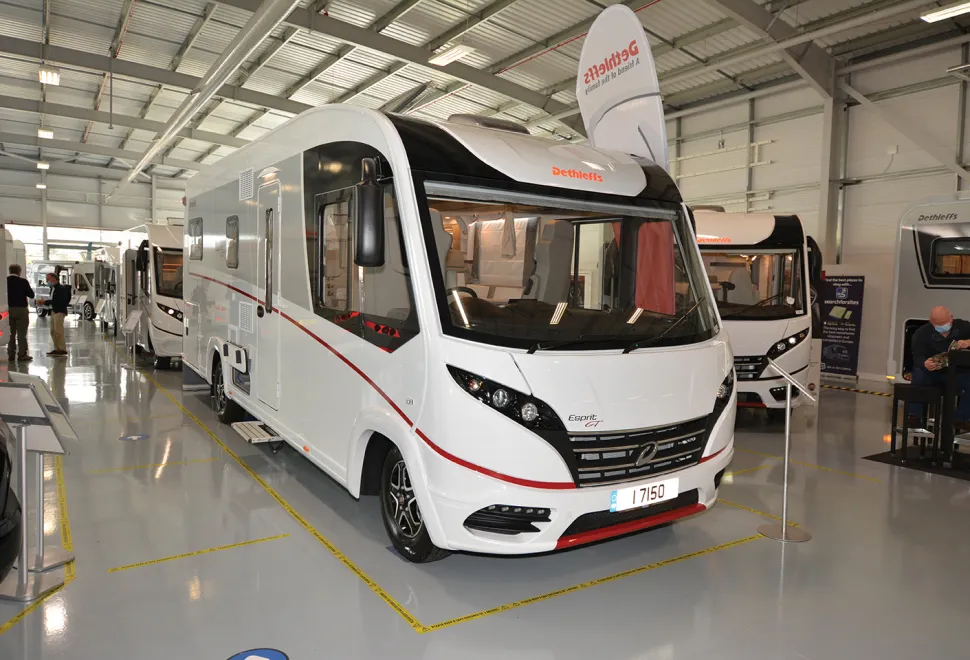
Dethleffs: Advantage I, Globebus (slimline), Magic Edition I, Trend, Esprit I and Globetrotter XL I. Search used Dethleffs motorhomes for sale
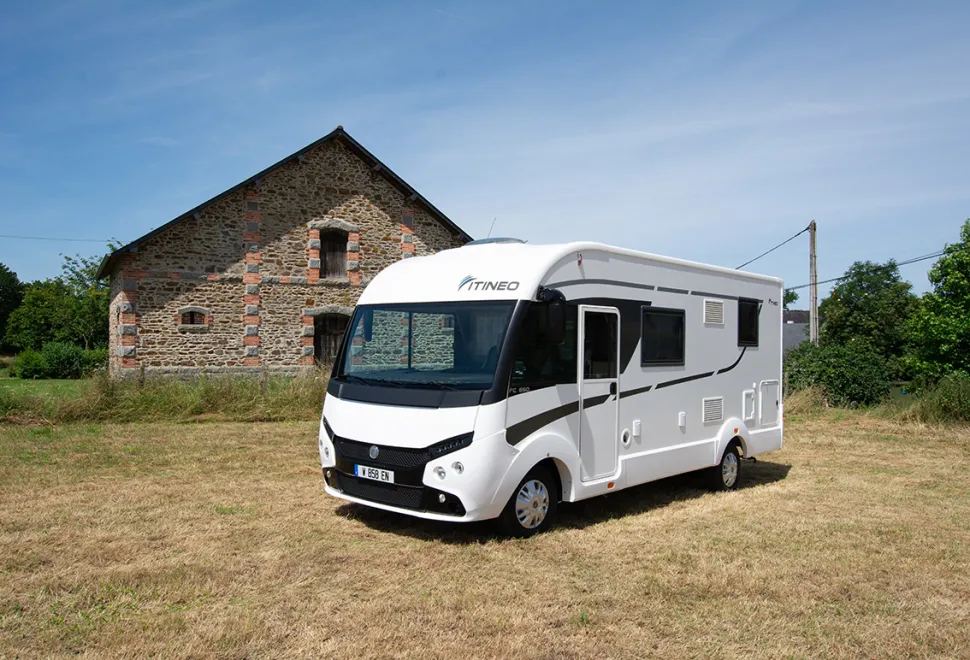
Itineo: Entry-level motorhomes with family friendly layouts
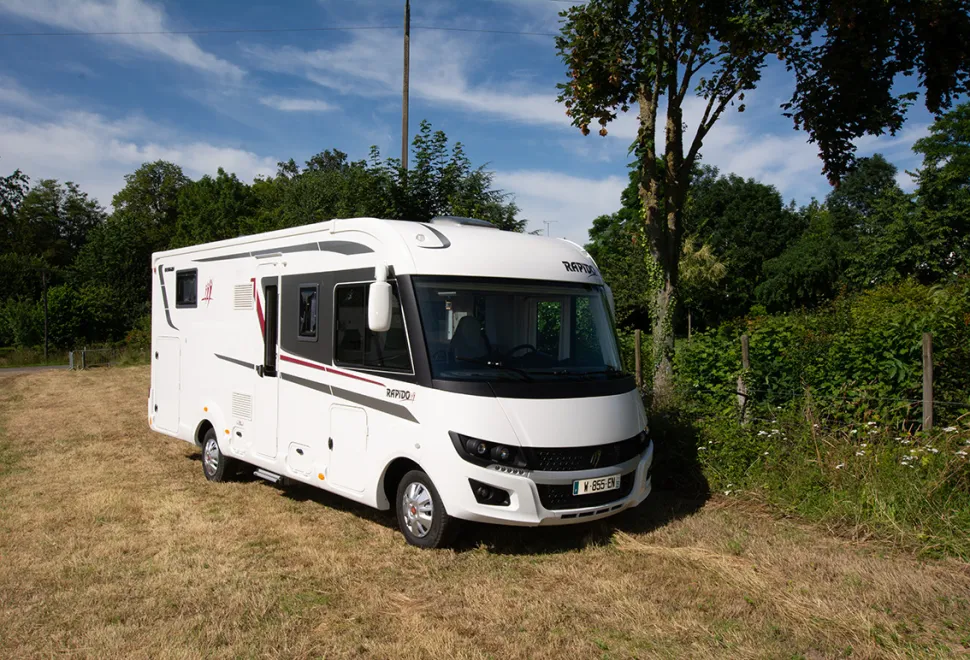
Rapido: C Series (slimline), 8F Series, 80dF Series, 9M Series, 90dF Distinction. This line-up, past and present, means there is a lot of choice of used Rapido A-class motorhomes
Crucial tips on buying a used A-class motorhome
Because so much extra design and engineering is involved in building an A-class, look closely at the details before buying.
Beware the UK handing trap
Most European A-class motorhomes are built for left-hand drive (LHD) continental markets. When imported to the UK as right-hand drive (RHD), they typically keep their habitation doors on the continental side. This means the main habitation door opens directly into the road/traffic rather than the pavement.
If you want a true ‘UK-handed’ layout, look specifically at brands like Mobilvetta (K-Yacht range) or Roller Team (Pegaso range). Generally, though, there is normally a cab door that will open onto the pavement side.
Windscreen wipers
Always inspect the wiper configuration. Many RHD imports still have their wiper sweep configured for LHD, leaving a massive, unswept blind spot directly in the driver's line of sight on the right side during wet weather. Some models will have a three-wiper set-up.
Windscreen replacement
Ask about the cost of a replacement windscreen and check if your insurance will cover the amount. Most policies put a limit on this. On obsolete secondhand A-classes, or models no longer imported, check how easy a replacement screen would be to source. It’s even more vital on these larger, more expensive screens to stay on top of chip repairs before they become a much bigger problem.
The option pack payload trap
German A-class motorhomes are famous for long, tempting options lists. Adding heavy accessories like hydraulic levelling jacks, large awnings, multiple leisure batteries or satellite dishes can easily add £20,000+ to the price and seriously erode your payload.
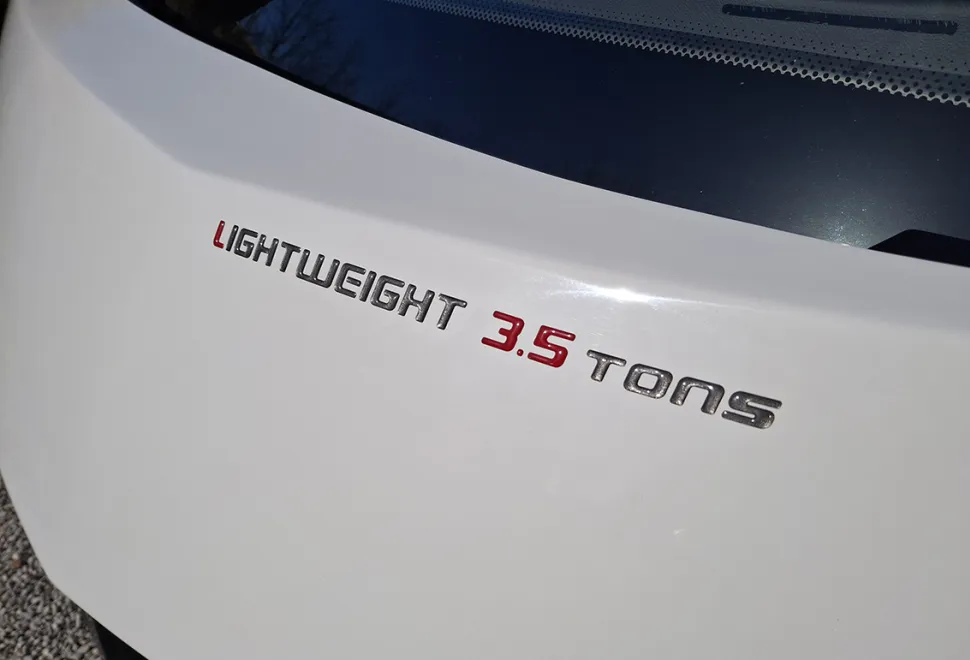
An A-class built on a standard 3,500kg chassis (which can be driven on a standard UK car licence) often has a very marginal payload to begin with. Ticking too many option boxes can make the vehicle dangerously and illegally overweight before you even pack your personal belongings. Consider upgrading to a heavier chassis (eg 3,650kg to 4,500kg) if you hold the appropriate C1 licence category.
If you are looking for a used A-class motorhome, then ask for a recent weighbridge certificate; aftermarket options could have been added impacting payload available on the vehicle you see.
Test drive for engine noise and rattles
Because the motorhome manufacturer builds the entire front cab bodywork themselves (rather than using the original van's steel cab), the quality of soundproofing and dashboard construction varies wildly. Some dashboards are prone to annoying rattles, and engine noise can be poorly suppressed. Always take a thorough test drive at cruising speeds to evaluate this.
Drop-down bed deletion
If you are a couple who never travels with guests, the standard drop-down cab bed might not be necessary. Some manufacturers allow buyers to delete the drop-down bed entirely, replacing it with extra storage cupboards. This significantly increases headroom in the cab and front lounge, making the interior feel even more spacious. That does mean that not all will be fitted with the drop-down bed – check berth figures and photos of the cab area before making a special trip to view it if you need a four-berth.
FAQ
-
Where can I buy a cheap A-class motorhome?
Finding secondhand A-class motorhomes for sale at a lower price point requires looking at older, well-maintained European imports. While new A-classes carry a £10k to £15k premium over low-profiles, older used models can often be found for a fraction of their original cost, making luxury touring highly affordable. Check reputable specialist dealers who understand top-end brands and can offer warranties.
-
What to look out for when buying a used A-class motorhome?
Key areas to inspect include the windscreen wiper sweep direction, the operation and squeaks of the drop-down bed mechanism, dashboard rattles and the habitation door placement. Most importantly, check the vehicle's actual payload capacity and weight certificate.
-
What are common A-class motorhome problems?
The most common issues include marginal payloads on standard 3,500kg chassis, left-hand drive wiper configurations on right-hand drive imports, high windscreen replacement costs and poor engine soundproofing on lower-end custom cabs.
-
What are the best brands of A-class motorhomes?
Hymer is the original pioneer and highly sought after. Carthago is outstanding for forward visibility and sloping dashboards, Frankia is the specialist for rear lounges and lengthways sleeping and Rapido offers excellent build quality. But this changes all the time and all motorhomers have different needs, so buy the one that fits your need best.
-
Is it worth buying a secondhand A-class motorhome?
Absolutely. Buying secondhand allows you to bypass the steep initial depreciation of a luxury vehicle. You can acquire a high-end, fully winterised A-class with premium features for the same price as – or less than – a basic new coachbuilt motorhome.
-
How much is A-class motorhome insurance?
Generally not that much more expensive than a conventional coachbuilt motorhome. Both are defined by security in place, driver experience, mileage and storage location, among many other things. The key difference for A-class motorhomes is the cost of replacement windscreens – check the glass claim limit on any policy.
-
Are A-class motorhomes safe?
Yes, A-class motorhomes are highly safe and stable vehicles, but they feature unique construction characteristics that buyers should understand:
- On-road stability: Many A-class motorhomes are built on a lowered chassis (such as Fiat's Camper chassis-cab or an Al-Ko alternative). This design provides a lower centre of gravity, which can pay significant dividends in on-road stability and handling
- Insulated bodywork: Unlike standard coachbuilts, the entire exterior bodywork is manufactured by the motorhome company. This allows for fully insulated sandwich-panel bodywork running right up to the front windscreen, offering superior thermal and sound insulation for four-season touring
- Visibility: While the massive windscreen offers epic panoramic views while driving, the distance between the driver's seat and the base of the windscreen is much larger than in a standard van. Buyers should sit in the driving seat before purchasing to evaluate front extremities and blind spots, prioritising models with short, downward-sloping dashboards to maximise forward road visibility
-
What licence do you need for A-class motorhomes?
The driving licence category you need depends entirely on the Maximum Authorised Mass (MAM), also known as the gross vehicle weight, of the motorhome:
- Up to 3,500kg (3.5 tonnes): You can drive these on a standard Category B car licence. This is highly convenient but be aware that larger A-classes on a 3,500kg chassis often have very limited payloads, especially when factory options or accessories are added
- Over 3,500kg up to 7,500kg (7.5 tonnes): You must hold a Category C1 entitlement on your licence. If you passed your UK car driving test before January 1, 1997, you likely have this category automatically. If you passed after this date, you must take an additional test to gain C1 entitlement
- Over 7,500kg: Rare, ultra-luxury models will need the Category C entitlement.
Latest motorhome articles

Explore our magazines
Enjoy expert tech help, travel and campsite inspiration, buying advice, reviews, and more with our best-selling magazines and guides.

Buying Your Perfect Motorhome
Buying Your Perfect Motorhome is the ultimate guide to turn your motorhome adventure into reality. From models starting at £20k to luxury options, layouts, finance, insurance, and a dealer directory, it has everything you need to find your dream motorhome.

MMM magazine
MMM is the UK’s best-selling motorhome magazine and your key to unforgettable trips, both in the UK and overseas. Packed with expert reviews, advice and maintenance tips to help you make the best choices and keep your motorhome roadworthy.


