

Motorhome Tyres And Wheels: A Complete Guide
Practical advice
Motorhome tyres have to support the weight of the vehicle at all speeds, control body roll in the corners, grip wet and dry Tarmac – as well as wet grass, mud and snow – help reduce the transmission of bumps through to the cab and bring the vehicle safely to a stop from any speed.
As if that wasn’t enough, they also have to do it even if they’re getting baked in summer and frozen in winter. Motorhome tyres really do have to contend with everything.
As tyres have such a critical role in the safety of your vehicle, it pays to choose wisely and know how to look after them to maximise their longevity.
Here we explain everything you need to know about choosing the correct tyre for your motorhome.

Rachel Scholes Content Editor: Motorhomes
Rachel Scholes Content Editor: Motorhomes
What’s different about motorhome tyres?
As long as you stick to the correct size, load and speed rating for your campervan or motorhome, you can safely use either van tyres or camper-specific tyres. The latter are a fairly recent development.
This technology includes a multi-layered carcass to support the weight, tread patterns to optimise grip on wet grass and sidewalls that are resistant to UV degradation and kerb damage. Some even have compounds that vary their properties across the width of the tread pattern, rather than using just a single material.
Van tyres tend to be cheaper and are more widely available, while camper-specific tyres can be harder to find as they’re made in batches.
Whichever tyre you prefer, the best motorhome tyre will be from a respected brand such as Michelin, Continental, Pirelli, etc. There are lots of cheap brands on the market and they may not be built to the same standards. If a tyre is half the price of a respected brand, it’s cheap for a reason!

Browse motorhomes for sale
If you're in the market for a motorhome, you need to explore the huge range of motorhomes listed here on Out & About Live! Use the advanced search to filter by budget, berths, manufacturer and much more, then save your favourites to your profile.
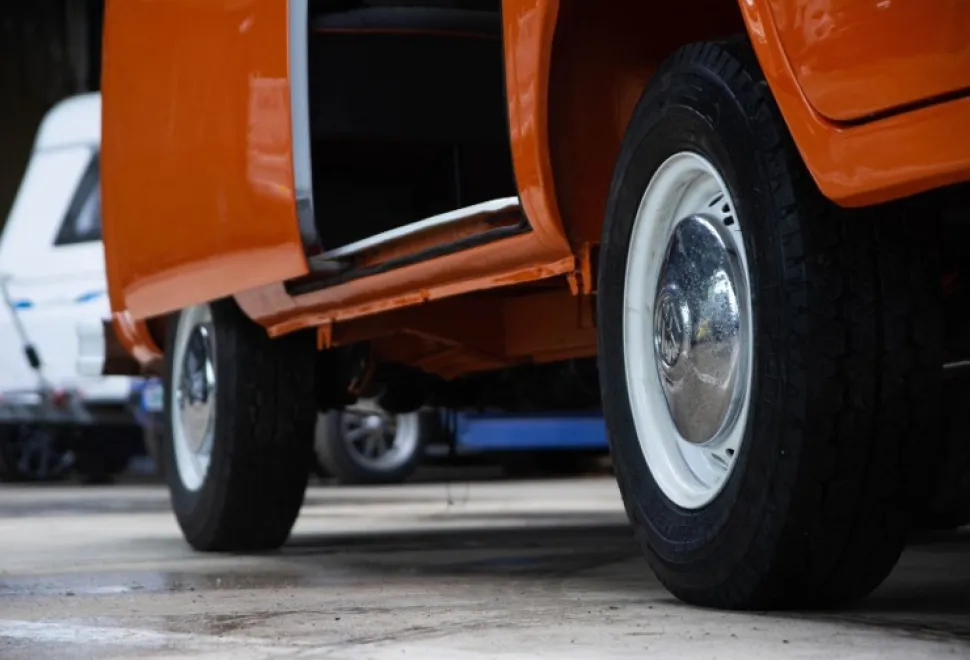
Motorhome tyre safety
Tyre sizes can look confusing at first, as they use a mix of metric and imperial measurements.
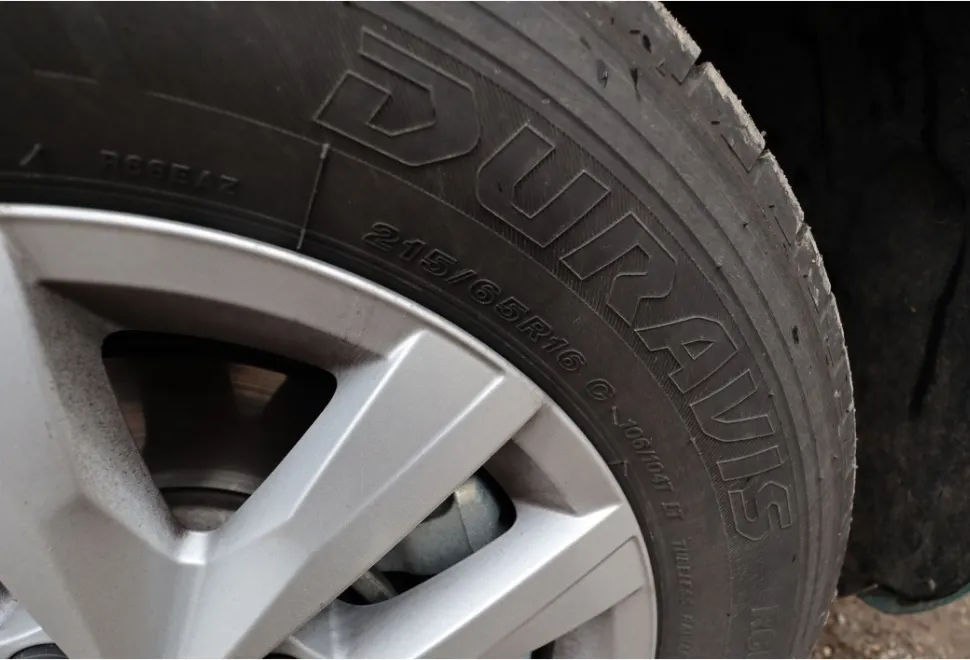
Take a typical Fiat Ducato motorhome tyre: 225/75R16. The 225 is the tyre's width in millimetres. The 16 is the wheel diameter in inches. The 75 is the aspect ratio, meaning the sidewall height is 75% of the tyre's width. The R stands for radial construction, the type used on virtually all modern motorhome tyres.
You'll also find a load and speed rating after the size, such as 116Q. The 116 is the load index, which means each tyre can carry up to 1,250kg when correctly inflated. The Q is the speed rating, indicating a maximum speed of 99mph.
In practice, the most important thing is to fit tyres that match the size, load rating and speed rating specified in your motorhome handbook. You can choose a tyre with a higher load rating – for example, 118 (1,320kg per tyre) instead of 116 – but higher-rated tyres are often built with stiffer sidewalls. This can affect ride comfort and may not work as well with your motorhome's suspension.
Looking after your tyres
Many motorhome owners believe tyres should be replaced after five or six years, but tyre life depends on a number of factors, including how the tyres are stored and used. Tyres kept out of direct sunlight and fitted to lighter vehicles will generally last longer than those exposed to UV light, carrying heavier loads or used regularly throughout the year.
Because most motorhomes cover relatively low annual mileages, tyre age is often a greater concern than tread wear. As tyres age, the rubber can deteriorate, leading to cracks, bulges or other signs of damage, even when there is plenty of tread remaining.
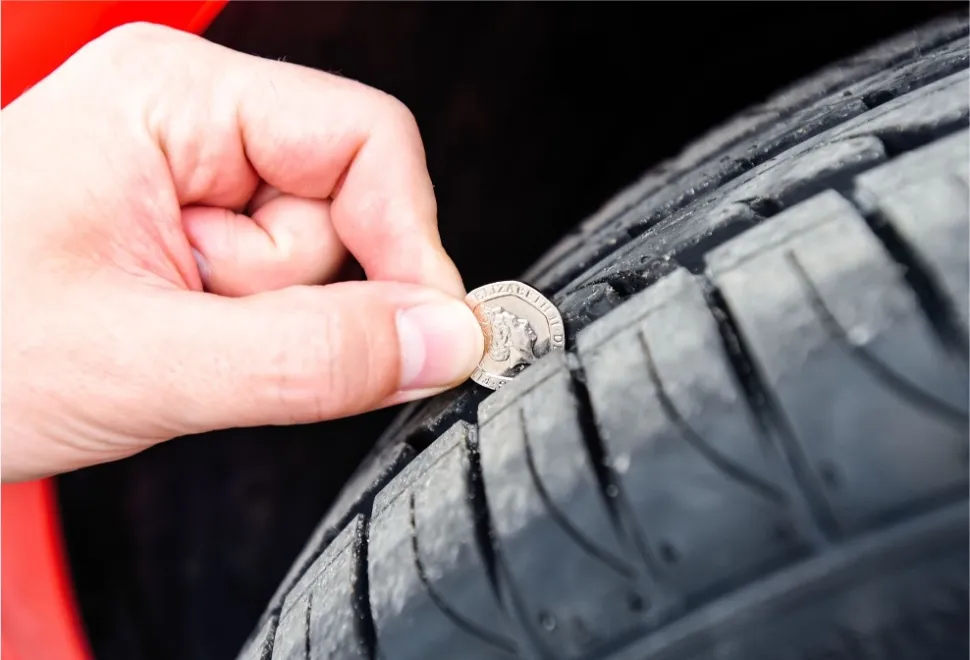
Although the legal minimum tread depth for cars and motorhomes is 1.6mm across the central three-quarters of the tread around the tyre's entire circumference, performance begins to decline well before this point. Once tread depth falls below around 3mm, grip in wet conditions is noticeably reduced and traction on grass pitches can also suffer. For this reason, many owners choose to replace their tyres before they reach the legal limit.

Motorhome tyres in winter
Most motorhome tyres carry an M+S (Mud and Snow) marking, which means they offer some additional traction in poor conditions. However, this does not make them true winter tyres. Only tyres displaying the Three-Peak Mountain Snowflake (3PMSF) symbol have been independently tested and certified to provide a defined level of performance in snow.
If you regularly travel in winter, particularly to Scandinavia, alpine regions or remote parts of Scotland, winter tyres are well worth considering. They remain more flexible at low temperatures, providing better grip and shorter braking distances on cold, wet, icy and snow-covered roads. In some parts of Europe, including certain mountainous regions of France, winter tyres or approved alternatives such as snow chains may also be required by law during the colder months.
Winter tyres can transform a vehicle's handling in cold conditions. In fact, good winter tyres often make a bigger difference than four-wheel drive alone. However, they are designed for low temperatures and tend to wear more quickly and generate more road noise when used in warmer weather.
For this reason, many motorhome owners keep a second set of wheels fitted with winter tyres and swap them over seasonally. As a general guide, winter tyres are best fitted when temperatures regularly fall below 7°C and changed back to summer or all-season tyres when warmer conditions return in spring.
Problems with motorhome tyres
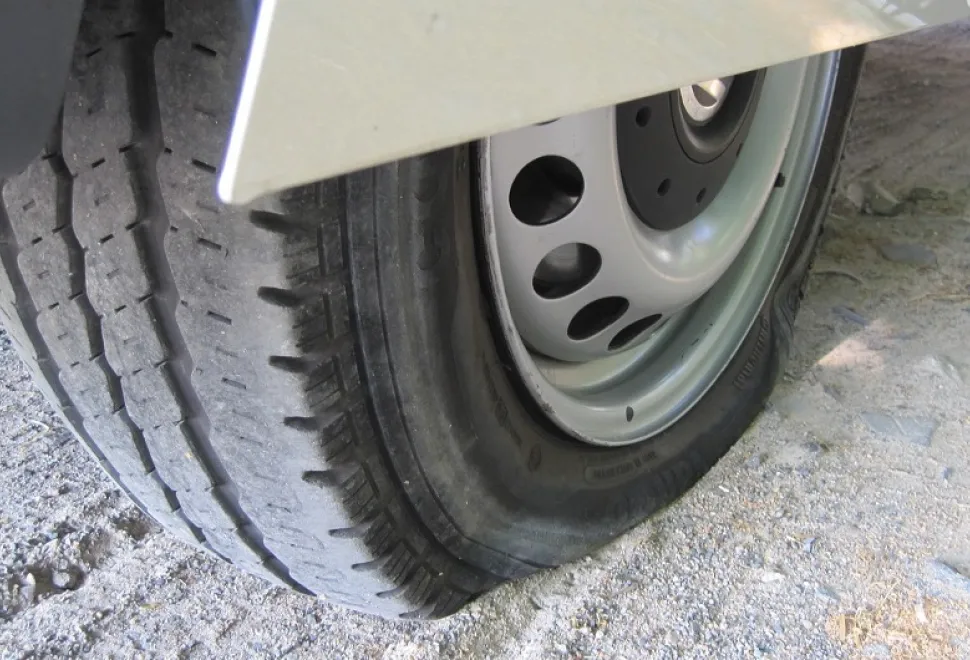
If your motorhome is parked for long periods, the weight of the vehicle rests on the same section of each tyre. Over time, this can cause flat spots, which may lead to vibration, uneven wear or reduced tyre performance.
Taking the motorhome for a short drive every couple of weeks can help prevent this. It also benefits the rest of the vehicle by circulating fluids, keeping moving parts free and helping to prevent problems caused by long periods of inactivity, what can be referred to a 'sleepy motorhome syndrome'.
Ultraviolet light can also damage tyre rubber, so fitting tyre covers when the vehicle is parked for extended periods can help protect them. It is also good practice to check tyre pressures regularly, as all tyres gradually lose air over time.
Another issue is that many new motorhomes no longer come with a spare wheel. Some manufacturers omit it to save weight and free up payload, while others simply do not have space beneath the vehicle for a spare wheel carrier.
A tyre sealant and inflator kit can be useful for small punctures caused by nails, screws or thorns, but it will not help with larger holes or sidewall damage. In those cases, the tyre will usually need to be replaced.
Regular tyre checks, correct pressures and good storage habits all help reduce the risk of tyre problems – and make it less likely that you will need to rely on a spare wheel or emergency repair kit.
What pressure should I run my motorhome tyres at?
Maintaining the correct tyre pressures is just as important on a motorhome as it is on a car. Properly inflated tyres improve handling, braking and fuel economy, while also helping to prevent uneven wear and reducing the risk of tyre failure.
However, finding the correct pressures for a motorhome is not always straightforward. Unlike a car or panel van, a motorhome's weight can vary significantly depending on the conversion, equipment fitted and how heavily it is loaded for travel.
Although the base vehicle may have a tyre pressure sticker fitted by the original van manufacturer, this information is not always updated to reflect the finished motorhome's weight and axle loads. As a result, the figures shown on the original sticker may not be the most appropriate for your motorhome.
Tyre pressures should be matched to the weight being carried by each axle. A lightly loaded motorhome may require lower pressures than one travelling fully laden with passengers, water, luggage and accessories. For the most accurate results, many experts recommend weighing the motorhome in touring trim and using the tyre manufacturer's load-and-pressure tables to determine the correct settings.
Whatever pressures you use, check them regularly and always when the tyres are cold. Even a small drop in pressure can affect handling, increase tyre wear and raise fuel consumption.
Motorhome tyre pressures and weight
The amount of equipment, luggage, passengers and accessories carried in a motorhome has a direct impact on the tyre pressures required. Everything added to the vehicle contributes to its overall weight and axle loads.
While it is possible to estimate these weights individually, the simplest and most accurate solution is to visit a public weighbridge. These can often be found at recycling centres, farms and commercial vehicle facilities.
For the best results, weigh the front and rear axles separately (or each rear axle on a tag-axle motorhome) with the vehicle loaded exactly as it would be for a trip. The measured axle weights should then be checked against the maximum permitted axle loads shown on the chassis plate or in the vehicle handbook.
Although axle weights provide a good guide, they assume the load is evenly distributed from side to side. In reality, this is not always the case, which is why TyreSafe recommends choosing tyres with sufficient capacity so that the maximum axle load does not exceed 90% of the tyres' combined load rating.
Checking your motorhome's weight is important. Overloading can affect handling, braking and tyre life, while also risking fines and penalty points if the vehicle exceeds its legal weight limits. If your motorhome is overweight, reducing the load carried may be enough to solve the problem. In some cases, however, replating the vehicle or upgrading to a model with a higher payload may be necessary.
What happens if tyre pressures are wrong?
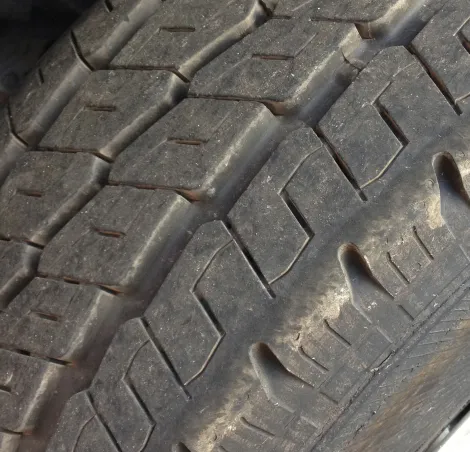
The tyre's contact patch – the area of rubber touching the road – is affected by inflation pressure. If the pressure is too high, the centre of the tread carries more of the load and the contact patch becomes smaller, potentially reducing grip. If the pressure is too low, the tyre flexes more, which can affect handling and cause excessive heat build-up.
Incorrect tyre pressures also lead to uneven tread wear. Overinflation typically causes greater wear in the centre of the tread, while underinflation wears the outer edges more quickly. Uneven wear on one side of the tyre can indicate a wheel alignment issue that should be investigated.
Choosing the right tyre pressures for your motorhome
Determining the correct tyre pressures for a motorhome can be more complicated than for a standard van. While a motorhome is based on a commercial vehicle, its weight distribution and overall load are often very different once the conversion is complete.
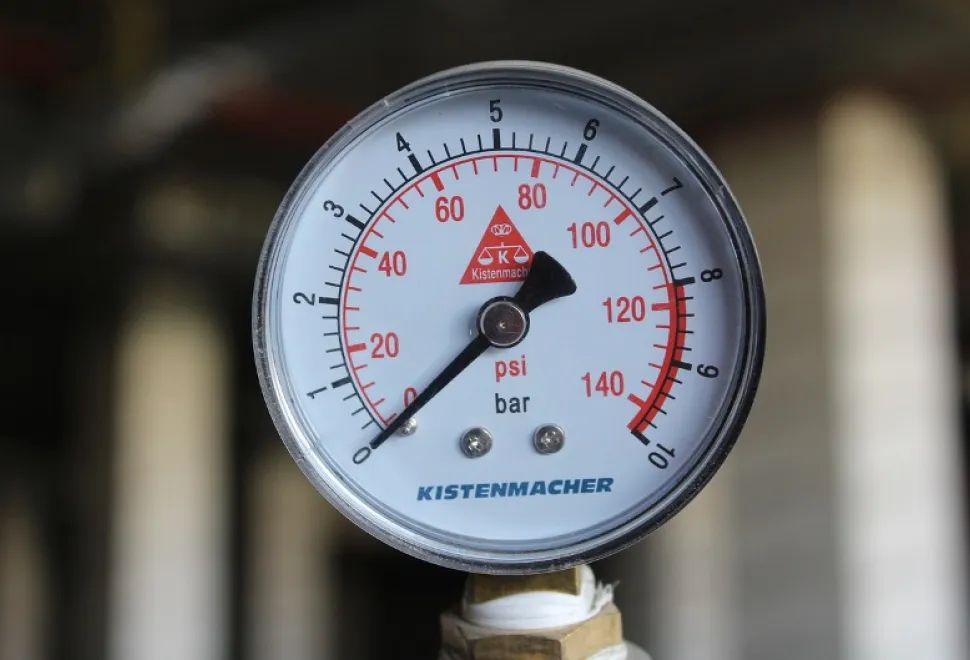
After weighing your motorhome, consult the tyre manufacturer's load-and-pressure tables to find the correct inflation pressures for the axle loads you recorded. You'll have to get these directly from the tyre maker. Continental has a useful technical request form.
Always check and adjust tyre pressures when the tyres are cold, as pressures rise naturally as the tyres warm up during use.
When inflating tyres, it is often easier to slightly overinflate them and then use an accurate pressure gauge with a bleed valve to reduce the pressure to the correct figure. If your motorhome is fitted with a tyre pressure monitoring system (TPMS), remember to recalibrate it after adjusting the pressures.
Some larger motorhomes require higher tyre pressures than those available from supermarket and petrol station air lines. In these cases, a heavy-duty portable compressor or a visit to a commercial vehicle tyre centre may be necessary.
Check tyre pressures regularly and always before a long journey. Even correctly maintained tyres lose a small amount of pressure over time.
Finally, ensure that any replacement tyre valves are suitable for the pressures used by your motorhome. Whether rubber or metal, the valves must be correctly rated for the tyre pressure and compatible with the wheel type fitted to the vehicle.
What is a TPMS?
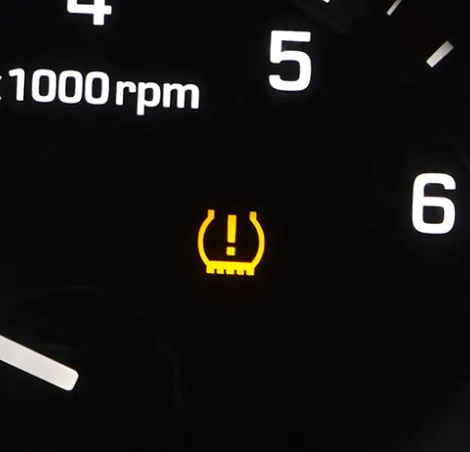
A tyre pressure monitoring system (TPMS) continuously monitors tyre pressures and alerts the driver if a tyre loses pressure. TPMS is now standard on most new vehicles sold in Europe, including many campervans and motorhomes.
While campervans based on passenger vehicles typically have TPMS fitted as standard, motorhome installations vary depending on the base vehicle and converter specification.
Aftermarket TPMS systems are also available. These usually use sensors fitted to the tyre valves and operate independently of the vehicle's original electronics. Because they are not part of the vehicle's factory equipment, they are not subject to MoT testing requirements.
Common TPMS faults and maintenance
Like any electronic system, TPMS components can fail over time. Valve stems can suffer from corrosion or accidental damage, while the batteries inside tyre pressure sensors have a finite lifespan.
Manufacturers often quote a battery life of seven years or more, but five to seven years is a more realistic expectation. Once a sensor battery fails, the entire sensor normally needs to be replaced.
Replacing a faulty TPMS sensor typically requires the tyre to be removed from the wheel and a new sensor programmed to the vehicle. Most tyre specialists can carry out this work, with replacement costs usually ranging from around £60 to £85 per sensor.
TPMS and motorhomes
Motorhomes present a particular challenge for TPMS systems because their weight and load distribution can vary far more than those of a typical car. The same base vehicle may be used for a wide range of motorhome layouts and weight ratings, while the amount and location of luggage, water, bikes and other equipment can significantly affect axle loads.
For this reason, it is important to establish the correct axle weights and tyre pressures before making any adjustments. Simply reducing tyre pressures to achieve a softer ride can be unsafe and may also trigger TPMS warning messages if the pressures fall outside the system's programmed limits.
Basically, with the TPMS systems supplied by base vehicle manufacturers, these systems are commonly set to much higher pressures than is needed for motorhomes. This is annoying, and, more importantly, the TPMS is no longer able to function as it is intended. Motorhomers have reported mixed successes with getting these parameters chnaged to reflect the recommended lower tyre pressures on older direct systems.
When used correctly, TPMS provides an additional layer of safety by warning of pressure loss before it becomes a serious problem. However, tyre pressures should always be based on the motorhome's actual loading and the tyre manufacturer's recommendations, rather than ride comfort alone.
Choosing alloy wheels for a motorhome
Many modern motorhomes are fitted with alloy wheels as standard. If your vehicle has steel wheels and you're considering an upgrade, tyre replacement time is often the most convenient opportunity to make the change.
The most important consideration is ensuring any replacement wheels are suitable for your motorhome. Unlike a car, a motorhome places high loads on its wheels, so any alloy wheel must have a load rating that meets or exceeds the maximum axle load of the vehicle.
Before buying, check the axle weight limits shown on your motorhome's weight plate and ensure the wheel manufacturer's specifications are compatible. The wheel must also have the correct dimensions, offset and bolt pattern for your vehicle.
When fitted correctly, alloy wheels can be just as strong and durable as steel wheels, provided they are designed specifically for motorhome use.
Why choose alloy wheels for your motorhome?
For most motorhome owners, alloy wheels are primarily an aesthetic upgrade rather than a performance enhancement. Although aluminium alloys are lighter than steel, motorhome alloy wheels are often built with thicker sections to achieve the required load capacity, so any weight saving is usually minimal.
The main advantage is appearance, with a wide range of designs available to personalise the look of a motorhome. However, more intricate wheel designs can be harder to keep clean.
Some aftermarket alloy wheels are wider or larger in diameter than the original equipment wheels. This can affect ride comfort and handling characteristics. Larger wheels typically require lower-profile tyres, which have less sidewall flex and can result in a firmer ride. Wider tyres may also increase susceptibility to tramlining, where the vehicle follows grooves and cambers in the road surface.
A modest increase in wheel diameter is unlikely to make a dramatic difference, but moving to very large wheels can noticeably alter the way a motorhome drives.
Common motorhome tyre questions
-
What are the best tyres for a motorhome?
The best tyres should be load rated for your weight of motorhome – look at the maximums for the axle weights. But equally important is the correct tyre pressures. So read our advice above about getting the laden weight of your vehicle to be able to run the correct tyre pressures. This can make a big difference to ride and on-road rattles without having to fork out for extra suspension upgrades – although these will make a much bigger difference.
-
Do motorhomes need special tyres?
There's no easy answer. We do recommend Camping tyres as they are commonly called, as the rubber has a slightly different compound that is supposed to be better when left stood for longer periods of inactivity, with stronger sidewalls. They can also have treads that are better on grass and mud found on campsites. That said, correctly rated commercial vehicle tyres could also be used, as Camper/Camping tyres can sometimes be much harder to source.
-
How often should you replace motorhome tyres?
The industry standard is 5-7 years. Importantly, tyres can harden with age and exposure to the elements even with low mileages. Side wall cracking and age hardening are commonly more of a risk than low tread with most vehicles. A regular check of tyre condition is important, and don't forget to check and change the spare tyre, too, if you have one.
-
How much to replace motorhome tyres?
It's roughly £100 to £250+ for a tyre, but they should always be replaced in axle pairs at the very least. Michelin and Continental Camper tyres can be easily found online starting from around £160 up to £260. One online retailer showed a brand called Gripmax (a Chinese brand) priced at £110 a tyre.
Other makes such as Hankook (Vantra), Bridgestone (Duravis) and Pirelli (Carrier Camper) offer motorhome tyres, but are much harder to find.
Latest motorhome articles




Explore our magazines
Enjoy expert tech help, travel and campsite inspiration, buying advice, reviews, and more with our best-selling magazines and guides.

Buying Your Perfect Motorhome
Buying Your Perfect Motorhome is the ultimate guide to turn your motorhome adventure into reality. From models starting at £20k to luxury options, layouts, finance, insurance, and a dealer directory, it has everything you need to find your dream motorhome.

MMM magazine
MMM is the UK’s best-selling motorhome magazine and your key to unforgettable trips, both in the UK and overseas. Packed with expert reviews, advice and maintenance tips to help you make the best choices and keep your motorhome roadworthy.


