

Motorhome weights and payloads: a beginner's guide
Technical advice
Why you must know the weight of your motorhome, your motorhome payload and how to up-plate your motorhome if it is overloaded.
Here we show how to calculate your motorhome’s payload, which will help prevent you overloading your motorhome.
We’ll also explain what to do if your motorhome is overweight. Overloading a motorhome is not only dangerous but also illegal.

Rachel Scholes Content Editor: Motorhomes
Rachel Scholes Content Editor: Motorhomes

Motorhome weights explained
Before you can calculate a motorhome’s payload, you must know its current unladen weight and its maximum weight. First check your motorhome’s weight plate, which is normally found just inside the driver’s door or under the bonnet.
There will often be two or even three weight plates on a motorhome. These are known as stage plates, and, at each stage of the motorhome’s construction, each company involved with the vehicle will have added their stage weight plate.
Stage 1 is referred to as the base vehicle manufacturer’s weight plate and will have familiar names like Fiat, Citroën, Ford, etc. You can ignore this weight plate.
Following the base vehicle manufacturer’s weight plate, you will may find a chassis weight plate, such as from Al-Ko. This is the Stage 2 weight plate and again can be ignored.
The final stage in the process, prior to registration, will be the motorhome manufacturer’s weight plate. This weight plate overrules all the previous stage plates and it is these weights that are the important ones. These are easy to recognize.
They will have the motorhome maker’s name on them, like Swift, Bailey, or Elddis.
This weight plate will list the maximum weight of the motorhome (often referred to as MTPLM, MAM, GVW, etc).
Motorhome weights terminology
To confuse things a little, there are numerous terms for motorhome weights, which can mean the same thing...
- Gross vehicle weight (GVW) – also known as MTPLM (maximum technically permissible laden mass), MAM (maximum authorised mass), or MGVW (maximum gross vehicle weight). This is largest weight the motorhome is allowed to be, with driver, passenger and all your touring kit on board.
- Maximum train weight – aka GTW (gross train weight). This is basically the combined maximum weight of the vehicle and any trailer being towed.
- Axle weights – as already described, each axle will be given a maximum figure on that weight plate – these often add up to more than the gross vehicle weight, so you need to make sure none of the axles are overloaded and that the gross vehicle weight is not exceeded.
- Unladen weight – not to be confused with 'mass in running order' – see next. This is the weight of the vehicle without passengers or fuel.
- Mass in running order (MIRO) – includes a 75kg weight for a driver on top of the unladen weight. This figure often includes other things, which vary by manufacturer so check the small print as some will include the weight of fuel in the tank, a full gas cylinder and full water tank in this figure (so your payload doesn't have to factor these things in).
- Payload – what you get when you subtract your MIRO from your GVW. This often needs to include the weight of any passengers (excluding that already-accounted-for 75kg for the driver), the weight of any food or essentials, the weight of any optional equipment (added when new by the manufacturer or dealer, or anything added during the motorhome's life), along with the weight of any extra accessories you need to take with you. Read on for further information...
Find More Technical Advice in MMM: The Motorhomers' Magazine
Keep your motorhome running smoothly with expert advice, DIY tips and practical know-how from the UK's favourite motorhome magazine.
Calculating your motorhome payload
When you know the max weight of your motorhome, it is easy to work out your motorhome payload.
Payload is the difference between your motorhome’s maximum weight and its empty weight. It does not include your kit or accessories. You can find this figure in your handbook, from the manufacturer or from the retailing dealer.
Just subtract the empty weight from the maximum to calculate the motorhome’s payload. .
Remember this is the weight of everything you will add before you set off. So include the weight of passengers, water, fuel, spare gas bottles, and other items.
Different makers include different items in their listed weights.
So check what your motorhome maker has included.
Also, subtract any extras added by the dealer or manufacturer from your motorhome payload figure. These extras include an automatic gearbox, an awning, or a satellite system.
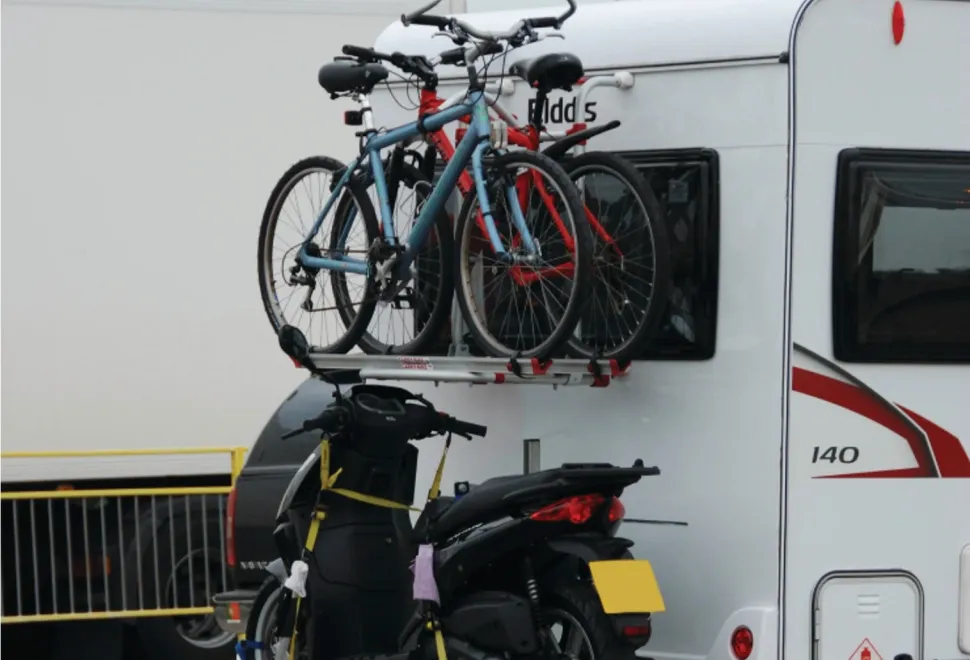
Any added extras must be included in the weight. This includes things like a towbar or bicycle rack. It also includes any bicycles on the rack. This applies whether you added the extras or a previous owner did.
Online motorhome payload and motorhome weight calculators can provide a good estimate, but the most accurate method is to visit a weighbridge. If there is no touring kit or people on board, this gives you the starting figure. Subtract from the maximum weight of your motorhome and his gives your exact motorhome payload figure.
Once you know your payload you can start to calculate what you can safely carry in your motorhome.
If you think you may be close to the maximum weight, return to the weighbridge and have the motorhome weighed again with all the touring kit on board (but without your passenger/s, and with an almost empty fuel tank and no water on board).
Motorhome weight chart
Here are some typical weights of accessories and options, but these figures are only a guide:
- Air-conditioning unit (roof-mounted): 35kg
- Automatic gearbox: 18-40kg
- Awning (driveaway): 10-30kg
- Awning (wind-out): 25-60kg
- Barbecue: 15kg
- Bike (pedal cycle): 15kg
- Bike (electric): 25kg
- Bike rack: 10kg
- Engine upgrade: 50-70kg
- Gas cylinder (full 6kg/13kg): 17kg/35kg
- Hook-up lead (10m/25m): 2kg/5kg
- Hose (15m on a reel): 2kg
- Leisure battery: lead acid (100Ah): 30kg
- Leisure battery: lithium (100Ah): 15kg
- Levelling wedges: 5-9kg
- Microwave oven: 11kg
- Motorcycle (125cc): 130kg
- Motorcycle loading ramp: 10kg
- Outdoor chair: 5kg
- Outdor table: 5kg
- Satellite TV system: 15kg
- Scooter (50cc): 100kg
- Solar panel (flexible), 100W: 1.5kg
- Solar panel (rigid), 100W: 15kg
- Toilet chemical (4 litres): 4kg
- Toolkit: 15kg
- Towbar: 60kg
- TV: 6-10kg

What to do if your motorhome is overweight
Overloading a motorhome can have serious consequences. It is illegal. You may have to pay a hefty fine, as well as having to unload your motorhome at the roadside. In addition, driving an overloaded motorhome puts excessive strain on the tyres, leading to premature wear or failure.
Suspension systems can become affected, resulting in reduced ride quality and potential safety hazards. An overloaded motorhome will also have longer braking distances, reduced manoeuvrability, and will increase the risk of crashes. Moreover, driving an overweight motorhome may invalidate your insurance. It is simply not worth the risk and is easy to avoid.
If you have visited a weighbridge and discovered your motorhome is overweight, you have options. But it is crucial to take immediate action. You must not drive an overweight motorhome on the road.
If your motorhome is only slightly overweight with all your touring kit on board, then have a clear out. Do you really need to carry that inflatable boat with the hole in that you’ve not got around to fixing? Are 40 litres of bottled water essential? Be ruthless – any item that hasn’t been used in the last year, leave at home.
Don’t forget food: a tin of baked beans weighs around 0.45kg, a bottle of beer is 0.8kg and a 75cl wine bottle is typically 1.3kg. We were surprised to find that four pints of milk weighed 2.4kg! Even a cutlery drawer probably contains about 2kg of silverware.
After a thorough declutter, weigh each item you’ve removed. For bulky stuff simply hold an item and stand on your bathroom scales, then subtract your weight.
If this gets you under the weight limit, great. If you’re nearly under the weight limit, then consider emptying your fresh water tank (always travel with an empty waste water tank) and refilling it on the campsite.
Many manufacturers already recommend not travelling with any water at all. Remember to calculate the weight of passengers, a full tank of fuel and any water you carry while touring – one litre weighs one kilogram.
If decluttering does not bring the overweight motorhome down enough, consider replating your motorhome. Or you can trade it in for a different model or get a towbar and use a trailer to carry some of your kit.
Here we investigate the most common way to solve the problem – getting the motorhome replated.

Motorhome replating and up-plating explained
Replating, or up-plating, a motorhome means adding more payload. It does this by increasing its maximum permitted weight.
But there are pitfalls. Do not do this without careful thought about the company doing the replating.
Many motorhomes are built to a 3,500kg maximum weight limit, but, with professional work, can be uprated to 3,650kg or 3,850kg. Here are some simple questions to ask when choosing a provider to replate a motorhome.
- Does it have offices or is it just a man in a van?
- Does it have ISO accreditation and links to the vehicle manufacturers?
- Does it have liability insurance to ensure your vehicle is covered for the service it’s offering?

Motorhome replating: our top tips
- Weigh your motorhome. How else will you know what weight you require?
- Once weighed, ascertain how much extra payload you require and get in touch with a professional DVLA-recognised converter.
- Most lightweight motorhomes can gain between 200kg and 400kg of extra payload, though this is largely dependent upon the base vehicle brakes, suspension and wheel/tyre combination.
- Check your driving licence – if you are limited to 3,500kg then it is illegal to drive a motorhome weighing more than this without carrying out training and passing an additional test. If you have the C1 category on your licence you can drive a vehicle up to 7,500kg.
- If all the above is in order, get the replate carried out and inform your insurance company (the DVLA will be informed by the replating company).
Motorhome downplating
Downplating/rating of a vehicle to 3,500kg is becoming more difficult due to the ever-expanding size of the motorhomes.
The vehicle’s weight will decide if downrating is possible. Typically, 400kg is a recommended minimum payload. If you downrate to 3,500kg, the motorhome should weigh under 3,100kg.
However, you should note the DVLA does not permit individuals to downrate their own vehicle, and, contrary to popular belief, it is not just a case of sending a weight ticket for the motorhome in order to have it downplated.
Once you have this, contact a company like SvTech to get its advice on downplating – remember you must ensure you have enough payload when you have downplated so check this first.
Critical brake testing
To replate a motorhome, you need data on the base vehicle’s safety equipment. This includes the brakes and suspension.
The heavier a vehicle, the more powerful the brakes need to be to stop it in the same distance as a lighter vehicle. So, adding extra weight to a vehicle with less powerful brakes could be dangerous. Likewise the steering and handling can also be adversely affected by adding extra weight.
This testing can only be carried out by a recognised technical service, two of which in the UK are VCA and Millbrook. Dynamic brake testing at an approved test facility covers brake line failure, ABS and ESC, and brake fade. It also includes many other tests.
Think of this testing as the same testing the original vehicle manufacturer did. They did it to get the vehicle approved for the road. A goos upplating company will repeat these tests at a higher weight. This isn’t a simple roller brake test at a local MoT station.
Motorhome driving licence categories
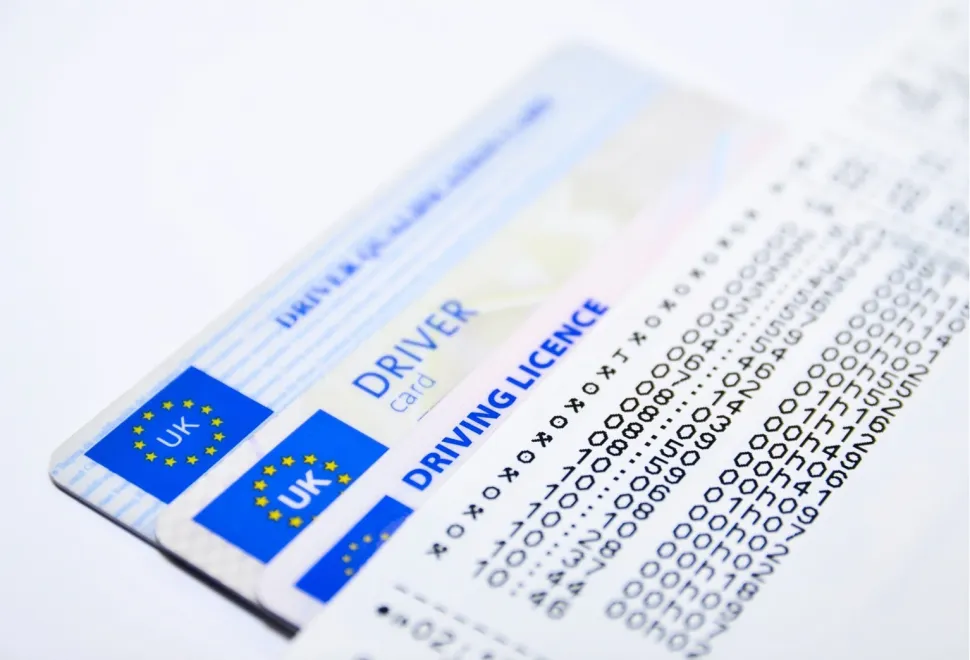
If you passed your driving test between 1 January, 1997 and 1 January, 2013, you will have category B and B1 on your driving licence. This limits you to driving motorhomes of up to 3,500kg and trailers of up to 750kg. To drive a motorhome of over 3,500kg, you will need to take an additional test to gain the C1 category.
If you passed your driving test before 1 January, 1997, you should have C1 and C1 + E categories on your licence, which allow you to drive motorhomes up to 7,500kg and to drive a motorhome and trailer with a combined weight of under 12,000kg if you have also passed your full trailer test, otherwise the combined weight is capped at 8,250kg.
When you reach 70, you’ll need to renew your driving licence every three years. While you will automatically retain categories B and B1, you will need to submit a D4 and D2 medical form to retain C1, which your doctor will need to fill out every three years. Depending on your medical details, this isn’t set in stone – for some conditions you may need to renew more frequently.
B and B1 categories for motorhomes under 3,500kg can be renewed online, but licence category C1 renewals (for motorhomes up to 7,500kg) must be done by post using form D47PU. Always renew your licence well before it expires – especially during summer holidays when the DVLA is busiest. You should get renewal forms by post 56 days before your current licence expires.

Should I get a trailer for my motorhome?
The first point to make about trailers is to consider if your motorhome is suitable for a towbar. If it has a garage, or a long rear overhang, a substantial frame will need to be in place to allow a towbar to be fitted. The weight of this needs to be taken into account. You also need to know the maximum tow weight of your motorhome – check with the converter. It is typically from 1,500kg to 2,500kg.
If you have a motorhome first registered on or after 1 April, 2012, the towbar must be EC type approved. Any good motorhome specialist towbar supplier will have a range of brands that will meet these approvals. For vehicles registered prior to 1 April, 2012, you have a little more flexibility in towbar versions. With a towbar and suitable electrics fitted, you then have to consider which sort of trailer will be best.
Again you need to check your driving licence – the categories you have will depend on when your licence was issued, any medical conditions or what tests you’ve passed. Category B allows you to drive trailers of up to 750kg if the motorhome is no more than 3,500kg. Category C1E allows you to drive a motorhome of between 3,500kg and 7,500kg with a trailer of over 750kg. C1E is usually linked to a restriction code 107 (as printed on your driving licence), which limits the total weight of motorhome and trailer to 8,250kg. So, for a 3,500kg motorhome, you can tow up to the maximum towing limit with this code.
Any trailer (or car on an A-frame) that you tow that weighs over 750kg must have a separate braking system fitted to it. You will also need to allow for the noseweight of the trailer. This is the force that pushes vertically downwards onto the head of the towball.
Towbar makers will issue their towbar with a maximum noseweight. Typically it is between 75kg and 100kg. Whatever noseweight figure your trailer exerts on the towball must be accounted for with your payload. If it exceeds your payload or noseweight limit, you can adjust the loading of the trailer to reduce the noseweight.
With a box trailer you ideally want to place heavy items low down and centrally over the axle (or axles). Load them evenly and as level as possible. Secure or wedge items carefully so they can’t move in transit and alter the weight distribution. A towed trailer or car on an A-frame must have rear lights and display reflective triangles.
Before you invest in a trailer, consider how easy it is to move around – small, single-axle box trailers are easy to move around by hand, while larger twin-axle trailers require much more strength or two people to manhandle. You may even need to consider caravan motor movers on larger trailers.
More payload considerations
First check your licence code categories with care – especially if you’re aged over 70. If you are limited to a 3,500kg motorhome, then think carefully about the weight of each and every optional item you specify. You’ll need to tot these up as you go.
This is further complicated as manufacturers tend to quote the weight as the mass in running order (MIRO), which may exclude such items as gas bottles and leisure batteries. The MIRO is often listed with a 90% filled fuel tank, empty water tanks, 6kg to 15kg allowance for gas bottles and a driver weight of 75kg. But this varies between manufacturers, so read the brochure small print for any motorhome you’re thinking of buying.
Every addition – from decals to a towbar – has a weight that needs to be subtracted from the available payload. It’s not just the manufacturer options you need to consider, but also the dealer-fit items such as the awning, satellite TV dish and solar panels. Even the new crockery you buy from the dealer shop to match the new motorhome's upholstery needs to be taken into account.
Weights and payload FAQs
-
Can you upplate a motorhome yourself?
The simple answer is no. As far as we are aware, the DVLA only accepts weight change applications from approved companies. The DVLA will need to see specific paperwork with this, and while there are some claims that it can be done, it is the exception rather than the norm.
-
How much weight can a motorhome carry?
That depends on a lot of things - the chassis, running gear and more. if you have any accessories added or decided to carry more people, it is up to you to make sure you stay within the gross weight. A trip to a weighbridge before this is vital.
-
How do I reduce my motorhome's weight?
There are many ways, the primary being not to carry an unneccesary weight - accessories you don't need. Basically have a declutter.
Travelling with an empty water tank can help, too.
-
What is the average weight of a motorhome?
All but the biggest motorhomes will be plated at 3,500kg. This means they can be driven on a standard car driving licence. However, many manufacturers offer upplating options from the factory meaning they can be 3,650 to 3,800kg as standard. Don't automatically assume a motorhome is rated at 3,500kg, ask to see the log book.
-
How do I upgrade the payload on a motorhome?
Use an approved company to discuss the options. If it is a small increase, no physical alterations may be needed, but for bigger increases the brakes and suspension components may need to be changed.
-
What is a good payload for a motorhome?
We recommend a payload of around 400kg for a couple, which allows for clothes, the second passenger, essential equipment like food and bedding, and outdoor accessories.
Final thoughts
So, while all that sounds complicated, it doesn't have to be. If you are buying a new motorhome and your licence does not allow you to drive over 3.5 tonnes, then payload is critical – as well as being fairly realistic about the amount of options you'll be able to tick. This is particularly important if you plan to travel with more than two on board or have a secondary hobby that involves heavy kit. If you have a driving licence with C1 on it then you may be able to get your motorhome uprated, but this might not be as much as you'd like without expensive upgrades.
Our key advice is to visit a weighbridge, whether you have a new or new-to-you motorhome or even a motorhome that you've owned for years. Any options, dealer-fit accessories, items fitted by previous owners or even your own upgrade projects might be taking you perilously close to that gross vehicle weight figure...
Latest motorhome articles

Explore our magazines
Enjoy expert tech help, travel and campsite inspiration, buying advice, reviews, and more with our best-selling magazines and guides.

Buying Your Perfect Motorhome
Buying Your Perfect Motorhome is the ultimate guide to turn your motorhome adventure into reality. From models starting at £20k to luxury options, layouts, finance, insurance, and a dealer directory, it has everything you need to find your dream motorhome.

MMM magazine
MMM is the UK’s best-selling motorhome magazine and your key to unforgettable trips, both in the UK and overseas. Packed with expert reviews, advice and maintenance tips to help you make the best choices and keep your motorhome roadworthy.


