
Which Motorhome? Choosing The Perfect Motorhome For You
Buying advice
There are hundreds of different motorhome types, styles, layouts and designs on the market, and it can be hard to know where to start when choosing a motorhome.
Ask yourself how – and how often – will you use the vehicle? Where do you want to go in it? Will you stay on full-facility campsites or do you envisage more off-grid touring? Will you need to park it in towns, drive on narrow roads or use it as a car? Will your tours be a few days or weeks or months?
Having a clear idea of the way you’ll use your intended purchase will make the choosing process easier.
If you’re already a motorhomer and looking to change, ask yourself why you’re upgrading. Do you want a bigger vehicle for more space, or a smaller or lighter one for easier driving (or driving licence reasons)?
Do a detailed assessment of your current motorhome and note the elements you like and dislike, then list the features you must have in your next motorhome.
It's great to have a list of must-have features, as well as aspects you'd like but aren't 100% essential.

Peter Vaughan Content Editor: Motorhomes
Peter Vaughan Content Editor: Motorhomes
Campervan or motorhome? What's the difference and which should you buy?
A campervan (or camper) is essentially a van that has been converted from a commercial vehicle for a leisure role, with the addition of seats, windows, insulation, furniture, etc.
It may have a pop-top or a permanent high roof to give standing room – see the different types of campervan below.
There’s a huge variety of campervans built by the major British and European motorhome brands and even Citroën, Ford, Mercedes and VW offer their own campervan models (the Holidays, Nugget, Marco Polo and California range, respectively).
However, a large part of this fast-growing market is also made up of smaller companies who usually sell direct from their factory.
A motorhome – in the past usually called a motorcaravan – is often also described as a coachbuilt. This refers to the fact that, traditionally, coachbuilders added a caravan-style living area onto the back of a cab of a light commercial vehicle.
Nowadays most motorhomes come from large specialist manufacturers that are often part of big groups (Erwin Hymer, Knaus-Tabbert, Pilote, Rapido, Trigano, etc), these firms often having a history of caravan construction behind them, as do big British brands, such as Bailey and Swift.
There are a number of advantages of motorhomes over campervans. For a start, the squarer body sides allow for better use of the interior space, while the sandwich construction of the bodywork makes it easier to provide full insulation for year-round use.
It’s also more cost-effective to build the habitation area of a motorhome onto the blank canvas of a chassis than it is to convert a panel van.
But, conversely, there are also advantages of campervans over motorhomes, as they are usually more compact (especially in width) and easier to drive with better visibility. Their all-steel bodywork is sturdier, too, without the flex that can afflict coachbuilts, causing rattles and creaks.
Campervans look more automotive, with a wide range of exterior colours, too. Some will also prefer the feel of being closer to camping, with large sliding doors bringing the outside in.
For the different types of motorhome – low-profile, overcab and A-class – see below.

The best campervans and motorhomes to buy
The best campervans and motorhomes to buy? If all of the above has whetted your appetite to buy a new campervan or motorhome, check out some of the best new models of 2026, as selected by our team.
Each year Out & About Live assesses the latest models and picks the best of the best in the Campervan Awards and Motorhome Awards, in association with leading consumer finance provider, Creation.
Types of campervans and motorhomes
Campervans retain the bodywork of a van and have a pop-top to give standing room, or come in taller high-top form, usually on larger models.
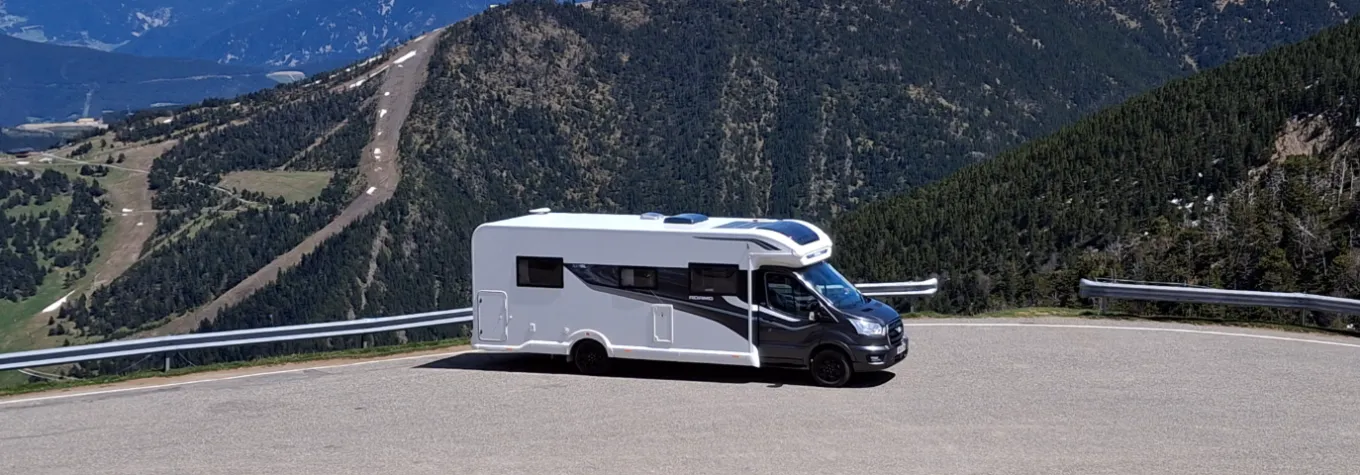
Motorhomes come in three key types – low-profiles dominate the market but you'll also find overcab coachbuilts and, at the top of the market, A-classes.
Pop-tops
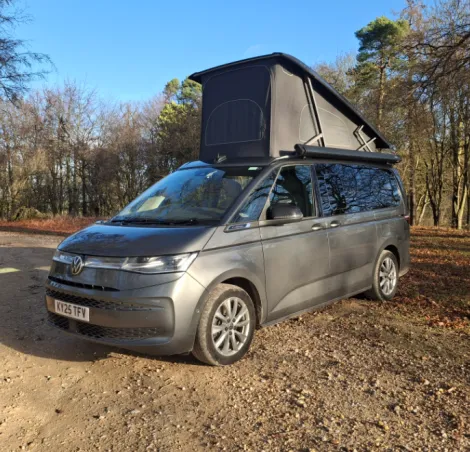
If you want both a daily driver and a weekend camper, a small pop-top camper is ideal. These are typically based on the VW Transporter and rivals such as the Ford Transit Custom, as well as a few on even smaller vans and some on grey import Japanese vehicles, such as the Toyota Alphard.
All should feel car-like to drive and, with lengths around the same as an estate car or SUV, they are easy to park at the supermarket or in town. Some will fit into car parks with height restrictions.
Also known as a rising roof or elevating roof, the pop-top is usually raised manually (with assistance from gas struts), but there are electric versions, too. The pop-top is there primarily to provide standing room, but will usually also offer a roof bed.
Remember, though, that with canvas sides to the roof, a pop-top is not ideal for midwinter trips. Most models have at least four belted travel seats, although some may offer five or six pews.
High-tops
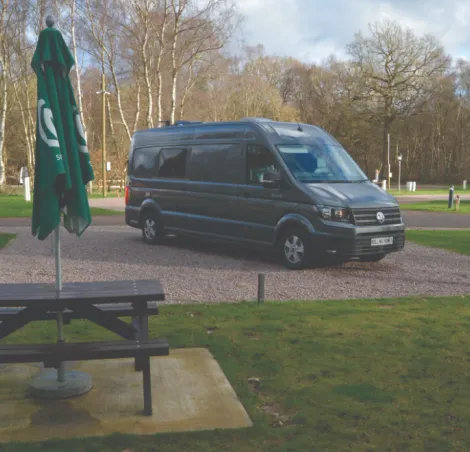
If you want something a little bigger than a pop-top campervan, then high-top campervans have the advantage of usually offering full standing room all the time, a walk-in washroom and, possibly, a fixed bed.
The vans used here are taller and wider than the pop-top type (usually Fiat Ducato, Ford Transit, Mercedes Sprinter, Peugeot Boxer or VW Crafter), with lengths typically ranging from 5.4m up to 7m.
These campervans are, therefore, less practical for daily duties but are still more manoeuvrable (especially due to width and visibility) than a coachbuilt motorhome. They are also better suited to camping in the cooler months than a pop-top as they should be better insulated.
With more space comes a wider choice of layouts, but fewer family-friendly offerings. There are four-berth layouts with a matching number of belts, but these may fall into the next category – high-tops that also have a pop-top.
High-tops with a pop-top
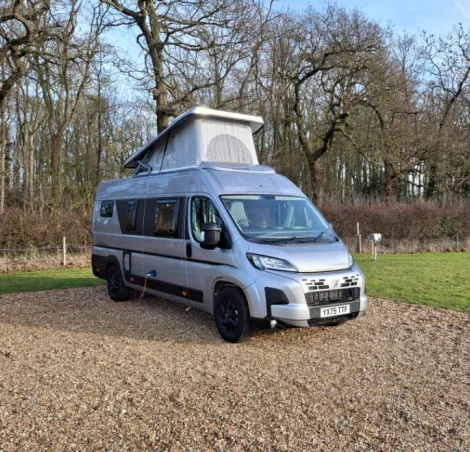
Until recently this was a niche sector, but now there’s loads of choice, especially from continental makers. Here, standing room is already available without raising the roof (unlike in smaller VW-style models).
The pop-top is there purely to provide an additional double bed. Of course, the same comments apply about heat loss through canvas, but these vehicles are ideal for people who may only need four berths on some, not all, of their adventures.
When used with the roof down they are all but identical to standard high-top vehicles. But be aware of the notable extra cost and weight of the pop-top (the latter reducing payload). They may also seem darker inside as the pop-top often precludes the fitting of a large rooflight.
If you're not sure you'll use the pop-top's bed often enough, consider a free-standing awning instead, or a Cabbunk system.
Low-profile coachbuilts
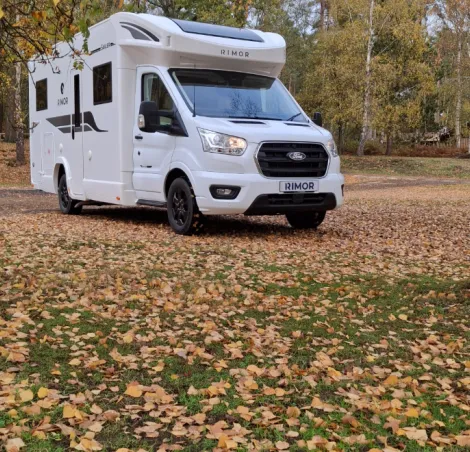
The difference between a low-profile and an overcab motorhome is at the front. The latter features a bulbous section that overhangs the windscreen (to provide a small bedroom), while the sleeker design of a low-profile can make it more aerodynamic (and more fuel-efficient – by around 3mpg typically).
Traditionally, low-profile models were more likely to be aimed at couples but the availability of drop-down beds over the lounge means that plenty of low-profiles cater for families.
Low-profiles vary in length from just under 6m up to 7.5m, with a few going up to 8m+. They are often built on a lowered chassis: Fiat’s own Camper chassis-cab or the Al-Ko alternative (on Fiat or Mercedes), with the lower centre of gravity paying dividends in on-road stability.
Overall widths of all coachbuilt types are usually around 2.30m to 2.35m, but there are some slimline low-profiles that aren’t much wider than a panel van and, therefore, suit more off-the-beaten-track destinations better.
Overcab coachbuilts
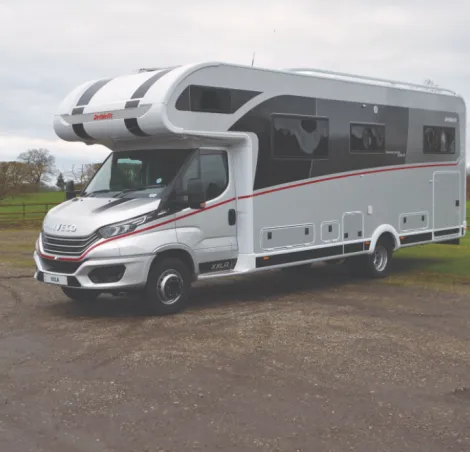
The obvious attraction of an overcab coachbuilt motorhome is the permanent double bed in the overcab, also known as the luton.
While headroom can be tight for adults and ladder access might be off-putting, the luton makes great sleeping quarters for children. Unlike a drop-down bed in a low-profile, it leaves the lounge area undisturbed when it is in use.
Overcabs are popular with families and they often feature in entry-level motorhome ranges. However, with overall heights often stretching over 3m (resulting in costlier tolls on French autoroutes) and a less-than-aerodynamic shape, beware of underpowered vehicles.
If you’re looking at six-berth models, consider carefully the adequacy of the payload, as well as storage for six people's clothes, etc.
A-class
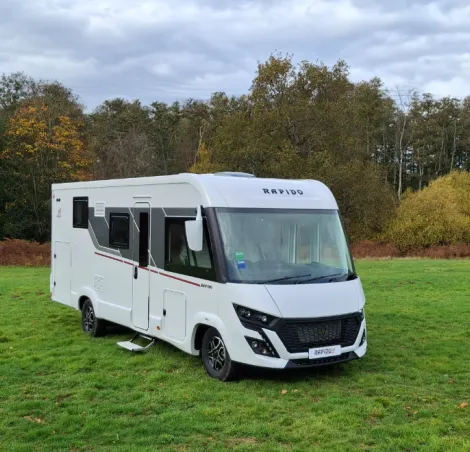
The top of the tree in the motorhome world, A-class motorhomes start with a chassis-cowl, which has no external bodywork from the base vehicle – although the dashboard will usually still be familiar and the mechanicals (Fiat or Mercedes mostly) will be the same. All the exterior bodywork is created by the motorhome company.
The advantages are more space in the wider cab, usually a drop-down bed that lowers over the front seats (without interrupting the rest of the lounge), and fully insulated bodywork right up to the windscreen.
You'll enjoy panoramic views out while driving but check the cost of that windscreen (and ensure your insurance for glass damage is adequate).
Some find A-classes easier to drive than conventional coachbuilts as they are the same width all the way along the side, but the view out (and windscreen wiper coverage) varies considerably from model to model.
Choosing the right size of campervan
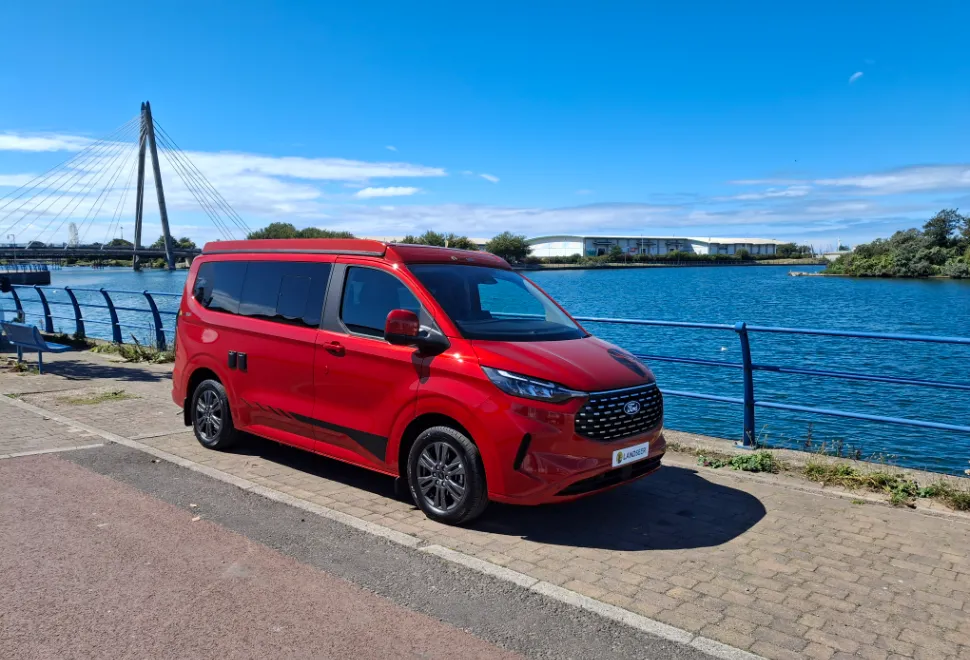
If your campervan is to take the place of a car, size will be a major consideration. Will the campervan fit into parking bays or under height restrictions? A campervan can make a very versatile car, arguably much more useful than an SUV, but campers the size of a VW T6.1 or Ford Transit Custom are most likely to fit the bill.
Even if you’ll be driving your camper less frequently, you need to be comfortable and confident at the wheel. If it seems cumbersome or underpowered, this will spoil your enjoyment every time you go out.
That’s why it’s so important to take a test drive, to consider options like engine upgrades and automatic options, as well as hiring first to get the feel of driving a leisure vehicle. Some seating positions don’t suit shorter drivers, while others have seat adjustment that is too limited for taller folk.
Once you’ve adjusted the seat and steering wheel, look at visibility all around, and check whether a reversing camera is included.
Another consideration is the size and accessibility of your driveway – you might be able to keep your motorhome elsewhere (such as at a secure storage site), but then it’ll be a lot less convenient for spur-of-the-moment getaways. Most insurers are reluctant to cover motorhomes that are parked on the street.
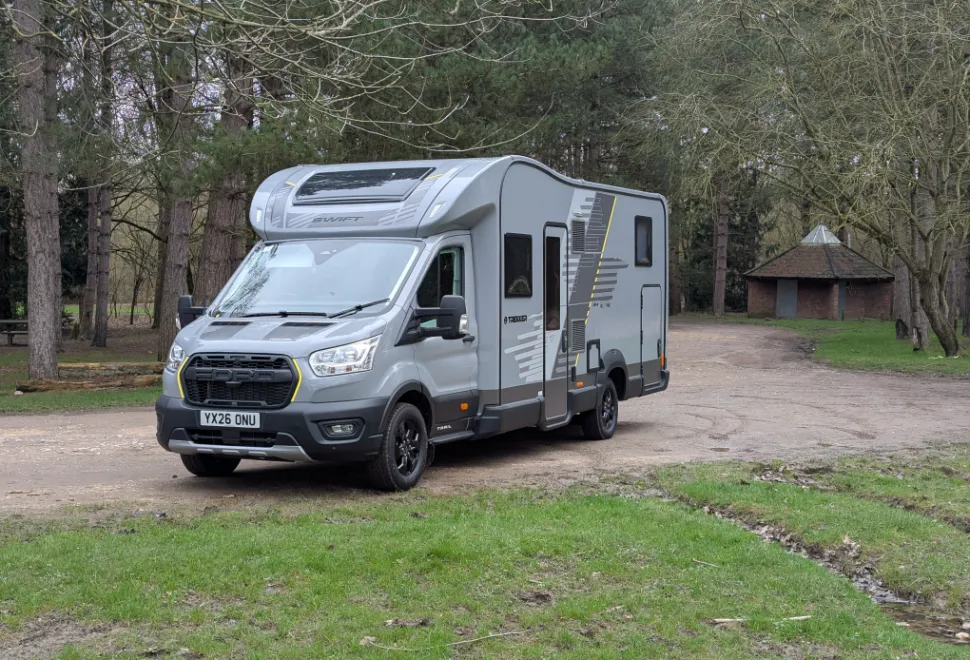
Can I drive a motorhome on my car licence?
If you passed your car driving test on or after 1 January, 1997, you are limited to driving a vehicle of no more than 3,500kg maximum weight. This will include most campervans (except the largest models) and many motorhomes, even a few A-classes, although you will have to be sure that you have enough payload in any 3,500kg motorhome.
If you passed your test before 1 January, 1997, you can drive a vehicle up to 7,500kg (enough for 99% of motorhomes, but not the largest American RVs). On reaching 70, however, you will only be licensed to drive vehicles up to 3,500kg, unless you apply to the DVLA (and take regular medical checks). You can then retain your 7.5-tonne entitlement in three-year chunks.
Because more young people are driving motorhomes, and older folk are losing their 7,500kg entitlement, motorhome manufacturers are increasingly striving to offer vehicles with a 3,500kg maximum weight. However, coachbuilts of over 7m in length and even some large van conversions offer very limited payloads within this limit (sometimes under 300kg).
Add a few options and accessories and you’ll quickly exceed the payload – and be driving illegally.
For most motorhomes there can be a solution – as long as you have a (C1) licence to drive vehicles of over 3,500kg. Some models can be upgraded to heavier chassis at the time of ordering new to give you more payload, while others can be subsequently uprated. If you think you may need to go down this route, talk to a specialist.
Before buying a heavier motorhome, though, you may want to consider that, in Europe, vehicles with a GVW of more than 3,500kg are often subject to reduced speed limits and increased toll charges. They might also be barred from some roads in towns.
In the UK, car speed limits apply unless your vehicle’s unladen weight exceeds 3,050kg.
More things to consider
On every trip in your motorhome, you’re likely to spend more time driving and sleeping than anything else, so these should be your top priorities. A mattress topper might improve sleeping comfort but, if the bed is too small or access (via a ladder or by climbing over your partner) is too difficult, then you won’t get enough kip – and absolutely nothing is more guaranteed to ruin your holiday than insufficient shut-eye.
In a similar vein, think about the space to get undressed and access to the loo, as well as whether you can sit up in bed.
You might be dreaming of hot summer days, sitting outside your campervan around the barbecue, but the reality is that the weather won’t always be wonderful.
If you’re stuck inside the motorhome, what will you do? Will there be enough space, and will you be comfy? Often, the motorhome’s cab seats are the best place to relax, once you’ve swivelled them, so do they rotate easily and can you put your feet up once they’re facing the living area?
If you’ll be motorhoming with your family, will there be room for everyone, perhaps with separate TV and quiet zones, or different areas for kids and parents? Can everyone see the TV, or easily reach the table at mealtimes? Do you prefer a table that’s always in situ or a removable one; in which case, how easy/heavy is it to extract and erect?
Where are you planning to stay in your motorhome? There are some superb campsites with fabulous facilities (swimming pools, etc) – such as the Premier Parks network – but the cost of using top-quality campsites can mount up on a longer trip.
If you have a proper washroom in your motorhome, you may prefer to use small, basic campsites (such as the Certificated Sites – CSs – run by the Camping and Caravanning Club or the CLs operated by the Caravan and Motorhome Club), or aires on the Continent, or perhaps you’ll just want to park up off-grid anywhere that you’re legally allowed to.
In that case, you’ll need to be more self-sufficient, so a large fresh water tank (minimum 100 litres), a second leisure battery (or upgraded to lithium) and a solar panel become must-have features.
You might even want a spare cassette for the toilet if going off-grid for more than the odd couple of nights and, if you really want to explore right off the beaten track, then suitable off-road tyres or even four-wheel drive may be on your shopping list. Increasingly, chemical-free toilets (composting loos or bag system toilets) are becoming the choice for off-grid touring.
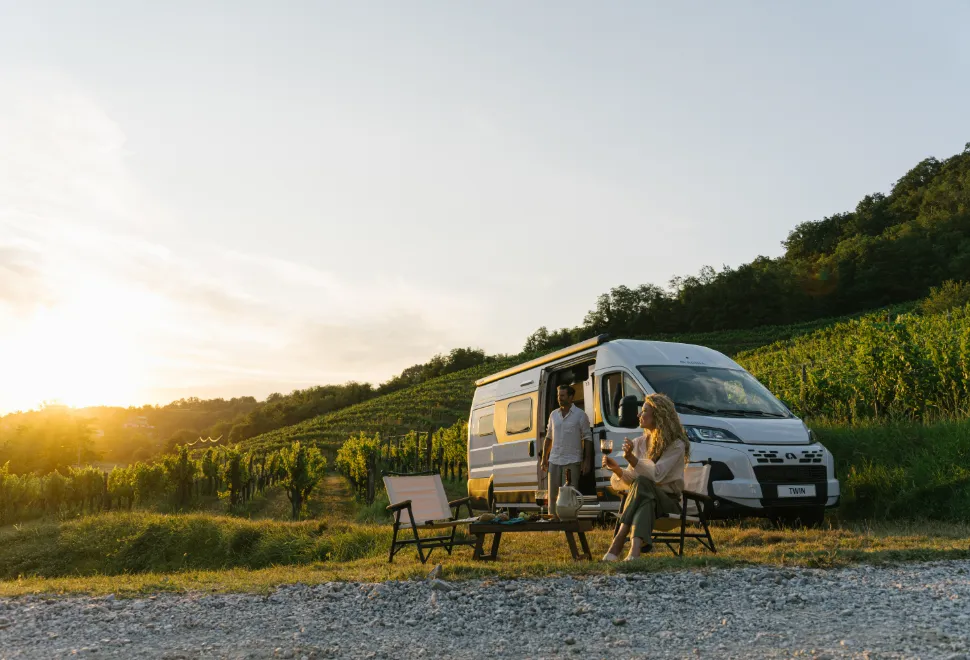
If your favourite destination is somewhere with narrow lanes, think about a campervan or a narrow-bodied coachbuilt. Then, when you get to a campsite, will you walk or cycle? Or will you want to explore in your campervan? Keeping it compact will help enormously with parking, especially in towns.
If you’ve retired and have all the time in the world for a grand European tour, it may be more important to ensure you have loads of storage and a payload to match.
Remember, too, that the Calor gas cylinders usually used in the UK are not replaceable/refillable abroad, so a larger fitted LPG gas tank or, perhaps better still, a diesel-fired boiler/heating system will be advantageous. Very little gas is used for cooking (in comparison to heating), so this becomes even more important in the cooler months of the year.
If you’re a foodie, you might be looking forward to cooking in your motorhome; in which case, preparation space will be as important as the facilities on offer.
Most models (apart from VW-sized campervans) can be specified with an oven, even if one is not standard, but microwaves are rare in imported models (and can usually only be used when you hook up to mains electricity, unless you have a powerful inverter and battery capacity to match). You may find an extra cupboard a lot more useful than an infrequently used microwave.
If you want to take bikes, will you need a garage, or are you happy to hang them on a rack on the back of the motorhome? Think about other bulky stuff you’ll want to carry – free-standing awnings for extra living space, kids’ toys, the barbecue and outdoor furniture.
And if you’re travelling mob-handed, is there sufficient space for everyone’s clothes – even four spare pairs of shoes or boots take up quite a lot of room!
Choosing the right layout in your campervan or motorhome, to suit all of the above, can be a complex process.
The best campervans and motorhomes to buy
The best campervans and motorhomes to buy? If all of the above has whetted your appetite to buy a new campervan or motorhome, check out some of the best new models of 2026, as selected by our team.
Each year Out & About Live assesses the latest models and picks the best of the best in the Campervan Awards and Motorhome Awards, in association with leading consumer finance provider, Creation.
FAQ
-
Which is the best motorhome to buy?
We announce the best campervans and motorhomes launched each season in the annual Out and About Live awards. These award winners are a great place to start in your search for the perfect model to suit you.
-
How to choose a motorhome
Think first about how you're going to use it. Do you need a small campervan that can double up as a car or venture down tiny Cornish lanes? Or do you want more luxury for long-term touring?
Will you do all your cooking on board, so you need a spacious well-equipped kitchen? Or do you prefer to barbecue outside or eat out at the pub?
How many berths do you need (will children, grandchildren or friends ever increase this number)? And do you need the same number of belted travel seats (sometimes its useful to have extra passenger carrying potential, especially if kids sleep in an awning or tent adjacent, or you use the vehicle day trips)?
Will you stay on rally fields, at festivals, or on aires in France, or do you plan to use full-facility campsites? There's no point is having that large separate shower if you're not going to use it.
If you're not sure about the size/type of motorhome you want it's best to hire one first. -
Which motorhomes to avoid
There are no specific models to avoid but vehicles from well-known and respected brands tend to hold their value best. In campervans, we'd stick to models that are type approved and registered with the DVLA as a 'motor caravan' if possible. For motorhomes, we'd try to steer clear of brands that have ceased trading or no longer have a UK importer.
-
What is better, a campervan or a motorhome?
A campervan will usually be easier to drive, more manoeuvrable, with better visibility. It benefits from the more rigid structure of a steel-bodied panel van and will be less prone to water ingress issues further down the line.
A motorhome, however, will usually have more living space with a wider body and flat sides. It's easier to insulate a motorhome so it may be more suitable for all-year use (but always check for details like inboard water tanks if you're going skiing).
Neither type is 'best', it's horses for courses...
Latest motorhome articles
Explore our magazines
Enjoy expert tech help, travel and campsite inspiration, buying advice, reviews, and more with our best-selling magazines and guides.

Buying Your Perfect Motorhome
Buying Your Perfect Motorhome is the ultimate guide to turn your motorhome adventure into reality. From models starting at £20k to luxury options, layouts, finance, insurance, and a dealer directory, it has everything you need to find your dream motorhome.

MMM magazine
MMM is the UK’s best-selling motorhome magazine and your key to unforgettable trips, both in the UK and overseas. Packed with expert reviews, advice and maintenance tips to help you make the best choices and keep your motorhome roadworthy.


