
Watch as an Outwell tent undergoes hurricane force wind test
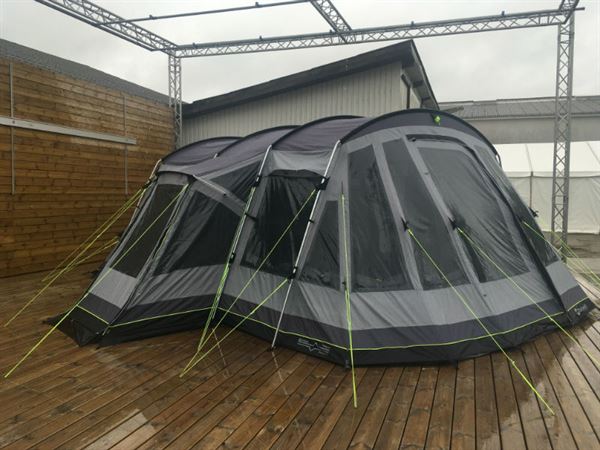
If you've ever camped in a storm you'll know what its like to be inside a tent as it takes a battering from the wind and rain.
It can be a hairy experience but, as the walls shake and poles shudder, it's reassuring to know that your tent has been tested to cope with extremes of wind speed.
But how do tent companies make sure that their models can stand up to such wild conditions? At Outwell HQ in Give, Denmark, they have a special set-up for exactly that purpose. Tents are set up on a platform where a huge industrial fan blasts them with wind.
Outwell tents are featured in The Essential Guide to 2021 Camping, along with reviews of other products from popular manufacturers. Buy your copy here.
After that, a rain machine sprays them with torrents of water. And sometimes they do both at the same time. The idea is to make the conditions as bad as possible to find out how much they can stand up to. And on a recent visit to the Denmark, I found out exactly how much that is first hand!
The first test was carried out with fairly strong windspeeds of around 85kph (around 50mph). Even in a typical summer, we rarely get conditions like that in the UK and certainly most people would choose not to pitch a family tent in that sort of weather. Nevertheless, the tent stood up well to the relentless battering, with the occupants emerging smiling and bone dry.
Then it's my turn to get inside. The wind machine cranks up and starts to blast the tent. It begins fairly steadily and although it's getting noisy inside, the tent is coping with it well. So far, so good. Then I hear a change in the tone of the engine as the speed starts to pickup. By now, if I'd been camping I would have fled my tent and headed for shelter, but not this time.
Still the speed increases, then finally it reaches breaking point. The guylines are whipped up from the platform and the tent is caught by one final gust, sending it - and me - flying into the air. Instantly the machine switches off and calm descends. I get to my feet, unhurt, and slightly exhilarated by the experience.
It turns out that the windspeed had reached 175 kph (110mph), the equivalent of the upper scale of a Category 2 hurricane, capable of ripping up trees, blowing the roofs off buildings and destroying mobile homes. For context, Hurricane Sandy, which killed 233 people and caused $75 billion of damage in 2012, was only 5mph stronger. In other words, the sort of conditions that no-one would be camping in. That's what it took to finally reach breaking point for this Outwell tent, and I reckon that's pretty impressive. Bear in mind too that the tent had already been pitched and subjected to similar tests for an extended period.
So next time you're camping in strong winds, remember what that Outwell was capable of dealing with and feel reassured. If you've pitched your tent properly you should be as safe as houses.
Next Shows

The Norfolk Motorhome & Campervan Show 17th - 19th July 2026
Join The Norfolk Motorhome & Campervan Show, 17-19 July 2026, for the Out & About Live Summer Party! Explore motorhomes, live demos, an...

Retro Festival 7th - 9th August 2026
Retro Festival celebrates timeless hits, vintage vehicles, fashion shows, and fairground fun.

The Western Motorhome & Campervan Show 21st - 23rd August 2026
Join The Western Motorhome & Campervan Show in Malvern, 21-23 August 2026, for live country music, 450+ motorhomes, and a weekend of ca...