
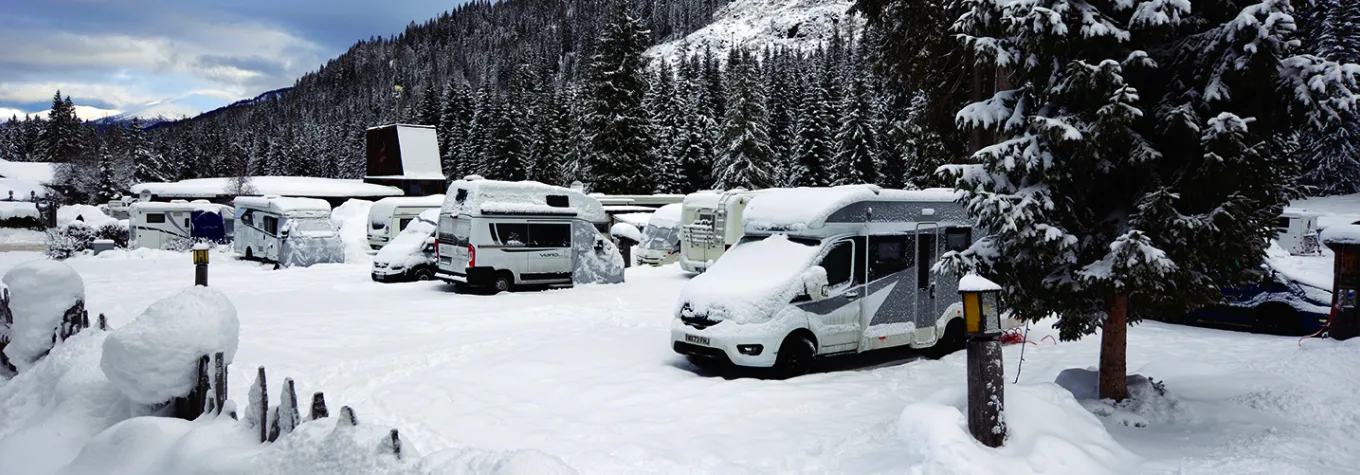
How to winterise your motorhome
Technical advice
Can a motorhome be used in winter? The answer is yes. Motorhoming in winter is a joy with fewer crowds, quieter roads and easier campsite bookings.
If you plan to use the motorhome all year, you should know about winterising water systems and workarounds. You also need to consider winter tyres, travelling to snowy places, proper heating and packing the right gear.
Plan your itinerary in advance to work around limited opening hours for places to be visited.
If you plan to store the motorhome over winter, have a checklist of tasks to do first. Empty the water tanks, lift cushions to allow good airflow inside, and use a dehumidifier.
Putting the motorhome on axle stands can extend the life of your tyres significantly, but if you do develop flat spots there are ways around this which we'll explain in more detail.
And remember, even if you travel all year round, the motorhome will still be stood for a time, so the winter storage tips should also be followed.
This article covers advice on both storing your motorhome over winter and preparing a motorhome for winter camping, as well as essential tips for driving a motorhome in cold weather.

Rachel Scholes Content Editor: Motorhomes
Rachel Scholes Content Editor: Motorhomes
Page contents
- Tips for motorhome water in winter
- Frost control valves for motorhomes
- Best ways to avoid motorhome freezing
- What is Grade III insulation?
- How to keep a motorhome warm in winter
- Top tips for winter camping
- Charging motorhome batteries
- Motorhome gas in winter
- Tips for storing a motorhome for the winter
- Can you drive a motorhome in the winter?
- Essential products for motorhomes in winter
- FAQ
Join the Out & About Live family
Get the latest news and exclusive offers direct to your inbox
Discover your inner outdoors with Out & About Live. For over 20 years we have provided the very best advice to motorhomers, campervanners, caravanners and campers – whether you are looking for travel advice, the very best campsites, help with choosing a new ‘van, news, shows, what’s on and much more – it’s all on Out & About Live.
We would love to welcome you to the family so sign up to our FREE email newsletters so you don’t miss out any longer.
Tips for motorhome water in winter
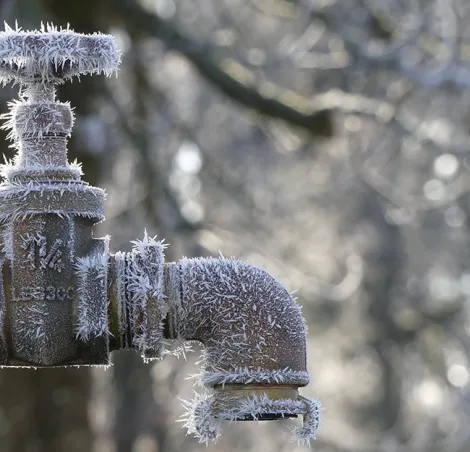
Whether you are storing your motorhome or using it, if the temperature drops below freezing, the first thing to be affected is water.
Draining down is good practice after each trip whatever the season to avoid stale water. This creates bacteria and algae in pipes and tanks.
In winter there’s the added danger of frost damage to taps, showerheads and pumps and a substantial hit to the pocket, especially if your combi boiler is affected.
Frost control valves for motorhomes
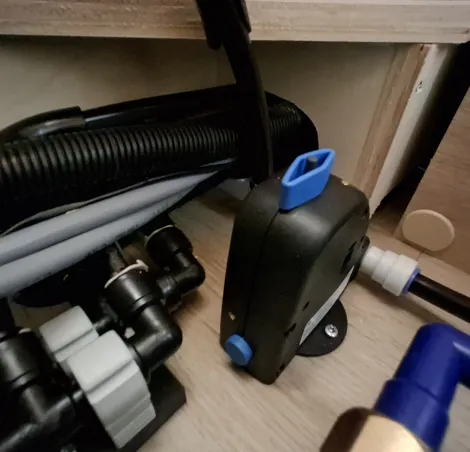
Most hot water boilers have a frost drain valve, that automatically opens when the outside temperature falls, hence draining the boiler and possibly (if your water pump is left on) the entire fresh water tank.
On older models with the Truma boiler this was a round peg-shaped button and was prone to releasing and dumping water on bumpy roads or sharp braking or well above freezing. Motorhomers invented all sorts of ways to stop this happening, but this will also stop the boiler emptying when it needs to, so be very careful.
The frost drain valves for new motorhome boilers are much better in this respect and therefore need less intervention.
Best ways to avoid motorhome freezing
- Empty the waste water and fresh water tanks
- Make sure the boiler frost drain valve is open or on auto
- You can leave the waste water tank valve open, particularly with underslung tanks, with a bucket underneath
- Tank heaters and insulation can help protect against cold, but not as well as having tanks set on board within the motorhome or in a properly insulated double floor
- Don't forget to protect the drain valve. One solution is to cover the drain valve with a temporary hat, perhaps made from a bubble wrap postage bag in a waterproof food bag
- If insulated underslung tanks freeze, they will take longer to thaw out
- Retrofitting a tank heater is now much easier with the availability of electrically heated mats fitted externally to the tank. In very cold weather, the use of these heaters is unlikely to be sustainable over long periods off-grid
- A good motorhome water system will take fresh water from directly above the tank into the living area and then be distributed internally. If you have exposed pipe runs, 12V pipe heaters can be combined with insulation
- Check for dips in the pipework or water traps designed to prevent smells where water will linger. If this is the situation, emptying a saline solution down the sink last thing at night will be worthwhile
What is Grade III insulation?
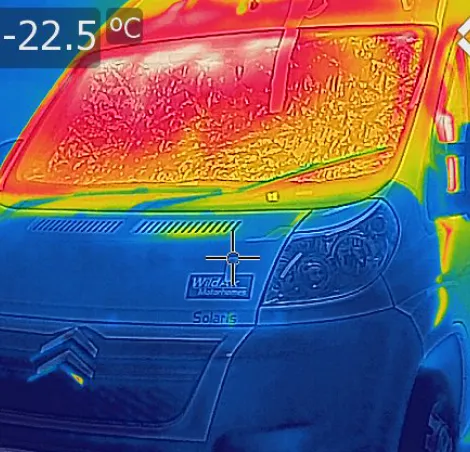
A motorhome that has Grade III thermal insulation does not mean it is fully winterised.
The UK EN1645-1 standard says:
In essence, Grade 3 means the motorhome is insulated and heated so an internal temperature of 20°C can be sustained with external temperatures as low as -15°C.
Grade 2 standard indicates the same internal temperature can be sustained at an external temperature of 0°C.
How to keep a motorhome warm in winter
When it comes to fuel, heating appliances are greedy.
For extended stays in extremely cold weather, it’s best to have a dual-fuel heater and go for a hook-up, using gas or diesel to supplement your energy supplies as necessary.
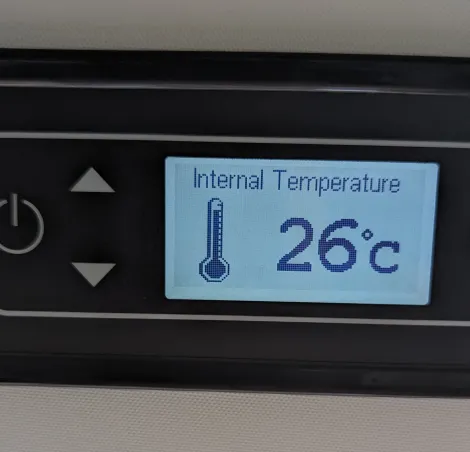
When out for the day, it’s best to keep the heating on with the thermostat around 10˚C.
If you have a separate water heater, keep this on or at least open up the locker door where it is located to ensure the temperature is kept up.
Whale’s underfloor water heater has a frost-protection setting.
If you have a Truma FrostControl drain-down valve fitted, extra care needs to be taken to ensure the temperature around the valve is kept above the 3˚C at which it automatically opens and dumps your water.
Top tips for winter camping
You can improve comfort levels, but make sure you don't block essential ventilation!
- Use a good-quality windscreen cover. An external cover stops condensation on the inside of the windscreen, which is worse when cooking in the kitchen
- Consider internal insulation for rooflights (even bubble wrap) and wrap-around insulation for pop-top campervans
- Add extra insulation to wheelarches
- Use carpet underlay in low-level lockers to improve floor insulation
- Never block vents – for safety reasons such as floor vents by gas appliances and venting around rooflights
- Never use your gas hob and/or oven for heating; this creates a small amount of carbon monoxide. Never bring a charcoal barbecue into your motorhome or awning while still warm
- Condensation under mattresses can be a problem if the bed locker is cold. Use a ventilation mesh layer (from boat chandlers) under the mattress
- If you motorhome a lot in winter, look for one with central heating like Alde, which provides a more even distribution of heat and helps eliminate cold spots.
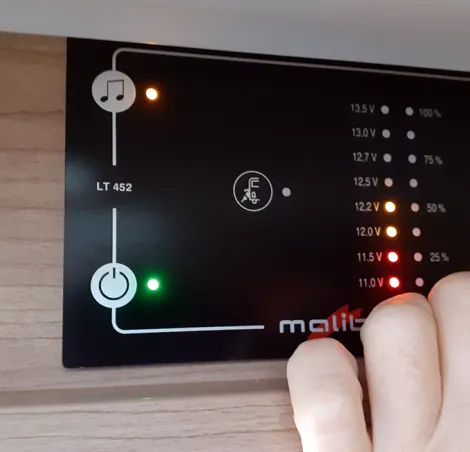
- Most heating systems need electric to function. So, when off-grid, it is essential you monitor your leisure battery’s health...
Charging motorhome batteries
Ideally, whether you are out motorhoming or it is in winter hiberation, the best way to keep batteries healthy is to plug the motorhome in.
If not plugged in, then ensuring the batteries stay warm is essential – any battery works less efficiently in the cold.
If you have a lithium battery fitted, these are more sensitive to the cold. Check out our lithium battery advice.
Solar panels will also not be as efficient with lower angles of sun and less daylight hours. In extreme cold, ice or snow will need to be cleaned off regularly.
A good B2B charging system could help, as this will add more charge to the battery while driving – to places of interest or from one campsite to another.
Motorhome gas in winter
Propane and butane
Only propane gas cylinders should be used in winter; butane ceases to gas off as the temperature approaches freezing. Propane continues to gas off until -40°C.
If you have refillable cylinders or a underslung gas tank, filling with Autogas will be fine. Autogas is a mixture of propane and butane with UK Autogas being mainly propane, thus suitable for winter use.
Gas and heaters
Gas space heaters and hot water boilers in a modern motorhome have external air intakes and waste gas vents. These intakes and exhausts should be checked to ensure they do not become blocked by drifting snow.
If using European Autogas, these can be different ratios, according to myLPG.eu, so ensure the gas tank is topped off with a more propane-rich product when winter camping.
Tips for storing a motorhome for the winter
If you are not planning to use your motorhome in winter, refer to our essential checklist...
- Clean the inside and remove any food that may attract vermin
- Ensure the fridge door is propped open to prevent mould forming
- Lift cushions or mattresses away from solid bases to prevent condensation
- Encourage air circulation throughout the motorhome by opening base locker doors where there are drop-out vents
- Spray or wipe silicone oil onto locker hinges to prevent rusting (Thetford’s seal lubricant is ideal as it’s safe with plastic)
- Use tank cleaner to remove any build-up of limescale and odours in your toilet cassette. Spray the lip seal with Thetford’s seal lubricant to keep the rubber supple and prevent it sticking over winter. Leave the valve open
- Fit winter covers to your fridge vents – these are also essential for winter touring
- Chock the wheels, leave the engine in gear and the handbrake off to prevent brakes binding on
- Fill the fuel tank to avoid a cavity in which condensation can form
- Increase your normal tyre pressure by 0.2 bar and move the motorhome from time to time to help prevent flat spots developing. For more motorhome wheel and tyre advice
- Eliminate any unnecessary drains on your vehicle and leisure batteries. A generously sized solar panel could help maintain the batteries but small solar panels marketed as battery trickle chargers are ineffective during winter months
- Consider protecting the external bodywork from a build-up of mould, algae and other environmental damage. Breathable covers are worth considering or use Fenwick’s Overwintering fluid, which provides a protective waxy coating
- Take the motorhome out for a lengthy run from time to time. This will air the motorhome, help charge the batteries and prevent mechanical components from seizing up
Can you drive a motorhome in the winter?
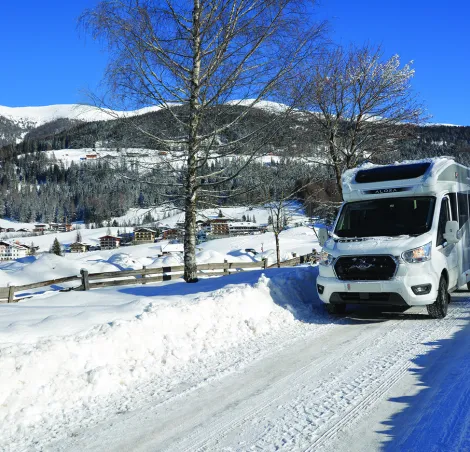
For most, driving a motorhome in winter is not going to be very different.
If you will be mainly touring the UK, top up with winter screen wash and check the radiator antifreeze.
Motoring organisations advise swapping to winter tyres. These provide better grip when it gets below 7°C.
But it's costly, and you'll need to find somewhere to store the summer tyres.
A compromise is four-season tyres, providing higher grip in warmer months than winter tyres. They don’t offer the same performance as summer or winter tyres in the right season.
Winter tyres are mandatory in some countries, during specified periods or just when roads are covered with snow and ice, while the regulations may also only apply to specific regions.
Several countries are happy to accept the use of tyres marked with M+S, generally found on all-season tyres. Germany, however, also requires the snowflake on three peaks symbol on the sidewall, also called 3PMSF.
In some countries, snow chains or socks must be carried and used as required by local conditions. Snow socks are not an alternative to chains but a low-cost and easy-fit solution to help get you out of trouble on soft snow.
Each country has different requirements; for further details refer to the AA's Driving in Europe Country by Country Guide. Tyre company, Continental, has a guide of European regulations for winter on its website.
Essential products for winterising your motorhome
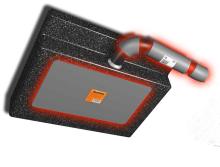
TankBlanket
TankBlanket is a heater that keeps water tank contents from freezing, attached to the bottom via a self-adhesive backing.
It also comes with a built-in thermostat so simply turn on and forget when the temperature starts to drop. The unit cycles on and off as needed. TankBlanket works best when used with insulation.
Price: from £165
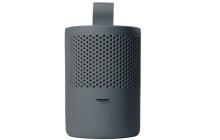
Lakeland Absodry Moisture Absorber
Who said dehumidifiers have to be bulky and ugly? This grey one from Lakeland includes 600g of moisture-absorbing crystals and is suitable for spaces up to 50m³.
Refills are available (as are green, blue and pink versions) and it's got a three-year guarantee. Plus, it doesn't need power. You'll just have to remember to swap out the crystals. Set a reminder in your phone.
Price: £27.99
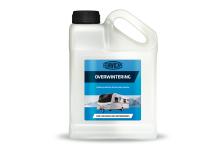
Fenwick's Overwintering Exterior Protector
Protect the exterior of your motorhome from dirt and mildew build-up when it’s laid up for the winter. The downside? You have to start with a clean motorhome.
Apply with a spray and it will only need another coat if ther weather's been particuarly rubbish. It’s a great alternative to the bulk and awkwardness of storing and fitting a fabric cover.
Price: £18
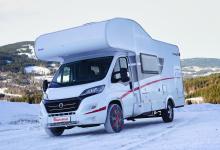
AutoSock snow socks
If you don't want the hassle of snow chains and need a 'just in case' option, try these snow socks.
They are approved for use in Switzerland and the EU, except Austria.
Price: around £80
FAQ
-
Will my motorhome water pipes freeze?
If any plumbing is located under the motorhome, then yes. That applies to water tanks and pipework.
Also if the motorhome is sat without heating on, it could affect internal plumbing, too, causing expensive water damage when the weather gets warm again.
-
Are motorhomes warm in winter?
Yes, motorhomes can be quite easily kept warm, especially more modern ones with the latest insulation technology. We'd recommend the Truma 6kW heater if you have an options when buying. Or if plugged into electric hook-up, a standalone fan heater can boost heat levels for short periods.
-
Can I leave my motorhome plugged in all winter?
Yes, as long as the charging system is a good one – however, we would always recommend driving the motorhome every few weeks to prevent flat spots in tyres as well as helping the engine and batteries. If you don't, inactivity does cause its own problems.
-
Can you live in a motorhome in the winter?
There's no reason why not, you just have to be prepared to deal with the possibilities of cold snaps and fewer campsites being open. Make sure you have a plan for when the temperature drops below zero as it can affect engines, heating and plumbing to name but a few aspects of motorhomes.
-
How do I store a motorhome for winter?
The key thing here is to reduce the risks of problems due to inactivity.
- It's best to take the vehicle for a run every two weeks
- Store on axle stands to help conserve tyre life
- Reduce the risk of damp and condensation causing mould by removing cushions and opening locker doors to increase ventilation
- Wedge open the fridge door
- Use a dehumidifier and empty it regularly
- Block up holes to stop rodents from nesting in the motorhome during the winter
- Plug the motorhome into the mains to keep the batteries in good condition, or check and charge regularly
Latest motorhome articles
Explore our magazines
Enjoy expert tech help, travel and campsite inspiration, buying advice, reviews, and more with our best-selling magazines and guides.

Buying Your Perfect Motorhome
Buying Your Perfect Motorhome is the ultimate guide to turn your motorhome adventure into reality. From models starting at £20k to luxury options, layouts, finance, insurance, and a dealer directory, it has everything you need to find your dream motorhome.

MMM magazine
MMM is the UK’s best-selling motorhome magazine and your key to unforgettable trips, both in the UK and overseas. Packed with expert reviews, advice and maintenance tips to help you make the best choices and keep your motorhome roadworthy.


