
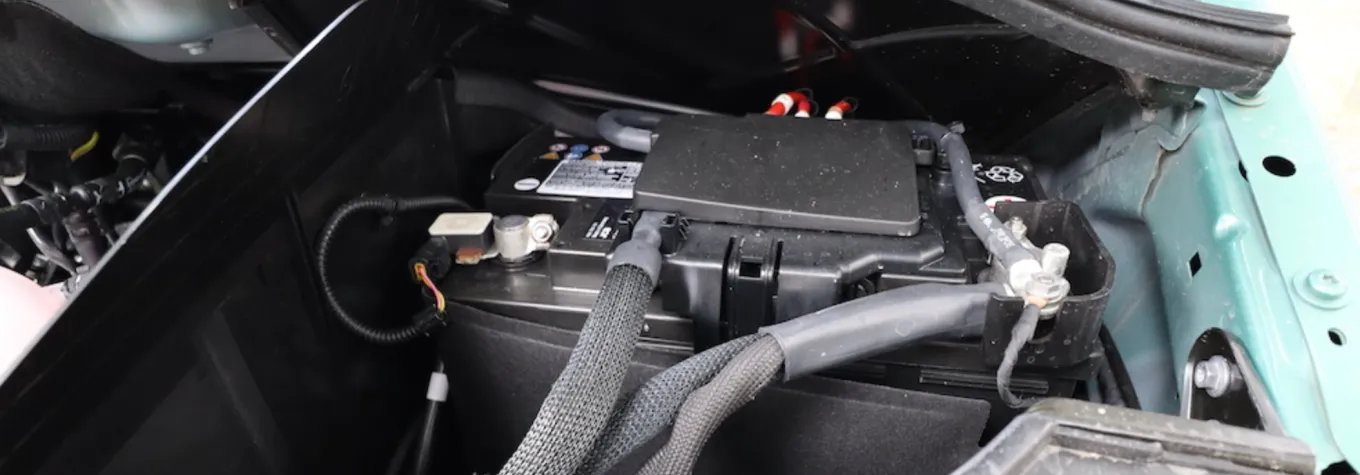
The lowdown on leisure batteries – is lithium right for your motorhome?
Technical advice
The lowdown on leisure batteries – is lithium right for your motorhome?
All you need to know about what powers your motorhome’s 12V electrical system, including details of a new type of battery hitting the market.
Modern motorhomes have two electrical systems: mains 230V AC – the supply in a typical home – and 12V DC. Both have different jobs, but often work in unison; the 230V supply will power heavy loads such as heaters, fridges, hot water boiler and battery chargers, while the 12V supply provides power for the systems that control them, as well as low-power items like lights.
The 12V supply comes from a battery, referred to as a leisure (or deep-cycle) battery, while the 230V power is normally supplied by plugging into a mains hook-up point – generally a bollard on a campsite.
This article is sponsored by Mr Batteries
In association with Mr Batteries Ltd
With over 25 years of experience with leisure batteries, Mr Batteries is a name you can trust with your motorhome's electrics.
The leisure battery
The heart of the 12V system is the leisure battery. The name is really a misnomer as this is the hardest working piece of kit in a motorhome. It is charged either by the base vehicle’s battery charging system, solar panels and/or when hooked up to the 230V mains system. When driving, the leisure battery is often connected to the engine’s alternator, which charges it.
When stationary a special device, called the split-charge relay, ensures the living area electrics do not flatten the starter battery. On all but the most basic campervans and motorhomes, a mains-powered charger and/or solar panel keeps the batteries charged. Some charging systems play a dual role, also charging the engine battery once the leisure battery is fully charged, while keeping the two separate.
Traditional lead acid batteries are similar to car batteries but, when used as leisure batteries, they should have much thicker plates to better withstand more frequent and more intense charge/discharge requirements. This is called a cycle and is how leisure batteries are graded.
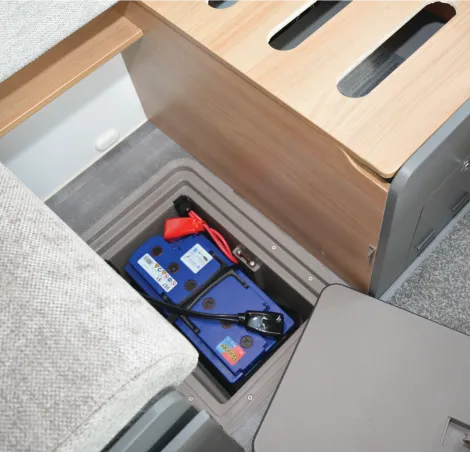
Most modern sealed lead acid batteries have a recombination lid, to trap the hydrogen and oxygen gases and condense them back to liquid in the battery.
These are commonly known as maintenance-free batteries. Traditional lead acid batteries are best protected by not draining them down to more than half of their capacity.
Life cycle figures are given for this 50% depth of discharge figure (DOD). So, a 100Ah battery should be considered to be only a 50Ah battery. With battery technology evolving and demands becoming greater, there are now five types of leisure battery.
The most prevalent and most basic is the wet lead acid. The budget versions of these batteries are likely to have a shorter service life, with wet batteries typically producing in 200-300 50% discharge/recharge cycles in their life.
In most cases these should come with a two-year warranty. In AGM (absorbed glass mat) batteries, the electrolyte is soaked up in a form of fibreglass matting and sealed to guarantee no spillage and no maintenance.
Traditional lead acid batteries are best protected by not draining them down to more than half of their capacity. Life cycle figures are given for this 50% depth of discharge figure (DOD). So, a 100Ah battery should be considered to be only a 50Ah battery.
With battery technology evolving and demands becoming greater, there are now five types of leisure battery. The most prevalent and most basic is the wet lead acid.
The budget versions of these batteries are likely to have a shorter service life, with wet batteries typically producing 200-300 50% discharge/recharge cycles in their life.
In most cases these should come with a two-year warranty. In AGM (absorbed glass mat) batteries, the electrolyte is soaked up in a form of fibreglass matting and sealed to guarantee no spillage and no maintenance.
The plates are of deep-cycle construction (thicker).
These batteries are a higher cost, but the trade-off is higher cycles (500-600, twice that of the traditional type batteries), and more usable power as AGM can be discharged to 60% of the battery capacity.
Also now available is AGM carbon technology, which allows the batteries to achieve lower discharge, and higher cycle rate, by adding carbon into the plate manufacturing.
These batteries can be discharged to 70% and will provide over 1,000 cycles in their life and are of a cost comparable to standard AGM batteries.
Gel batteries are like AGM, but the electrolyte is stored in a gel form and can put up with more extreme conditions and temperatures.
Modern gel batteries can be charged with both AGM and gel profiles.
When being charged, gel, like all batteries, get warm, so the gel technically returns to acid, rises, covers the plates and, when it cools, it forms a gel around the plates again.
The latest battery technology is carbon nanotube (CNT). These batteries have been proven in the forklift truck industry for many years, and manufacturers like Eternity have now launched this technology in 12V batteries. Quasar CNT batteries have a combination of traditional lead grid plates and lead spined plates, which are inserted inside a carbon tube.
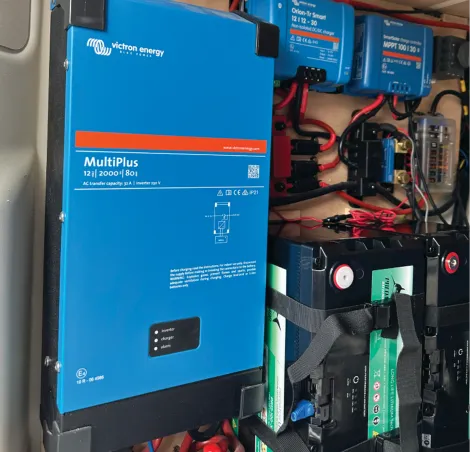
This process enables the battery to discharge multiple times more than traditional wet, AGM and flat plate carbon gel batteries. In fact, at 70% DOD. It is claimed the Quasar battery can perform over 2,000 cycles. The CNT battery technology is not only designed to be discharged to 90%, but Mark Baker from Mr Batteries also says the unique patented CNT technology allows electrons to flow with minimal resistance resulting in faster charge and greater discharge performance. In fact, CNT recharges at least twice as fast as AGM batteries.
The new CNT technology also reduces sulphation, which is the most common reason for premature battery failure. A further advantage of this technology is that, with 25% more electrolyte, these gel batteries never suffer from dry-out that is more common with AGM and gel batteries in their later life.
The final, and latest, type of auxiliary battery for your motorhome is lithium. Don’t get confused with the lithium-ion batteries in devices such as phones and tablets, as well as electric bikes; the ones powering motorhomes use iron, and are called LiFePO4 (lithium iron phosphate) or lithium ferrous.
Lithium batteries
These are lighter, charge faster, offer higher efficiency and last far longer – costs are higher, but prices are quickly becoming more affordable.
Whereas a few years ago, a 100Ah lithium battery would cost close to £1,000, and the equivalent high-quality traction battery would be around £300, now a LiFePO4 battery can be bought for around £400 on average.
Other advantages provided by lithium ferrous batteries are the ability to fully discharge without seriously compromising the battery life.
If you factor in the advice not to discharge a lead acid battery below 50%, then a 50Ah lithium ferrous battery can provide the same amount of usable energy as a nominal 100Ah lead acid battery.
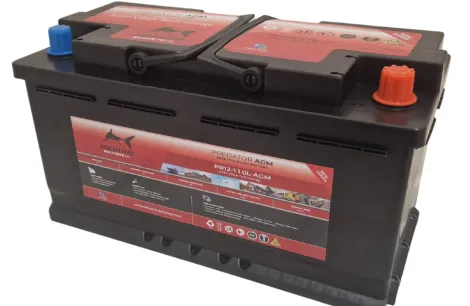
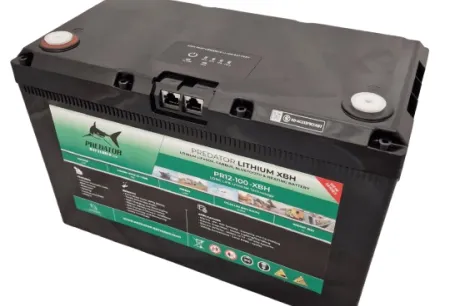
However, this technology is fragile. All the batteries need built-in battery management systems (BMS) that monitor the voltage of every cell to switch off the battery if the set voltage limits are reached for any cell.
Another difference is the working temperature range. You can use these batteries between -10˚C up to 60˚C, but the temperature when charging is between 0˚C up to 40˚C. Most lithium batteries do come with heat plates but check before buying; you can do permanent damage if the BMS does not provide temperature protection.
Predator lithium batteries, for example, are fitted with BMS, heat plates and also Bluetooth connectivity to monitor the battery’s health.
You may be able to find a drop-in lithium replacement for your existing battery set-up, but it is vital to ensure charging and management systems already fitted are compatible with lithium batteries.
Upgrades
There is a host of options and upgrades that will improve power supply and maintain a battery. A mains battery charger controls the charge into the battery. If you spend a lot of time wild camping, consider battery-to-battery chargers.
If you are electrically minded, you may be able to fit this device yourself, especially if you have a digital multimeter. These are inexpensive and there are many to choose from. This tool can be set to measure voltage (electrical pressure), current in amps (the electric stuff that flows through the wires) and electrical resistance, which is measured in ohms.
Mark recommends that, if you are considering a new battery-to-battery charger, the Victron Energy range is worth considering.
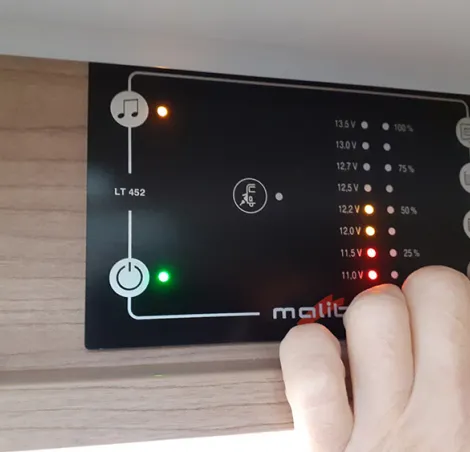
If your motorhome has an ‘intelligent alternator’ that converts braking energy to electrical energy to fast-charge the starter battery, then your motorhome may have a B2B unit already installed.
If you only stay at campsites with hook-up then most standard leisure batteries will satisfy your needs, as they only need to power your systems when you stop for a cuppa en route.
However, if you want to power a microwave or hair dryer without being hooked up to 230V, you’ll need an inverter. These generate a ‘mains’ AC voltage and the more expensive pure sine wave variants are recommended if you want to power sensitive equipment like laptops. Cheaper quasi-sine wave units may not work with all equipment, so check.
Typically, inverters are used for powering phones and laptops, where a 150W unit should be sufficient. If you’re charging electric bikes, then look at a 600W inverter. If you want a microwave, you will need to use an inverter of around 1,500W to power it, which will use 125A, so you’ll need beefy cabling to handle this.
Even a 600W (output) microwave will still take nearly 90A from a leisure battery via the inverter.
If this is your lifestyle then be aware you will need a significant battery power bank to support such an inverter and microwave combination.
If your needs cannot be supported by one leisure battery, then adding another matching battery is the best way to double your independence. Make sure each leisure battery has its own in-line fuse for safety. Solar panels are ideal for topping up batteries if you have the roof space, the budget (decent panels are not cheap) and want your batteries always charged to optimum.
Mark suggests CIGS technology (copper indium gallium selenide), which is good at maximising output in low light (such as MIPV panels). The advice is to fit the largest panel or panels you can.
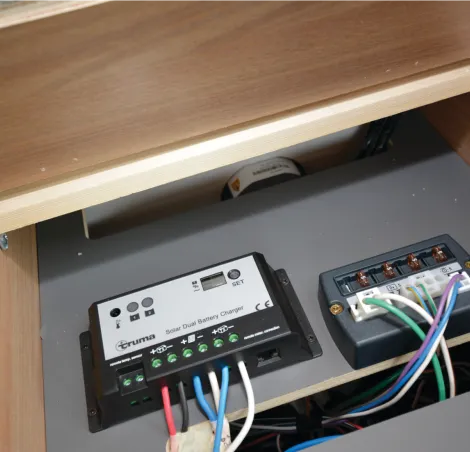
Make sure you have the appropriate MPPT (maximum power point tracking) solar regulator to maximise the panel’s output and match the battery technology and, if required, a regulator that can charge both leisure and starter batteries.
Any advice given by consultants and contributors is designed to be by way of suggestion only and does not negate a reader’s responsibility to obtain professional advice before acting upon it. Any such advice is not a recommendation on behalf of the Editor or publishers and is followed entirely at the reader’s own risk. Consequently, the Editor, consultants and publishers shall not be responsible for any loss or damage incurred by a reader acting upon such advice.
Latest motorhome articles



Explore our magazines
Enjoy expert tech help, travel and campsite inspiration, buying advice, reviews, and more with our best-selling magazines and guides.

Buying Your Perfect Motorhome
Buying Your Perfect Motorhome is the ultimate guide to turn your motorhome adventure into reality. From models starting at £20k to luxury options, layouts, finance, insurance, and a dealer directory, it has everything you need to find your dream motorhome.

MMM magazine
MMM is the UK’s best-selling motorhome magazine and your key to unforgettable trips, both in the UK and overseas. Packed with expert reviews, advice and maintenance tips to help you make the best choices and keep your motorhome roadworthy.


