

Motorhome Gas: What Fuel Type Should You Use?
Motorhome advice
Gas tanks or refillable cylinders for motorhomes
Most motorhomes and campervans have systems that are powered by lpg gas, generally heating and cooking, and many come with refillable gas tanks and cylinders. Here we explain what these are and the pros and cons of using them.
There are many reasons to buy a motorhome for your adventures; and the ability to stay warm and cosy inside, as well as cooking up a hot meal, is one of the most compelling – for that, your motorhome needs an lpg gas supply.
In terms of the diesel versus gas motorhome debate, you can go gas-free with diesel-powered heating and hot water, compressor fridges that work off electric only and either diesel or induction hobs, but most of these things will require hefty batteries and upgraded charging systems to allow you to stay away from hook-up for even a few days.
Usefully too, a motorhome gas system can also be used to power a bbq, thanks to special connections points fitted by a manufacturer or as an aftermarket extra by a qualified professional. Smaller campervans may also only have portable gas-powered hobs and not be fitted with hot water or heaters.

Rachel Scholes Content Editor: Motorhomes
Rachel Scholes Content Editor: Motorhomes

An introduction to motorhome gas
The most important thing to note about motorhome gas is a fact that one of our electrical experts quotes on a regular basis and that’s the amount of energy stored in a motorhome gas bottle in comparison to a battery.
Like for like, one 6kg motorhome gas bottle holds the same amount of energy as 42 leisure batteries. So, gas is a good thing for motorhomes, where space and weight is at a premium.
What does motorhome gas do?
As already mentioned, gas is fitted in motorhomes to power the cooking, the heating/hot water and the fridge. It’s very efficient in all respects, but it does add a layer of complexity with its system and servicing requirements.
How does motorhome gas work?
All motorhome gas systems work the same way: there’s a bulk storage container of some sort with a regulator. This feeds gas into the pipework that then runs to all the appliances that need it.
The refilling is where systems differ as there are two types of system. The most common is the exchange cylinder – such as the most well-known, Calor. You simply remove the empty gas bottle and swap for a new one.
The refillable gas systems for motorhomes involve an underslung tank or a special type of cylinder installed in an existing gas locker and this is topped up at LPG stations around the country.
Types of gas for motorhomes
There are two main types of gas – butane and propane.
We have found that some websites state butane is cheaper than propane and doing an online search showed that in some places this seems to be true and in others it is not the case.
Propane (C3H8)
Propane (C3H8) is probably the most widely used gas and one of many gases that make up generic LPG. However, Propane itself is a byproduct of the processing of natural gas as well as crude oil refinery.
It is odourless and when in the cylinder under pressure is a liquid, but converts back into gas within the system.
Pros:
- Propane can be used in lower temperatures
- Better for multiple appliances at once
Con:
- Needs odour adding in for safety
Butane (C4H10)
Butane (C4H10) has a smell similar to natural gas and comes from crude oil processing. For those looking to impress friends, it appears as two isomers – n-butane and isobutane.
Pro:
- Reported to be slightly cheaper
Cons:
- Butane doesn’t work so well in colder temperatures, producing less gas below 4˚C
- Comes in smaller cylinders commonly
The other thing is that butane, in the form of Campingaz cylinders, can be exchanged across Europe. The biggest gas brand in the UK, Calor, is only available in the UK, as is Flogas, one of the other main suppliers.
Butane and different European gas bottles (from Cepsa, etc) will require different regulators to work.
Renewable LPG
While still in early days, renewable liquid gas has been suggested as an alternative to the current systems.
While electrical heating and the like can work in brick built homes, the system complexity, size of units and high demands on the grid make it untenable for leisure vehicles.
According to Liquid Gas UK, the industry body for LPG, “two forms of renewable liquid gases (RLGs) emerge as promising solutions for the caravanning sector: bioLPG and renewable dimethyl-ether (rDME).”
It says that, ”BioLPG and rDME are chemically identical to LPG and are considered a ‘drop-in’ solution made from a diverse mix of sustainable biological feedstocks and processes, including domestic or agricultural waste, energy crops, or recycled carbon.”
It seems that this is available in domestic settings, but has not yet filtered into the leisure vehicle market, although watch this space.
Cylinders and regulators
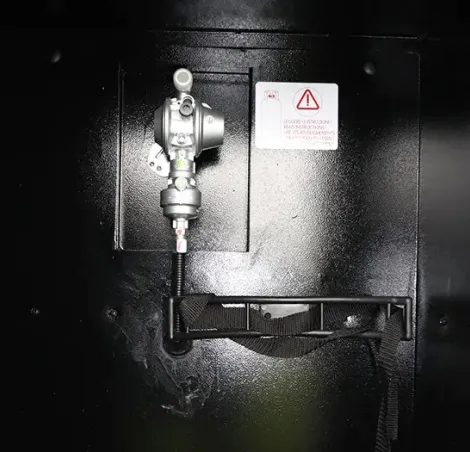
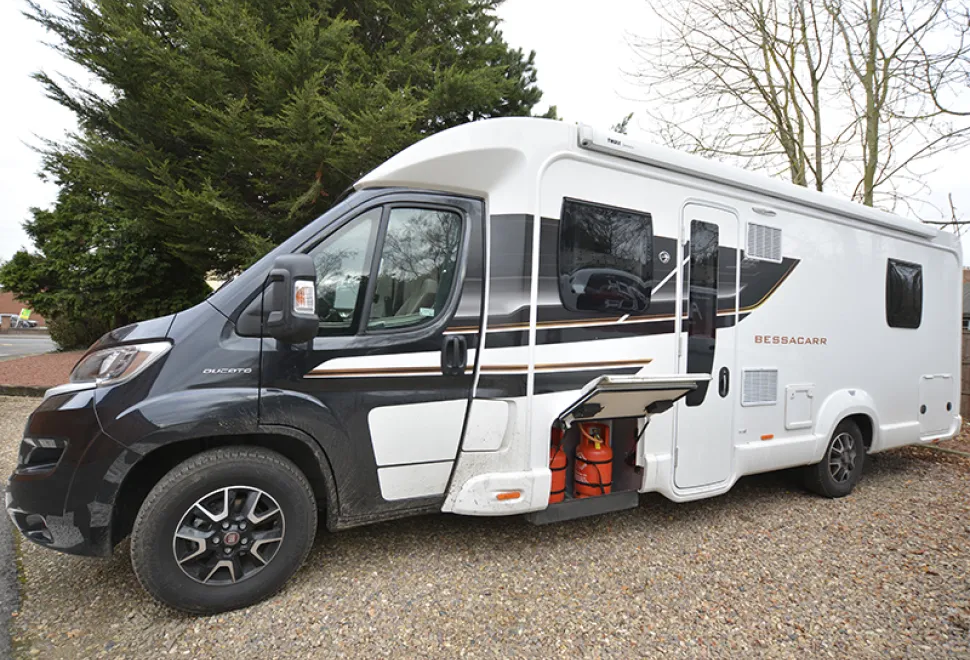
Exchange and refillable cylinders will live in what is called a gas locker. These will vary in size.
Some will be big enough for two 13kg cylinder (the largest size normally catered for in a motorhome); however, if this is the case, make sure you are happy lifting a full 13kg motorhome gas cylinder and manoeuvring it into the gas locker. There’s often a lip and the aperture size may affect how easy this is. Some lockers have slide-out racks or swivelling mechanisms to make this easier.
In smaller campervans, these lockers can be steel boxes with sealed doors, but they won’t be huge. If you are looking to commission a bespoke campervan or are buying used, they key thing to look at is gas drops in the gas locker venting any potential gas fumes, as well as a sealed door to make sure the gas doesn’t make it into the motorhome interior.
All motorhome gas systems have a regulator; this is either fixed directly to the bottle in terms of older models and smaller campervans, or it will be secured to the wall with a hose running to the cylinder.
In more modern motorhomes and campervans, if the locker is big enough for two cylinders, there will be two hoses, one to each, with either a manual switch to swap from the empty to the full or an automatic changeover that controls this for you, ensuring an uninterrupted supply.
The latter is very handy, but remember to regularly check which one is supplying gas as you don’t want to end up with two empty bottles!
You’ll need a gas spanner in all instances to unscrew either the regulator or hose fittings. These are reverse threaded.
Remember if you use butane or propane you will need a specific regulator – the former is set at 28-30 mbar and 37 mbar for the latter.
Gas vs diesel: what's best for motorhomes?
There is significant debate within the motorhoming community about whether gas is better than diesel for heating. And it’s a very individual thing.
Gas systems are common, and they are very low consumers of 12V power, which is the one thing that defines how long you can spend camping away from hook-up, etc. However, those cylinders take up a lot of space and some people don’t like gas for the potential risks.
Underslung motorhome gas tanks can get around the space issue, but have their own set of downsides (see section below).
Diesel systems take fuel from the vehicle tanks so free up a chunk of valuable interior space; on the flip side, they can be noisier and need more electric to keep them running – when you have this and a compressor fridge in a gas-free motorhome, your battery set-up will need to be good – the new breed of lithium batteries has made the switch to diesel more viable.
And while diesel hobs for cooking are available, induction hobs seem to be the preferred route to gas-free motorhomes (the same caveat about battery power and electrical set-up still applies.
LPG cylinders vs tanks
The second debate is about fitted gas tanks verses exchange cylinders and even user-refillable cylinders. There’s a few key points to highlight:
Exchange cylinders, from the likes of Calor, Campingaz and Flogas are possibly the most convenient, with numerous locations to swap your empty cylinders for full ones around the UK – garden centres, builders merchants, caravan dealers and even campsites.
However, the costs can be higher, particularly if you only have space for smaller cylinders and are heavy gas users. Also, if you plan to travel abroad, then you’ll have to do your gas usage calculations as the main exchange cylinder suppliers only operate in the UK. Campingaz is available all over Europe, but not in the same cylinder sizes and they can work out much more expensive in the long run.
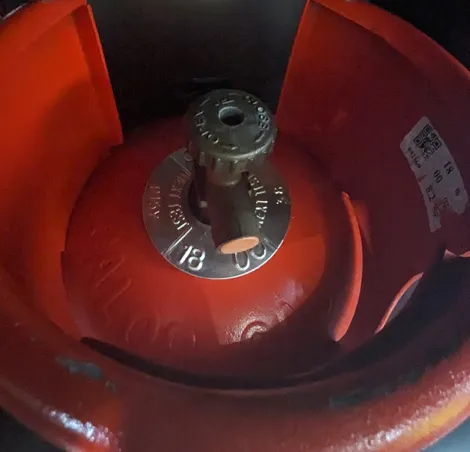
The second option, which may reduce the cost of gas, is a refillable cylinder system. This uses your existing gas locker and set-up but swapping out for cylinders that can be refilled at LPG fuel points across the UK. The system needs a shut-off mechanism that only allows the cylinder to be filled to 80% (this leaves space for LPG to convert to gas vapour before it is drawn through the gas pipes).
Make sure you have a remote fill point mounted on the outside of the vehicle – you are less likely to encounter resistance from forecourt staff – refilling cylinders on the forecourt is often not allowed because of a lack of understanding about the specifics of refillable systems in motorhomes.
Underslung tanks resolve the storage issues, if you have space for a tank, and people do talk about the lower cost of LPG at fuel stations, but factor in the installation and you’ll have to refill a huge number of times before you break even.
Also, with refillable LPG, there is a concern about the availability of LPG at fuel pumps in the UK. One of the biggest fuel station operators, MFG, has stated that it will withdraw LPG from all its forecourts by 2024. It’s primarily due to the move away from gas-driven vehicles towards electric ones.
That’s not to say there are not still options. There are other independent operators and some of the big oil companies' stations will continue to offer Autogas; however, the only one that seemed to have a filter for this on its forecourt finder was BP.
One of the refillable gas system manufacturers, Gaslow, has a useful search function on its website with some tips for finding a place to refill your LPG cylinder.
And, Marquis installed refilling points at three of its branches, Durham, Exeter and Surrey. As this is an attendant only service, a member of staff will top up your tank or refillable cylinder for you. https://www.marquisleisure.co.uk/lpg-gas
It’s also worth bearing in mind the ferry company and LeShuttle guidelines on LPG systems if you plan to travel to Europe. Most will have maximum amounts of gas and will require the system to be shut off while on board.
LeShuttle has a useful advice page listing its terms, while P&O guidelines can be found in its prohibited items page and Brittany Ferries lists this on its FAQs section
Using gas barbecues with motorhomes
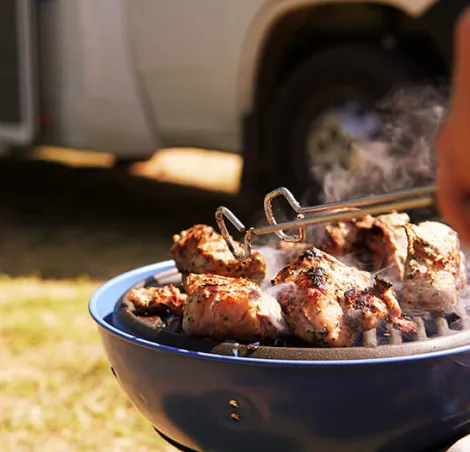
Gas can be used to power bbqs, but we’d recommend getting a proper point fitted into the side of your motorhome or campervan to be able to tap into the gas running in your motorhome. Either that or you’ll need a different regulator and it’s always recommended to lift the cylinder out of the motorhome and next to the bbq.
Remember, barbecues should never be used indoors and the hose and regulator should be checked regularly and changed when necessary.
Gas maintenance & safety
As with anything, gas systems can become dangerous if neglected or treated carelessly. DIYers should not tackle gas-related maintenance or servicing unless trained and if you do carry out any work, always get it checked by an accredited leisure vehicle technician that holds qualifications specifically for leisure vehicle LPG systems.
- Get the gas system checked annually – this often involves leak detection as well as a check of the regulator, hose, pipe and manifold. The technician will check that gas is being delivered to all appliances and check the retaining straps or holders in the gas locker are working. They will also check that the gas drops are clear – if you do tend to use the gas locker for storage, make sure nothing obscures these vents. There are over 550 service centres (including mobile technicians) listed on the Approved Workshop Scheme (run by the National Caravan Council – NCC), with minimum training standards. It’s worth bearing in mind that if you plan to hire out your motorhome, your gas system will need to have an up-to-date Landlord Gas Safety Record.
- Check gas hoses. If you’ve bought a used motorhome, it might be worth checking the age of the hoses in the gas locker. These do deteriorate with age and will have a date on them, as will most of the other elements of the gas system.
- Inspect cylinders. Cylinders need to be checked and renewed every 10 years – the same goes for regulators too. With exchange cylinders this is all handled within the normal return process; however, if your motorhome has a fixed cylinder or an underslung tank then this should also be checked regularly. Also, these should be recertified or replaced every 10 years – Gaslow has a swap scheme for such cylinders and tells its users that the cost of recertification can outweigh the cost of a new cylinder under its replacement scheme.
Also, it’s worth knowing that while LPG is odourless, the industry adds a smell agent to help detection. However, all gas appliances (hob, fridge and heaters) can give off carbon monoxide and this is undetectable by smell, sight or taste. So make sure a carbon monoxide detector is fitted and that it has been checked – the sensors in these devices do need replacing every 7-10 years. Insurance company, Lifesure, has some really useful advice on carbon monoxide in motorhomes.
Motorhome Gas FAQs
-
Where can I refill my LPG tank or cylinder?
Anywhere that offers autogas should allow you to refill your cylinder, although we’ve found a post on our forums that suggests it can be problematic in Europe. Here in the UK, as well as fuel forecourts that offer autogas, there are other independent options, such as Marquis and Gaslow, which also has a helpful guide on its website.
-
Butane or propane: which one will suit my motorhome?
Propane is best for winter trips and more temperate climates, while butane is more efficient in warm climates – it doesn’t work very well or at all in below-freezing conditions.
-
Is there a difference between autogas and propane/butane in cylinders?
It’s worth noting that LPG in cylinders is quite clearly stated as propane or butane, but autogas can be a mix of the two.
The myLPG website (which also has a station finder) has a pretty useful breakdown, which implies that here in the UK it’s 100% propane. Other websites seem to indicate small amounts of butane, but if you fill up in the summer in European countries, there might be a higher percentage of butane and gas appliances may struggle to work in the colder months on this ratio.
-
How can I swap my gas cylinder in Europe?
UK-based brands, such as Calor and Flogas, can not be exchanged in Europe. If you are planning to be away for the 90 days that the EU now allows, then your gas supply may not last the duration.
There are various options: fit an underslung system that can be refilled; have a smaller UK cylinder to create space for a Campingaz cylinder that can be swapped across the Channel; or buy a European cylinder (Repsol and Cepsa are common Spanish brands) here in the UK, secondhand, and swap it at suitable outlets while on your travels. You’ll need the right regulator, too.
Check out our forums on gas in Europe, too.
-
How long does gas last?
It’s very subjective question – in summer it will last longer as you may be cooking outside on a bbq, and you won’t need the heating. If you are on hook-up, the fridge won’t be using gas.
However, in winter, the heating, hot water and cooker are more likely to be in regular use. Various forum users quote everything from three days to three months, depending on time of year and equipment fitted and whether the 'van is hooked up to the mains.
You can work out an estimated consumption based on all your gas appliances as they will all quote a gram per hour figure, but unless you have an analytical mind, you might end up tearing up your notepad of calculations. We’d be really interested to hear from those who’ve done the sums and how they relate to actual consumption.
-
How do I know how much gas is left in my bottle?
There is no easy way to tell. The motorhome team here have had mixed results with the numerous gauges and level indicators on the market.
The easiest way, although it will require some experience, is by weight and feel. The gas sploshing about in the bottle will give you an indication, as will carrying some scales and subtracting the weight of the bottle from the total weight of the cylinder and gas when freshly swapped.
Another method is using temperature and warm water, as spotted on The Motorhome Holiday Company website, which explains that if you pour a cup of warm water down the side of the bottle and then run your hand down it, the bottle should be cooler where the liquid gas is in the bottle.
-
Can I drive with the gas on?
There is also something that can be built into regulators called a crash sensor, or other similar terms. This is a nifty device that will allow you to drive with the gas on – this is particularly handy if you want to heat water in preparation for arrival on a campsite or you want to run heating (if you travel in winter with rear seat passengers it is important to know that the cab heating won’t extend that far).
In the event of a crash, this device shuts off the gas. So, unless you have one of these devices, you should remember to close of the gas at the cylinder before starting the engine.
-
How can I swap my gas cylinder in Europe?
UK-based brands, such as Calor and Flogas, can not be exchanged in Europe. If you are planning to be away for the 90 days that the EU now allows, then your gas supply may not last the duration.
There are various options: fit an underslung system that can be refilled; have a smaller UK cylinder to create space for a Campingaz cylinder that can be swapped across the Channel; or buy a European cylinder (Repsol and Cepsa are common Spanish brands) here in the UK, secondhand, and swap it at suitable outlets while on your travels. You’ll need the right regulator, too.
Check out our forums on gas in Europe, too.
Explore more gas-related questions on our forums...
There are many gas-related questions, with possible answers on our forums. This covers everything from problems with hobs and fridges to underslung tank life, getting gas abroad and more. Browse and read as a guest or register for free to post your own question of help other motorhomers in need by providing your experiences.
Join the Out & About Live family
Get the latest news and exclusive offers direct to your inbox
Discover your inner outdoors with Out & About Live. For over 20 years we have provided the very best advice to motorhomers, campervanners, caravanners and campers – whether you are looking for travel advice, the very best campsites, help with choosing a new ‘van, news, shows, what’s on and much more – it’s all on Out & About Live.
We would love to welcome you to the family so sign up to our FREE email newsletters so you don’t miss out any longer.
Latest motorhome articles
Explore our magazines
Enjoy expert tech help, travel and campsite inspiration, buying advice, reviews, and more with our best-selling magazines and guides.

Buying Your Perfect Motorhome
Buying Your Perfect Motorhome is the ultimate guide to turn your motorhome adventure into reality. From models starting at £20k to luxury options, layouts, finance, insurance, and a dealer directory, it has everything you need to find your dream motorhome.

MMM magazine
MMM is the UK’s best-selling motorhome magazine and your key to unforgettable trips, both in the UK and overseas. Packed with expert reviews, advice and maintenance tips to help you make the best choices and keep your motorhome roadworthy.


