
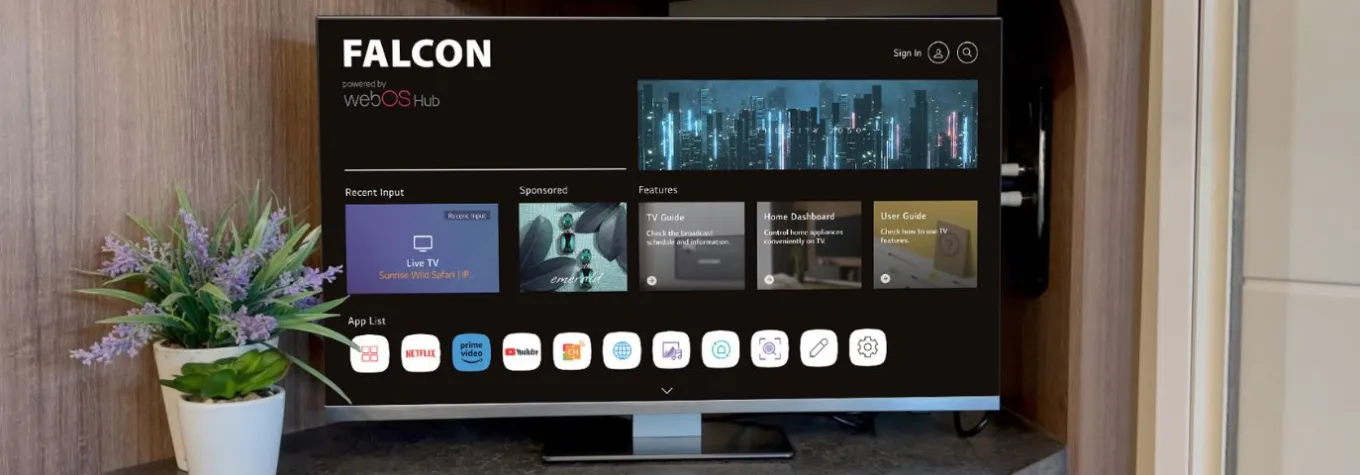
A Complete Guide To Motorhome TVs
Technical advice
Are you a self-confessed telly addict? Read our complete guide to motorhome TVs.
For many people, there’s still nothing quite like unwinding at the end of a long day with your favourite TV show – whether you’re watching live sports from a secluded Scottish glen or streaming the latest drama on a Spanish campsite.
To get the best possible viewing experience in your motorhome, you’ll need to make sure that your set-up is fit for purpose…
Words and photos by Andy Harris
Can you use a normal TV in a motorhome?
Technically, yes, you can take your TV from home and use it in your motorhome. However, household televisions run on 230V AC power, so you can’t just plug one into a convenient lighter socket: you’ll need mains electricity or a suitable inverter.
Of course, using an inverter will drain your leisure battery and you could end up missing the last few minutes of a nail-biting thriller – you’ll never know who dun it!
So, for most people, a better alternative is a 12V TV, designed to run directly off the vehicle’s battery and, in the case of some models, built to withstand the shocks and vibrations that are inevitable when driving on UK roads.
Such TVs will probably be smaller than the one you have at home but, because of this, will draw less power than a domestic TV, putting less strain on the leisure battery.
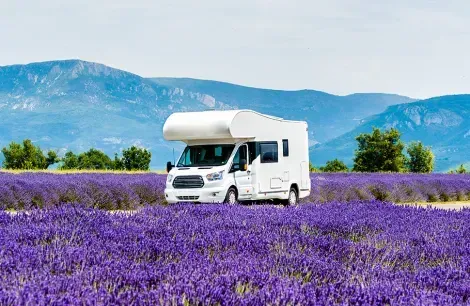
Browse motorhomes for sale
If you're in the market for a motorhome, you need to explore the huge range of motorhomes listed here on Out & About Live!
Use the advanced search to filter by budget, berths, manufacturer and much more, then save your favourites to your profile.
What size screen do you want?
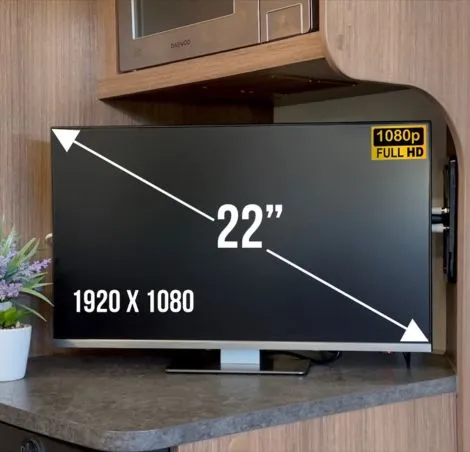
You may have a giant screen at home, but do you really want the same in your motorhome? Probably not! 12V TVs come in a wide range of sizes and it may be that, in a small campervan, a 14in screen will be sufficient.
Whatever size screen you choose, make sure that it gives a clear, bright picture even if you’re not sitting directly in front of it. Look at the viewing angles figures, as you could be watching TV from the side or looking up.
Do you need a TV licence for a motorhome?
Yes and no: if you’re watching or recording live TV (on any channel) or using BBC iPlayer, you’ll need a valid TV licence. The key rule is that the licence must cover you where you are watching.
If you watch TV when no one else is using your home TV simultaneously, your licence covers you. But, if someone is using your home TV while you’re watching at the same time in your motorhome, you’ll need an additional licence!
You don’t need a licence to stream from Netflix, Disney+, or Amazon Prime Video, etc, as you’re not watching live TV content.
What's the best way to get a TV signal in a motorhome?
There are three main ways to receive a TV signal in a motorhome: through an aerial, from a satellite dish and via the Internet, using WiFi.
An omnidirectional aerial is the simplest and easiest method for motorhomes. It will pick up signals from multiple directions, without needing to be adjusted. This is ideal when you move from one place to another, but getting a good signal may be a bit hit and miss if you’re out in the countryside. You can get aerials that are mounted on the roof or mounted temporarily using suction cups or a magnet.
For more reliable performance, especially in areas where the signal is weak, a directional aerial is a better bet. This type of aerial can be adjusted so that it points at the transmitter that gives the strongest signal. There are many models available; just search online and see which takes your fancy.
The only trouble with this type of aerial is that you need to know where to point it but there are apps and signal meters that can help you.
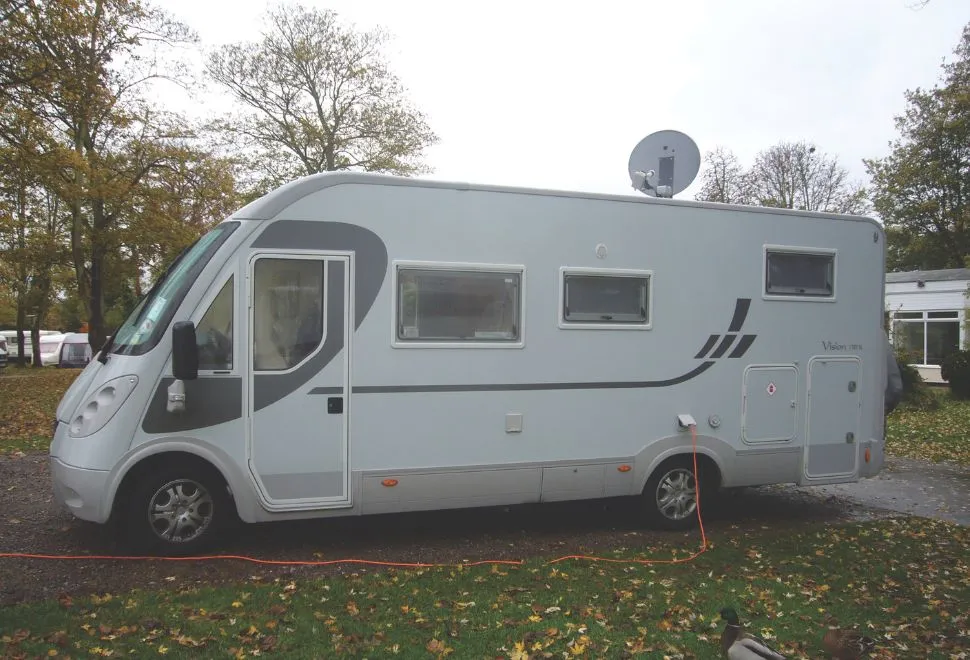
As long as it has a clear view of that part of the sky where the satellite is positioned, and you are located within the satellite’s ‘footprint’, a satellite dish is virtually guaranteed to give you a perfect signal in your motorhome. If you plan to travel abroad, a satellite dish will enable you to watch British TV; although, again, as long as you’re within the satellite’s ‘footprint’.
Search online to find maps showing you what channels are available, wherever you find yourself. Note, accessing British TV in Spain is not possible with a standard set-up. However, nothing is impossible and specialist suppliers may be able to offer a solution.
You will also need a satellite receiver. Some TVs have these built in. Otherwise, small 12V receivers are available and will connect to most televisions.
Is streaming a viable alternative?
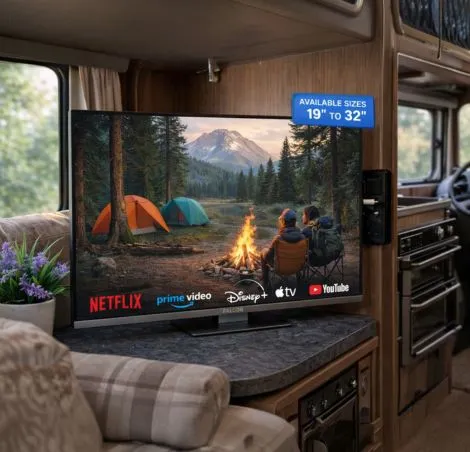
Absolutely – in fact, it’s increasingly the preferred method as long as you have a Smart TV. With a decent mobile WiFi hotspot or 4G/5G router, you can stream shows from Netflix, iPlayer, or Disney+ just as you would at home. WiFi can also enable you to skip traditional TV set-ups entirely, instead using a tablet, laptop or even a phone.
Keep an eye on your data usage, though – HD streaming can consume several gigabytes per hour.
The biggest problem here is that campsites are often in locations with variable mobile signal – streaming does need more bandwidth and a better connection.
So take a look at signal boosters. These can be used with PAYG SIMs, and you can even get cards with data that lasts a whole year, so you are not paying monthly for data you may or may not use.
Firesticks can be used to make a TV smart, as long as it has an HDMI and USB connection.
You can also use mirror casting with more modern TVs, using the relevant TV app, such as Sky Go, on your phone to cast to the TV. Look for a TV that supports the latest apps – ask about the operating system.
How to set up a satellite dish in a motorhome
This does depend on the kit you’re using, but as long as you’re within a broadcast area, you should be able to get a signal. First, find a clear view of the sky — if anything blocks it, you won’t get reception.
From there, the signal needs to be decoded. This can be done automatically by the TV or by connecting the dish to a satellite receiver.
Once connected, tune the system accordingly. It should then lock on and give you a picture, although you may need to adjust the dish or settings slightly.
Can you download programmes to watch offline?
If you have a smart TV, most streaming services let you download shows and films while online for later offline viewing. This is perfect for areas with no signal – just queue up some content before your trip. BBC iPlayer, Netflix, Disney+, YouTube, etc all offer offline downloads on smartphones, tablets, and most Smart TVs.
If you don’t have a smart TV, you can download programmes at home, using a USB drive or a portable hard drive. Make sure your TV has a USB input.
Have you thought about DVDs?
DVDs were first introduced around 30 years ago but are still a great way to watch films when you’re out and about in your motorhome. If you have a DVD collection, choose a TV with a built-in DVD player. Unfortunately, fewer and fewer TVs have these, in which case, you can use a portable DVD player which you will probably have to run from a small inverter.
The great thing about DVDs currently is that they can often be bought from charity shops for tuppence and are a great backup if you are in an area with no mobile or TV signal.
What about TV sound?
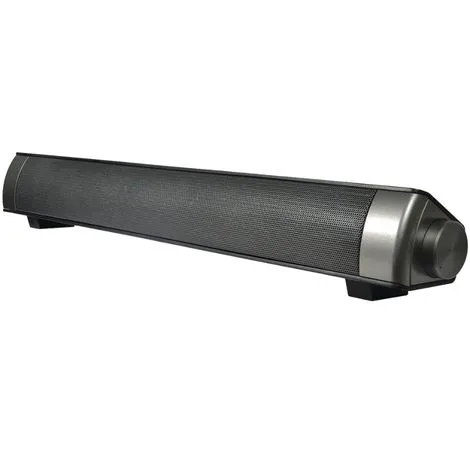
It’s inevitable that a small TV will have small speakers. Although the sound quality and volume may be quite acceptable to you, if it isn’t you can usually attach a soundbar which will improve both.
You might even be able to use Bluetooth to transmit the sound to an external speaker and wind the volume right up high! (Always consider your neighbours.)
How do I attach my TV to a wall mount?
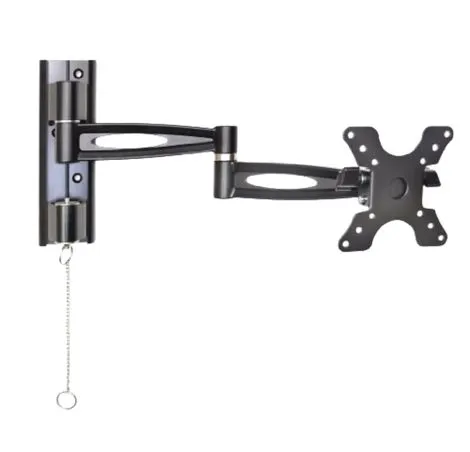
Most modern TVs follow the VESA mounting standard – a universal hole pattern system. That means if your TV has VESA-compatible (typically 75 by 75mm or 100 by 100mm) mounting holes, it will attach to a suitable bracket. Just make sure your bracket and the surface it’s attached to can support the TV’s weight.
If you don’t want to permanently mount the TV, make sure you store it safely when you’re on the move. Several manufacturers make suitable padded bags. This is not only great when travelling, but one TV brand even recommends removing the TV from the motorhome or campervan in winter to help prolong its life.
Where to buy a TV
While there will be plenty of options online, nothing beats looking at a TV in the flesh and our outdoor shows make the perfect place to shop for a new box, with multiple suppliers offering a range of prices to suit your budget.
If you need to order without seeing the product first, take a look at online reviews via Google and Trustpilot for the product, the supplier and the TV brand.
What about a TV projector?
You may not have thought about this but, no matter how big your motorhome is, there’s probably a way to use a TV projector. Why would you? Well, you can buy a decent one for around the same price as a mid-range TV. They are smaller than a TV and can be placed anywhere, even outside!
The downside is that you need a screen of some sort but, if you want a big picture and don’t mind a bit of faffing around with a screen, some cables and possibly a speaker, a projector could be well worth considering.
Final thoughts
The first 12V TV I bought was made in the USSR. It had a 5in black and white cathode-ray tube screen, a knob to tune it with, volume and brightness controls and an aerial stuck in a socket on the top. It was the only 12V TV on the market at the time.
Things have changed dramatically and now, when buying a TV, aerial, satellite dish, mounting bracket or projector, you really need to take the time to ensure that the TV has the features you want and need.
It’s so easy to get things wrong and, when you’re sitting down in your motorhome, it’s nice to know that the whole set-up is working just as you expected.
FAQs
-
What is the best TV for a motorhome?
The best TV for a motorhome is typically a 12V model, designed to run directly from the vehicle’s battery. These are more suitable than household TVs, which require mains power or an inverter and can quickly drain your leisure battery.
Rather than one standout model, the right choice depends on how you plan to use it. Key things to consider include:
- Screen size – smaller screens (around 14in in compact campervans) are often more practical and use less power
- Power consumption – lower draw helps preserve battery life
- Signal type – Whether you’ll use an aerial, satellite dish or WiFi
- Connectivity – access to streaming services, USB playback or DVDs
- Viewing angles and sound – important in a confined space where you won’t always sit directly in front of the screen
-
What is the best TV aerial for a motorhome?
The best TV aerial depends on how and where you travel. There are two main types to consider:
Omnidirectional aerials are the simplest option.
Directional aerials offer more reliable performance, particularly in areas with weak signal.
-
What is the best satellite dish for a motorhome?
Manual portable dishes
These are the most affordable option, but you’ll need to align them yourself using a signal meter.Roof-mounted manual dishes
These are permanently fitted to the motorhome but still need to be adjusted by hand.Fully automatic systems
These are the premium choice. At the press of a button, the dish aligns itself automatically, making them the easiest and most convenient option to use.
Latest motorhome articles
Explore our magazines
Enjoy expert tech help, travel and campsite inspiration, buying advice, reviews, and more with our best-selling magazines and guides.

Buying Your Perfect Motorhome
Buying Your Perfect Motorhome is the ultimate guide to turn your motorhome adventure into reality. From models starting at £20k to luxury options, layouts, finance, insurance, and a dealer directory, it has everything you need to find your dream motorhome.

MMM magazine
MMM is the UK’s best-selling motorhome magazine and your key to unforgettable trips, both in the UK and overseas. Packed with expert reviews, advice and maintenance tips to help you make the best choices and keep your motorhome roadworthy.


