

Why use a levelling system for your motorhome?
Technical advice
A complete guide to motorhome levelling systems
Weirdly, levelling a motorhome is one of the most individual processes when pitching up. Some people deploy complicated apps and/or several spirit levels to ensure they are level to an enth of a degree. Some like to level by feeling alone.
Whatever the process, though, ensuring a level motorhome has all sorts of benefits and, here, we go into all the options.

Rachel Scholes Content Editor: Motorhomes
Rachel Scholes Content Editor: Motorhomes
Why use a levelling system for your motorhome?
Motorhomes often have a nose-down stance, which means the back end sits higher; this is especially noticeable on more lightly laden motorhome or new models. And even if not, campsite pitches come in a variety of slopes and degrees of flatness.
There are various options for levelling a motorhome, from manual cheap fixes to expensive aftermarket systems, so it’s easy to find the right option for you no matter what your budget.
Why is a level motorhome important? It’s all about sleeping really, as a level bed means you’re less likely to end up with both of you squashed onto one side of the bed in the night. Sloped pitches can also affect the efficiency of a fridge when it's working on gas. Plus, waste water from the shower tray may not drain into the tank properly.
Generally, here we are talking about levelling systems, which are different to suspension upgrades and air suspension. Air suspension can transform the ride and brings safety and handling benefits and provide benefits on a campsite, while a levelling system helps with a flat pitch on site.
A self-levelling system is different and works when you get to a campsite by levelling the motorhome in seconds at the touch of a button, making it rock steady. It has many other benefits, too, such as lifting the motorhome to be able to change a wheel and allowing the motorhome to be laid up over winter without resting on the tyres. The latter can cause flat spots and shorten the life of the tyres.
The final benefit of a self-levelling system is that you will no longer need to carry bulky levelling ramps and you may be able to use them to help drain water more effectively from the waste water tank.
Types of levelling systems
There are two key types of systems: manual, whereby you use a form of jacks and ramps to obtain a level motorhome, then there’s the automatic self-levelling systems that take the hassle out of it for you.
While the latter is a great idea, just to be able to press a button and the motorhome levels itself, these systems can be expensive and complicated to fit. So, let’s start with the basics.
Manual levelling systems for motorhomes
Levelling blocks, wedges and ramps
The beauty of a levelling ramp, also known as blocks or wedges, is that they can be very simple. But even here, there are degrees of complexity and cost. A set of very basic wedges (a simple triangle shape) costs around £17 for a pair from various suppliers – Milenco, Froli, Fiamma and more.
Then there are stepped versions and models that you can add wedges at the back of the wheel for more security. Plus there’s a variety of heights for greater lift.
Things have come a long way from my parents travelling around with a load of wood blocks in the passenger door step well.
Consider where you are going to store them when not in use, the weight of the ramps and the material (plastic is lighter, while rubber ramps can provide better traction).
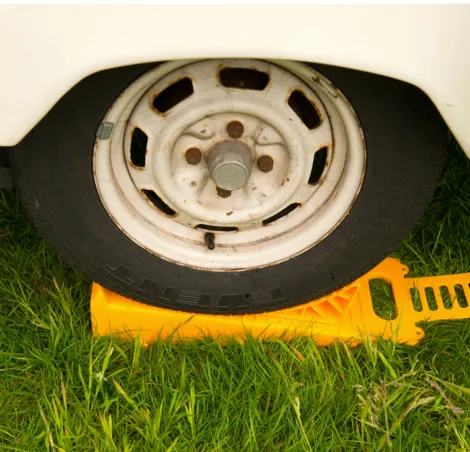
How to use levelling ramps
- Decide which wheel need raising – it may be both on one side, or just one corner.
- Tuck the ramp in front of the relevant wheels.
- Inch onto and up the ramp, with the wheel central – an assistant will help here.
- Apply the handbrake and add a wedge behind the wheel, to secure it in place.
- While a spirit level may help initially, after a while, the process will get easier and more intuitive and you’ll be able to work out by rough feel if the motorhome is level or not.
- Always reverse back off the ramps when leaving the pitch – it’s a common mistake to forget about them and drive forwards, with a potential to damage the underside if so.
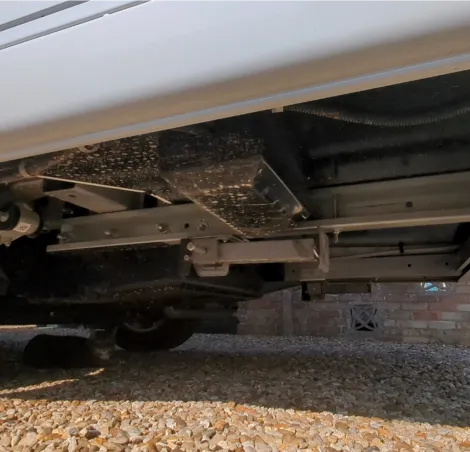
Manual levelling systems for motorhomes
Corner steadies
These are often fitted to motorhomes with long rear overhangs and can be particularly useful for those with soft rear suspension.
There are electric versions, but most come with a winding handle and a lowish jacking point at the rear of the motorhome.
Most of these are just used for on-site stability and not really ideal when needing to make big changes to be level on a pitch.
You can get adaptors that allow the winder to be controlled by a cordless drill if the effort of a winding handle sounds too much.
Manual levelling systems for motorhomes
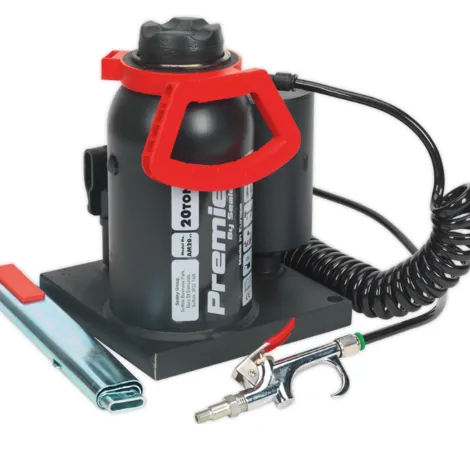
Pneumatic jacks
The final manual option, and one that’s possibly more suitable for tasks like changing a wheel, is airbag-based systems.
However, a company called LocknLevel offers an air cushion-style pad that can lift a wheel up to about 14cm for on-site levelling.
Remember to always used axle stands when working underneath a motorhome.
Motorhome self-levelling systems
Self-levelling systems make pitching up pretty easy, especially on bumpy or hilly campsites – some of the best locations can have sloped pitches. However, there are two key types depending on requirements.
The most common use hydraulic jacks, while the other main option has electric motors to extend the stabilising legs. The electric versions are quieter, generally lighter and need less maintenance; however, hydraulics legs can cope with heavier loads and therefore are more suited to bigger motorhomes.
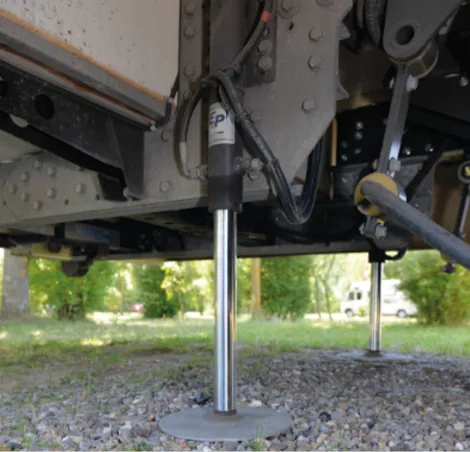
Hydraulic self levelling systems
Hydraulic levelling systems work with fluids doing the heavy lifting. This therefore requires a pump and a significant amount of electrical gubbins.
Four telescopic legs are fixed underneath the motorhome, one at each corner, and these are extended at varying heights to make the motorhome level.
If you are thinking about attempting a DIY installation of a hydraulic levelling system, think again as the systems are complicated and therefore best left to a professional. Aligning the system is difficult and many of these have warranties that are dependent on installation being done by an approved company. Because of this, installation takes longer and so can be more expensive than the simpler set-ups.
This system also needs regular maintenance, some of which can be done at home. Checking for leaks and damaged components is vital. Fluid levels need to be monitored and then changed every three years.
These systems are also heavier, taking up valuable payload (around 50kg to 70kg), but users can leave items like ramps and jacks at home, offsetting some of that extra weight.
The lifting process is pretty quick, though, and a vehicle can be stored on legs over winter, reducing the risk of flat spots and bulges on tyres. This can also be an additional security measure. However, if you are planning to do this, check manufacturer guidelines for extra maintenance tips. One brand states the rams may need protecting from corrosion with silicone or dry PFTE spray.
Hydraulic self-levelling system providers
Lincoln Towbar Centre
Unit 14, Churchill Business Park, Sleaford Rd,
Bracebridge Heath, Lincoln LN4 2FF
T: 01522 524444
M-Level
Unit 11 Aynsley Mill, Portland Works, Sutherland Road,
Longton, Staffordshire ST3 1HH
T: 01782 703407
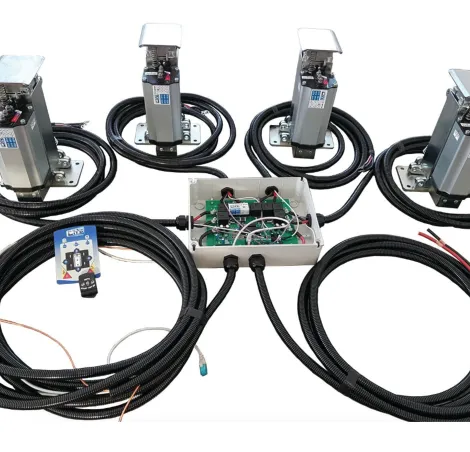
Electric self-levelling systems
The final type of levelling system is electrically controlled and operated. They are generally lighter and simpler, and it is possible for a DIY installation, if you are a competent amateur. They are also more energy efficient than hydraulics ones.
However, we are currently only aware of one system of this type and there are a couple of other drawbacks, too.
They are not as powerful as hydraulic systems and therefore may not be suitable for heavier motorhomes. The legs also store horizontally before swinging down and extending, meaning the lift height may be limited.
Choosing the best levelling system for your motorhome
Cost and motorhome type have to be factored into the choice of a system, but it is fair to say that if you don’t like using levelling ramps, but do like a level motorhome, then look at one of the levelling systems.
They’ll make pitching up a doddle without even factoring in the security implications when not in use and the idea that you can store the motorhome in winter off its tyres, to keep them in tip-top condition.
FAQs
-
Which is the best motorhome levelling system?
There is no easy answer – it all depends on your budget and your motorhome. While fully hydraulic systems are the bees knees, they will take a lot of payload from your motorhome, they will need servicing and are expensive in terms of purchase and installation. If you’re happy to use ramps and indulge a certain degree of precision and skill to get your motorhome flat, then they are the most simple option
-
What is the best way to level a motorhome?
The best way to level a motorhome varies – even on super-flat pitches, some motorhomes, particularly shorter ones, stand a little nose down. The key reasons to get a level motorhome are mainly about sleeping comfort, fridge operation and shower draining. If fact, if you use your motorhome shower, this might be the most important decision when it comes to levelling, meaning you might actually want a slight slope to ensure the water drains away properly. And this is where the self-levelling motorhome systems come into play as you can adjust the motorhome depending on whether you want to sleep or shower.
-
Should you use levelling blocks on a motorhome?
When I was a kid, my parents kept a bunch of basic wooden blocks in the passenger door step well. These were for levelling. It was terrifying to use them, so if you want physical levelling aids, then ramps are a much better option, allowing you to easily drive on and off them. They can also be paired with grip tracks to ensure they don’t move while you are manoeuvring.
-
How do I use levelling ramps?
With a little care, levelling ramps are easy to use. The most complicated bit is working out which corner or corners you'll need to raise to get your motorhome level. Tuck the ramp in front of the relevant wheel and drive up the ramp slowly. An assistant is helpful here. While you can use apps and spirit levels to gauge the sloping, one motorhome manufacturer recommended the washroom door as an aid, or even just a tin on the floor.
Remember to always reverse back off the ramps when leaving the pitch – it’s a common mistake to forget about them and drive forwards, with a potential to damage the underside if so.
Final thoughts
Just like anything, you can spend as little or as much as you like on levelling aids for your motorhome. If you like playing about with the spirit level, using judgement to level your vehicle, then levelling wedges and ramps are definitely for you.
If you just want to pitch up and press a button then a self-levelling system for your motorhome is probably the best way to go. Remember, it’s not just bigger vehicles that benefit from these systems, there’s a growing number of people choosing to add them to more compact vehicles for all manner of reasons…

Join the Out & About Live family
Get the latest news and exclusive offers direct to your inbox
Discover your inner outdoors with Out & About Live. For over 20 years we have provided the very best advice to motorhomers, campervanners, caravanners and campers – whether you are looking for travel advice, the very best campsites, help with choosing a new motorhome, news, shows, what’s on and much more – it’s all on Out & About Live.
We would love to welcome you to the family so sign up to our FREE email newsletters so you don’t miss out any longer.
Latest motorhome articles

Explore our magazines
Enjoy expert tech help, travel and campsite inspiration, buying advice, reviews, and more with our best-selling magazines and guides.

Buying Your Perfect Motorhome
Buying Your Perfect Motorhome is the ultimate guide to turn your motorhome adventure into reality. From models starting at £20k to luxury options, layouts, finance, insurance, and a dealer directory, it has everything you need to find your dream motorhome.

MMM magazine
MMM is the UK’s best-selling motorhome magazine and your key to unforgettable trips, both in the UK and overseas. Packed with expert reviews, advice and maintenance tips to help you make the best choices and keep your motorhome roadworthy.


