
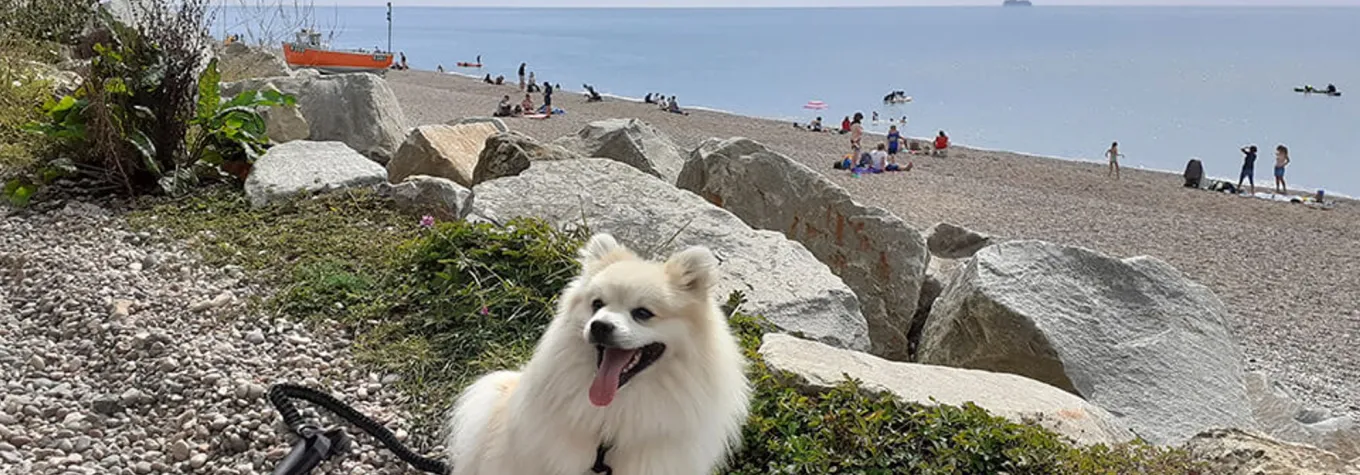
Tips for travelling with dogs in a motorhome
Inspiration
Tips for travelling with dogs in a motorhome
Dogs are a major part of why people choose motorhome holidays; it’s so much easier to take your furry friends with you. To make things easier, we've collated everything you need to know about travelling with dogs in your motorhome.
Follow our advice and your dog will enjoy motorhoming as much as you do and you’ll be more relaxed having your four-legged companion with you on holiday.
This article is sponsored by Tavo, which makes a range of pet travel systems to ensure your four-legged friend stays safe on the road.

Peter Vaughan Content Editor: Motorhomes
Peter Vaughan Content Editor: Motorhomes

Motorhoming with dogs: the essentials
When packing your motorhome for touring you’ll need to think about your dog’s needs as well as your own, but some of these essential items can be left permanently in the motorhome.
- Leads, harnesses, extending leads
- Hook to secure a lead in the ground
- Dog poo bags
- Dog bed/crate
- Towels
- Food, including biscuits and treats
- Toys and chews
- Insurance details
- Tick hook
- Vet contact details
Always make sure that your dog is wearing a collar with a tag recording your mobile phone number, so you can be contacted if your pet gets lost.
Think about your dog’s needs before you set off, too – a good walk prior to travel, with plenty of opportunity for them to empty both bladder and bowels is essential.
Some owners teach their dogs, as puppies, to ‘go’ on command by simply adding a command to the natural event. If you give that command before travel, the dogs usually oblige.
Join the Out & About Live family
Get the latest news and exclusive offers direct to your inbox
Discover your inner outdoors with Out & About Live. For over 20 years we have provided the very best advice to motorhomers, campervanners, caravanners and campers – whether you are looking for travel advice, the very best campsites, help with choosing a new ‘van, news, shows, what’s on and much more – it’s all on Out & About Live.
We would love to welcome you to the family so sign up to our FREE email newsletters so you don’t miss out any longer.
Securing your dog in a motorhome or campervan
Fastening our seatbelts when travelling in the car seems to be second nature to us humans, but, when it comes to our dogs, it’s often a different story – though it shouldn’t be.
Rule 57 of the Highway Code states, “When in a vehicle, make sure dogs or other animals are suitably restrained, so they cannot distract you while you are driving, or injure you, or themselves, if you stop quickly. A seatbelt harness, pet carrier, dog cage, or dog guard are ways of restraining animals in cars.”
Driving with an unrestrained pet could invalidate your insurance and lead to you being charged with a number of offences, from driving without due care and attention to dangerous driving. The punishments can range from penalty points and a fine, to disqualification or even a custodial sentence.
While the Highway Code is mainly focused on protecting humans, restraining your dog is key for their safety, too. Now, when we say ‘restrained’ it doesn’t sound pleasant but it’s actually a really kind thing to do. I think it is much more helpful to think of it as contained. It’s what we do to ourselves and our children, so we should do the same for our dogs!
The options for this include:
- Dog guards/barriers – placed behind front or rear seats, these are designed to block off a section of the vehicle
- Crate/travelling kennel – available in a wide variety of shapes and materials, a small or medium size may fit on the back seat of most vehicles. You may need to reaarange cushions or adjust seats to fit a larger crate in. Crates should be large enough to allow your dog to stand up, lie down, and comfortably turn around
- Car harnesses – manufactured to withstand the impact of a car accident, the tether attaching it to the seatbelts should be as short as possible to reduce the distance a dog is thrown during an accident
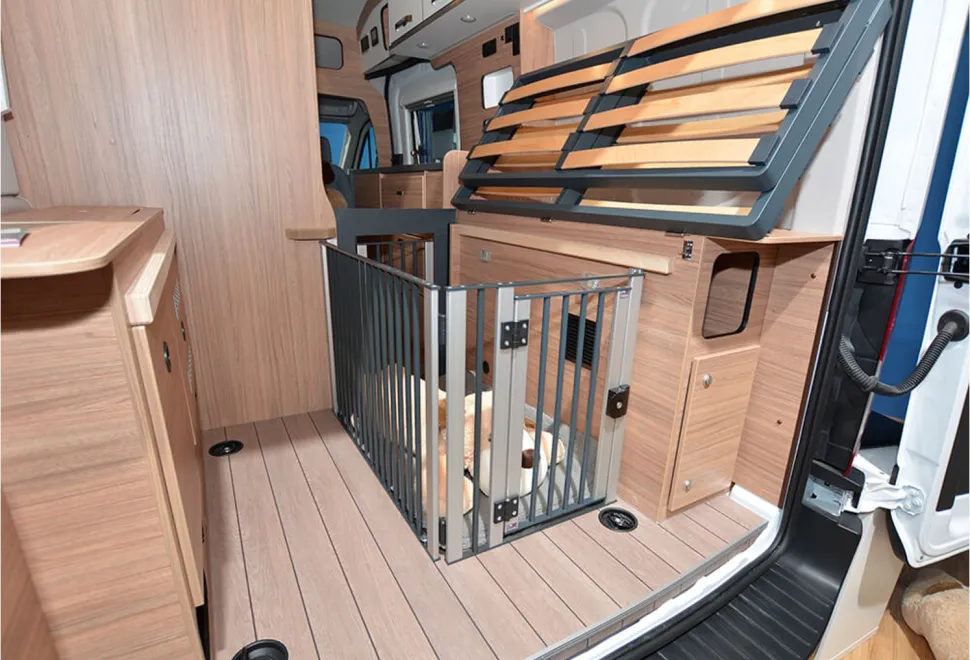
If travelling with a large dog, or dogs, in a motorhome, this is a matter to consider when choosing your motorhome. The best option will probably be a motorhome with a garage big enough for the dog crate(s) and with internal access from the living area to the garage. We’ve seen vehicles modified so that dogs can see their owners, or even windows added in garage doors.
Another precaution with puppies that may try to wriggle out of their harness, might be to place an obstruction so that they cannot get into the cab or around the driver’s feet.
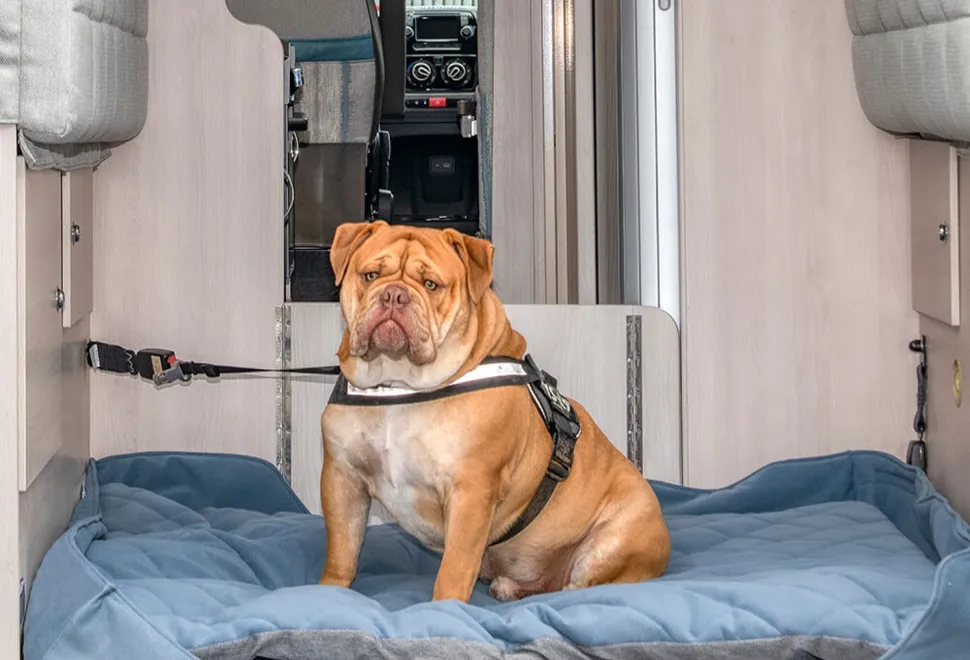
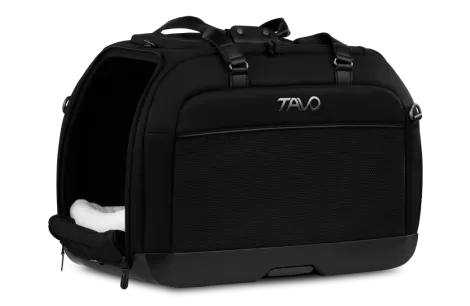
Product of the month: Tavo Hendrick Pet Car Seat Carrier
If your pets prefer a secure, enclosed travelling environment, take a look at the new Hendrick from Tavo, priced at £300. It has Isofix latching points that can be quickly released at the push of a button. A structured base prevents sagging and mesh panels provide ventilation and viewing windows. This crash-tested carrier also has memory foam side impact protection.
Dogs love motorhoming, and so will you!
Follow all our advice here and your dog will enjoy your home on wheels as much as you will. Taking a dog motorhoming is sure to get you talking to other dog owners and walking more to see the locality you’re visiting. Motorhoming and dogs make a perfect partnership.
Find the right campsite
Seek out a campsite where your dog will be welcomed as much as you are. Will it be easy to take your dog out to toilet? Are there walks on the doorstep? Are there any restrictions on dogs?
You might find the site provides extras you and your pet can take advantage of such as an enclosed dog field, dog wash facilities, or even a canine welcome pack. Check out our picks of dog friendly campsites.
Home comforts
Your motorhome should be a home away from home for your dog. Bring along familiar comforts such as the bed, toys, crate, and food bowls.
And while a getaway is about doing different things, try to stick to your dog’s usual routines. It’s the little things, such as if your dog goes out to toilet and then has breakfast, then replicate this during your break.
The familiarity of the environment and routine will help your dog settle and build confidence. For most dogs, they become seasoned travellers and the sight of the motorhome becomes a cue that they’re about to spend quality time with you.
Plan dog-friendly activities
Research the area and find fun days out with your canine companion. This could include countryside walks, boat trips, grounds of historic properties, country parks, cafés, pubs, beaches, steam train rides, gardens, and events, such as fun dog shows and country fairs.
Historic properties do not usually let dogs inside, but many have beautiful outdoor spaces to explore. And there is no reason you couldn’t pop in for a quick look while a family member focuses on the dog.
Pack dog supplies
Having all the gear you need makes life so much easier. Prepare a doggy ‘suitcase’ with all the essentials, such as food, treats, toys, bed, crate, leads, collars, brush, drying towel, medication, and anything else you might need. You can buy items that have been forgotten, but it’s better being prepared. Write a list, as there is often much more than you realise!
Prepare for the worst
Nothing will spoil a holiday more than an emergency. So, although something is unlikely to happen, research where the local vets is, ensure your dog’s microchip details are up to date, carry a canine first aid kit, including a sling to carry your dog, and check your insurance policy.
Dogs and motorhomes travel checklist
Ensuring your dogs travel securely is easy, but here are our top tips for travelling safely with dogs in a motorhome:
- Research your travel system – look for a system that’s been crash tested
- A distressed dog who is restrained can still be a major distraction – build up training, beginning with just sitting in the car and giving your dog treats. Step by step you can move to closing doors, starting the engine, and then short journeys
- Check your breakdown cover will permit dogs to travel with them in the event of your vehicle needing to be recovered
- Never allow your dog to put their head out of the window – it may look fun but, as well as the obvious risks, dust and dirt particles can hurt your dog’s eyes
- Don’t travel with your dog sat next to an airbag
- On longer journeys, give your dog plenty of breaks
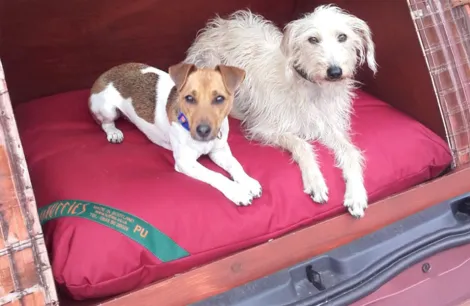
Tuffies Tailor-Made Service
Tuffies was voted Best Dog Bed 2025 by the readers of Your Dog magazine and one of those reasons is its bespoke service that allows you to find the exact fit for the space available, meaning it won’t slide around on the road.
Call 01888 563288 and quote TOUR75 to get a 7.5% discount until the end of July 2025.
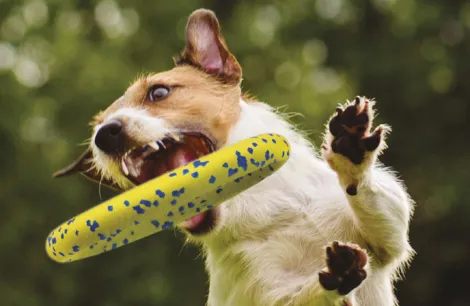
Zeus Nitro dog toys
Get ready to experience Zeus Nitro…
Unleash the inner athlete in yourself and your dog with Zeus Nitro dog toys, designed for intense, energetic play! Made to be extra-strong yet highly flexible, these toys promote safe fetch and play, with the optimal weight for maximum performance — on land and in water!
Helping your dog travelling in a motorhome
If your dog is not a good passenger, it’s not something you (or your dog) need to learn to live with. It’s time to put in place an action plan!
The first port of call is your vet. Any health issues could be causing your dog to be in pain or extra anxious when being driven.
Once your dog has a clean bill of health, then you can begin to work on their travelling environment.
If your dog doesn’t enjoy travelling then they may already have negative associations with it. You can begin to rebuild their confidence with some travel training.
Take it slowly and break it down into stages. Start with the car stationary and use treats or toys, whatever motivates your dog, to build positive associations.
Keep sessions short – don’t allow your dog to get to a stage where they can’t cope. This training will include getting your dog used to his safety devices, such as a seatbelt or crate.
Once your dog is happy in the car, you can then start to build up to doing short journeys.
Just like us humans, dog can suffer from motion sickness when travelling. Or the anxiety might be fuelling their sickness.
There are a range of calming products to reduce anxiety, as well as anti-sickness supplements and even medication. Talk to your vet who should be able to recommend useful products and advise on any that you source yourself.

TOP TIPS
Travelling with a dog in a motorhome
As your dog learns to relax on the drive, you can help keep trips comfortable with the following tips:
- Feed a light and easily digested meal three to four hours before setting off
- Plan longer journeys to schedule stops at least every two hours
- Drive carefully – a smooth drive will help
- Keep calm – if you get angry when driving, your dog can think there is something to worry about
- Provide ventilation
- Place shades on side windows to reduce heat and glare
- Make sure your dog is comfortable – there should be enough room to stand up, turn around, and lie down comfortably
- Never let your dog put their head out of the window – it’s not safe and can make them feel worse
Travelling in the UK
If you are planning to use any other forms of transport (apart from your motorhome) to get around whilst on holiday, always check on the rules with the bus, train or ferry company before you set off. If there are tourist sites that you particularly want to see, look online to see if they are dog-friendly to avoid disappointment. Rules regarding stately homes, castles, etc, vary and often ornamental gardens are out of bounds to dogs (but not always; at the fabulous Lost Gardens of Heligan, in Cornwall, “dogs with well-behaved owners are welcome all year round”!). If you’re going to the seaside, check for dog-friendly beaches (these are more common out of season).
When on holiday with your dog, try to keep to their regular routine as much as possible (same walk times, food, toilet breaks) and let them rest as well as enjoying all the fun and excitement of the holiday.
Foreign travel
When travelling with your pet dog abroad, what you need to do will depend on the country or countries you’re going to. The old pet passport scheme no longer applies since the UK left the EU after Brexit.
Now, when travelling to an EU country or Northern Ireland, your pet needs:
- A microchip
- A valid rabies vaccination
- An animal health certificate (AHC)
- Tapeworm treatment if you are travelling directly to Finland, Ireland, Northern Ireland, Norway or Malta
These requirements also apply to assistance dogs. Always check the rules of the country you’re travelling to for any additional restrictions or requirements before you travel.
You’ll need a new animal health certificate (AHC) from your vet for each journey you make to Europe or Northern Ireland, whether your dog has travelled there before or not. A visit to your vet is required to get the certificate. This needs to be done no more than 10 days before you travel. You should plan well in advance, as vets can be busy and may not be able to fit in appointments at short notice.
Your pet’s animal health certificate will be valid after the date of issue for:
- 10 days for entry into the EU or Northern Ireland
- Four months for onward travel within the EU
- Four months for re-entry into Great Britain
If your pet hasn't previously travelled, or their rabies vaccination is out of date, you'll need to visit your vet at least 21 days before you travel. Your pet must be at least 12 weeks old to get the rabies vaccination. After the rabies vaccination, you cannot travel for 21 days.
You'll also need to microchip your dog as this is the best chance of returning your animal to you if it gets lost.
You should also find out about the diseases your pet may encounter abroad that it wouldn’t be exposed to in the UK. And think about how your dog will cope if you’re travelling to a hot country. If your dog is elderly or has any health issues, it may be kinder to leave it at home with someone else looking after it.
Laws on dog ownership vary between countries. In Italy, for instance (as well as aboard some ferries), dog owners can be asked to muzzle their pet in public, so you will need to purchase one and ensure your dog is trained to wear it. In Spain, dogs are often not allowed on buses but, in France, we have found that dogs are accepted in far more cafés and restaurants than in the UK.
If you are travelling using LeShuttle, dogs remain in the motorhome with their owners and there are dedicated exercise areas for dogs at either side of the crossing, which owners are encouraged to use.
If you’re going by ferry, the rules vary, so check before you book. Some ferry companies have dog-friendly cabins where your dog can stay with you for the entire journey, others have dog-friendly areas (but your pet might be required to wear a muzzle). However, on some ferries, pets are required to stay in your vehicle on their own for the duration of the trip, which can be distressing for them and could even be a risk to their health.
For more information on taking your dog to Europe, read the Government's guide to taking your pet abroad, or call the Pet Travel Scheme helpline on 0370 241 1710. You can also email the Government’s pet travel helpline at [email protected]
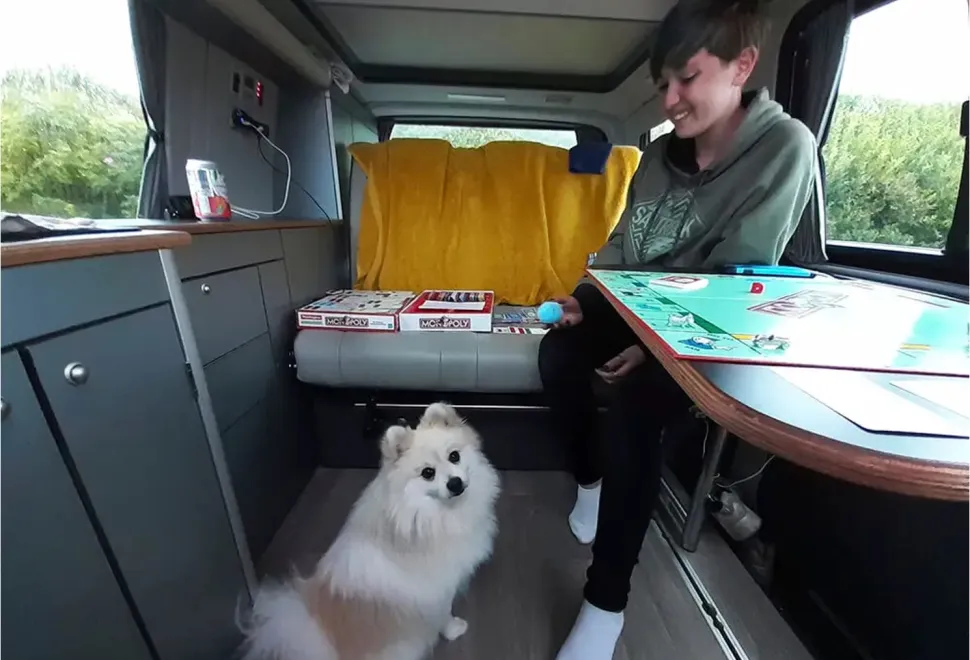
Day-to-day life in a motorhome with a dog
Space – especially floor space – is at a premium in most motorhomes but it is beneficial that dogs understand which space is theirs. Some owners will restrict their dogs to the cab, with a board to close off this zone, others might keep their dogs in a garage (as long as it has internal access), but many motorhomers will simply cover a sofa with a blanket or throw and that will be where the dog lies.
It's worth thinking about space for your dog when choosing a motorhome as some models and some layouts will have a lot more floor space than others – that could be crucial if you have a large dog or more than one pet!
Once you’re on site, to alleviate boredom in the motorhome, games like hiding a treat for the dog to sniff out or simply a few toys to play with will help.
Some motorhome companies (such as Hymer) offer specific dog accessories, designed to fit your vehicle.
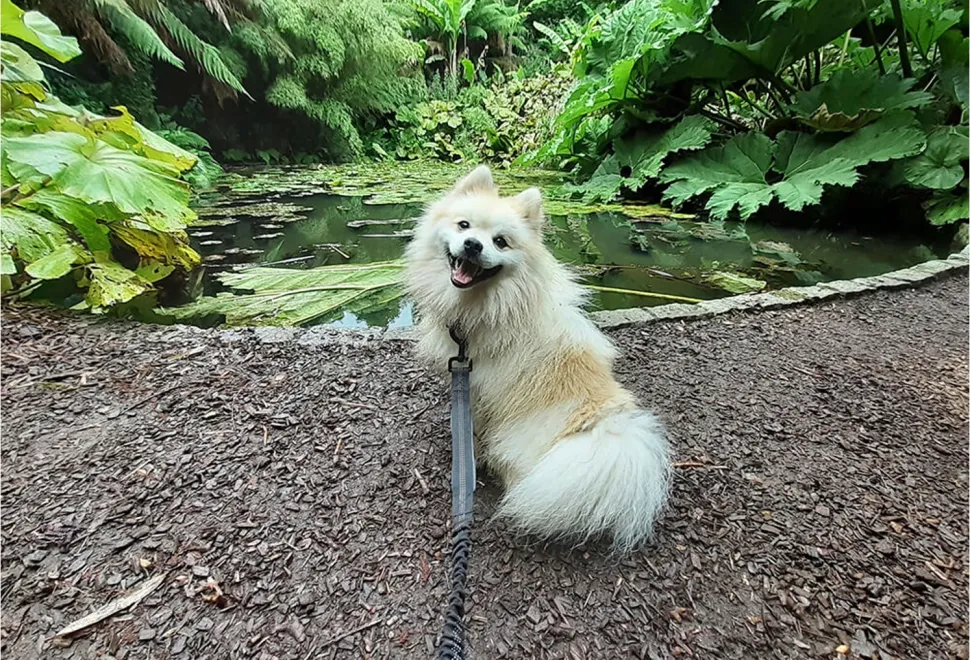
Dogs on campsites
Most campsites are dog-friendly; indeed, that’s often a key reason for people choosing to go motorhoming. But remember that not every site allows dogs, and others limit the number of dogs per pitch, so check before booking. Most campsites will require your dog to be on a lead at all times, while some will have an exercise area where they can run free and some will have dog showers.
When you arrive, your dog may be excited, so it’s often a good idea to walk around the campsite and to visit the dog walk area to familiarise your furry friend with its surroundings.
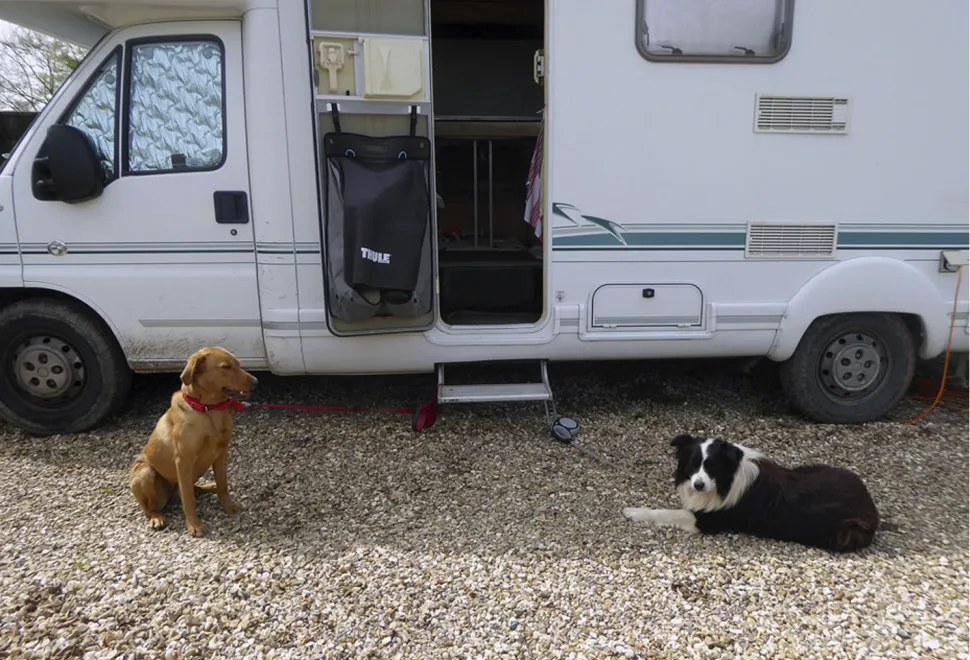
Often owners secure their dogs outside their motorhome, but check that you do not exceed maximum lead lengths for the site rules and that your dog cannot reach the neighbouring pitch or the campsite roads. Dogs should never be left secured outside the motorhome unattended and remember that excessive barking will annoy others on the campsite.
Dog-friendly motorhome hire
We always recommend hiring a motorhome before you buy your first home on wheels, to ensure that you choose the right size of vehicle and layout for you, but what if you want to take your dog on this exploratory trip, too?
Not all rental motorhomes allow dogs, but many hire fleets have some dog-friendly vehicles (check whether extra charges apply), and some platforms for hiring privately owned motorhomes (such as Goboony and Quirky Campers) offer a selection of vehicles in which your dog can go, too. Just remember that, if you don’t return the vehicle clean and tidy, you may be subject to extra cleaning charges to get rid of those muddy paw prints.
A quick Google search is all you need to find a pet-friendly rental vehicle in your area.
Latest motorhome articles
Explore our magazines
Enjoy expert tech help, travel and campsite inspiration, buying advice, reviews, and more with our best-selling magazines and guides.

Buying Your Perfect Motorhome
Buying Your Perfect Motorhome is the ultimate guide to turn your motorhome adventure into reality. From models starting at £20k to luxury options, layouts, finance, insurance, and a dealer directory, it has everything you need to find your dream motorhome.

MMM magazine
MMM is the UK’s best-selling motorhome magazine and your key to unforgettable trips, both in the UK and overseas. Packed with expert reviews, advice and maintenance tips to help you make the best choices and keep your motorhome roadworthy.


