
Selling a motorhome
Buying advice
Where and how to sell my motorhome: the ultimate guide
Nothing lasts forever and no matter how happy you’ve been with your motorhome or campervan, there will come a day when it’s time to sell your motorhome.
It could be because your circumstances have changed, you need a lighter motorhome because of driving licence restrictions, or simply that you want a newer motorhome or campervan with more modern facilities.
Whatever the reason for selling a motorhome, there are a number of steps to take to get the best price - this guide explains all you need to know to get the best price for your motorhomes when you come to sell it.

Rachel Scholes Content Editor: Motorhomes
Rachel Scholes Content Editor: Motorhomes
How to value your motorhome
The main problem with motorhome values is that there is no definitive guide. With the sheer range of motorhomes available, sizes, layouts, base vehicles, and types, and the complexity of fittings, most models are only produced in relatively small quantities compared to the car market.
So, this makes valuation difficult. Even dealers have very little information on used motorhome values, relying on their experience of what they have sold previously.
If there's one thing that you have to accept, it's that unless you bought a classic camper or a VW T2, your motorhome or campervan is likely to be worth less when you sell it than when it was bought. However, the current market conditions and popularity of motorhomes post pandemic, has seen a rise in values as demand outstrips supply.
It all depends on when you bought your current motorhome. If it was pre-pandemic or around the time of this world-changing period, then you could be pleasantly surprised at the value of your vehicle. We have heard reports of those with 10-year-old desirable motorhomes getting a trade-in value of what they originally paid for it when new.
To get a base valuation, try calling a few dealers and explain that you have a motorhome for sale. Explain your motorhome's condition, mileage and age and they will often give you an idea of what it might be worth to them. Note that this is the lowest value. Selling it privately or through a broker will bring in a higher price. How much higher depends on the demand for that type of model.
You can also get a good idea of the relative value of your motorhome by checking out the classified adverts in magazines like MMM and online in our Motorhomes for Sale or Campervans for Sale sections to see what other people are charging for their motorhomes.
Where to sell your motorhome
Part-exchange your motorhome
The easiest and quickest way to sell your motorhome or campervan is to part-exchange with a dealer or manufacturer. You won't get the same price as you would by selling privately, but you have the security of knowing that you won't be scammed out of your motorhome.
It makes things quicker and easier because both the selling and buying are completed at the same time. Due to current market conditions, you may get more money for a trade-in than expected, but this will be offset by an increase in prices of new motorhomes.
Be prepared to supply pictures of your actual motorhome, which will help with the valuation process. Honesty about a vehicle’s condition is key. Most dealers don't mind taking in vehicles with snags or warranty issues as long as they know about it in advance. The company may even be able to organise repairs or spares more easily than the customer anyway.
Sell through a motorhome broker
Another option is to use a broker. This is a company that will accept your motorhome onto its books and try to match it with a buyer. You don't get paid until the broker sells the motorhome and then it will take its commission.
The advantage is that you can get a better price than by part-exchanging and that the broker will actively look for a buyer. The disadvantage is that you don't get paid straight away and that the motorhome can be sat with the broker for months. There is also the issue that fraudsters will often pose as brokers and simply make off with your motorhome, never to be seen again.
For this reason you should only use a broker which has a specific address where motorhomes are on display, or one that you have been recommended as genuine. It's also worth checking any terms and conditions of sale as, if you go on to sell the vehicle another way, the broker may still expect a fee.
Sell to a motorhome dealer
An alternative to trading in your motorhome is to simply sell your motorhome to a dealer and use the cash to buy elsewhere.
Again, you won't get the highest price unless your motorhome is in the low mileage and almost new category, and here again, it's worth getting quotes from three or more dealers. The final option when using a dealer is 'sale or return'. This is where you still own the motorhome, but a dealer will agree to display it on its forecourt for a pre-agreed fee and time. It has similarities to selling a house using an estate agent.
Your vehicle needs to be insured (normally by the dealer, but check), both on and off the road while it is in the dealer's care. You may have to pay for any maintenance work required. Be sure you are aware of all the risks and have guarantees in writing for issues such as how long the dealer can hold your money once the motorhome is sold, how much negotiating room there is on the price, what the dealer's commission is, etc.
We recommend that ownership of the motorhome remains with you, not the dealer, until the sale is complete.
Sell your motorhome privately
The alternative to these channels is to sell a motorhome or campervan yourself, which has the advantage that you can get more money for it, and that you can continue to use it while looking for a buyer.
You can place an advert in your local paper or shop window but you are less likely to get many valuable enquiries.
You can also take out online adverts, such as in our Motorhomes for Sale section. This is one of the best routes to sell, as most research is done online now and so you can potentially reach millions of buyers for a small cost. You will need to provide pictures, a description and a price and, of course, handle all the enquiries.
Placing an advert on a generic auction or buying/selling website, such as eBay or Gumtree, can be cheaper or even free, but your motorhome may get lost in the crowd. You can also get bombarded with questions from non-serious buyers. Selling privately requires investment, including your time and costs related to preparing it for sale. But the rewards can be the greatest.
You should also take note of the common perils of selling privately and don't hand over the key until the money is in your account.
Sell you motorhome at an auction
Auctions are used by many traders to both sell and acquire secondhand motorhomes and campervans. If you enter a motorhome into an auction, do not expect it to sell for its market value. You can set a minimum price, below which the auctioneer will not sell.
Bear in mind, the auction house will take a percentage of the sale price and, of course, your motorhome may not sell at all.
A few companies, such as BCA, hold auctions specifically for motorhomes and campervans (and caravans), so it may be worth selling a motorhome at one of those.
Prepare your motorhome for sale
The first thing to do is to get your motorhome into the best condition possible, and that means some elbow grease is required:
- Wash your motorhome: Firstly, get some good-quality vehicle shampoo and polish and concentrate on the windows and wheels, then the rest of the bodywork
- Shine your alloys: Alloy protector will keep your alloys shiny even if you do a few miles while waiting to sell your motorhome
- Check the grey water outlet: Make sure that the grey water outlet works and that there are no missing covers for any of the services
- Check locks work: Ensure that all locks work freely so that you can demonstrate access to the garage if your motorhome has one, and the cassette toilet and gas locker
- Empty the interior: Inside, it's a matter of clearing out any rubbish, emptying and cleaning the fridge and removing any personal items that may be inside. This can be difficult if you still want to use the motorhome while trying to sell it, but it's certainly better to completely empty the motorhome of all of your personal belongings. It will make the interior look roomier, cleaner and says to the buyer that you are serious about selling
- Remove DIY additions: Don't assume that your DIY modifications will add to your motorhome's appeal. So take a look at all those extra shelves, hooks, tea towel holders, etc, and consider removing them to return the motorhome to as near its original spec as possible – as long as you can do so without leaving behind any unsightly evidence
- Clean upholstery: Check the upholstery, carpets and curtains, and vacuum, stain-remove and wash anything that isn't clean
- Fix all small faults: Make sure any small faults like blown light bulbs are replaced
- Air your motorhome: Make sure the motorhome is odour-free – which includes strong 'air freshener' smells as well as pet, cooking, smoking and musty whiffs
- Get utilities in working order: Test the gas and electric and all the appliances like the fridge and cooker. It's also worth putting in a full gas bottle and filling the water up so that you can demonstrate the heating, sink, shower and toilet. It almost goes without saying that you need to empty the toilet cassette and put the usual chemicals in it
- Test all gadgets: Just because your motorhome is filled to the gunwales with gadgets, don't assume you will get a better price. As is true with the car market, optional extras don't add extra value, though they may make it easier to sell
- Display your tools: If there are specific tools that come with the motorhome, such as gas spanners, wedges, or other accessories, make sure they are on show, or neatly arranged in the garage so you can point them out. Additional components like this make the motorhome more attractive because it shows that it's ready to go as it is
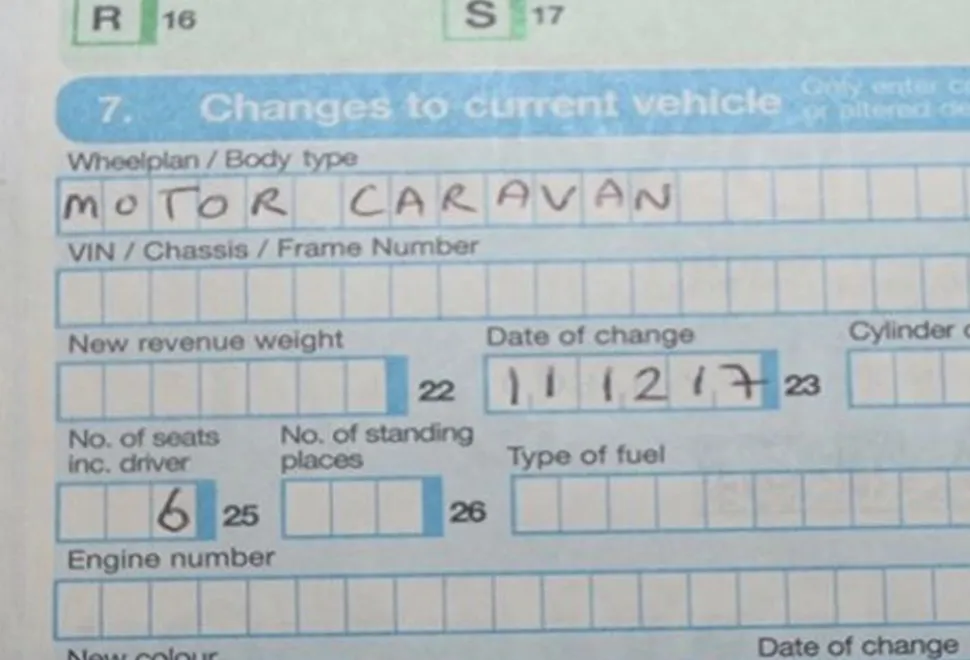
Sort your motorhome paperwork
- Gather warranties and instructions: For any of your motorhome accessories, do make sure you keep any paperwork, in particular warranties and instruction manuals. Being able to produce a full collection of information about the motorhome, and any extras that have been fitted, shows a potential buyer, whether that is a dealer or private, that this motorhome has been cared for
- Get a habitation certificate: The other thing that's different for motorhome sales as opposed to selling a car is getting a habitation service, which will highlight any problems, including damp. If you have a current habitation service document that shows the motorhome is in good condition and free from damp, it will aid the sale to dealers and reassure private buyers. If you don't have one it could detrimentally affect the price
- Motorhome MoT certificate: Before you sell your motorhome or campervan, you need to have a valid MoT. If it's nearly time to get it renewed, go ahead and get it done now. A 12-month MoT gives a lot of confidence whereas no MoT is a red flag to any purchaser
- Motorhome service history: If you bought the motorhome from new then a properly stamped service history book will show that it's been looked after and will make it more desirable to purchasers. You need to have your vehicle registration document (V5C) to hand, which shows details of the registered keeper
- Motorhome V5C certificate: When selling your motorhome, you will need to fill out the details of the new keeper and send this to the DVLA so it knows who is now responsible for the motorhome. It isn't proof of ownership; for that you will need a sales invoice, though many buyers won't ask for this. Legally, all you need to provide is the V5C when selling and the DVLA recommends that you don't buy a vehicle if it doesn't have one
- Get your tax refunded: It used to be the case that the tax disc could be sold on with the motorhome, but now that the actual disc has been rendered obsolete, that is no longer the case. If there's any tax left on your vehicle, you need to apply to the DVLA for a refund. It's the responsibility of the buyer to organise the new vehicle tax
Showing your motorhome to potential buyers
When it comes to actually showing your motorhome and taking payment, here are some top tips from our motorhome experts about what you should and should not do.
- When it gets down to the nitty gritty of selling your motorhome, make sure that the electric hook-up is plugged in so the viewer can test everything electrical inside
- Don't hand over any keys, instead unlock the doors and start the engine for them
If someone wants to take it out for a test drive, ensure they have insurance to cover them and also go along for the ride. Ensure you have your phone with you - Make sure that you demonstrate everything in working order and if there are any problems, explain what they are first
- If someone calls to buy the motorhome without seeing it first, wants you to drive it to their house, or wants to have a courier collect it, treat with utmost caution. These are known tactics by fraudsters
- When it comes to payment, the safest method is for the buyer to pay using the Faster Payment Service of direct bank transfer. When it arrives in your bank account, you can release the motorhome, not before. Do not accept cheques, money services or the offer to pay via PayPal, unless the motorhome was actually sold through eBay. If you do sell it through eBay, then PayPal will offer protection, but ensure that it is done directly through the end of auction process, not by ending the bidding early
- If your motorhome is a few years old and not worth a huge amount, you may get the offer to pay in cash. If you do decide to take this option, make sure you pick up a forgery detecting pen – they only cost a few pounds on eBay – and test each note before accepting them
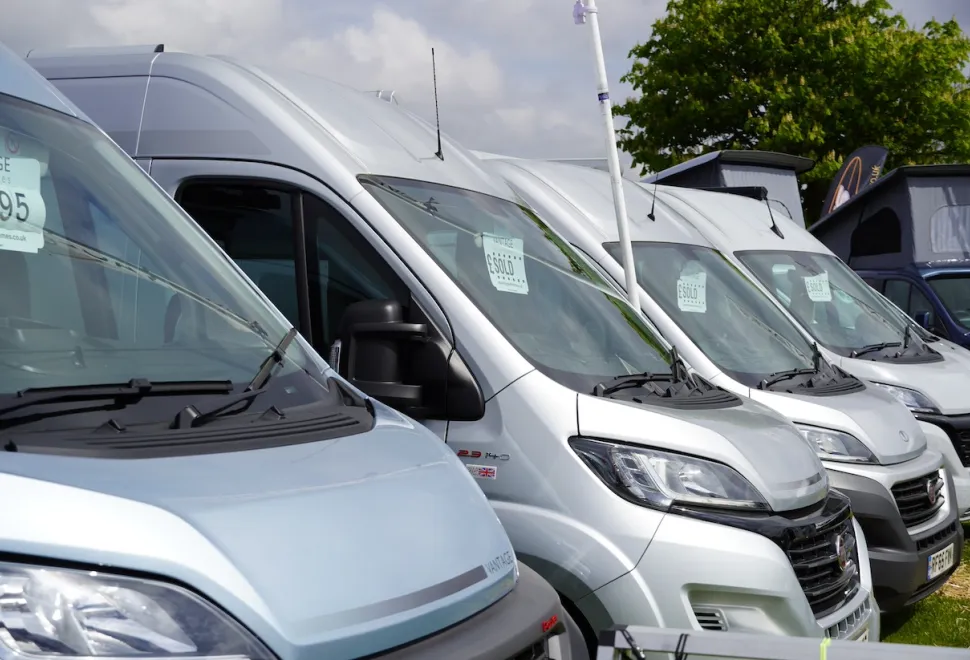
Things to consider before selling
Motorhome values
As already discussed, prices of new and used motorhome are still high and we don’t expect the prices of new models to soften. So if you are looking to capitalise on the value of your current motorhome or campervan, then factor in the cost to change as this will likely also be more than it was in the pre-pandemic times.
Trading in?
If you are looking to trade in, shop around within reason, although the dealer you choose will often be defined as the one that can sell you the motorhome you want. If you plan to sell outright privately then do your research and check potential buyers carefully. The internet has made it incredibly easy for scammers to operate and the methods employed can be incredibly convincing.
Best time to sell a motorhome
If you want to know about the best time to sell a motorhome, then traditionally, this used to be at different times of year. Motorhome dealers order a set amount of motorhomes from a manufacturer at the start of the year, and are keen to allocate customers to each order, so if you are buying new and trading in, the best time for this is towards the end of summer and in the run up to the October NEC show.
However, if you plan to sell privately, then it might be best to wait until the weather gets better in spring and people want to get out and about. However, all that said, there are thousands of motorhomes for sale across the UK at any one time throughout the year, so there never is a best time to think about selling your motorhome.
Finding the best deals at the Southern Motorhome & Campervan Show 2025
Latest motorhome articles
Explore our magazines
Enjoy expert tech help, travel and campsite inspiration, buying advice, reviews, and more with our best-selling magazines and guides.

Buying Your Perfect Motorhome
Buying Your Perfect Motorhome is the ultimate guide to turn your motorhome adventure into reality. From models starting at £20k to luxury options, layouts, finance, insurance, and a dealer directory, it has everything you need to find your dream motorhome.

MMM magazine
MMM is the UK’s best-selling motorhome magazine and your key to unforgettable trips, both in the UK and overseas. Packed with expert reviews, advice and maintenance tips to help you make the best choices and keep your motorhome roadworthy.


