

Towing a caravan: all you need to know
Technical advice
The complete guide to towing a caravan
Towing a caravan might seem daunting at first, but with a few straightforward tips and the right information, your journeys can be smooth, safe and enjoyable.
Whether you’re heading to a local site or touring across Europe, understanding how to safely tow a caravan is essential. Here, we shall cover everything you need to know – from driving licence laws and loading tips to essential equipment and safety regulations.

Try our Towmatch tool
Towmatch, a completely free service from Out & About Live, enables you to take your first steps to owning your dream caravan. Towing a caravan is a stress-free experience once you've used Towmatch to find which models your car is suited to tow.
Use Towmatch today to start your caravan journey, then explore the latest caravan news, reviews and inspiration on Out & About Live!
How to tow a caravan
Towing and manoeuvring courses from the Caravan and Motorhome Club or Camping and Caravanning Club are ideal for beginners – and actually quite valuable for experienced towers, too; it’s amazing what you can learn from experts, and some insurance providers offer discounts for course completion.
Courses teach you key skills, including reversing, safety checks, hitching and handling.
The Caravan and Motorhome Club runs courses specifically for beginners (£218 for a day and a half of tuition), plus courses on manoeuvring (£118 for one day or tuition). They are available at 17 locations, in England, Scotland and Northern Ireland.
The Camping and Caravanning Club runs courses at its headquarters in Coventry. There’s a course designed for complete beginners; one for more experienced caravanners, and a two-day course designed to build your confidence.
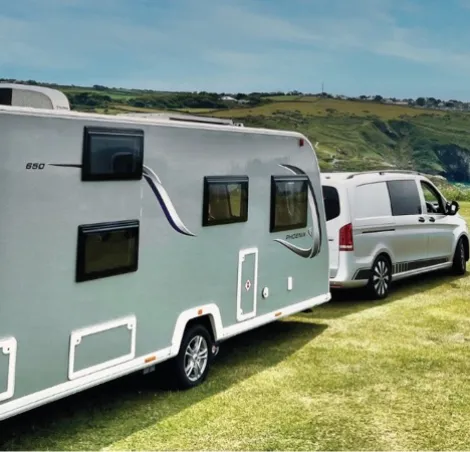
Do you need a licence to tow a caravan?
Can I tow a caravan with my UK driving licence in 2025?
A standard car ‘B licence’ granted after 1 January, 1997, traditionally meant that the maximum combined weight of the car and caravan could not exceed 3,500kg, but this changed in 2021. B licences were automatically granted BE status, which allows the holder to tow a caravan that weighs a maximum of 3,500kg, providing the tow vehicle is legally capable of doing so.
To check if BE status has been applied to your B licence, read the UK Government guidelines.
Always double-check your car’s towing capacity – this figure is key and may be lower than the allowance on your licence.
Understanding the 85% towing rule
This remains a guideline, not a legal requirement.
Both UK caravanning Clubs recommend that your caravan’s MTPLM or maximum technically permissible laden mass, should not exceed 85% of your car’s kerbweight. Experienced drivers may go up to 100%, but never exceed the manufacturer’s towing limit listed in your car’s handbook.
What caravan can my car tow?
Matching your caravan to your tow vehicle is extremely important – not just for ease of towing, but also to ensure safety and legal compliance. Using a mismatched car and caravan can cause instability, handling difficulties and even accidents. That’s why it’s crucial to get this right from the start. Our Towmatch service can help you do just that and find the best vehicles to tow a caravan.
Towmatch is a completely free tool that helps you take the first step toward owning your dream caravan and once you use it to find which caravans are most compatible for your vehicle, towing becomes a stress-free experience.
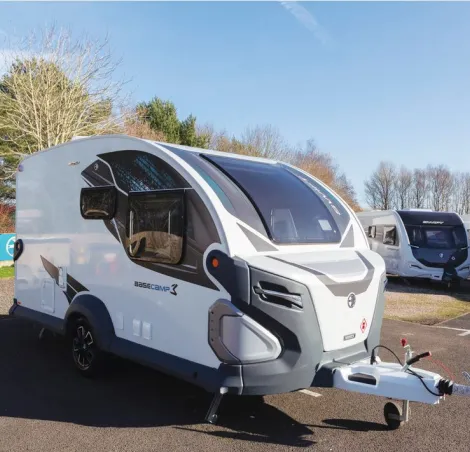
Towing rules and width restrictions
The maximum caravan width is 2.55m and if you’re towing with a car under 3,500kg MAM, your caravan body length must not exceed 7m (excluding the A-frame).
Speed limits for towing
The speed limits when towing a caravan are slightly different to driving a standard car (without towing):
- Single carriageway: 50mph
- Dual carriageway / motorway: 60mph
Top tips for caravan towing
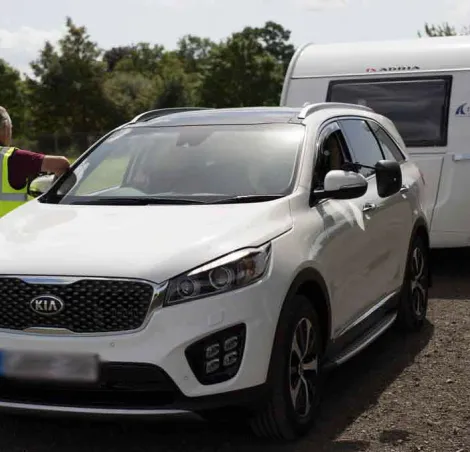
How to load a caravan
Correct loading is essential for stability. There are a few golden rules:
- Place heavy items such as an awning on the floor, and near the axle
- Store medium-weight items under seats or beds
- Put lightweight items in top lockers
- Avoid placing weight at either end of the caravan
- Ensure the MTPLM is never exceeded. Calculate the weight of your caravanning equipment by weighing items individually (bathroom scales are the obvious tool for this). Factor in any equipment that has been fitted to the caravan since it left the factory, such as motor movers and solar panels
For more info, see our full guide on how to load a caravan.
What is caravan noseweight?
Your caravan’s noseweight is the downward force on the towball. This should be 5-7% of your caravan’s MTPLM.
Use a noseweight gauge or bathroom scales with a wooden prop, so that you can measure it accurately.
Also, make sure your towbar is rated for the noseweight – check the car handbook or towbar sticker.
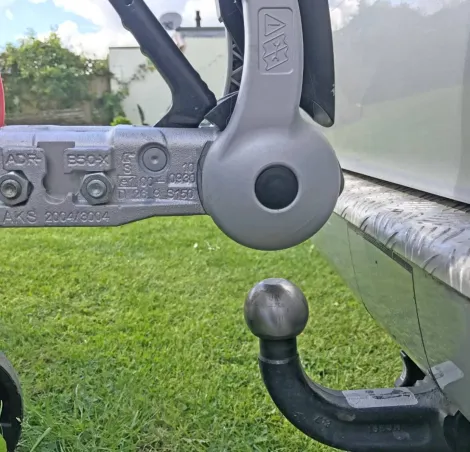
Essential equipment for towing
- Towing mirrors: mirrors for towing a caravan are a legal requirement if your caravan is wider than your car
- Breakaway cable: ensures your caravan brakes if it detaches
- Jockey wheel: allows easy manoeuvring and levelling
- Hitch stabilisers: most caravans now feature Al-Ko or Winterhoff units
- ATC (Al-Ko Trailer Control): optional electronic system that helps prevent snaking
Choosing the right towbar
Towbars vary in style – from fixed flange to detachable swan necks.
- Cars built after 1 August, 1998, require a type-approved towbar
- It must not obscure the number plate when not in use
See our full guide to towbar types and towing electrics.
Final thoughts
Towing a caravan is easier than ever – with technology such as hitch-head stabilisers and ATC, and support from experienced Clubs in the form of courses, there’s no reason to hold back.
Our advice: master the basics like loading, noseweight and legal limits, and you’ll be enjoying towing in no time.

Try our Campsite Finder!
We have an extensive database of campsites across the UK and Europe.
Whether you're looking for the perfect pitch for your motorhome, caravan, tent or to hire glamping accommodation or a holiday home or lodge, our exclusive Campsite Finder will help you choose your next weekend break, midweek getaway or summer holiday in the UK or Europe.
Latest caravan articles
Explore our magazines
Enjoy expert tech help, travel and campsite inspiration, buying advice, reviews, and more with our best-selling magazines and guides.

Buying Your Perfect Caravan
Buying Your Perfect Caravan is the ultimate guide to finding your ideal caravan. From layouts and storage to finance, insurance, and essential kits, it has everything you need to make your dream caravan adventure a reality.

Caravan magazine
Caravan magazine is perfect for caravan enthusiasts. Make the most of your caravan lifestyle with expert advice, unforgettable road trips, must-see attractions and top maintenance tips to keep your ‘van adventure ready.


