
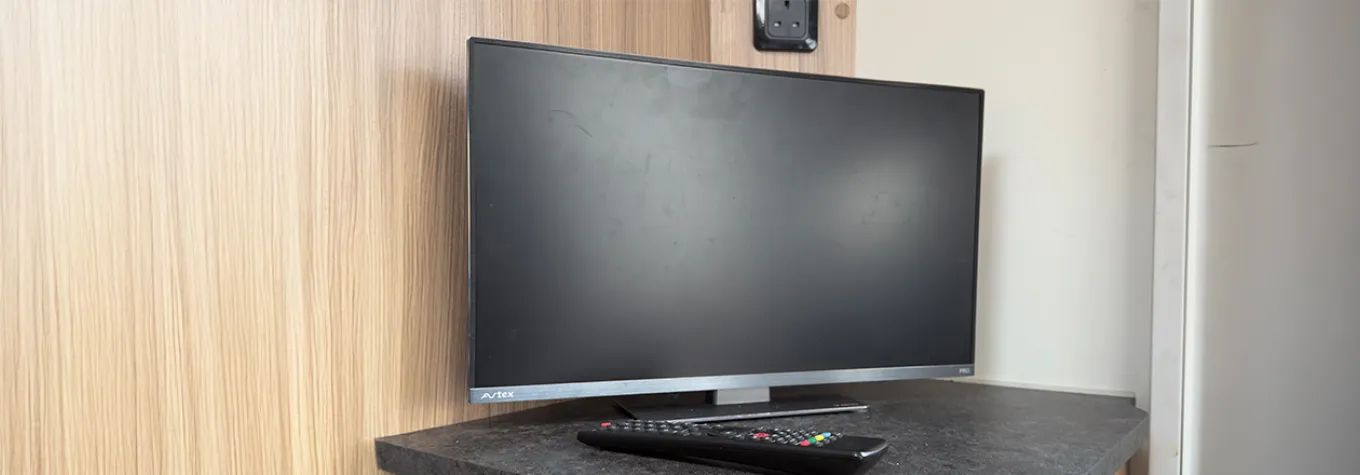
How to choose the perfect TV for your caravan
Buying advice
Some caravanners can happily go a whole week without switching on a screen, whilst others like the option of a film after a long drive or a familiar programme while the rain does what it does best.
The first thing to decide is what watching TV in the caravan actually means for you. Are you someone who always uses electric hook-up and just wants a simple screen for the odd evening?
Do you tour off-grid and need a telly that won’t drain the battery? Or are you mostly streaming and the TV is really just a bigger monitor for iPlayer, Netflix and sport? Once you’re clear on that, every other decision gets easier.

Macaulay Nichol Content Editor: Caravans
Macaulay Nichol Content Editor: Caravans
Choosing the right TV
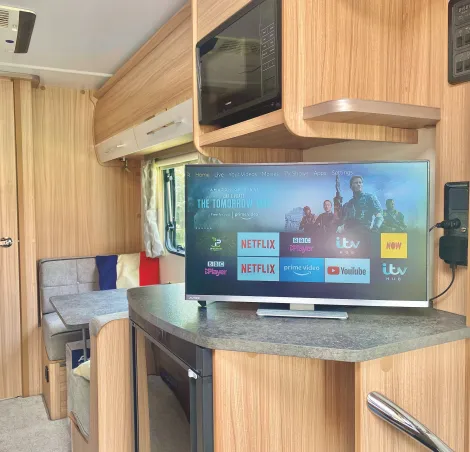
The biggest mistake people make is buying a television purely by screen size. In a caravan, the practical details matter more: where it will live, how you’ll power it and how it will cope with travel.
If you stay on campsites with hook-up, you can often use a standard household TV with no drama. The downside is that domestic TVs aren’t built with touring in mind. They can be a little more delicate and you’ll need to think carefully about storage when you’re towing.
If you tour without hook-up – or you like the freedom of the occasional night off-grid – a 12V touring TV starts to make more sense.
These sets are designed to run happily on caravan power and, in many cases, handle voltage changes better than a standard domestic model. They’re also often built to be lighter and easier to move in and out of a locker or carry bag.
Looking for caravan equipment? Find it all at our dedicated OAL shop
Explore our caravan collection on the OAL Shop, where we have hand-picked the most reliable gear to keep you protected.
Screen size
It’s tempting to go bigger, especially if you’re used to a large TV at home. But caravans are different. Seating is closer to the screen, viewing angles can be awkward and anything too big becomes one more thing you’re constantly working around.
As a rough guide, a 19in to 24in TV suits many tourers. Go bigger if you’ve got the space, the bracket allows it and you’re certain it won’t interfere with cupboards, blinds or the bed.
The best approach: measure the space, then measure it again with the TV on a bracket and then move it to where you’d watch it.
Power and why it matters
Power is where most caravan TV frustrations start. On hook-up, life is easy. Off hook-up, every watt counts.
A TV that’s happy on mains might still run off an inverter, but that adds another layer of kit, uses more energy and can be less efficient than a set designed for 12V from the start.
If you know you’ll mostly be on campsites with electricity, you may not need to overthink it. If you mix touring styles with the odd weekends on serviced pitches or longer stays with no hook-up, it’s worth planning for flexibility.
Many touring TVs can run on both 12V and 230V, which keeps your options open.
How you’ll get a signal
There are three main routes for television in a caravan: terrestrial TV through an caravan tv aerial, satellite or streaming through the internet. Many people use more than one, depending on where they are and what they want to watch.
Terrestrial TV with an caravan tv aerial
This is the simplest set-up for many UK trips. Most caravan tv aerial systems are designed to be adjusted on the campsite and in good-coverage areas you can get a perfectly decent picture with minimal effort.
But it’s also the method that can feel most inconsistent. Signal strength varies widely depending on location, weather, nearby trees and even which way your pitch faces. A small signal booster can help, but it can’t perform miracles if you’re in in an area with weak coverage.
Satellite TV
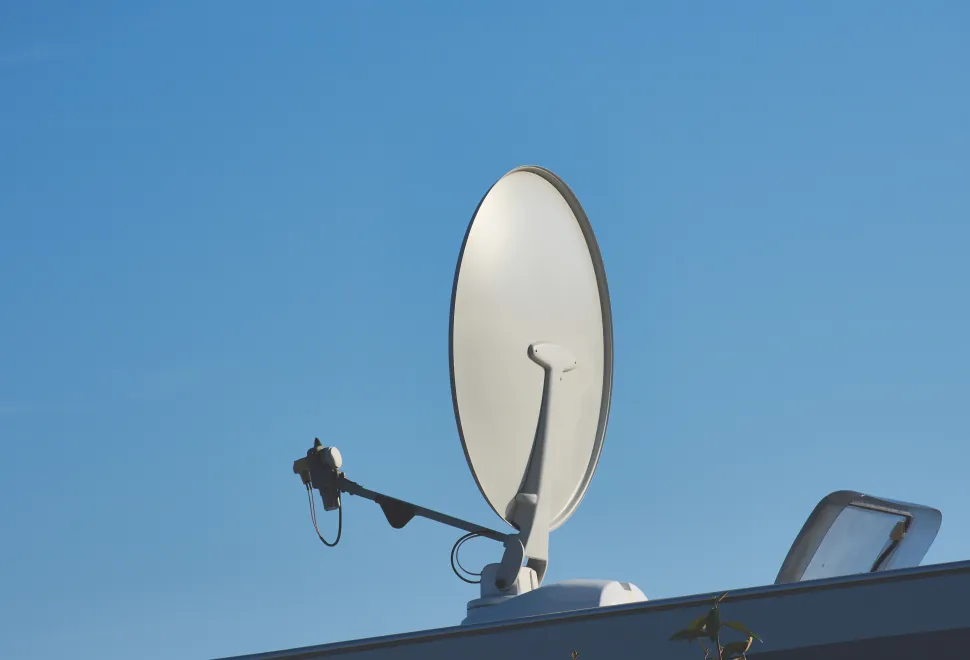
Satellite remains a strong option for caravanners who want reliable reception in rural spots or who tour in Europe and still like access to familiar UK channels. The main compromises are cost and storage space – plus the need for clear line of sight to the satellite.
You can go portable and manual, which is cheaper but requires a bit of patience to align. Or you can fit a roof-mounted system that does the work for you, at a higher price and with an eye on payload and roof weight. Either way, satellite is about consistency – but it’s not always the quickest job if you arrive late or are pitched alongside trees.
Streaming and smart TVs
Streaming has changed the way people watch television in a caravan, but it’s only as good as the connection feeding it. Campsite WiFi can be fine for browsing and messages, then fall apart when half the site tries to stream in the evening.
Mobile data can be excellent – especially with strong 4G or 5G, but you’re still relying on local coverage and data allowances. If streaming is your main plan, think less about the TV and more about the internet. A smart TV is only smart if it can actually connect. For many caravanners, it’s easier to use a phone or tablet as the hub, then cast to the TV when the connection is strong enough.
DVDs
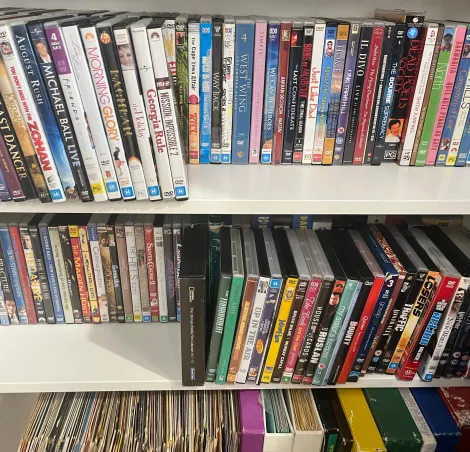
Even if you love streaming, it’s worth having a fallback. A built-in DVD player can still be useful in a caravan, especially if you tour in remote areas or just want something simple when the weather closes in.
For some DVDs are outdated and not very glamorous, but they’re reliable, plus they work – so very little to complain about. The modern version of this is downloading content in advance on a tablet or phone, then watching offline.
Mounting, storing and moving with a TV
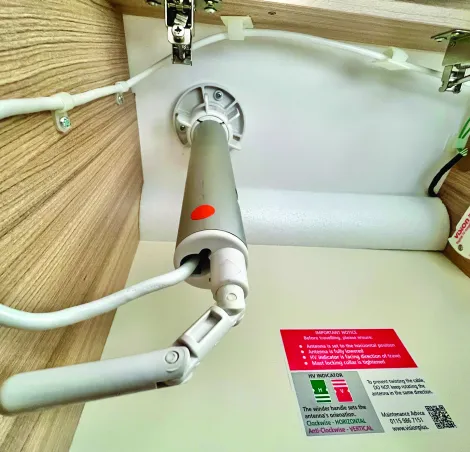
Most caravans now have a designated TV point with power and an caravan tv aerial connection, often with a bracket location nearby. That helps, but it doesn’t solve the bigger question: where does the TV go when you’re towing?
A TV left on a bracket while travelling is asking for trouble unless the bracket and set-up are designed specifically for it and, even then, many owners prefer to take the screen down.
A simple routine works best:
- Take the TV off the bracket
- Lay it flat somewhere protected
- Pad it with cushions so it can’t slide
- If you move it in and out regularly, consider a proper carry case
- And for longer-term storage, it’s usually sensible to take the TV home
Sound
Slim TVs often sound thin. If you actually care about audio, a compact soundbar can make a noticeable difference, especially in a caravan where soft furnishings soak up sound.
Just be realistic about space and where it will live. The best tv sound for caravan is one that doesn’t become another awkward item to store.
Before you spend anything, ask yourself these questions:
- Do I usually tour with hook-up or do I want off-grid flexibility?
- Where will the TV sit and where will it go when towing?
- Am I mainly watching live TV, satellite or streaming?
- Do I need a built-in DVD player or is streaming enough?
- Is my internet reliable enough to justify a smart TV?
If you can answer those without hesitation, you’re most of the way there.
Final thought
A caravan TV doesn’t have to be complicated and it doesn’t need to dominate your holidays. Get a set-up that suits your style and it becomes a small comfort, rather than a headache.
-
Do you need tv license for a caravan
You generally need a TV Licence for a caravan only if you watch live TV or use BBC iPlayer there.
-
How does satellite tv work in caravans
A caravan’s satellite dish (portable or roof‑mounted) points at a satellite and sends signals via coax cable to a receiver or TV tuner, which decodes them so you can watch TV without internet.
-
Can you mount a tv on a caravan wall
Yes, you can mount a TV on a caravan wall, but use a caravan-specific bracket, secure it to an internal stud or reinforced backing plate, and use a quick-release mount for safe travel.
-
Can you use a normal tv in a caravan
Yes, a a normal (domestic) TV works well in a caravan, especially when connected to mains hook-up, but a purpose-built 12V caravan TV is usually more practical and reliable.
Latest caravan articles
Explore our magazines
Enjoy expert tech help, travel and campsite inspiration, buying advice, reviews, and more with our best-selling magazines and guides.

Buying Your Perfect Caravan
Buying Your Perfect Caravan is the ultimate guide to finding your ideal caravan. From layouts and storage to finance, insurance, and essential kits, it has everything you need to make your dream caravan adventure a reality.

Caravan magazine
Caravan magazine is perfect for caravan enthusiasts. Make the most of your caravan lifestyle with expert advice, unforgettable road trips, must-see attractions and top maintenance tips to keep your ‘van adventure ready.


