
How to load a caravan
Technical advice
How to load a caravan: all you need to know
We’ve all been there – you’re packed and ready for your caravan holiday, excitement levels high, but then that familiar worry sets in: have I packed the caravan correctly?
Properly loading a caravan is not only key to towing safety, but also makes for a smoother, more enjoyable journey. This guide covers everything you need to know – from caravan weight distribution to noseweight checks – so you can tow safely, avoid costly mistakes and make the most of your touring adventures.

Macaulay Nichol Content Editor: Caravans
Macaulay Nichol Content Editor: Caravans
Understanding caravan weights
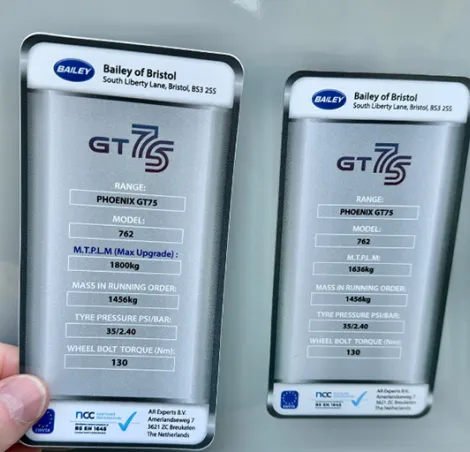
Every caravan has a maximum payload – the maximum weight it can safely carry. You’ll find this information on a data sticker (often called the weight plate) on the side of your caravan.
- MRO (mass in running order): This is your caravan’s base weight and includes a gas bottle (approx 10kg) and the mains hook-up lead (4kg). Alde heating fluid is also included if applicable
- MTPLM (maximum technically permissible laden mass): The maximum weight your caravan can carry when fully loaded
Payload = MTPLM - MRO
This figure tells you how much you can load into your caravan, including accessories like solar panels and motor movers.
Best way to load a caravan
Your caravan might seem like a giant storage box, but not all spaces are equal. Strategic packing ensures safe towing and a more balanced ride.
- Heavy items (like awnings) should be stored low, directly over the axle
- Medium-weight items (pans, tools, tins) can go in under seats, beds, or floor-level lockers
- Lightweight items (clothing, plastic kitchenware) are best in overhead lockers
Top tips for loading your caravan
- Avoid overloading either end of the caravan, this can severely impact the stability
- Use bathroom scales to weigh individual items and tally up your total
- Remember to include factory-fitted accessories in your payload calculation
What is caravan noseweight?
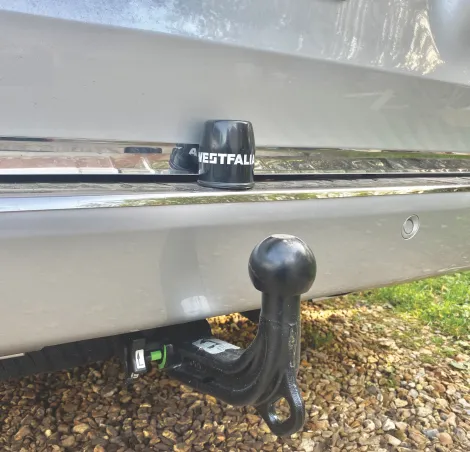
Your caravan’s noseweight is the downward force on the towball – crucial for safe towing. This should be between 5% and 7% of its MTPLM.
For example, if a caravan has an MTPLM of 1500kg, the noseweight should be between 75kg and 105kg.
Our guide to caravan towing covers this in more detail.
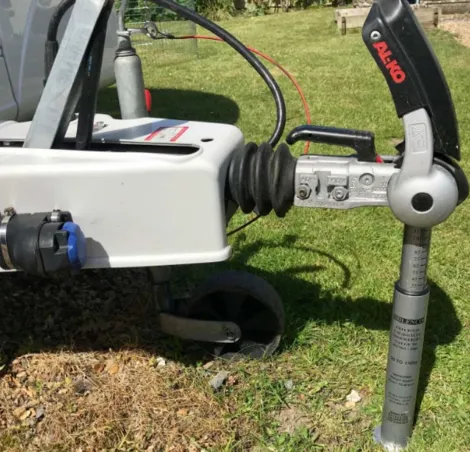
With your caravan on level ground, fully loaded and handbrake applied, place the noseweight gauge (or piece of wood) in the hitch socket (the part that the towball fits into) and wind the jockey wheel up until the gauge or bathroom scales and wood are taking the full weight. This figure – in kilograms – is your noseweight.
Should your noseweight be too light or too heavy, rearrange your caravanning kit to suit.
Heavy items can be moved forward or backwards to fine-tune things, but don't move them more than a couple of feet from the axle. Don't be tempted to place heavy items at the front or rear.
Don’t forget your towbar limits
Your car and towbar will also have a maximum noseweight, so check this figure in the handbook (it may have a sticker on the towbar) and don't exceed it.
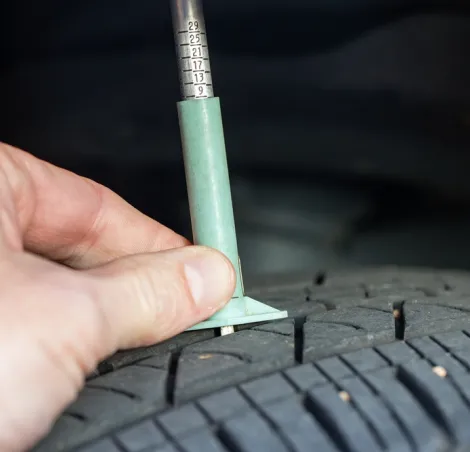
Caravan tyres – an easy win for safety
This is a great moment to check tyre pressures – on both the caravan and the tow vehicle.
Tyres that are over or underinflated can affect stability, fuel efficiency and wear.
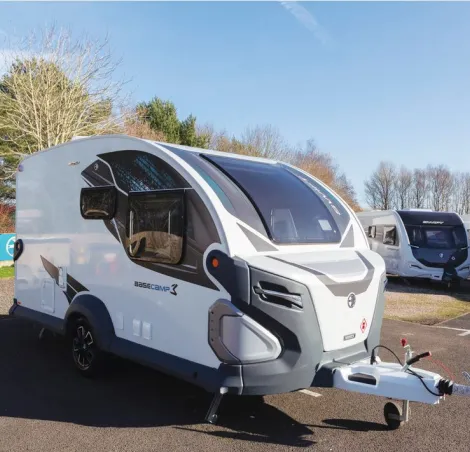
Can I increase my caravan payload?
Yes, some manufacturers offer MTPLM upgrades if your chassis allows it. There’s usually a small admin fee and you’ll need to update CRiS records.
We asked the manufacturers: Do you offer MTPLM upgrades?
Here is what they said:
Swift
"This varies based on the caravan and car combination; the chassis can provide some addition weight benefit, normally requested where a customer has had optional extras fitted such as an air-conditioning unit or motor mover. Upgrading the maximum technically permissible laden mass (MTPLM) on a Swift caravan is possible on some models, but it's not a universal option. The ability to upgrade depends on the specific caravan model and chassis number. Swift generally allows upgrades from the factory at order point free of charge; post build the upgrade is available through the dealership which is chargeable."
We also asked: How can you can do this and what are the benefits?
Where an upgrade is available this can be viewed via the technical data through our Swift website. This upgrade referred to is the difference between the declared MTPLM and the MTPLM upper limit. The tyres and running gear are always capable of the upper limit. This information can be viewed by model product and should be the first point of contact.
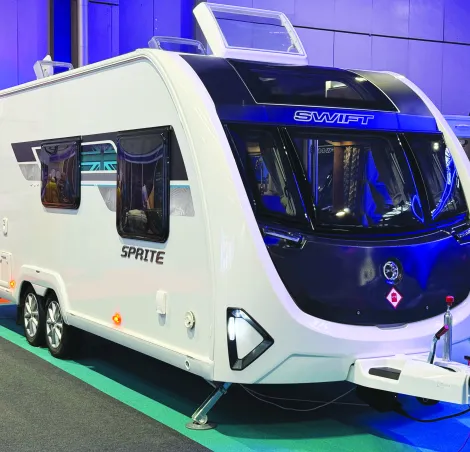
Loading advice from Swift
What’s your number one tip for safely loading a caravan for towing?
Follow the manufacturer’s instructions/handbooks, etc. Store the heaviest items low down and centrally in and around the axle. Caution should be taken not to store heavy items towards the rear of the caravan. Care should be taken to observe the maximum noseweight of both the caravan and the towing vehicle and should be nose heavy but within these two weight parameters (caravan & towcar). Care should also be taken to evenly load the caravan side to side.
Top caravan loading tips
Are there any common mistakes you see caravan owners make?
Towing empty caravans can be a problem that some caravanners are not aware of, especially lack of noseweight. The height of the vehicle towball should also be factored in, ensuring that it falls between the guidelines of 350mm – 420mm vertical height from the ground, with the vehicle loaded, but without the caravan attached.
Do you recommend any specific products or tools to help caravanners measure noseweight or distribute load correctly?
We don’t recommend specific tools but noseweight measures are an added check for safety purposes as this is one of the key factors affecting stability; too low a noseweight and the outfit will be unstable, too heavy and you may exceed the technical limitations which is 100kg on the chassis, but may be lower on the towcar. The best advice therefore is to have the laden noseweight as high as technically possible or practical for the outfit, taking into the account the towing vehicle and caravan noseweight limits.
This can be confusing to new caravanners but there’s lots of help available and a good source of immediate help is some of the owners' groups; most have chat groups and are more than happy to help new users.
FAQs
-
What is the correct way to load a caravan?
Ensure that heavy items are placed low and towards the centre of the caravan to keep the weight evenly distributed. Secure all items properly to prevent movement during travel.
-
Where should you put weight in a caravan?
Weight should be placed low down and over the caravan's axle to maintain stability. Avoid overloading the front or rear and distribute weight correctly.
-
How much payload does my caravan have?
Your caravan likely has a data sticker or weight plate attached to the side or hitch. Subtracting the MRO figure from the MTPLM figure will give you the payload.
-
How do I check caravan noseweight?
With the caravan loaded, on level ground and with the handbrake applied, place the noseweight gauge in the hitch socket and raise the jockey wheel until the full weight of the hitch is on the gauge. This figure, usually in kilograms, is displayed on the side of the gauge.
Final thoughts
Mastering how to load a caravan properly doesn’t just protect your investment – it makes every trip smoother and safer.
With a little preparation and the right equipment, you’ll be towing like a seasoned tourer in no time.

Try Towmatch
Towmatch, a completely free service from Out & About Live, enables you to take your first steps to owning your dream caravan. Towing a caravan is a stress-free experience once you've used Towmatch to find which models your car is suited to tow.
Use Towmatch today to start your caravan journey, then explore the latest caravan news, reviews and inspiration on Out & About Live
Latest caravan articles
Explore our magazines
Enjoy expert tech help, travel and campsite inspiration, buying advice, reviews, and more with our best-selling magazines and guides.

Buying Your Perfect Caravan
Buying Your Perfect Caravan is the ultimate guide to finding your ideal caravan. From layouts and storage to finance, insurance, and essential kits, it has everything you need to make your dream caravan adventure a reality.

Caravan magazine
Caravan magazine is perfect for caravan enthusiasts. Make the most of your caravan lifestyle with expert advice, unforgettable road trips, must-see attractions and top maintenance tips to keep your ‘van adventure ready.


