

The complete guide to caravan tyres
Technical advice
Caravan tyres: everything you need to know
One crucial aspect of caravan maintenance that still gets overlooked is tyre care.
Ignoring your caravan tyres can lead to serious safety issues and, later down the line, more expensive repairs, especially as they’re the only point of contact between your caravan and the road.

Macaulay Nichol Content Editor: Caravans
Macaulay Nichol Content Editor: Caravans
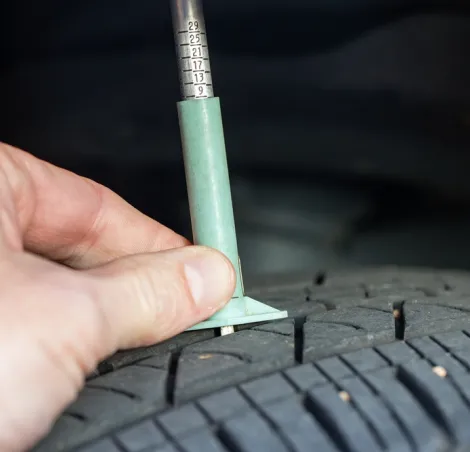
Caravan tyre maintenance
Regular inspections remain essential.
It is vital that you regularly check for any cuts or bulges and also ensure that the tyres are adequately inflated to the manufacturer’s specification.
Finally, you should also check that each of the wheel nuts and bolts are properly tightened.
Tyre tread depth and condition
The legal minimum tread depth is still 1.6mm across the central 75% of the tyre. But with caravans, tread depth isn’t the most important factor – age and condition matter significantly more.
This is why, particularly for older tyres, you should always check for cracks in the sidewalls or between the tread blocks; these can appear small at first, but often ring the alarm bells as a sign of ageing rubber that, if left, could compromise safety.
How old are your caravan tyres?
Infrequent use, UV exposure, and static storage mean age is more relevant than mileage.
Both UK Clubs still recommend that you:
- Replace tyres every five years
- Never use tyres older than seven years
To check the age, look for the four-digit DOT code on the tyre sidewall.
Correct tyre pressures for caravans
Underinflated tyres cause overheating and extra wear.
Overinflated tyres reduce grip and comfort.
We recommend that you regularly check your caravan's tyre pressures; this can be achieved using a tyre pressure gauge.
For the correct pressure, refer to:
- The caravan’s handbook
- The data plate (usually near the door or on the A-frame)
Bonus tip: don’t forget the spare.
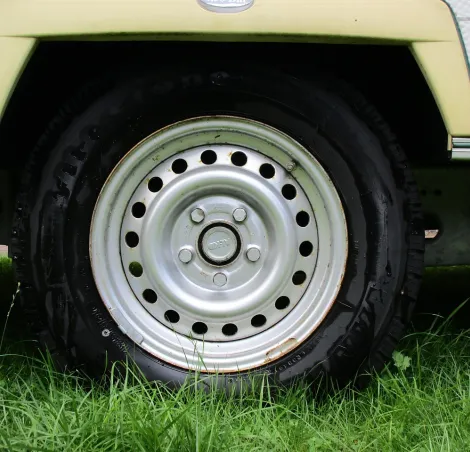
The Caravan and Motorhome Club offers advice on how to protect your tyres
If you’re not going to use your caravan for a lengthy period of time, we recommend that your remove the wheels and tyres and store them at normal inflation pressure in a cool, dry place and protect them from direct sunlight, sources of heat and fuel/oil spillages.
Cover with a natural material, not plastic, for protection.
Note that the terms and conditions of your caravan insurance and/or storage site might prevent you from removing the wheels during storage.
Storing your caravan: tyre protection tips
- Use tyre covers to block UV rays
- Avoid storing your caravan on grass or soft ground
- Check pressures before and after long-term storage
- Move the caravan slightly every few months to prevent flat spots
Pre-trip checklist
If your caravan’s been stored over winter, inspect the tyres in detail before heading out. Look for any signs of sidewall cracking or unusual wear and confirm pressures are at recommended levels.
Tyre safety tech for caravans
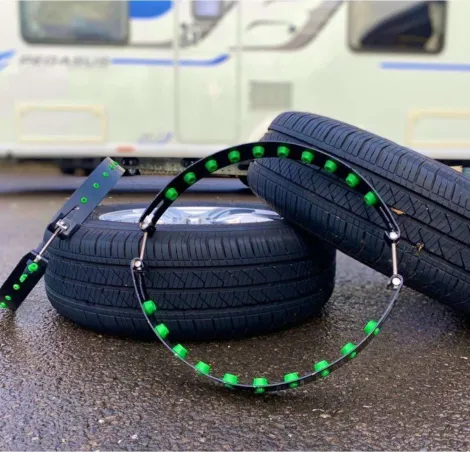
Tyre pressure monitoring systems (TPMS)
Many new caravans come with built-in TPMS, but aftermarket systems like TyrePal remain extremely popular. These screw-on or internal sensors monitor both pressure and temperature.
They alert you instantly to any pressure loss – which can be useful for preventing a blowout.
Some insurance providers may also offer discounts for using a TPMS.
Tyron bands
These fit inside the wheel rim and keep the tyre on the rim if it suddenly deflates. Tyron bands don’t prevent punctures but improve safety and control during emergencies.
Some tyre fitters specialise in working with Tyron bands, and again, some insurers may offer discounts if they’re installed.
Choosing replacement caravan tyres
Here’s what you need to check:
- Size (for example, 185/65R14) – this can be found on the tyre sidewall
- Load rating – must meet or exceed 90% of your caravan’s MTPLM
- Speed rating – at least 'M' (81mph) or higher
We asked the experts at Hometyre: What are the top three things people should look for when purchasing caravan tyres?
- DOT codes – the DOT code on a caravan tyre (and any vehicle tyre) is a critical piece of information that tells you when the tyre was manufactured. It’s particularly important for caravans because tyres often age out before they wear out due to lower mileage and long periods of static storage. We recommend tyres are changed when they reach around 5-6 years in age and we always aim to fit new tyres no older than 6-12 months
- “C” rated tyres – a C-rated tyre for a caravan refers to a "Commercial" tyre, not to be confused with fuel or wet grip ratings found on EU tyre labels. The “C” marking indicates that the tyre is designed for light commercial vehicles, making it particularly suitable for caravans, trailers and vans that carry heavier loads than standard passenger cars
- Correct size and pressure – always fit tyres in line with the manufacturer’s specification. The most accurate place to check your tyre size is on the sidewall of your current tyres. Alternatively, you can also find the tyre size printed on the plaque on the inside of the caravan door.
FAQs
-
How much do caravan tyres cost?
Expect to pay around £60–£90 per tyre, depending on brand and size. Mobile fitting services are widely available.
-
How long do they last?
Replace at five years, regardless of tread. Don’t use over seven years old.
-
Is the five-year rule a legal requirement?
No, it’s still a strong guideline. Not legally binding, but widely followed by manufacturers, service centres and insurers.
-
Where do I find the correct tyre pressures?
Check the handbook or manufacturer’s plate. Pressures vary by weight and axle configuration.
Final thoughts
Caravan tyres play a big role in your safety and if something goes wrong, or if left unchecked, lives could be put at risk.
This is why regular checks, age awareness and using technologies like TPMS and Tyron bands are smart ways to travel safely – plus, they can even save you money and reduce your insurance premiums.
Keeping your caravan tyres in top condition doesn’t just protect your vehicle – it protects your holiday.

Browse our Out & About shop
The Out & About Shop is your one-stop shop for everything you might need for an outdoor lifestyle, whether you’re touring coastal roads in a campervan or wild camping in the Highlands.
Fusing a comprehensive array of outdoor leisure products with reviews from trusted and experienced editors, consider this your online high street for outdoor leisure brands.
Latest caravan articles


Explore our magazines
Enjoy expert tech help, travel and campsite inspiration, buying advice, reviews, and more with our best-selling magazines and guides.

Buying Your Perfect Caravan
Buying Your Perfect Caravan is the ultimate guide to finding your ideal caravan. From layouts and storage to finance, insurance, and essential kits, it has everything you need to make your dream caravan adventure a reality.

Caravan magazine
Caravan magazine is perfect for caravan enthusiasts. Make the most of your caravan lifestyle with expert advice, unforgettable road trips, must-see attractions and top maintenance tips to keep your ‘van adventure ready.


