
Caravan solar panels: a complete guide
Technical advice
The ultimate beginner's guide to caravan solar panels
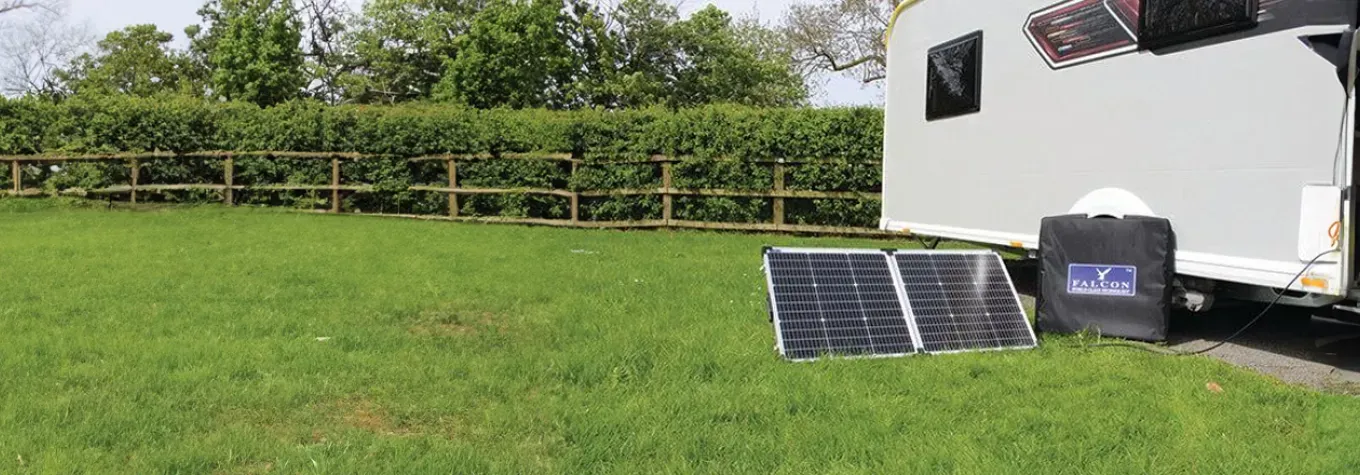
Caravan solar panels are increasingly popular with caravanners looking for more independence. They are now regarded as pretty much essential kit for off-grid caravanning.
They allow you to power your caravan’s water pump and lights without relying on electric hook-ups. This means you can save money on pitch fees, by choosing pitches without electric hook-ups. And this also increases your choice of more remote locations.
Whether you’re planning to head off-grid, or simply want to keep your battery topped up between trips, solar power is a smart and sustainable solution.
In this guide, we’ll explain everything you need to know, from how solar panels work to choosing the right system for the way in which you use your caravan.

Macaulay Nichol Content Editor: Caravans
Macaulay Nichol Content Editor: Caravans
Are solar panels worth it for a caravan?
In one word, yes – but it depends on how you use your caravan.
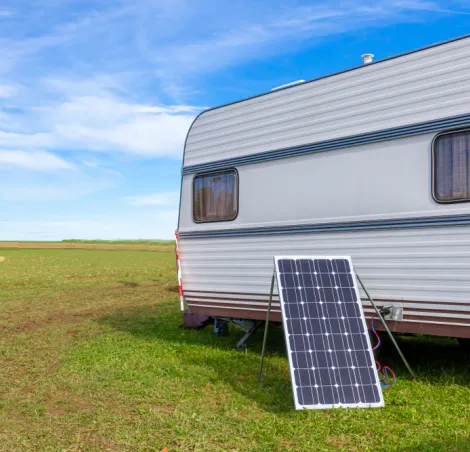
If you regularly stay at campsites without electric hook-ups, solar panels can give you freedom and convenience.
They reduce reliance on campsite power, save you money in the long run and cut down your carbon footprint. Plus, they help maintain your leisure battery by keeping it consistently charged.
The pros and cons of caravan solar panels
Pros:
- Lower pitch fees and access to non-electric sites
- Free, renewable energy
- Reduced environmental impact
- Battery maintenance and longer battery life
- Quiet power generation compared to generators
Cons:
- Upfront costs can be high
- Output depends on sunlight – not ideal in dark winters
- Free-standing panels can be at risk of theft
How do caravan solar panels work?
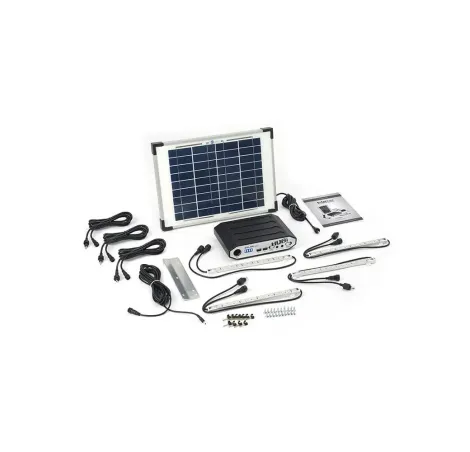
Solar panels generate electricity by converting sunlight into direct current (DC) through photovoltaic (PV) cells.
The power is then regulated by a charge controller, which safely manages the voltage before sending it to your leisure battery.
In summary:
- Sunlight hits the solar panel
- Energy is converted into DC electricity
- Charge controller regulates the voltage
- Electricity charges your leisure battery
A solar panel and battery combination won’t directly power mains appliances unless combined with an inverter, but solar panels are excellent for charging your battery to run 12V systems like lights and water pumps.
The different types of caravan solar panels
There’s no one-size-fits-all solution.
The best panel for your caravan depends on how you travel, how much power you need and how you want to install it.

Flexible panels
- Lightweight and low-profile
- Ideal for curved or awkward roof spaces
- Can be bonded directly to the caravan roof
- Less efficient than rigid panels, but more discreet
Rigid framed panels
- More efficient and durable
- Mounted using brackets
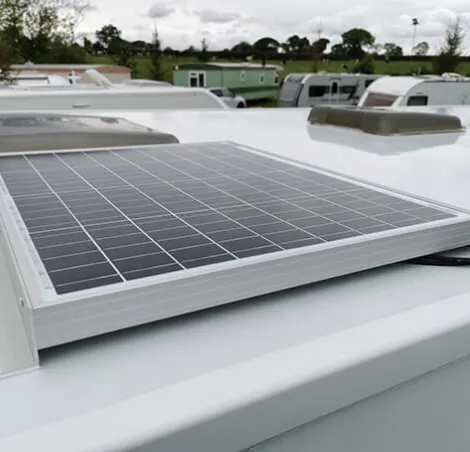
- Often fitted permanently to the caravan roof
- Heavier, but excellent for long-term touring
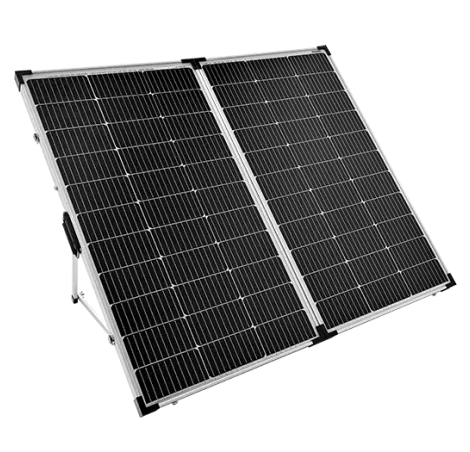
Portable (free-standing) panels
- Suitcase-style fold-out panels
- Can be moved throughout the day to maximise sun exposure
- Great for caravanners who don’t want to drill or permanently modify their caravan
- Must be secured when in use
Roof-mounted panels
- Offer “fit and forget” convenience
- Always charging when there’s sun
- No need to store or move them
- Do add some weight and height to your caravan
What size solar panel is right for your caravan?
Panel size is usually measured in watts (W), with common sizes for caravans ranging from 50W to 150W.
The size you need depends on how much power you use and how much time you spend off-grid.
Example usage:
- A 100W panel in summer can produce up to 500Wh per day – enough to run LED lights, charge phones and power a water pump
- In winter, the same panel might only generate 100Wh – enough for low usage or topping up
If you use high-power appliances like TVs or travel in winter, a larger panel or multiple panels might be better suited.
Installing and maintaining solar panels
Caravan roof-mounted solar panels
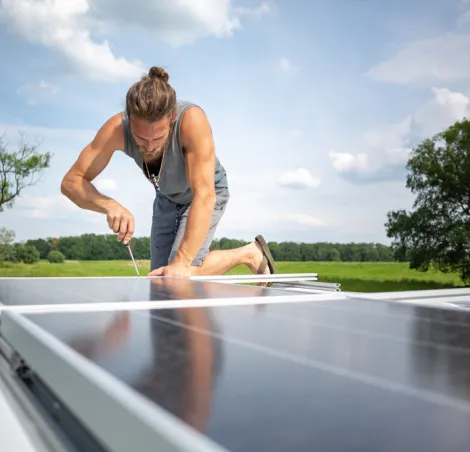
Permanent panels are typically fitted using brackets or bonded adhesive. The wiring passes through a cable gland to a charge controller, which connects to the battery.
Note: DIY installation may void your caravan warranty unless done to manufacturer guidelines. If in doubt, seek a professional.
Portable panel set-up
Portable panels are plug-and-play.
Just unfold them, position them in the sun and connect to your battery – usually via crocodile clips or a 12V socket.
Maintenance tips
- Keep panels clean and free of dirt, dust and bird droppings
- Store portable panels safely when not in use
- Check wiring and connections regularly
Calculating your power usage
It’s essential to match your panel size to your usage.
Here’s how:
- List your appliances and their wattage – found on the label or in the manual.
- Estimate daily usage – multiply wattage by hours used per day.
- Add it up – total your daily usage in Watt-hours (Wh).
Example:
LED light: 10W for 5 hours = 50Wh
Water pump: 30W for 1 hour = 30Wh
Phone charging: 10W for 2 hours = 20Wh
Total daily use = 100Wh
In this case, a 100W panel in summer would be more than enough.
Top tips
- Angle portable panels towards the sun for best results
- Use energy-efficient appliances to reduce demand
- Add a battery monitor to track charge levels
- Combine with a smart charger for cloudy days or winter top-ups
FAQ
-
Can house solar panels be used on a caravan?
No – house panels are too heavy and produce too much voltage for 12V systems.
-
Can I run a caravan entirely off solar?
Yes, for basic needs. You’ll need a large enough panel and battery set-up – and maybe an inverter for 230V items.
-
How much do caravan solar panels cost?
Anywhere from £100 to £600+, depending on the type, size and quality.
-
Do solar panels work in winter?
Yes, but with reduced output. Angle and position become more important.
Final thoughts
Caravan solar panels offer a sustainable way to stay powered while touring. The freedom and cost savings of solar power, by enabling you to choose cheaper, off-grid pitches, can quickly outweigh the initial investment – depending on how often you use your caravan, of course.
Choose the right system for your needs, calculate your power usage, and maintain your set-up properly – and you’ll enjoy years of energy independence.

Your one-stop shop for everything outdoors!
The Out & About Shop is your one-stop shop for everything you might need for an outdoor lifestyle, whether you’re touring coastal roads in a campervan or wild camping in the Highlands.
Fusing a comprehensive array of outdoor leisure products with reviews from trusted and experienced editors, consider this your online high street for outdoor leisure brands.
Latest caravan articles
Explore our magazines
Enjoy expert tech help, travel and campsite inspiration, buying advice, reviews, and more with our best-selling magazines and guides.

Buying Your Perfect Caravan
Buying Your Perfect Caravan is the ultimate guide to finding your ideal caravan. From layouts and storage to finance, insurance, and essential kits, it has everything you need to make your dream caravan adventure a reality.

Caravan magazine
Caravan magazine is perfect for caravan enthusiasts. Make the most of your caravan lifestyle with expert advice, unforgettable road trips, must-see attractions and top maintenance tips to keep your ‘van adventure ready.


