Caravan heating systems: a guide to caravanning warmth
Technical advice
A guide to caravan heating systems
A caravan heating system is essential for year-round touring, ensuring comfort regardless of the season. Whether you are preparing for winter caravan trips or searching for a new caravan with an efficient heating system, understanding the available options is key.
Thankfully, modern advancements in caravan heating technology make keeping warm effortless.
So, whether your next adventure takes you to Bognor, Bangor, or the Alps, you can trust that innovative engineering guarantees a cosy and energy-efficient caravan experience.
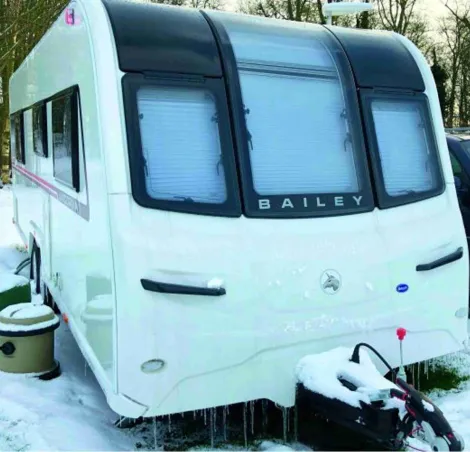
Caravan heating options
When exploring heating solutions for caravans, Alde, Truma, and Whale are industry leaders.
Commonly, caravans used either one of two heating methods: blown air or wet central heating.
These heating systems can operate using gas, electricity, or a hybrid approach.
Opting for gas option enables you to choose sites without an electric hook-up.
How does heating work in a caravan
Most caravan heating systems can run on electricity, bottled gas, or a combination of both. Blown air systems duct heated air around the caravan, while ALDE's hydronic system passes heated fluid through pipes and radiators.
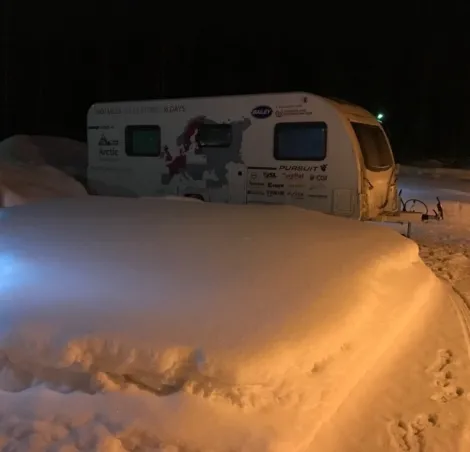
Thanks to a combination of efficient heating and insulation, modern caravans can easily withstand sub-zero temperatures. Many caravanners enjoy ski season or wintry destinations from the comfort of their leisure vehicle.
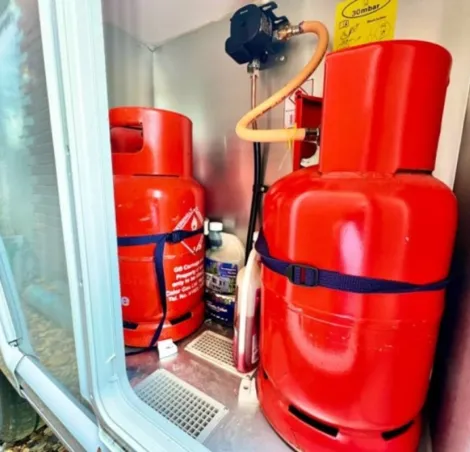
Gas. Propane or butane?
If winter trips are planned, the gas type used should be checked.
Butane will struggle if temperatures fall below freezing, whereas propane will continue to work until temperatures reach -40°C.
Calor is a popular choice among caravanners, with butane sold in 7kg blue bottles and propane in 6kg red bottles.
Blown air heating
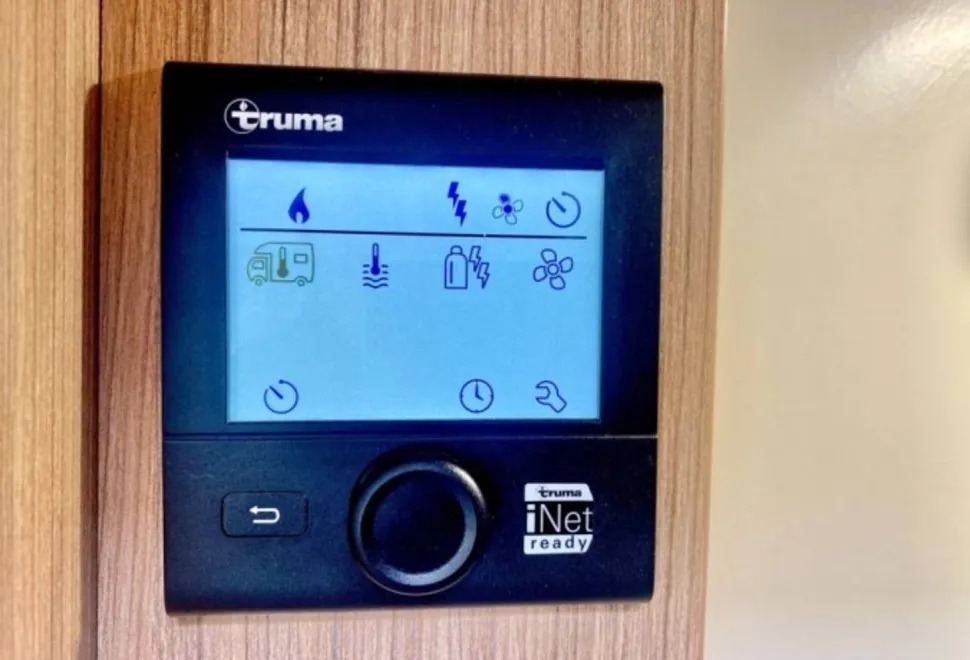
Truma and Whale
Truma and Whale produce blown-air heating systems, which heat the caravan's interior by passing warmed air to various points within. The air is heated inside the central unit (usually under a seat base or bed) and distributed via a network of tubes and vents.
The system can be 'balanced' by partially closing a vent or two if warmed air is needed in another part of the caravan.
How long does it take?
Heat-up times are usually quick.
I've tested a Truma Combi blown air heating at -26°C in the Italian Dolomites, and, thankfully, the heating system performed faultlessly.
Pros of blown air heating
Quick heating – blown air heating systems can warm up a caravan quickly, making it comfortable in cold weather
Even heat distribution – the system circulates warm air throughout, reducing cold spots and ensuring consistent temperatures
Compact design – these systems are often compact and can be installed without taking up much space
Cons of blown air heating
Noise levels – some people may find that blown air heating systems can be noisy
Dry air quality – the process of blowing heated air can sometimes lead to dry indoor conditions
Wet central heating
The Alde heating system for caravans is similar to a domestic central heating system. It uses a network of fluid-filled radiators to warm the caravan, which is known as a hydronic system.
To guard against the system freezing, a specialist anti-freeze liquid is warmed by a central unit that, like Truma's system, usually resides under a seat or bed.
Alde wet central heating systems are often installed in caravans with higher specifications.
Alde caravan central heating is commonly found in high-specification caravans. If you are purchasing a used caravan and want to identify an Alde system, look for branded control panels, an expansion tank in a cupboard or wardrobe, or a heated towel rail in the washroom.
If you need help determining if an Alde system is fitted, giveaways can be an Alde-branded control panel, an expansion tank in a cupboard or wardrobe, or a heated towel rail in the washroom.
Pros of wet central heating
Quiet operation – wet central heating is generally quieter than blown air systems
Efficient heating – provides even heat distribution throughout the caravan, meaning no cold spots
Cons of wet central heating
Slower warm-up – it can often take more time to warm up compared to blown air heating
Higher potential for leaks – due to the water-based system, the need for regular antifreeze fluid level checks and top-ups
Caravan radiators
Caravan water heaters
Alde, Truma, and Whale systems can also heat hot water for a sink, basin, or shower. Later Truma and ALDE heaters use the same central unit to heat the water and the inside of the caravan. The Whale systems I have used tended to have a separate water heating unit, one of which was underslung to maximise interior space.
Depending on the chosen energy source – gas, electricity, or a combination – these water heaters can efficiently warm tanks with capacities ranging from 8 to 13 litres, ensuring a consistent supply of hot water while on the road.
Choosing the best heating system
ALDE, Truma, and Whale heating systems are incredibly popular, and choosing between them is a matter of personal preference.
The Truma Combi and Whale systems heat air, which a fan passes through ducting pipes and vents.
The Alde system is similar to domestic central heating. It warms fluid before passing it through a network of pipes and radiators, which provides quiet, even heat.
Premium caravans are often fitted with Alde wet central heating, although all heating types perform incredibly well in all conditions.
While Alde’s caravan central heating and hydronic heating operates silently, blown air heating systems, such as those from Truma and Whale, provide quicker heat-up times. It’s worth considering these factors when selecting a heating system for your caravan.
Installing and maintaining your heating system
DIY kits are available, although they tend to be more popular among campervan builders.
Routine maintenance ensures longevity and optimal performance. Alde’s antifreeze fluid needs replacement every two to five years, depending on the type used. If Alde-approved antifreeze is used, the change is required every five years.
The importance of caravan insulation
Caravan insulation plays a crucial role in retaining heat. Older models used a timber framework with minimal insulation, whereas modern caravans feature advanced construction techniques for improved thermal efficiency.
Additionally, modern caravans often include gas heaters and caravan radiators for enhanced heating options.
For instance, Bailey’s Alu-Tech construction provides a fully laminated bodyshell with enhanced insulation, effectively maintaining indoor temperatures and reducing heat loss. The caravan heating system is designed to work seamlessly with the caravan heater, ensuring comfort in colder conditions.
Further testing is conducted in a cold chamber, with a thermal camera checking for warm air ‘leaks’ around areas such as windows and wheel boxes. The result is a thermally efficient leisure vehicle.
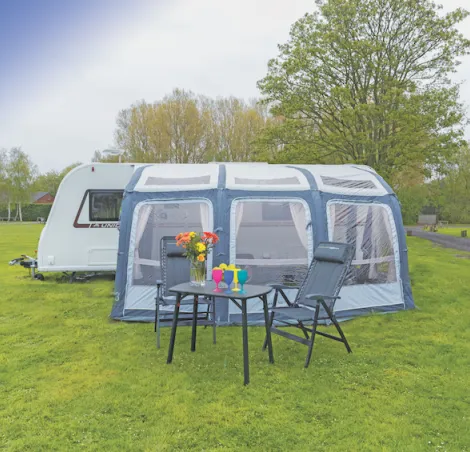
Caravan awning heating
Ensure your awning is correctly pegged and has no gaps. An awning skirt and wheel arch cover should also be used to help prevent wind from entering the awning from underneath the caravan.
If you have a porch awning or another type that doesn’t run the entire length of the awning rails, the awning must be snug against the body.
Dedicated awning flooring will also help, with many being breathable to minimise damage to grass. Interlocking foam tiles are popular for hardstanding pitches.
With the awning and floor sorted, popular awning heating units include fan and halogen heaters.
As the awning has been erected to minimise any draughts or fresh air, it’s unwise to use gas heaters in the awning due to the risk of carbon monoxide build-up.
Many sites are struggling due to stratospheric energy costs, so avoiding secondary heating in the awning until normality resumes may be beneficial in the long term.
FAQs
-
What is the best heating system for a caravan
The best heating system for a caravan is one that suits your needs and climate. Alde’s fluid-based heating system is highly recommended because it includes antifreeze, which means you don’t need to drain it during winter storage. However, if freezing temperatures are expected while the caravan is not in use, it's important to drain the water heating system to prevent damage.
-
How to drain down a caravan heating system
Draining a caravan’s heating system is similar across Truma, Alde, and Whale systems. Locate the drain-down toggle switch – Truma’s is yellow and should point vertically – then open all taps, including the shower, to ensure complete drainage. Performing this step before the final journey of the season helps shake out any residual water during transit.
-
How to add antifreeze to a caravan’s central heating
Alde’s system requires periodic antifreeze changes, in line with the manufacturer’s servicing schedule. To maintain warranties and ensure correct servicing, it’s best to have a technician handle antifreeze replacements. If using Alde-approved antifreeze, such as G13, changes are needed every five years.
-
How can I make my caravan warmer in the winter
Keeping warm at night is where your caravan central heating excels.
Most caravan heating systems are thermostatically controlled, allowing the occupants to set the desired temperature before bed. 15°C is comfortable for most conditions.
Many heating systems from Alde, Truma and Whale have a timer function, which allows the heating to switch from a higher evening temperature to a comfortable sleeping temperature at a predetermined time.
Should you be caravanning in chilly conditions, this timer function will also enable you to heat the inside of the caravan before getting out of bed.
-
What is the cheapest form of heating for a caravan?
If you stay at a campsite with electricity included in the pitch fee, the on-site 230v supply will be the cheapest option. That said, use it sparingly, as site energy costs have spiralled in recent years. If you use gas, a refillable bottle can pay for itself relatively quickly.
Final thoughts
Caravan heating systems are engineered for efficiency and comfort, offering gas, electric, or dual-powered heating solutions. Through testing Alde, Truma, and Whale systems in various climates, I can confidently state that each excels in maintaining warmth and energy efficiency.
With modern caravans designed for four-season touring, why not extend your adventures beyond summer and plan a winter caravan trip?