

Caravan satellite dishes: how to watch TV in your caravan
Technical advice
Understanding caravan satellite systems
Few holiday types can rival the escapism of the humble caravan, but we all love to sit back and relax in front of the TV from time to time
However, finding a good TV signal can occasionally be frustrating, something that a caravan satellite dish can overcome.
We have more TV choices than ever, from online streaming services to bollard-mounted coax plugs, although different destinations – especially those overseas – can play havoc with our viewing pleasure. Here's how a caravan satellite system can ease our TV woes.
What you need to know about caravan satellite systems
What is a caravan satellite dish?
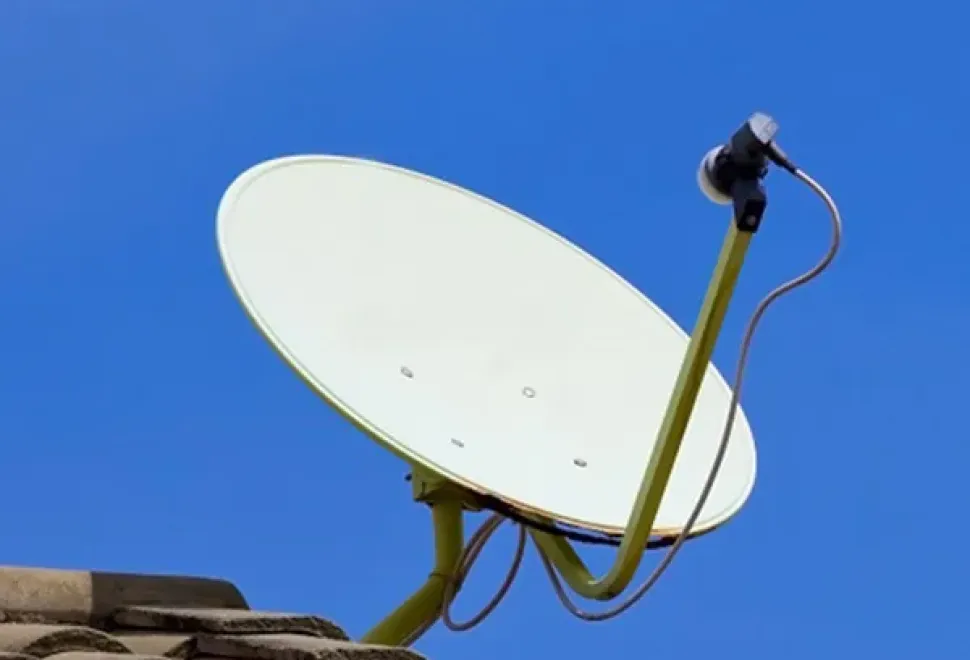
A caravan satellite dish is a compact dish that receives TV signals from satellites orbiting the Earth. It allows caravanners to access a wide range of channels – including UK Freeview and Freesat channels – regardless of local aerial coverage.
Satellite TV is especially useful when touring abroad, where streaming services may be restricted or mobile data expensive.
How does a caravan satellite dish work?
Now this might get slightly technical, but most UK users rely on the Astra 2 satellite, positioned in geostationary orbit over the southern sky. A caravan dish focuses radio signals onto an LNB (low-noise block downconverter), which sends them via a cable to your satellite decoder or TV with built-in tuner. From there, the decoded signal displays on your TV screen – no internet required.
Do I need a satellite dish for a caravan?
If you like to watch TV while on holiday in your caravan, satellite systems are a worthy alternative to streaming services. After the initial investment, they are also cheaper to use.
They are great for European travellers as UK channels can be enjoyed without the complications of data roaming.
Types of caravan satellite dishes
There are three main types of satellite systems for caravans.
The best option depends on your budget, travel habits, and how hands-on you want to be.
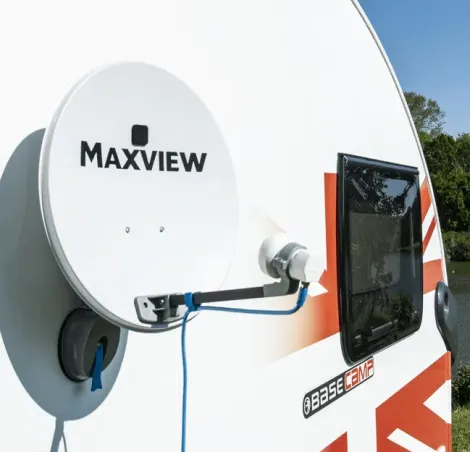
Suction-mounted satellite dish
Suction-mounted and tripod-mounted systems are 'standalone' and can be used when required or moved to another caravan.
- Portable and easy to position
- Attaches to the caravan side using strong suction mounts
- Ideal for casual UK use
- Requires manual alignment
Best for: occasional use, light touring, budget-conscious caravanners.
Tripod-mounted satellite dish
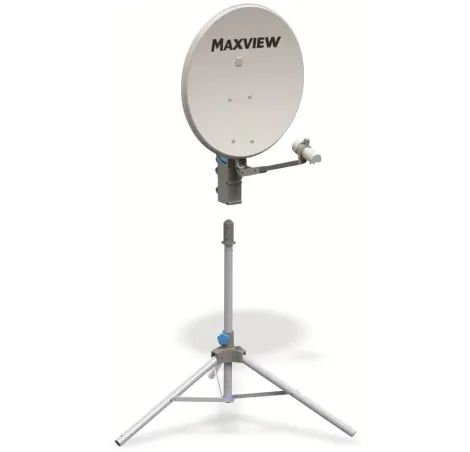
Tripod-mounted satellite systems are used to receive satellite TV and radio channels. They have been designed to simplify the assembly and alignment process for ease of use.
- Free-standing and adjustable height
- Often supports larger dish sizes for better signal abroad
- Needs to be manually set up and aligned at each stop
- More flexibility for positioning in clear line-of-sight areas
Best for: tourers heading into France, Spain, or rural areas needing a stronger signal.
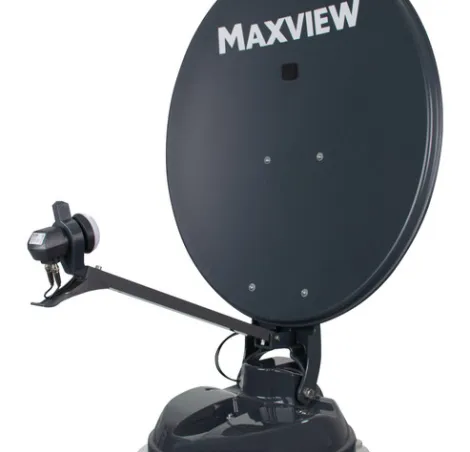
Roof-mounted automatic satellite system
A roof-mounted system is tricky to use, but when it is fitted, it will be so permanently. They are designed to receive satellite TV and radio from the UK and Europe at the press of a button, using a wired control box.
- Permanently installed on the caravan roof
- Auto-aligns to pre-programmed satellites at the press of a button
- Tidy, cable-free set-up
- Weighs around 10kg – check your caravan payload allowance
Best for: frequent travellers, year-round tourers, or anyone who wants press-and-play convenience.
What equipment do you need for caravan satellite TV?
To get started with a caravan satellite set-up, you’ll need:
- A caravan satellite dish (suction, tripod, or roof-mounted)
- An LNB (included with most dishes)
- A TV with built-in satellite tuner, or a separate satellite decoder
- Coaxial cable
Optional tools for a for caravan satellite set-up:
- Satellite signal finder or app (eg SatFinder, DishPointer)
- Compass (for manual alignment)
- Mount or tripod (if applicable)
How to set up a caravan satellite dish (step by step)
- Assemble the dish and mount (tripod or suction)
- Point it south – most UK satellite signals come from the southern sky
- Use a signal-finding app or a compass to find the Astra 2 satellite
- Adjust elevation angle (around 21–28° depending on your UK location)
- Connect the LNB to your decoder or TV
- Fine-tune the alignment using a signal strength meter or app
- Scan for channels using your decoder or TV settings
- Tip: trees, buildings, and hills can block your signal
- Choose your pitch wisely
Which satellite dish should I choose for a caravan?
There’s no one-size-fits-all answer.
Consider the following:
- Budget-friendly
- Suction-mounted
- Touring across Europe
- Larger tripod-mounted
- Roof-mounted automatic
- Minimal payload impact
- Suction or tripod-mounted
Remember, the larger the dish, the wider the coverage – especially important when travelling further into Europe.
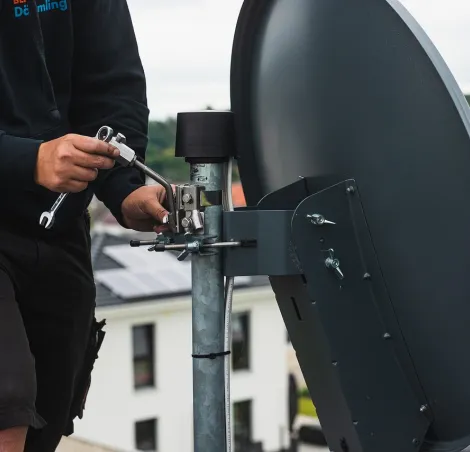
Things to consider
Line of sight is essential:
- Trees or tall buildings will block reception
Weather matters:
- Roof-mounted systems often perform better in poor conditions
Payload:
- Roof-mounted dishes affect your caravan’s weight limit
Manual vs automatic:
- Manual systems are cheaper but need set-up time; automatic systems cost more but offer convenience
What is the best satellite dish for caravans?
This is primarily a matter of personal preference and budget.
UK travellers may find a smaller suction-mounted unit suitable for occasional use, while hardy European caravanners will need a larger dish.
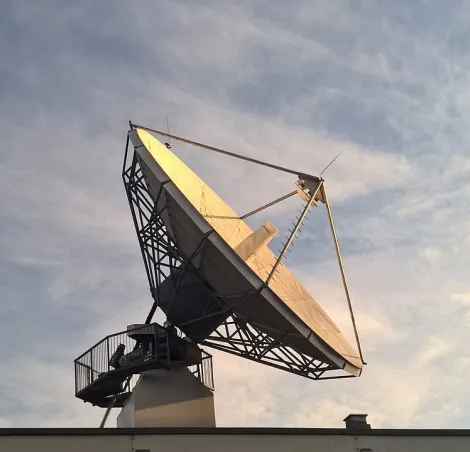
How to find TV satellite signal in your caravan
- Assemble the satellite dish and tripod/suction mount
- Point the dish due south. A compass or phone app can be used
- Connect the cable to the LNB
- Connect the other end of the cable to the TV (if it has a built-in decoder) or to the satellite decoder unit. If necessary, connect the decoder to the TV
- Point your dish at the relevant satellite using a free app such as DishPointer or SatFinder Lite. These apps use 'augmented reality' to map each satellite. A compass can be used, but it tends to be less accurate
- Set to the correct elevation. The Dish Align app can help
- Fine-tune satellite reception with a signal finder. They cost £20 or so from all good retailers
Final thoughts
Caravan satellite systems allow folks to watch their favourite TV shows from destinations across the UK and Europe. Once purchased, they won’t eat into your phone’s data plan or attract additional charges when overseas.
They do, however, require line of sight to the satellite, which trees and tall buildings can block. Choose a dish type based on your future travel plans, and you’ll be able to receive satellite TV from within the UK, France, or Spain.
FAQs
-
How do I find satellite TV stations?
All new Avtex TVs have a preloaded channel list, so your TV will work once a signal is found. If you use a TV with no preloaded channels, locate the satellite first and scan for new channels.
-
Can I use my Sky box?
Before Sky Q, the answer was yes. All previous Sky boxes are compatible with Maxview systems; plug them in like a free-to-air receiver. However, Sky Q receivers work differently, therefore the standard range of automatic systems is incompatible.
Consequently, Maxview has launched Sky Q-compatible Precision (tripod-mounted manual system) and a Sky Q-compatible Target (roof-mounted automatic system). Alternatively, if you have a manual or portable system, you can upgrade the LNB.
-
What size caravan satellite dish do I need?
A 40cm dish is sufficient for the UK and, possibly, the very edge of northern France. A 55cm satellite dish extends the coverage to northern France. The middle of France requires a 65cm dish, 75cm covers most of France, and the French-Spanish border is achievable with an 85cm dish.
-
How much elevation is needed for a caravan satellite dish?
In the UK, the Astra 2 satellite is between 21 degrees (Scotland) and 28 degrees (southern England).
-
How much does a caravan satellite system cost?
A good-quality, branded, suction-mounted system for a caravan will likely cost £150, with a larger tripod-mounted satellite system being around £250. Roof-mounted systems are upwards of £1,400.
-
Do I need a decoder box?
Many 12V caravan TVs include a built-in satellite decoder. If not, you’ll need a standalone decoder (eg Freesat or Sky box).
-
What size satellite dish do I need for European coverage?
Region recommended dish size for the UK & south of England 40cm–50cm. Northern France 55cm. Central France 65cm. Spanish border 75–85cm.
Latest caravan articles
Explore our magazines
Enjoy expert tech help, travel and campsite inspiration, buying advice, reviews, and more with our best-selling magazines and guides.

Buying Your Perfect Caravan
Buying Your Perfect Caravan is the ultimate guide to finding your ideal caravan. From layouts and storage to finance, insurance, and essential kits, it has everything you need to make your dream caravan adventure a reality.

Caravan magazine
Caravan magazine is perfect for caravan enthusiasts. Make the most of your caravan lifestyle with expert advice, unforgettable road trips, must-see attractions and top maintenance tips to keep your ‘van adventure ready.


