Compact motorhome: Is it right for you?
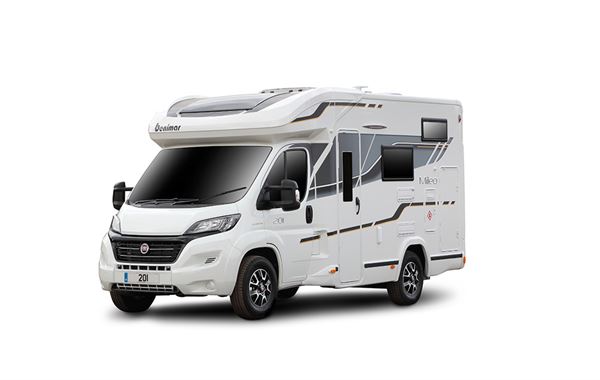
One of the most basic considerations to make when thinking about buying a motorhome is just how big it needs to be. Click here to read our advice on choosing the right type and size of motorhome for you.
Bigger and better is not always the case when it comes to motorhomes — it very much depends on where you plan to go in your motorhome and how much space you really need inside, so try to be realistic and only go as big as you really need.
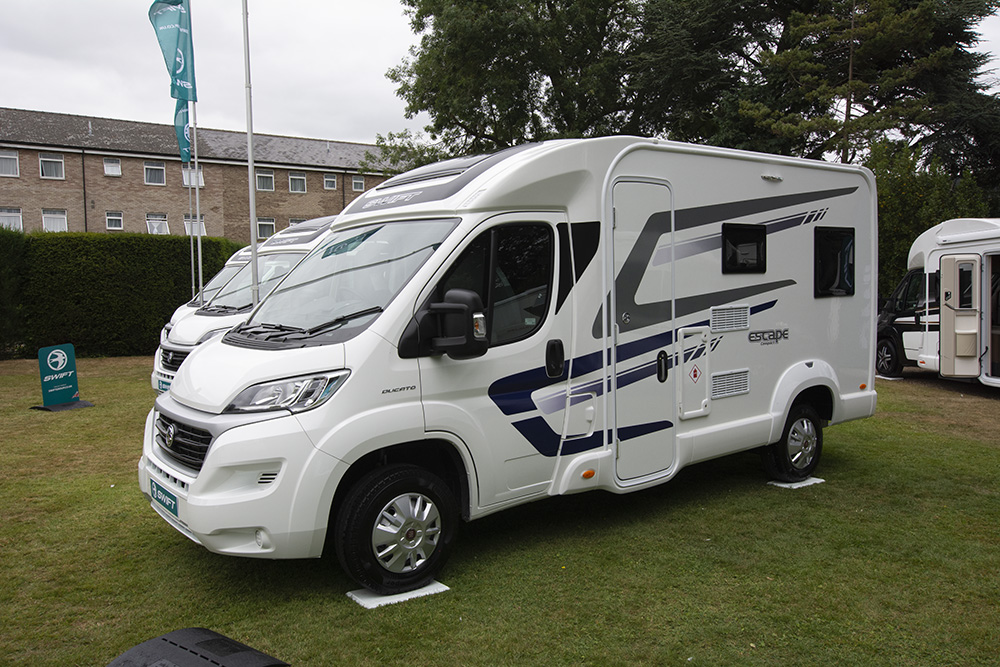
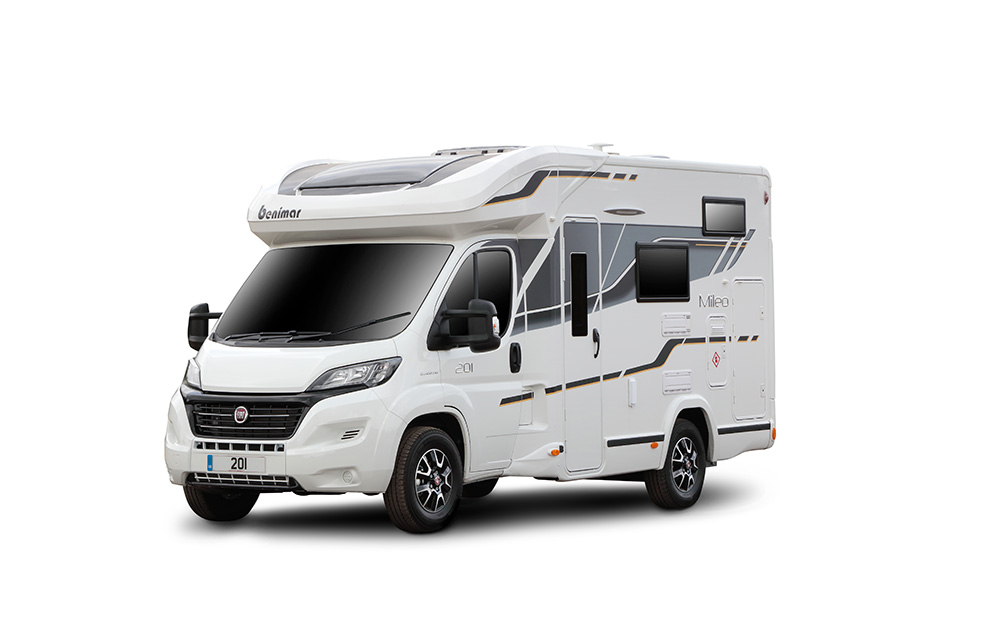
The longer the motorhome, the more space there is inside, but there are penalties to pay in the form of less manoeuvrability around busy towns, greater difficulty parking and possibly higher charges from ferry companies when journeying abroad. But that doesn’t just leave you with the campervan or panel van option… compact motorhomes are big business.
To make the distinction, a compact motorhome is generally one that is 6m or less in length. We’re not talking about campervans or panel van conversions but genuine coachbuilt motorhomes, and all the better insulation and facilities that they offer.
If you’re currently driving a larger coachbuilt motorhome and are looking to downsize, you’ll still be faced with a considerable choice of layouts and body styles in the compact motorhome market — from low-profiles to A-class motorhomes. Click here to read about the different motorhome layouts available.
The six pros of compact motorhomes
Opting for a compact motorhome has many advantages, some of which include:
1. Compact motorhomes are easier to drive
If you’re new to the motorhoming hobby and unsure about driving a huge vehicle, or if you’re looking to downsize your current motorhome, a compact motorhome could be the perfect choice. Not only do compact motorhomes often come in under the driving licence-friendly 3,500kg limit (click here to read more about motorhome driving licence restrictions), but they are also, obviously, a great deal easier to drive than a larger, heavier vehicle.
With no long overhang at the back of a sub-6m compact motorhome, negotiating a 90-degree bend at rush hour in a busy towns is a lot easier as you don’t have to swing out as wide to avoid cutting the corner off and catching any pedestrians.
In fact, you’ll probably find that driving a compact motorhome is easier in general, as you don’t have to repeatedly check the rear mirrors to see where the back end is. Reversing is also considerably easier as the rear wheels of the motorhome are nearer the back so it feels a lot like reversing an estate car.
2. Smaller motorhomes are often easier and cheaper to park
When parking a compact motorhome in a general car parking space, you can often reverse park and fit into just one parking spot towards the back of the car park (particularly if you find a space with a grass verge behind). As local councils expect you to pay for every parking space you use, it means you’ll only need to buy one ticket.
It’s also much easier to get into and drive around car parks than when driving a 7m long motorhome, which can prove to be impossible at busy times.
3. Cheaper ferry crossings for smaller motorhomes
Ferry companies will always ask how long your motorhome is, and anything over 6m may be subject to an additional cost. Smaller, sub-6m motorhomes often easily slot into the narrow lanes alongside cars and other smaller vehicles.
4. More payload on a compact motorhome
As there is less superstructure, a compact motorhome tends to weigh less than a much larger coachbuilt, which in turn means there’s more payload on a 3,500kg gross vehicle weight. More payload means you’ll have more flexibility to load up with the gear that you want, like a satellite dish, TV and full size oven. Click here to read more about motorhome weights and payloads.
5. Better fuel economy for smaller motorhomes
Another advantage of a smaller motorhome is better fuel economy. Compact motorhomes are generally low-profile (as opposed to overcabs) which boast better aerodynamics and are easier to get into thanks to lower suspension.
6. Better insulation than a panel van
If you were thinking about getting a panel van because you didn’t want to drive a large motorhome then a compact coachbuilt is a compelling alternative. Generally wider, you get a little more space, but the real advantage is that a coachbuilt motorhome will have much better wall and under-floor insulation compared to a panel van. Sliding doors on panel vans can also be more draughty and certainly let out a lot of heat compared to a smaller habitation door.
The cons of compact motorhomes
The disadvantages of compact motorhomes are mainly related to space and layout, so it’s down to the individual motorhome manufacturers to come with innovative ways to make the space work. Click here for our guide to motorhome layouts.
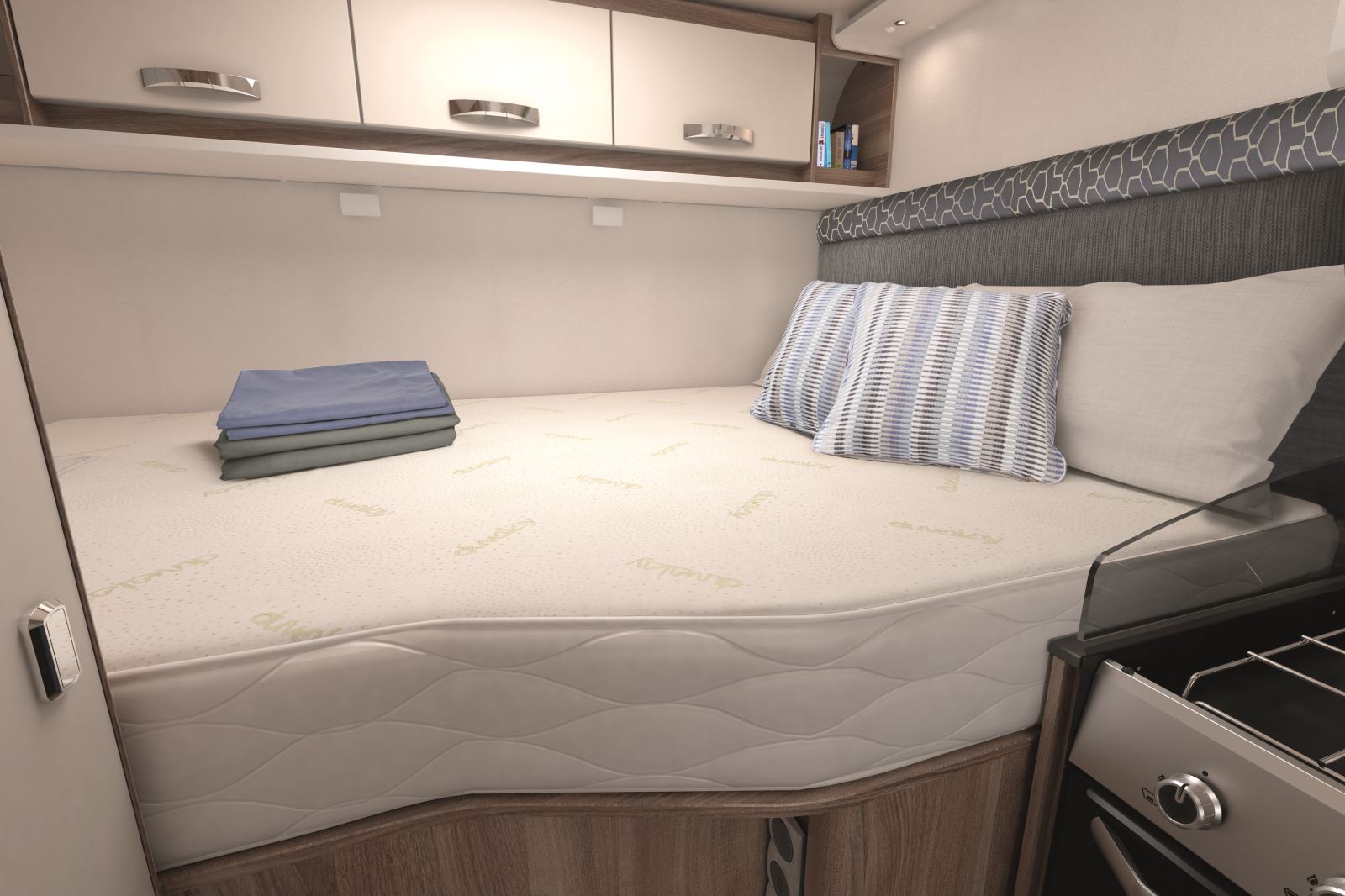
You’re highly unlikely to find fixed, longitudinal single beds in a compact motorhome as they take up too much room and eat into the rest of the motorhome’s layout. Instead you are likely to find a transverse double bed, which can be a huge disadvantage if you’re tall. You might also find that a transverse double isn’t suitable if one of you has to get up frequently in the middle of the night.
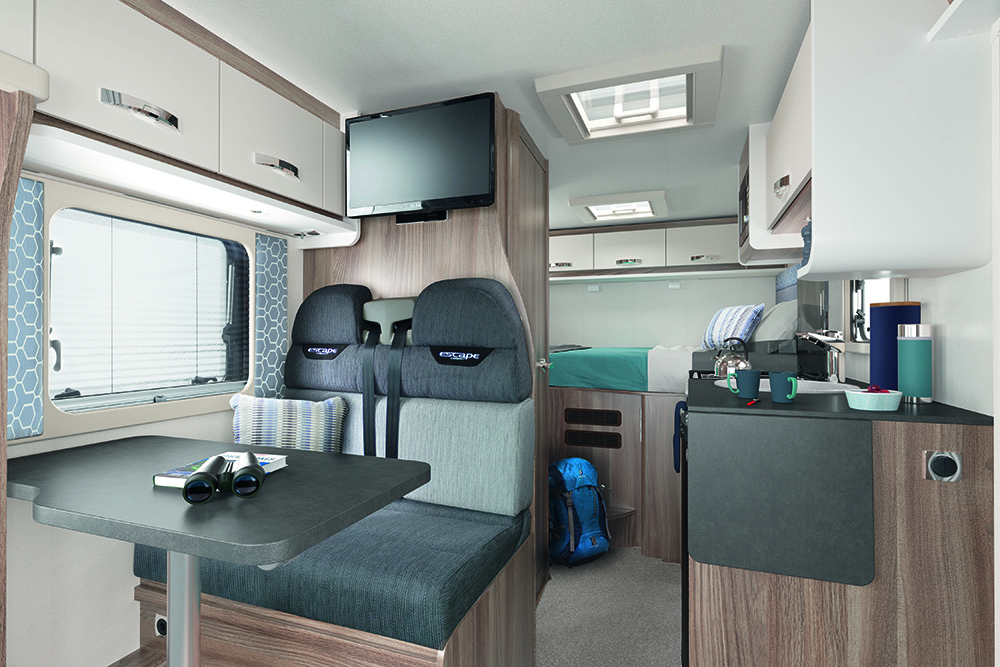
When a motorhome has a fixed bed, something else will have to make way and with European motorhomes this tends to be the lounge area, which ends up being a two-seater dinette with cab seats that swivel round to face it. However, manufacturers are coming up with novel ideas all the time.
One of the more popular layouts uses a drop-down bed over the lounge as this means that more space can be freed up everywhere else, leading to a generous kitchen area or washroom. The disadvantage of having to use a drop-down bed is that if one person is tired but the other isn’t, your lounge area will be compromised when the bed comes down.
Take a look at the selection of compact motorhomes currently for sale in our online Motorhomes for Sale section.
Now you have a better understanding of compact motorhomes — and the motorhome layouts that are available — check out our ultimate guide to buying a motorhome. If you’re looking to downsize and need to sell your current motorhome, read our ultimate guide to selling your motorhome.