
DIY: Caravan kitchen makeover

DIY: caravanning projects to try yourself
Refurbish your caravan kitchen in a morning, the Tony Brown way
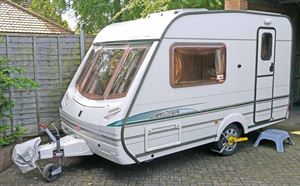
My daughter’s ten-year-old Abbey Iona developed a loose kitchen tap and examination showed that the swivelling spout had seized, causing the whole tap and plumbing to rotate until the large plastic fixing nut became quite free.
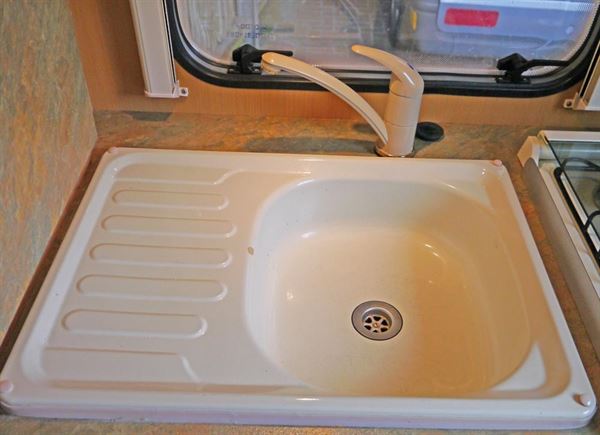
This well-built caravan was in generally good shape and deserved a face lift. Access to the tap would only be available if I temporarily removed the enamel sink and since it had become chipped and scratched over its many years of use.
Finding caravan spare parts
It made sense to replace it too, provided I could source a suitably sized replacement. Caravan manufacturers tend to keep spares for old models for only 5 to 6 years so a supplier of old spares such as O’Leary Motorhomes of Beverley, Yorkshire proved to be the stockist of the 550mm x 400mm enamel sink/drainer required.
The long spouted Whale Elite tap proved rather easier to find, and although both designed as direct replacements, this simple refurbishment did have its tricky moments.
Removing the sink
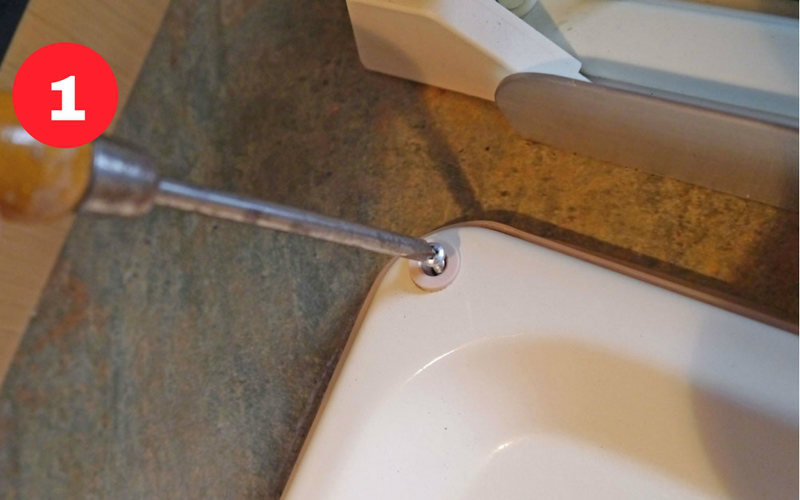
Remove the cover plugs and long fixing screws.
You remove the sink/drainer by flicking the four corner fixing grommet plugs out of their sockets using a penknife, giving access to the four long, cross-point fixing screws.
As these were a little rusted into place, the hinged sink lid had to be temporarily removed to improve access to the two screws at the drainer end of the unit.
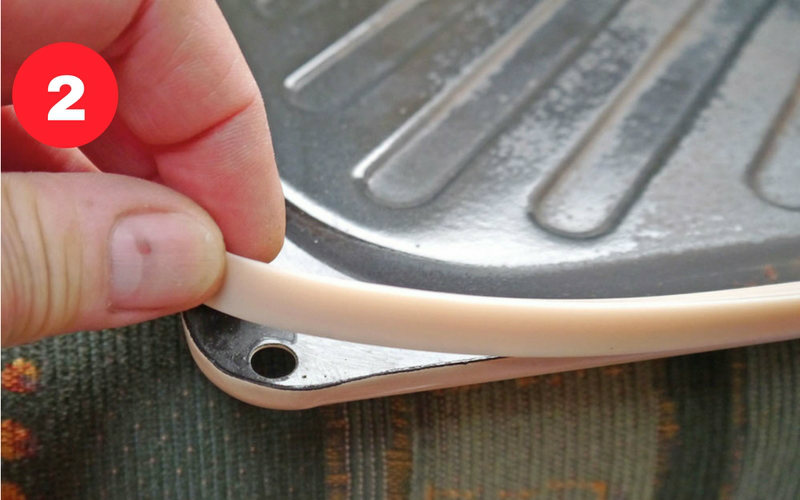
Preserve the plastic sink edge seal for refitting to the new sink later.
As I lifted the old sink, the waste pipe, which the manufacturer had kept short came off the waste fitting. I had to join 200mm of new waste pipe using the appropriate plastic pipe grommet fitting to provide sufficient length to allow space for later reconnection. Keep the sink's plastic edge sealer strip because this will be needed later for the new basin.
The wiring
The wires to the microswitch on the old tap can now be disconnected and the push-fit plumbing to the hot and cold tap inlets unplugged. These push-fit connections just require gentle pressure on the black rings while you pull out the pipes.
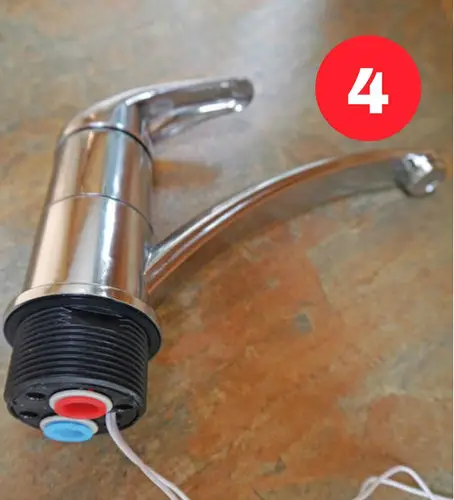
The replacement tap showing colour-coded blanking plugs for hot and cold pipes.
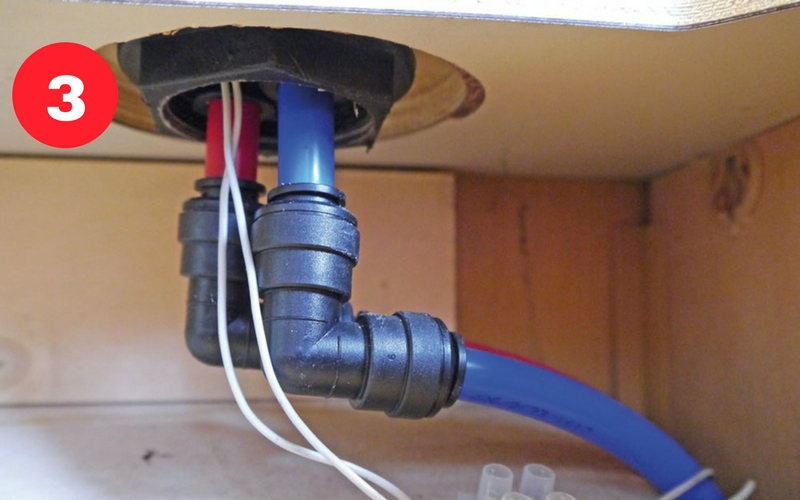
My van had short lengths of red and blue water pipe connected by right angle fittings at the tap end of the supply pipes. I disconnected and fitted them into the tap's base following the red and blue plugs provided with the tap.
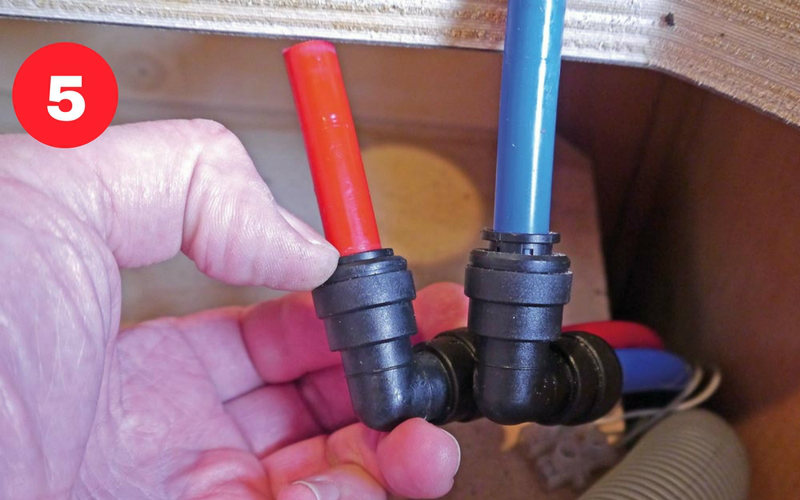
Press black release ring on the plumbing fittings to withdraw the pipe.
I inserted the tap through the worktop and both wires and short supply pipes fed through the large, plastic tap fixing nut. Ensure that you have two washers, one above and one below the worktop.
I tightened the nut firmly by hand, checking that the tap handle could be turned sufficiently to clear the hinged worktop cover. The tap swivel mechanism is very tight, so you need to be careful to prevent the fixing nut working loose. The official advice is to tighten 1/8 turn after hand tightening.
Access can be tough, so I advise tightening the tap by hand about half a turn too soon then rotating the body of the tap clockwise from above to its final position while holding the nut in my other hand.
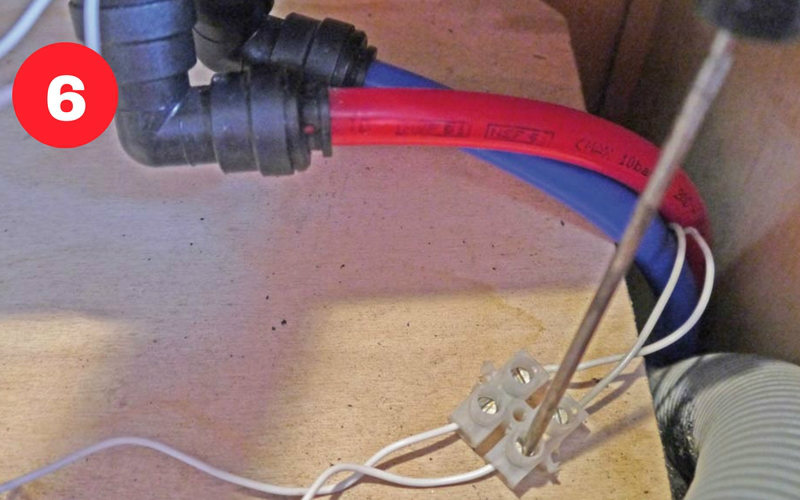
Disconnect the pump wires at the connector block. They are not polarity sensitive.
After rejoining the plumbing connections and switch wires (these are not polarity sensitive) I checked the pipework for leaks and the micro switch for operation before I fitted the new sink.
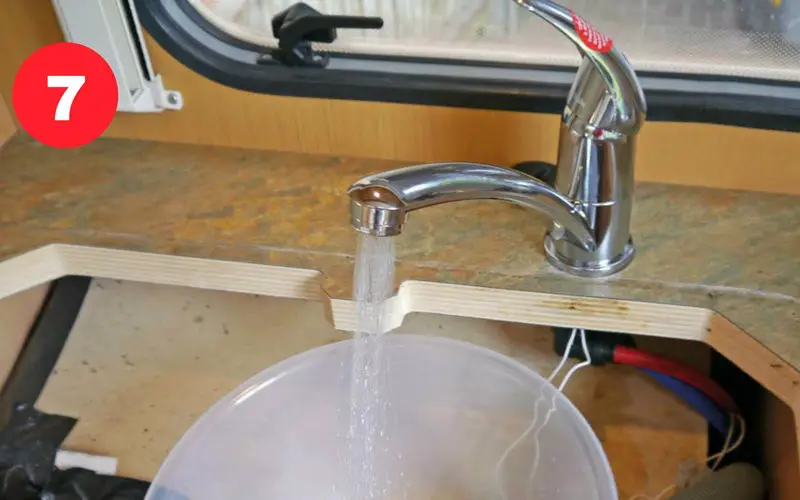
Test for correct function and leaks before refitting the sink.
Sealing the sink
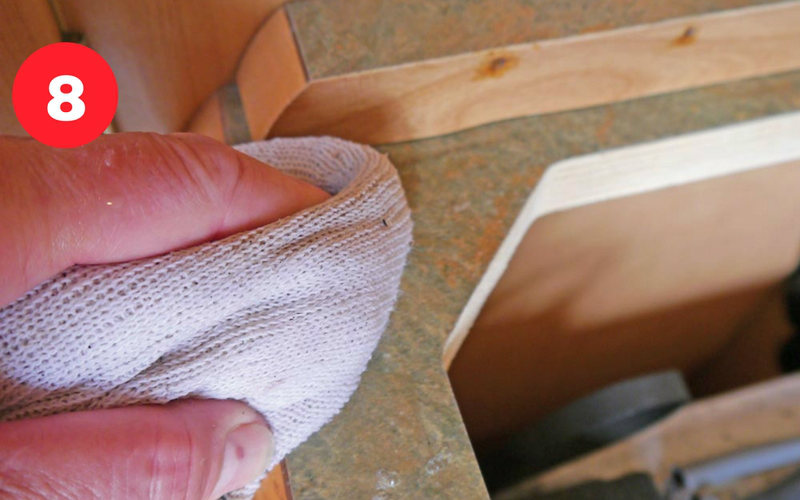
Clean the surround before continuing.
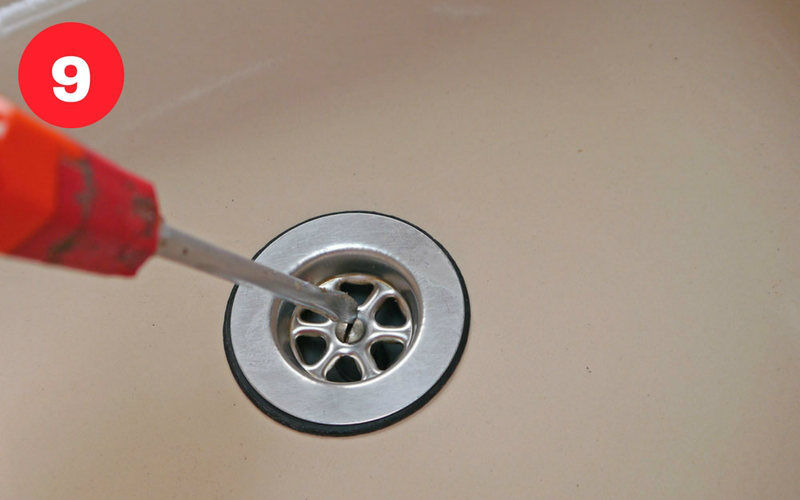
Transfer the waste fitting to the new sink.
After cleaning the worktop, the old sink edge seal and the waste fitting, I moved the fitting to the replacement sink, remembering to install the black plastic washers to both sides of the sink bottom.
Fit the old edge seal to the new sink remembering to fit the join at the rear and hold it in place using several short lengths of masking tape to keep it in place (but not under the edge seal). The sink waste can now be attached to the extended waste pipe, and the sink let down into place into its recess.
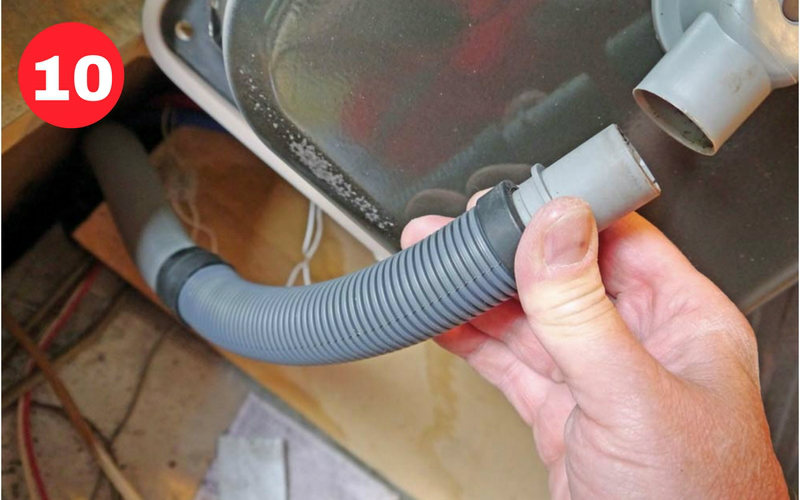
Add an extension waste pipe if required and fit to the new sink.
You can do a further waste leak test before refitting the four corner fixings from the new fixing kit supplied with the new sink. You can find the original fixing holes using a sharp instrument, but it is likely that most of the holes will need redrilling using a 2.5mm twist drill in the centre of the matching plastic fixing grommets.
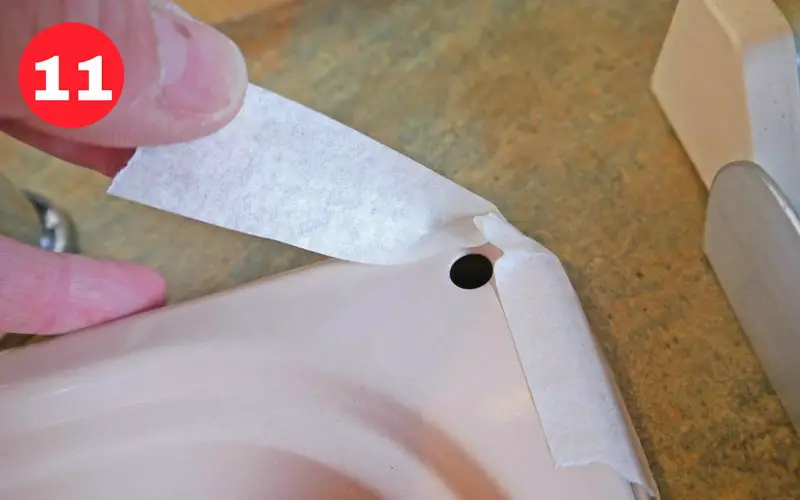
Use masking tape on the sink edges to stabilise the edge seal during refitting.
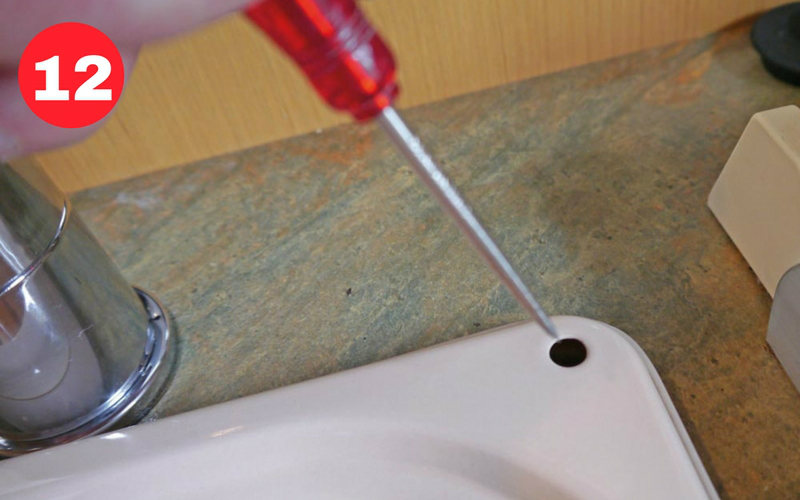
Explore the existing fixing holes using a pointed instrument
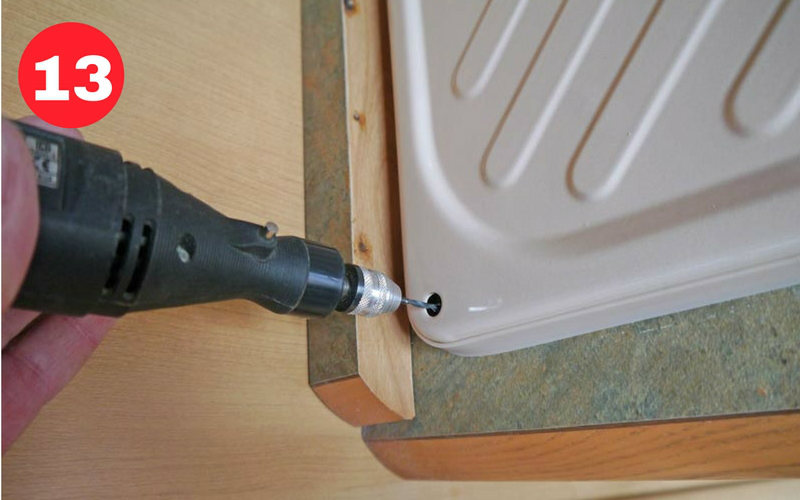
Drill replacement holes if the alignment is not quite correct
Tighten the four screws gently into place then snap the four caps over the fixing grommets before removing the masking tape from the sink sides.
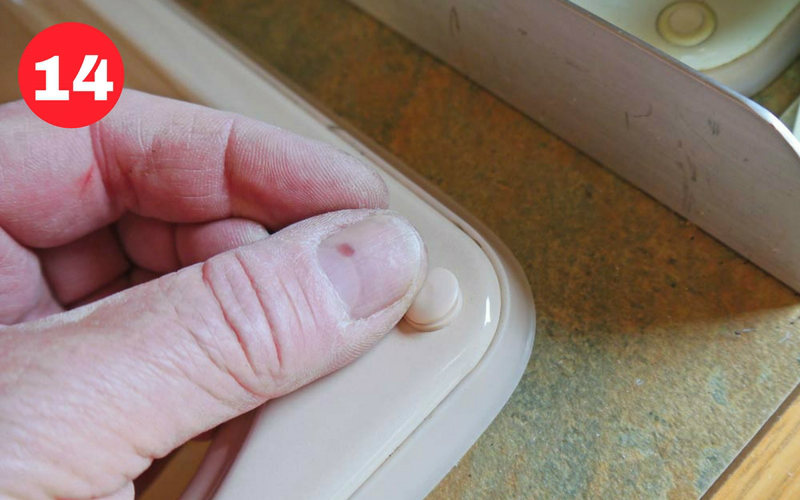
Replace the fixing screws and cover plugs
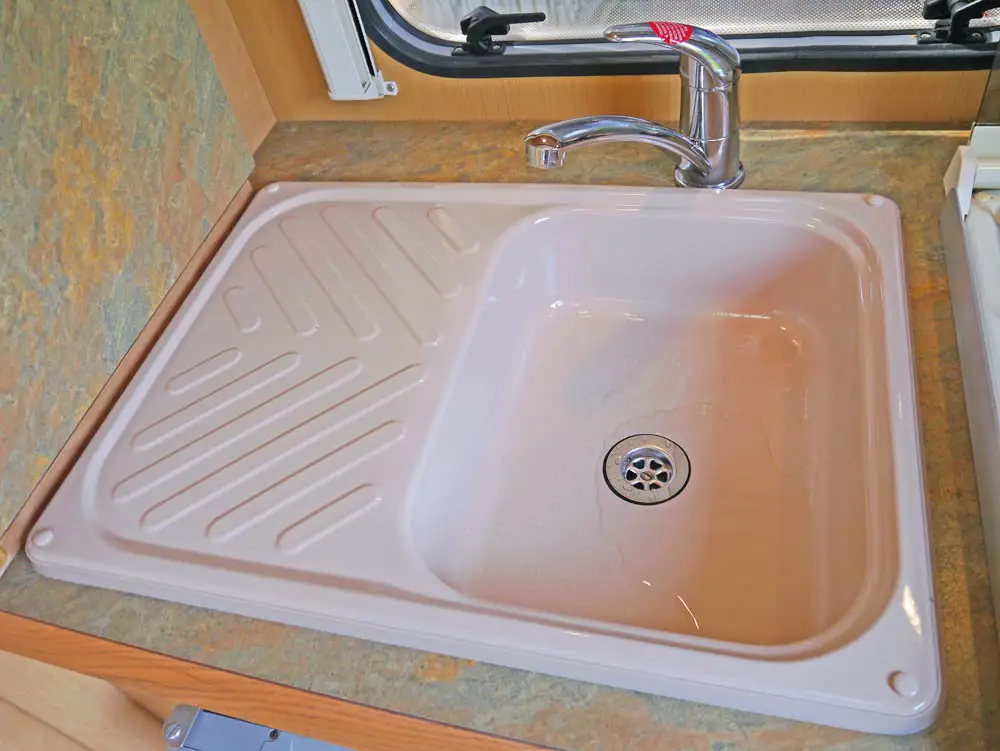
The final result after fitting new tap and sink.
Years of touring pleasure
The Abbey Iona is a well designed and robustly built ten-year-old caravan which should give many more years of touring pleasure as a result of one morning’s work.
Dismantling the Whale Elite tap
1. Remove the red/blue indicator with a penknife.
2. Remove the Philips screw and pull off tap top. You now have access to change the microswitch if necessary later.
3. Remove the large plastic O-ring which allows the swivelling spout section to be pulled off for extra lubrication or replacement.
The Abbey Iona
This small width, 13’, end kitchen two berth was made by Abbey between 1995 and 2005 before Abbey was taken over by the Swift Group. It is well built with GRP sheet sides and runs on a galvanised chassis. At 1060Kg maximum weight, it is suitable for towing by a wide range of cars.


