
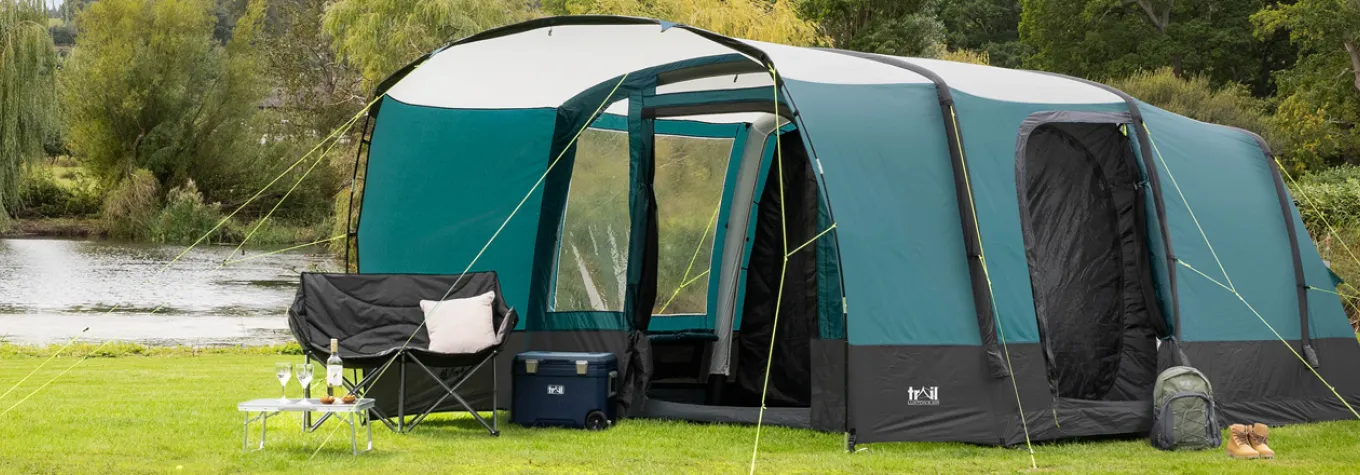
Types of camping tents: how to choose the right one for you
Buying advice
If you're considering buying a camping tent, whether it's your first time or you're a seasoned camper, it's important to look at the different types of tents and making the right choice for a comfortable and enjoyable outdoor experience.
This comprehensive guide will help you understand the various types of tents, their designs and factors to consider when making your selection.
As well as looking at the different types of camping tent, you should take into account camping tent sizes and tent materials.
This article is sponsored by Trail, Adventure Meets Affordability – At Trail We Live for Adventure and Believe Outdoor Experiences Needn't Cost the Earth.

Iain Duff Content Editor: Campervan/Camping
Iain Duff Content Editor: Campervan/Camping

Browse our Out & About shop
The Out & About Shop is your one-stop shop for everything you might need for an outdoor lifestyle, whether you’re touring coastal roads in a campervan or wild camping in the Highlands.
Fusing a comprehensive array of outdoor leisure products with reviews from trusted and experienced editors, consider this your online high street for outdoor leisure brands.
What are the different types of tents?
Watch our video to make sure the next style of tent you buy is the perfect match for you to make your camping experience the best it can be.
Family tents
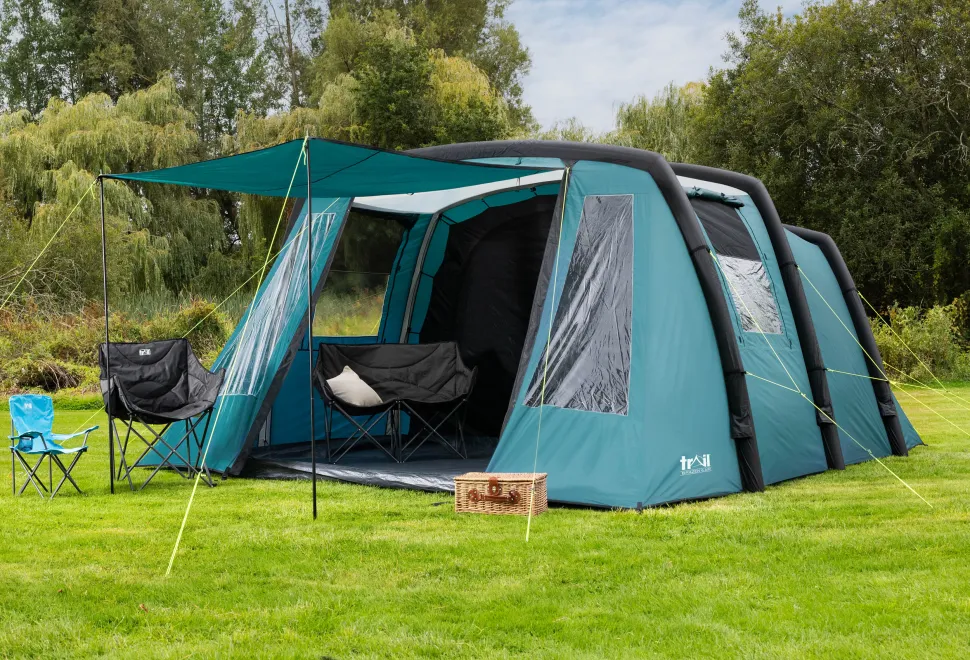
Family tents
Family tents are ideal for extended trips with larger groups. They come in a variety of layouts, tend to be large and are designed for longer-term trips than just the occasional night away.
They are available in either inflatable or traditional poled versions and can be bought in four, five and six-man versions, or even more. For larger families or groups you can choose a tent that will house up to 10 people.
Most have separate living and sleeping areas with sufficient headroom, providing comfort for longer vacations. Some even feature front porch areas for added utility.
Generally, big family tents take longer to set up and pack away so aren’t ideal if your time or storage space is limited. The packed size and weight of family tents means they’re best suited for transporting by car rather than being carried.
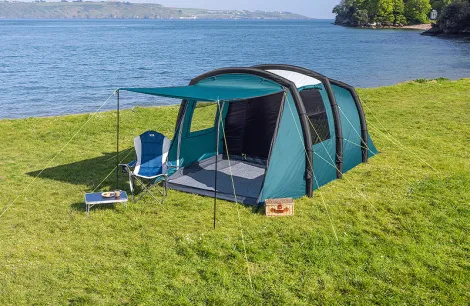
Trail Brazen 6 Family Tent
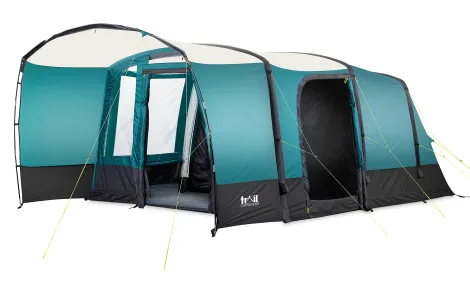
The Brazen 6-man air tent is a roomy, inflatable family camping tent that sleeps up to six people with a large living area and darkened bedroom for better sleep quality.
It features a high-density polyester flysheet with a 5,000mm waterproof rating, durable TPU air poles and a safety purge pump for fast, simple set-up. Multiple windows and vents offer good light and airflow, while a linked tub groundsheet helps keep out moisture and insects.
The bedroom can be split into two three-berth sections for privacy, and included king poles convert the entrance into a sun canopy for extra sheltered space on the campsite.
Weekend tents
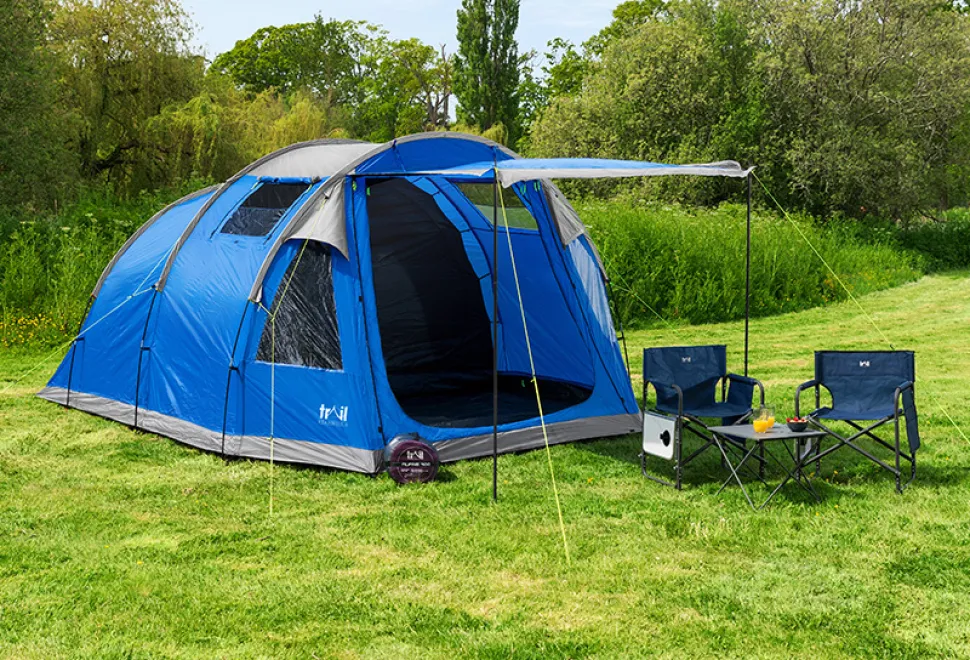
Weekend tents, also known as touring tents, are smaller shelters which have less living space but are quick and easy to pitch and pack away, making them ideal for shorter breaks when time is at a premium.
Like family models, weekend tents come in poled or inflatable versions and are available in a range of styles, including domes, tunnels and hybrids of the two. They tend to be for a maximum of four or five people but work especially well for couples who want a little more space to spread out.
A weekend tent can have a single living/sleeping area or might have a separate bedroom and living room. Depending on the model, there could be a side door in addition to the main front entrance.
Some weekend tents have a high roof that allows you to comfortably walk around inside, while others have very little headroom. If mobility is an issue, you should go for the taller style, as crawling in and out of the tent can be difficult.
The smaller pack size means they are easier to pack into the boot of your car without having to use a trailer or roofbox.
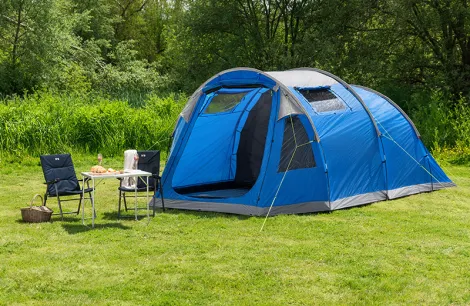
Trail Stannon 5 weekend tent
The Stannon 5 from Trail is an easy-to-pitch tunnel tent that comfortably sleeps four, but is big enough for five. Its more compact footprint and pack size makes it perfect for weekends away, without compromising on comfort.
The Dark Zone bedroom blocks out sunlight, allowing you to enjoy a more relaxing sleep. The 5,000mm hydrostatic head provides exceptional rain protection, capable of standing up to the stormiest of downpours.
The bedroom measures 210cm by 300cm and is a maximum of 205cm high, with a divider to create two rooms. The spacious living area measures has standing room, a sewn-in groundsheet, cable access and windows.
Adventure tents
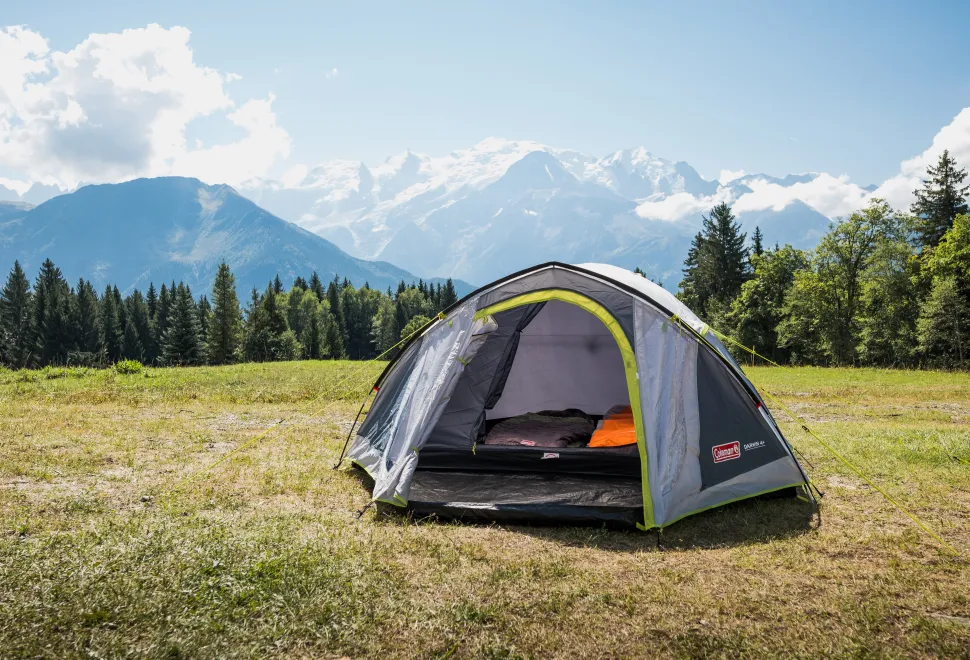
If your trips fall into the adventure camping category – wild camping, trekking, backpacking, cycling, canoeing, etc – rather than simple holidays, then you'll need a more technical tent.
Adventure tents can be for one, two, three or, occasionally, four people and tend to be more expensive than mainstream models because of the technical materials used for fabrics, poles and pegs.
In backpacking tents, the lightweight materials used are designed to allow you to carry the tent in a rucksack or on your bike and they can usually be pitched very quickly.
They don’t have much space inside to do anything but sleep, but most have small vestibule areas at the front or side where you can store gear overnight and cook with some shelter.
For cycle and motorcycle camping, or in fact any trip where weight and pack size is not a big issue, you could go for a bigger tent.
As with lightweight tents, these are mainly places to sleep, but some have larger porch areas where you can store more gear, or maybe even a bike. And often they have enough headroom to comfortably sit upright.
Trailer tents & folding campers
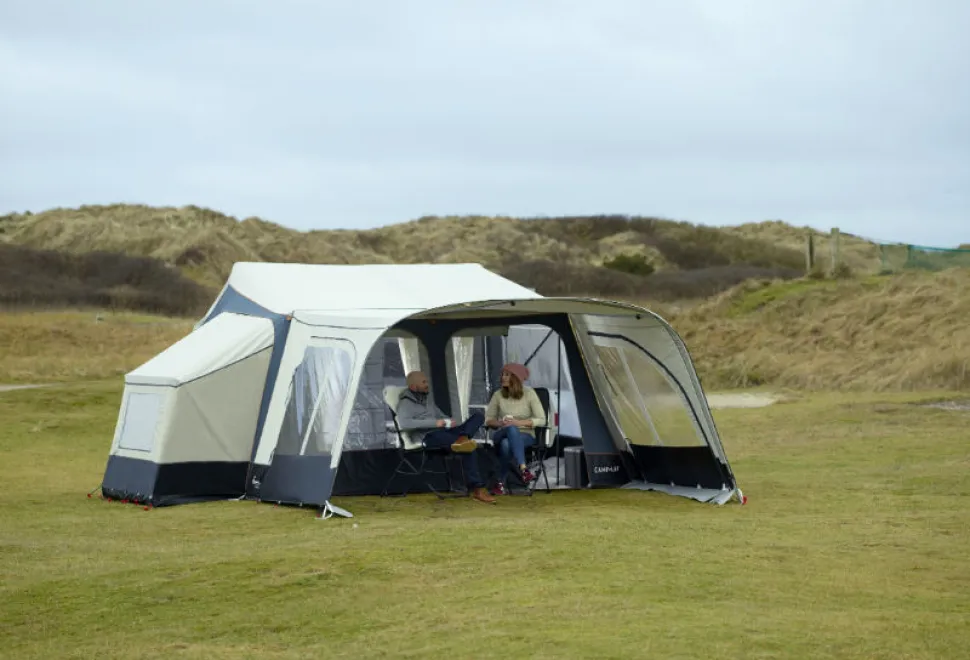
A trailer tent is a unit where the roof and all of the walls are made out of canvas or another type of heavy-duty fabric. The fabric is folded out from the trailer and pegged out.
Some models have flip-tops, where the canvas unfolds to like a giant pram-hood. These can take just a few minutes to pitch. Inside, trailer tents have off-the-ground beds with mattresses that usually fold out from the trailer and can be used as a seating area during the day.
In larger units you'll find further inner tents in the awning for more sleeping space and some trailer tents allow you to increase the sleeping accommodation by fitting under-bed compartments.
Higher-spec trailer tents have their own kitchen units while with more basic models you’ll have to bring your own camping stove and other gear. Storage compartments can often be found in the main trailer.
Folding campers provide comfortable accommodation for campers who want a bit more luxury but still enjoy sleeping under canvas. They are built on a trailer unit that looks like the bottom half of a caravan.
Many modern folding campers have hydraulic struts that make opening it out much easier, while the self-inflating Opus Air can be put up at the touch of a button.
Roof tents
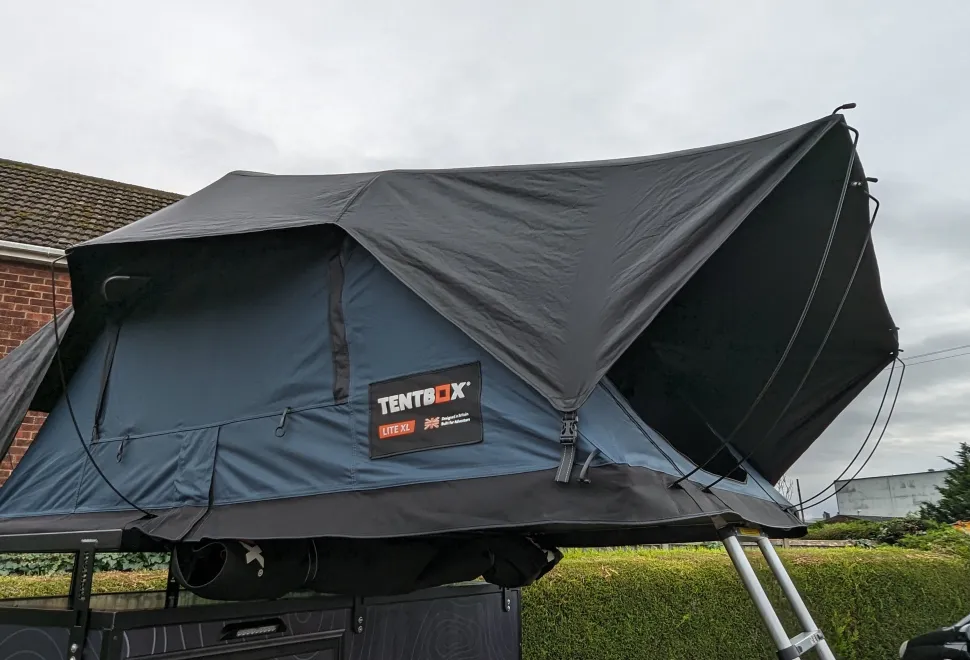
Roof tents mount on your car's roof, and can be set up very quickly, making them suitable for on-the-go campers who value simplicity and speed.
They generally are fitted to roof bars or a roof rack with brackets or clamps, and look like a roof box when packed away. When you park up, the tent either folds or rises out of the ‘shell’, with a ladder that is then attached or extended down to allow you to climb up into the tent.
In the morning, simply fold or remove the ladder and pack the tent away again until your next adventure. Not only do they offer a unique camping experience, but they also provide the convenience of being able to set up camp anywhere your vehicle can go.
What tent layout should I buy?
Your choice of tent layout will depend upon the kind of camping that you plan to do and who it’ll be with.
The distinction between types is becoming less clear-cut these days, with some designs borrowing elements of different types, but we’ve put together a guide to the basic types of family tent and adventure tent to help you make your choice.
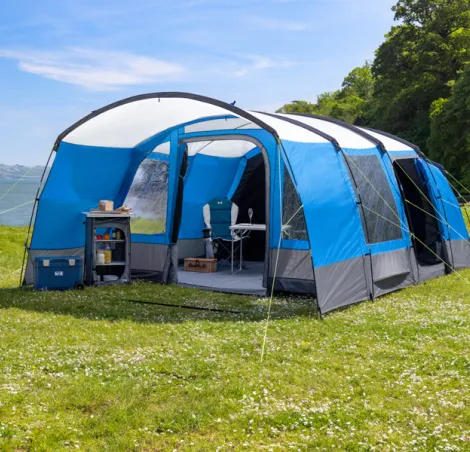
Tunnel tents
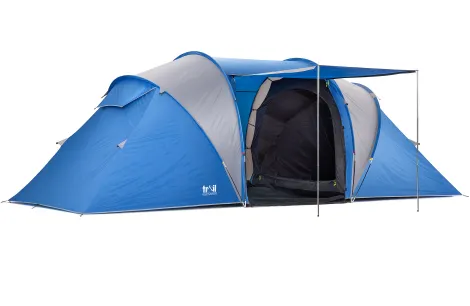
Tunnel tents are popular for families. They provide spacious living and sleeping areas with almost upright side walls. Extended porch sections can be used for various purposes, such as cooking or storage. A good example of the space on offer in a tunnel tent layout is the Trail Shilstone 6.
Vis-a-vis tents
These tents have two inner bedrooms facing each other, separated by a central living section. They offer privacy and flexibility, and allow for increased living space by removing one inner tent.
These are especially popular for families with older children, who prefer more privacy. The Trail Hexton 6 is an example of the vis-a-vis layout.
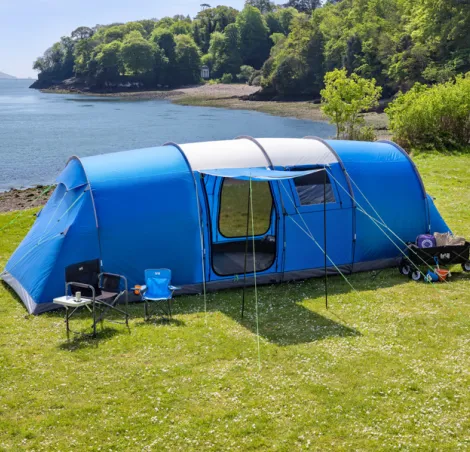
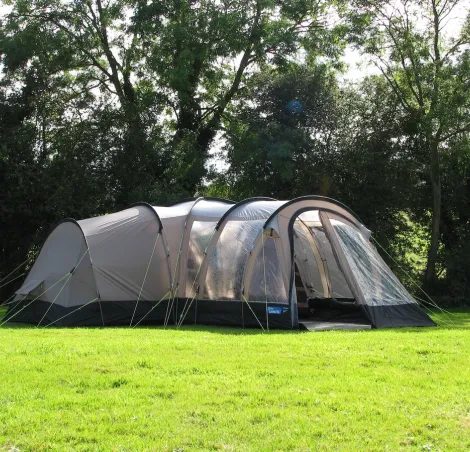
Pod tents
Pod-style tents offer personal space for everyone, making them suitable for family camping. However, their large footprint can lead to extra charges at campsites, and they may be challenging to set up.
Tipi/bell tents
Tipis and bell tents are fast and simple to pitch, making them ideal for weekends away. They lack separate inner tents but work well for short trips.
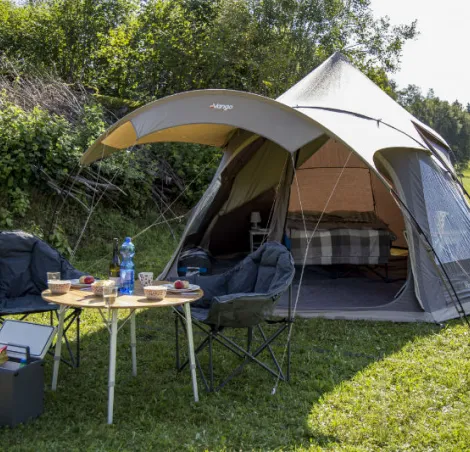
Dome tents
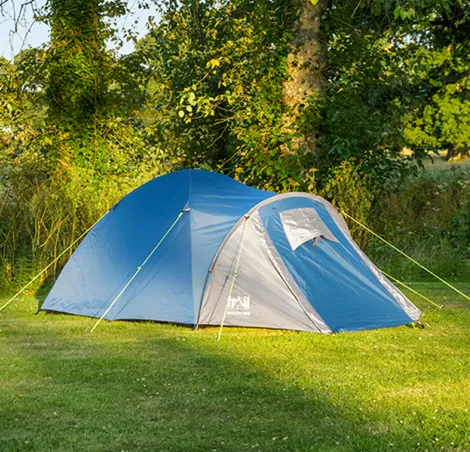
Dome tents use flexible poles to create free-standing structures with reasonable headroom. They are stable in smaller sizes but less so as they get taller. Some, like the Trail Bracken Dome shown here, feature extended porch sections.
Geodesic/semi-geodesic tents
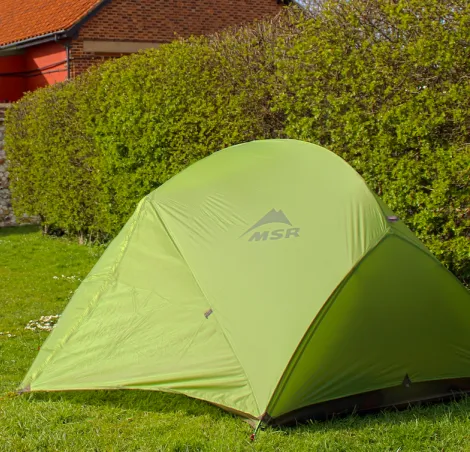
These designs are favoured by mountaineers and expedition enthusiasts due to their exceptional stability. They use multiple poles to create a dome-type structure.
Ridge tents
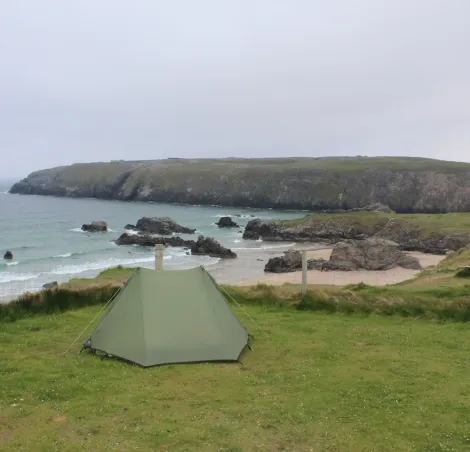
Classic triangular tents with A-shaped poles and a ridge pole between them are called ridge tents. They are straightforward in design and set-up.
Pop-up tents
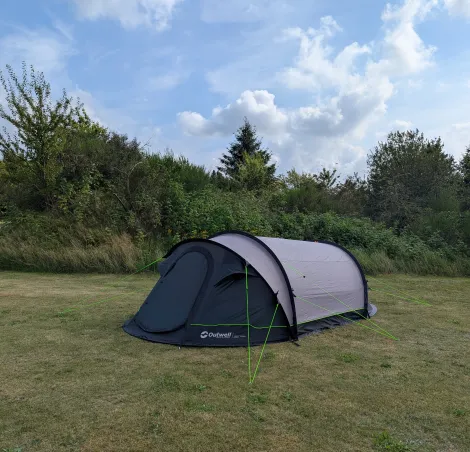
Quick to pitch by unleashing the frame from its bag, pop-up tents are perfect for festivals and small groups. Keep in mind that they can be challenging to pack back into their bags.
Poled tent or inflatable tent?
Poled tents
Traditional poled tents come with two, three, or four poles, offering spacious living and sleeping areas. They are lighter and pack smaller than inflatable tents, but they take longer to set up.
Inflatable tents
Inflatable tents rely on air-filled chambers for support, allowing for rapid set-up, even with large models. However, they can be heavy and bulky, with higher costs.
How to pitch a tent
Where should I buy a tent?
In the past, camping equipment was generally bought from high street chains and local independents. But there are now many retail outlets fighting for business as well as retailers operating online
Independent and high street tent retailers
Many towns still have at least one camping and outdoor shop on the high street – either a local independent set-up or one of the larger chains like Blacks, Millets or Cotswold Outdoors.
There are also lots of large independent stores, based on the outskirts or just out of town, that have a wider range of equipment for sale.
Many of these are family-run and boast staff who have worked there for many years and are extremely knowledgeable. They can provide you with the sort of expert advice you might not find elsewhere.
Camping superstores
Over the last decade there’s been a huge growth in the outdoor superstores like Go Outdoors and Decathlon – often based on retail parks and carrying a huge range of tents and accessories from a wide range of manufacturers at discount prices.
Visit any of these retailers and, as well as being able to touch and feel the products, you should also be able to sound out staff for help and advice.
Their purchasing power means they also have the ability to undercut smaller rivals but the downside is that they can feel a little soulless and don’t have the personal touch of the independents.
Budget supermarket
Lidl and Aldi are a great source for picking up decent-quality camping tents at bargain-basement prices.
Both introduce a range of outdoor gear to their famous middle aisles a couple of times a year and generally speaking it’s good value for money.
We’d always recommend that you don’t buy a super-budget piece of gear anywhere unless you are 100% certain it’s of a good standard.
Buying a tent online
The internet has extended the buying options open to would-be campers dramatically, but unless you know exactly what you are looking for, we’d advise a little caution before diving in with both feet.
It allows you to compare dozens of tents online and give an excellent indication of the most competitive prices for a specific tent or accessory.
But it’s difficult to gauge quality from pictures on websites and until you’ve actually stepped inside a tent and wandered around in it, it’s hard to work out whether it’s right for you and your family.
We’d recommend seeing all the tents on your shortlist in the flesh before making a final decision.
You may then decide to buy a specific tent online to get a cheaper deal, but bear in mind that aftersales service can vary significantly and if something does go wrong, getting it fixed or replaced can be much more complicated.
What to look for when buying a tent
1 What size tent do I need?
Consider the size that suits your needs. Larger tents provide more comfort but require more set-up time and storage space, and can incur extra charges at campsites. It's often better to choose a tent with a berth size larger than your actual group.
2 Do I need a groundsheet?
Most modern tents have sewn-in, waterproof groundsheets to keep out insects, animals, and weather. Some have "bathtub" designs, and using a tent footprint can protect the groundsheet.
3 What tent materials are best?
Most modern tents use man-made materials like nylon and polyester, which are lighter and more compact and are generally cheaper.
Traditional cotton tents are heavy and take time to dry but are the most natural and breathable tents available.
Polycotton combines natural and synthetic fabric for better waterproofing and breathability, but it's more expensive.
4 How is tent waterproofing measured?
Waterproofing is measured by the hydrostatic head rating, with higher values indicating better performance. Most tents have ratings over 1,500mm, making them waterproof. Consider seam sealing for added protection.
5 How much should I spend?
Tent prices vary. Budget-friendly options start at less than £100, while higher-quality models range from £300 to £800. Premium models, especially canvas or polycotton tents, can cost up to £2,000. Poled tents are generally more affordable than inflatable ones.
Final thoughts
Selecting the right camping tent is crucial for a memorable outdoor adventure. By understanding the various tent types, designs, and key factors like size, materials, and waterproofing, you can make an informed decision that suits your camping needs.
Whether you're planning a family holiday, a weekend getaway, or an adventurous expedition, having the perfect tent ensures comfort and enjoyment in the great outdoors. Take your time, do your research, and find the ideal camping tent that becomes your home away from home.
Latest camping articles

Next Shows

The Norfolk Motorhome & Campervan Show 17th - 19th July 2026
Join The Norfolk Motorhome & Campervan Show, 17-19 July 2026, for the Out & About Live Summer Party! Explore motorhomes, live demos, an...

Retro Festival 7th - 9th August 2026
Retro Festival celebrates timeless hits, vintage vehicles, fashion shows, and fairground fun.

The Western Motorhome & Campervan Show 21st - 23rd August 2026
Join The Western Motorhome & Campervan Show in Malvern, 21-23 August 2026, for live country music, 450+ motorhomes, and a weekend of ca...