
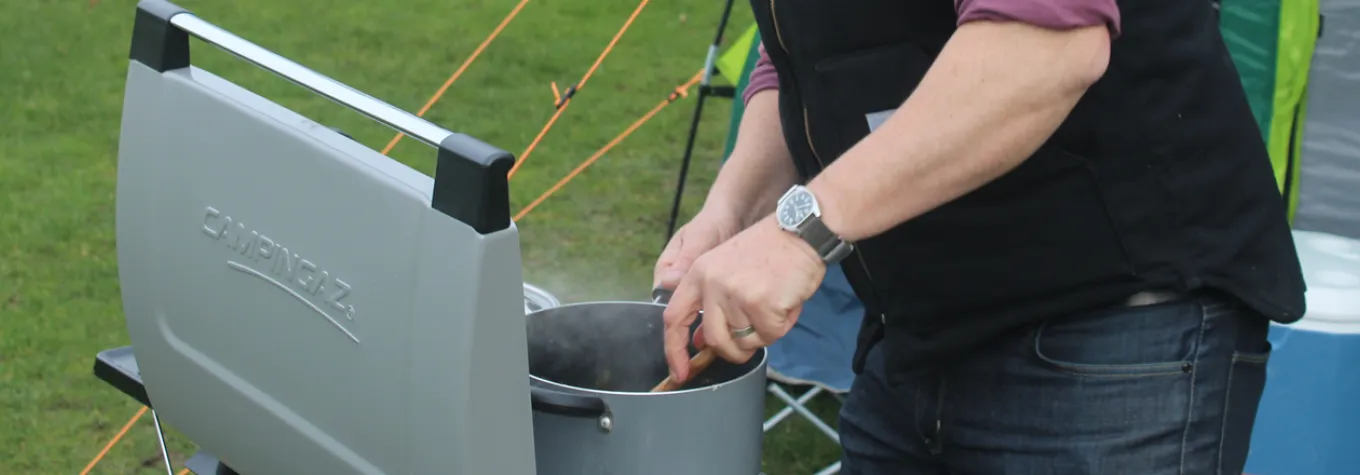
The best camping stoves and cookers to buy in 2025
Buying advice
Camping stoves and cookers: the complete guide
Camping stoves are an essential part of any outdoor adventure, allowing you to prepare meals and hot drinks when you are out and about.
Whether you're a solo backpacker, a family on a camping trip, or a group of friends exploring the wilderness, finding the right camping stove can elevate your culinary experience.
Camping stoves come in all sorts of different styles and sizes, all with different benefits depending on the type of trip you’re planning.
In this comprehensive guide, we'll take you through everything you need to know about camping stoves and cookers, helping you choose the best one for your needs.

Iain Duff Content Editor: Campervan/Camping
Iain Duff Content Editor: Campervan/Camping
Types of camping stove
There are various types of camping stoves available, each catering to different camping styles and cooking preferences.
Let's explore some popular options:
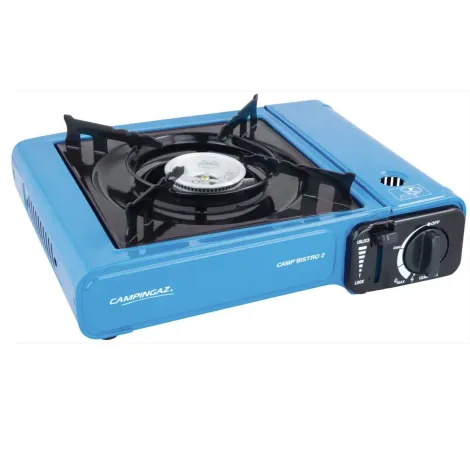
Single burner gas stove
Simple, compact and relatively lightweight, single-burner camping cookers are inexpensive and can be found in all camping shops and many supermarkets. They come in their own carry case and run on gas cartridges, which easily clip into place and can be replaced in seconds. They are suitable for one-pot cooking and hot drinks, and are ideal for solo campers or those who need minimal cooking capacity.
f buying one of these gas cookers online, make sure the brand is reliable and from a trustworthy source, as there have been examples of cheap, sub-standard models bought from overseas that have exploded, causing serious injuries.
Pros:
- Relatively cheap
- Easy to use
- Compact
Cons:
- Very basic cooking controls
- Gas can run out quickly
- Limited cooking capacity
Double camping stove
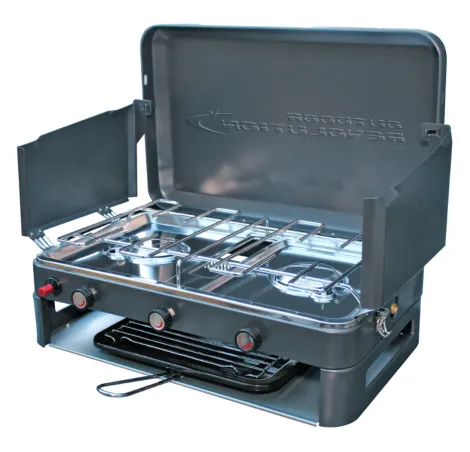
For larger groups or families, double-burner camping cookers offer more cooking space and versatility. With the ability to accommodate two pots or pans simultaneously, these stoves can handle more elaborate meals.
A grill option means you don’t need to fry everything and makes toast much easier than relying on burner-top camp toasters.
Double-ring camping stoves generally sit on a tabletop or a specialist kitchen unit at your tent.
More advanced camping cookers come with their own foldable legs and built-in windshields. Double-burner cookers tend to use the larger gas bottles and you will usually need a suitable hose and regulator to control the gas pressure.
Pros:
- Can handle larger meals
- Grill option gives versatility
- Better stability
Cons:
- Bulky for transporting
- Gas is more expensive
- Suitable hose and regulator needed
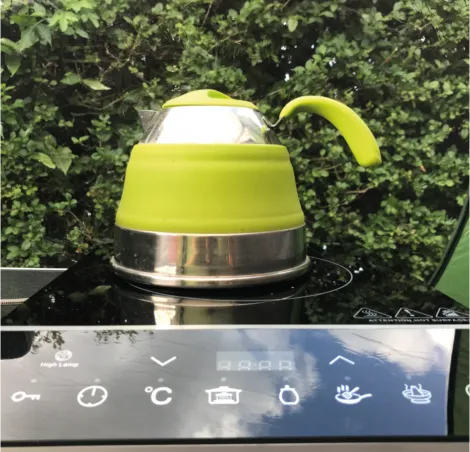
Electric camping stoves
Electric camping cookers are a safe alternative for cooking inside your tent, but they require access to an electric hook-up at the campsite. They are less common than gas stoves but offer a practical solution for campers with specific needs or preferences.
Remember that induction hobs require pans that contain iron to work so make sure your cook set is compatible.
Many family campers these days are using even more elaborate electrical appliances to cook on their camping holidays, including air fryers and slow cookers.
Pros:
- Safer for inside cooking
- No gas bottles required
- Child friendly
Cons:
- Require electric hook-up access
- Induction hobs need specialist pans
- Cooking slower than gas
Lightweight camping stoves
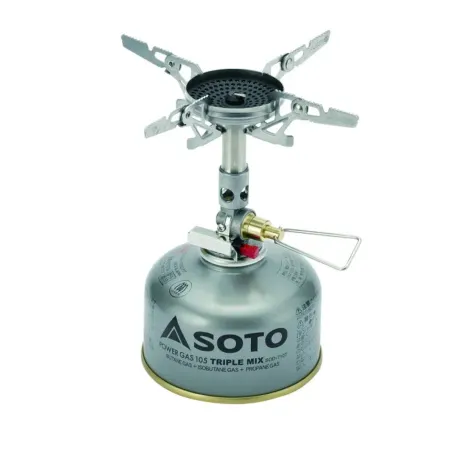
Designed for backpackers and lightweight campers, these compact folding camping stoves are easy to carry and connect directly to the gas bottle.
They can be quite unstable in rugged ground but are ideal for lightweight camping. Cooking systems such as Jetboil and MSR’s Reactor, where the pot is integrated with the cooker, have become popular in recent years although Trangia led the way decades ago. The Biolite stove lets you use twigs and other natural fuel sources and, at the same time, generates enough energy to recharge your mobile phone.
Pros:
- Easy to carry
- Practical for backpackers
- Simple to use
Cons:
- Limited cooking capacity
- Can be unstable
- Struggle in low temperatures
Liquid fuel stoves
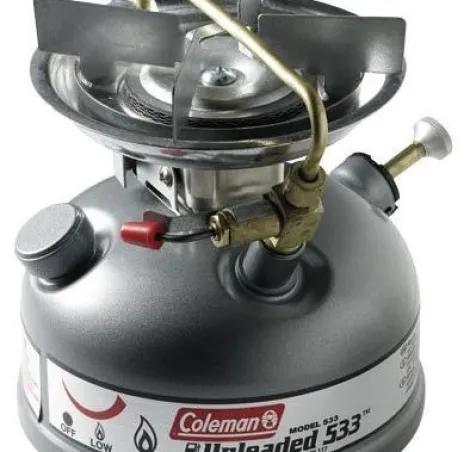
Liquid fuel camping stoves, also known as paraffin or petrol camping stoves, offer outdoor enthusiasts a versatile and efficient way to cook while exploring. These stoves use various liquid fuels like unleaded petrol and paraffin, making them a reliable choice for campers seeking flexibility.
Despite a higher initial cost compared to gas stoves, their benefits make them popular among experienced campers. Always follow instructions for safe and effective use.
Pros:
- Efficient cooking without adding bulk
- Unlike gas stoves, liquid fuel works well in colder temperatures
- Liquid fuels like petrol and paraffin are readily available
Cons:
- Need regular cleaning and upkeep
- Can be complex to use
The best camping stoves of 2025
Whether you want to heat a tin of beans or rustle up a gourmet-standard meal, you can find the perfect camping cooker for your needs.
Camping magazine editor Iain Duff puts a selection of gas stoves through their paces.
#1 Campingaz Camping Kitchen 2 Grill & Go
Price: Around £150
Weight: 3kg
Burner output: 3.5kW
Website: www.campingaz.co.uk
Our review
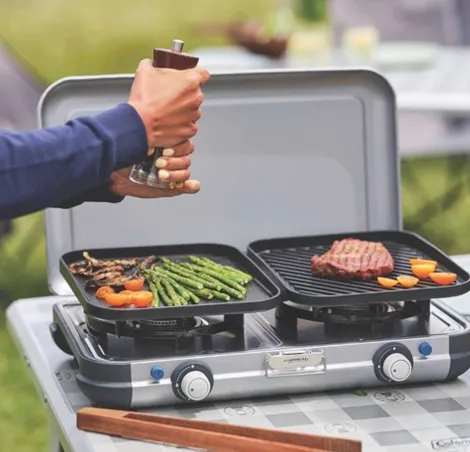
From boiling an egg to creating a gourmet camping meal, this new stove from Campingaz is versatile enough to cover all your campsite cooking needs and has the quality that the brand is known for. The two-burner unit comes with a plancha and a searing grid, which sit on top of the burners. You can use both at the same time, use one grill with a pan or simply use both of the 2,000W burners for cooking with pans.
The plancha and grid are designed so fat will flow away from your food, for healthier cooking. The enamelled steel grills are simple to clean and the stainless-steel cooking top can be wiped down easily. It has piezo ignition, so no matches needed, and it all packs away safely in its own carry bag.
#2 Outwell Jimbu
Price: £109.99
Weight: 3kg
Burner output: 3.5kW
Website: www.outwell.com
Our review
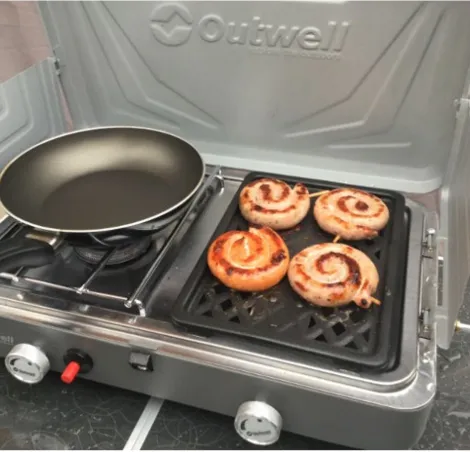
At first glance, this tabletop cooker looks like a conventional double-burner stove, but it actually offers a couple of key features that make it stand out from the crowd. First is how it’s powered. Most stoves of this size connect to a refillable gas bottle through a rubber hose and regulator. The Jimbu, though, uses smaller, self-sealing gas cartridges via a steel braided hose that comes included. It basically means you can get cooking straight out the box, without the faff of buying the right regulator and attaching it.
The compactness of the cooker and canister means it takes up a lot less space in the car boot, a bonus when you’re carrying a lot of kit with you. I took it on a two-week tour around Europe and it was ideal for the job, and I’ve been using it regularly for the last three years.
The second difference is the actual burners themselves. The Jimbu offers the versatility of a single gas burner alongside a removable grill plate with non-stick finish. It means you can cook in a pan on the standard burner while grilling on the plate at the same time. A fairly minor issue with a temperamental piezo ignition aside, I’ve found it to be a practical, easy to use and versatile stove.
#3 Outdoor Revolution Twin Burner Stove & Grill
Price: £109.99
Weight: 3.87kg
Burner output: 2 x 1.4kW (grill 0.6kW)
Website: www.outdoor-revolution.com
Our review
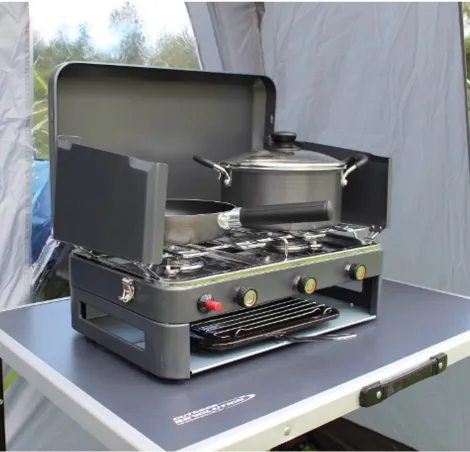
With twin burners and a grill, this piece of kit lets you tackle pretty much any meal that you can cook at home. But where I’ve found it really comes into its own is at breakfast time. Cooking a full English (or Scottish, in my case) on the campsite can be tricky, and usually involves trying to keep several elements warm as you go along. But the powerful double burner means you can have bacon, sausages, black pudding and fried eggs all on the go at one time. If you do need to keep anything warm, you can stick it under the grill for a few minutes until everything else is ready.
The grill also means you don’t need to fry everything and, perhaps more importantly, makes toast so much easier than relying on those hopeless burner-top camp toasters! Unusually for a double burner and grill, this runs off a 450g screw-fitting butane/propane canister rather than a heavy, refillable cylinder, cutting down on space and weight when you’re on the move.
This is a great option for weekend trips with the family, and it comes in at a decent price, too.
#4 Campingaz Camp’Bistro 3
Price: £29.99
Weight: 3.87kg
Burner output: 2 x 1.4kW (grill 0.6kW)
Website: www.campingaz.co.uk
Our review
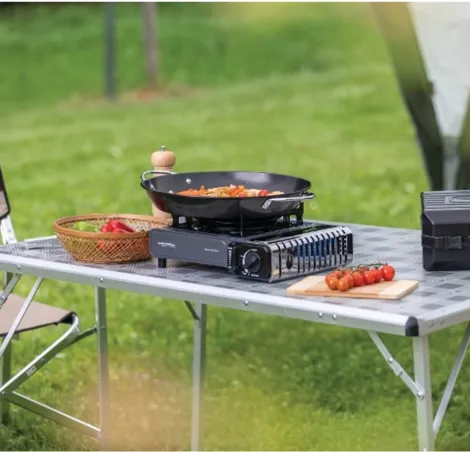
For me, this is a camping design classic. I’ve had a single-burner like this since the very first time I went camping and I pack one in the boot of the car for every journey, whether camping or not.
You’ll see plenty of versions of this in the shops and online – some of them temptingly cheap. But beware of cut-price imitations – there’s a certain reassurance from seeing the Campingaz name on the side that makes it worthwhile to pay that little bit extra. I’ve used others and, while they generally work fine, I’m always happier to have that famous French brand.
This new version of the Camp’Bistro has had a few subtle design tweaks to make it even safer to use, but it is essentially the same stove that it’s always been. It is still extremely easy to use, operating off a simple gas cartridge, so there’s no need to take a bulky cylinder. And the cartridge locking system makes it almost impossible to set up wrong.
The Camp’Bistro is perfect for single pot cooking, frying bacon or simply boiling the kettle for a brew, and it’s just as useful for days at the beach as for weekend camping trips. A camping essential.
#5 Vango Combi IR Grill Compact
Price: £76
Weight: 3.87kg
Burner output: 2 x 1.4kW (grill 0.6kW)
Website: www.vango.co.uk
Our review
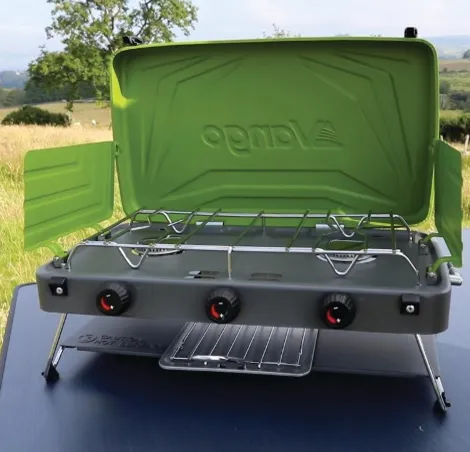
The Combi IR Grill Compact is a traditional two-burner stove with the addition of something called an infrared grill. This infrared technology has been around for a few years now and it has been hailed as the microwave of outdoor cooking.
There’s lots of baffling science behind it, involving the likes of electromagnetic spectrums and heatwaves. But in simple terms, the main benefit is that it provides very high heat output and cooks evenly but remains low on fuel consumption and emissions.
In fact, Vango says it saves 10% on fuel and delivers a 90% reduction on emissions. The Compact is a smaller and lighter (and cheaper) version of the original double-burner cooker, and has all the features you’d expect, including piezo ignition, a drip tray, anti-slip feet, windshields and a vibrant green, lockable protective lid.
Overall I found the cooker was extremely easy to set up with the gas bottle and it was very straightforward to use. The IR Grill certainly performed as well as promised, creating a good, even heat across the food – although I haven’t used it long enough to really vouch for the longer-term fuel efficiency claims.
#6 Primus Alika
Price: £285
Weight: 4.7kg
Burner output: 3kW/3.9kW
Website: www.primusequipment.com
Our review
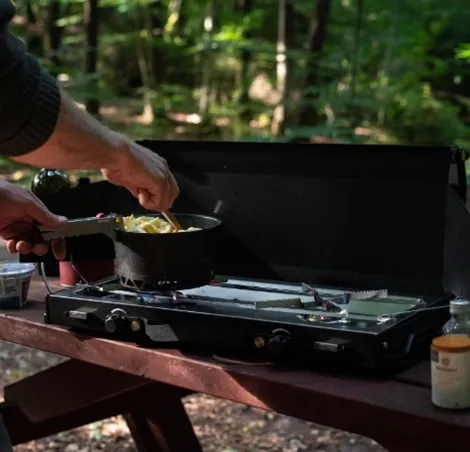
There’s no doubt that Scandinavians know how to do outdoor living properly. It’s an integral part of the Nordic culture, instilled in children from a very young age. In Sweden, where the Primus is from, communal cooking and eating around a campfire is a big thing and the Alika stove was designed with that in mind.
The large cooking surface can easily handle two big pots and the body of the stove is designed to let two people cook side by side. Alternatively, the removable lid provides 360° access to the burners, so you can have a chef working on both sides at the same time. The burners are different sizes and are ideal for cooking on a range of pans. Another nifty feature is that you can flip the pan supports to create a flat griddle surface.
The lid also doubles as a pot stand when it’s removed from the main body of the stove. It operates off a small canister so there’s no need to buy a regulator.
Scandinavia is famous for is its design, and the Alika is lovely to look at. It’s not cheap, though. This is aimed squarely at the sort of camper who wants to buy into a lifestyle, but they’re certainly getting a quality product for their money.
FAQ
-
What kind of fuel should I use for a camping stove?
When it comes to fuel options for camping stoves, the most popular choice is gas, specifically propane or butane, either in cartridge or cylinder form. Propane performs well in colder temperatures, while a mixture of propane and butane is suitable for year-round use.
Other fuel options include alcohol, methylated spirits, and even unleaded petrol or aviation fuel for longer trips in cold climates.
However, gas remains the most practical and widely used choice for family camping. Cookers like the classic single-burner stoves use cartridges which clip and lock into place and can be disconnected when not in use.
Small camping stoves, especially for backpacking and lightweight camping, use disposable cartridges that screw or clip on to the equipment. They come in two types – pierceable or with an integral valve – and in a range of sizes.
Other appliances such as double-burner stoves and barbecues use larger refillable bottles and need an appropriate hose and a regulator to control the gas pressure delivered to the appliance.
-
How do you store a portable stove?
Portability is a key feature of camping stoves, and knowing how to store them correctly is crucial for their longevity. Before storing, make sure the stove is clean and free from any food residue or debris.
Allow the stove to cool down completely before packing it away. Opt for a carry case or protective bag to keep the stove safe from scratches and damage during transport.
-
Are gas camping stoves safe?
Gas camping stoves are widely used for their convenience and efficiency. When handled and used properly, they are generally safe. However, it's essential to follow safety guidelines provided by the manufacturer.
Always use the stove on a stable and flat surface, and keep flammable items away from the burner. Check for gas leaks before using the stove and never leave it unattended while in use.
-
Can you use a camping stove indoors
Using a camping cooker indoors or inside a tent is not recommended due to safety concerns. As well as the risk of a fire, gas stoves produce carbon monoxide, which is a colourless and odourless gas that can be harmful or even fatal if inhaled in enclosed spaces.
Always use camping stoves in well-ventilated areas, preferably outdoors, to prevent the risk of carbon monoxide poisoning.
Final thoughts
Choosing the right camping stove is essential for enhancing your outdoor cooking experience. Consider the type of camping you'll be doing, the number of people you'll be cooking for, and your fuel preferences when selecting a camping stove.
Always prioritise safety and follow the manufacturer’s guidelines for usage and storage.
With a reliable camping stove by your side, you can savour delicious meals, create unforgettable memories, and fully immerse yourself in the joys of camping. Happy cooking and bon appétit!
Latest camping articles

Next Shows

The Big Land Rover Fest 11th - 12th July 2026
Experience The Big Land Rover Fest – a weekend of off-roading, live music, club displays and family fun at Newbury Showground, 11–12 Ju...

The Norfolk Motorhome & Campervan Show 17th - 19th July 2026
Join The Norfolk Motorhome & Campervan Show, 17-19 July 2026, for the Out & About Live Summer Party! Explore motorhomes, live demos, an...

Retro Festival 7th - 9th August 2026
Retro Festival celebrates timeless hits, vintage vehicles, fashion shows, and fairground fun.