
Eurostyle A63 (2009)
Image
Image
Image
Image

Image
Image
Image
Image
Image
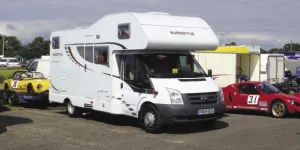
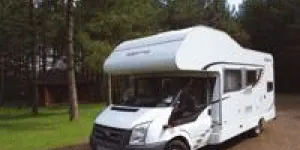


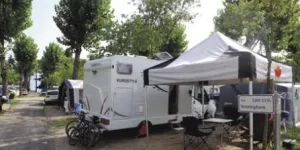

Description
Eurostyle A63 2009
Key Features
Model Year
2009
Product Class
Overcab Coachbuilt
Product Model Base
Ford Transit
Price from (£)
£36761
Length (m)
6.31
Berths
5
Belted seats
4
Main Layout
Bunk Beds
Full Review
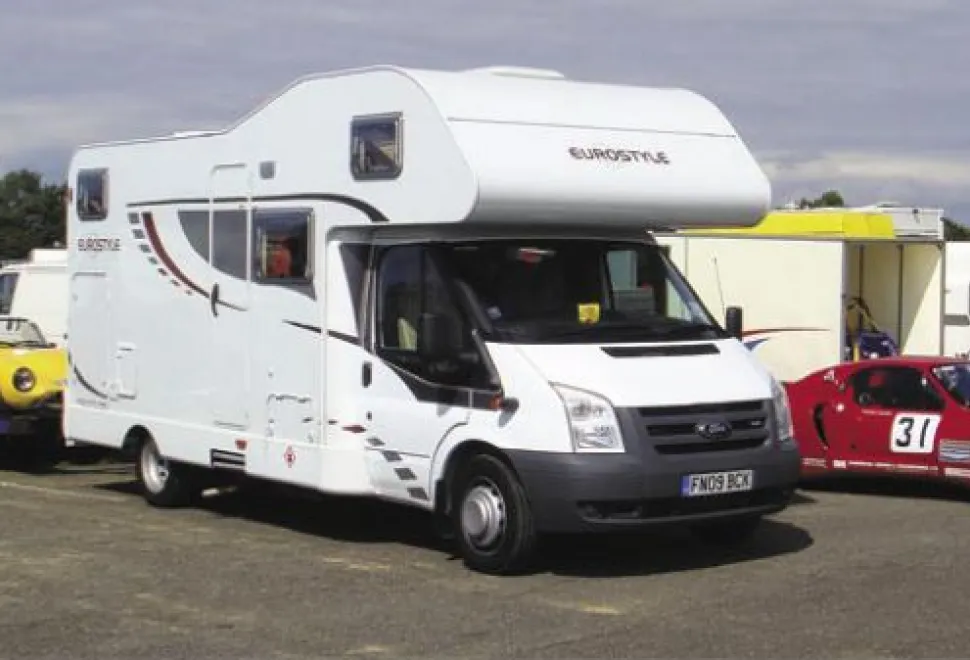
MMM’s Peter Rosenthal reports on life with his family-friendly motorhome, a 2009 Eurostyle A63. This motorhome review was first published in the October 2011 issue of MMM.
Fifteen thousand pounds should get you a decent motorhome. Or so I thought.
This was in February 2009, and we’d finally decided to take the plunge and start looking for a used motorhome. At the time, two things were happening: the economy was in free-fall and used motorhomes were in short supply.
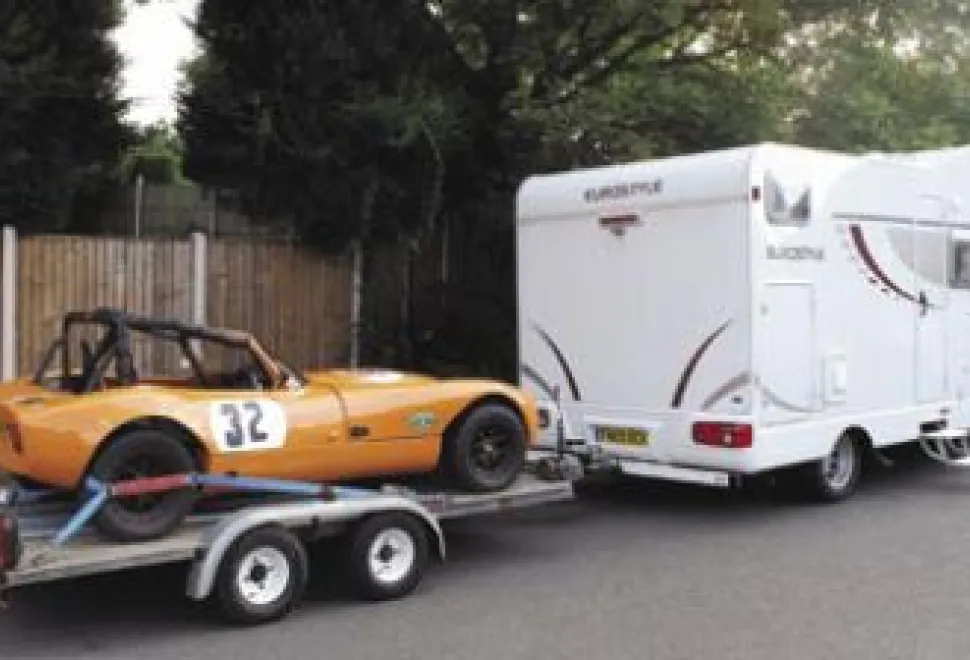
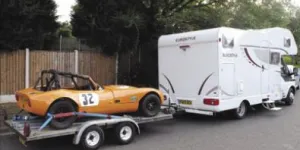
As one of my main hobbies is taking part in track days, sprints and hill-climbs in my kit car, the motorhome had to be good for towing and have a decent-sized garage, with sufficient payload for tools, jacks, spare wheels and jerry cans of fuel. I also had a strong preference for rear-wheel drive. This limited the choice of vehicles to secondhand Mercedes and Fords.
From my experience testing motorhomes, I also knew that vehicles with beds at either end of the vehicle (and central washrooms) would work best for the family. The trouble was, this further limited the choice.
A LOT OF MOTORHOME
After viewing various, frankly miserable, 10-year-old motorhomes that smelt of wet dog and had faded trim, we had all but given up hope of ever finding anything within budget.
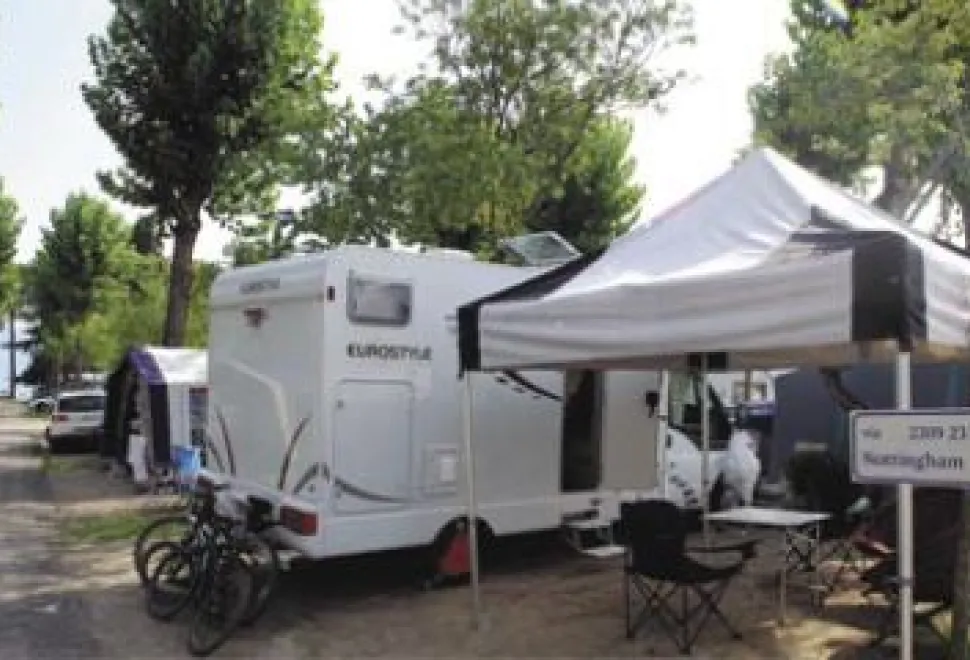
It was on a trip to Lowdhams, looking at used stock, that we first saw the Eurostyle A63, having been recommended it by a salesman - it was one of a handful of oldstock, new ‘vans that Lowdhams was looking to move on at a discount. At £29,995, it seemed a heck of a lot of motorhome for the money (particularly as a few days earlier I’d been looking at a 10-year-old Hymer for £20,000). Plus, it was based on the twin rearwheel drive Ford Transit with cherries-on-the cake, 140 horsepower engine, air-conditioning, iPod connection, remote central locking and electric windows.
The ‘van was about £10,000 over our initial budget, but given that everything on it was new (and came with a full warranty) it made more sense to me. Sure, we’d lose money on depreciation, but we planned to keep it a good few years, so this shouldn’t be too painful.
Apart from opting for Paint Seal treatment to all the bodywork and interior, there were no other options specified.
At the time Lowdhams was offering the A63 (6.30 metres, with transverse rear bunks over a garage), A69 (6.90 metres, with longitudinal rear bunks and twin dinette) and A70 (7.0 metres, with large garage with double bed over and twin dinette) Eurostyle models for the same price. Although it was tempting to go for the most bang for my buck with the longer A70, I opted for the smallest of the trio, as I reckoned my son would prefer bunk beds, and the rear overhang was the stubbiest, making it set to be the best for towing.
TRAILS AND TROUBLES
Fast forward one year, and I’ve now covered over 9,000 miles - taking the ‘van to most of the UK, to France, Switzerland and as far as northern Italy. Although, I’ve tested all sorts of different motorhomes over the years, there’s something special about having your own ‘van. It’s like owning your first house after years of renting.
Since buying, I’ve had a towbar fitted (PWS, with a full-width protection beam), which is a really nicely made bit of kit and thoroughly recommended. I’ve also rolled up my sleeves to fit a Camos reversing camera (which is great when you’re reversing onto the trailer hitch). I’ve also added various extra shelves and hooks, together with rubber matting for the garage floor.
Given that this is a budget-priced motorhome, it would be reasonable to expect a few bits to have dropped off it in a year. So what has gone wrong?
To date, the only minor issue has been the sliding bolt that secures the lower bunk bed in either the ‘up’ position (when the garage is brimmed) or the ‘down’ position (when the bed is in use). The screw-in latch has always been loose and I’ve kept meaning to blob some threadlock on it, but never got around to it. So the bolt has dropped off and rolled into some crevice in the back. Not so much of a fault as poor maintenance - as Interchange editor, I hang my head in shame!
In terms of layout, we’ve had no real issues and overall the half-dinette-based lounge area works well. But how practical has it proved?
GALLEY
The kitchen area is quite small, and although the hob and sink both work well, the lack of cutlery drawers had been annoying (there’s a warming oven, rather than a couple of drawers). A loose plastic cutlery divider is provided for the overhead locker, but this is fiddly to use, so I’ve screwed a wire mesh cutlery holder to the side of the adjacent wardrobe and this works well (we just have to remember to remove the cutlery when on the move).
In a similar vein, I’ve added an extra, chromed wire shelf to the crockery cupboard, allowing plastic ‘glasses’ to be stored above the mugs.
WASHROOM
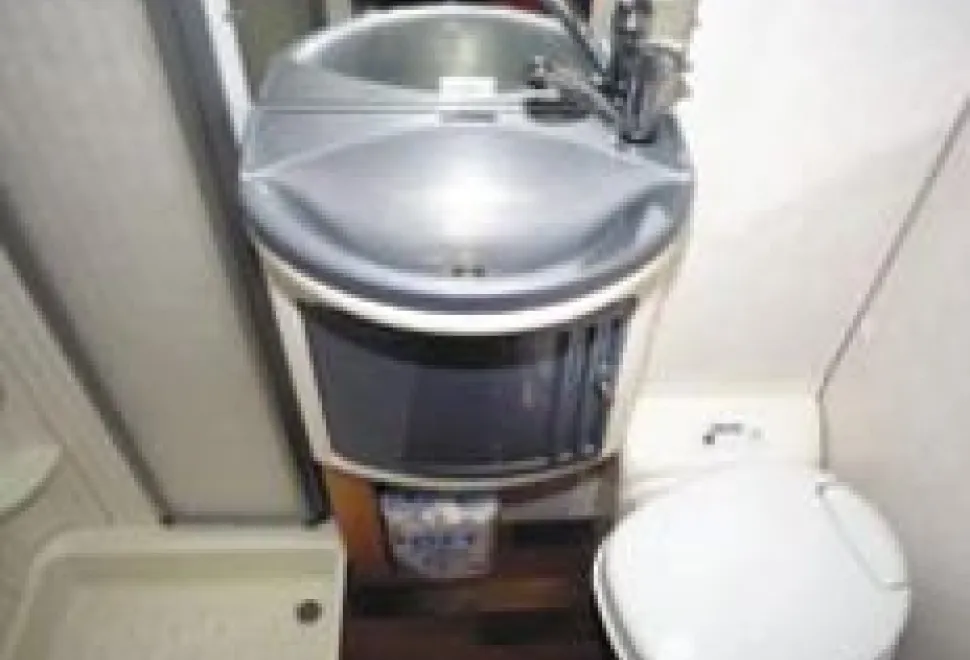
The washroom has proved fine, with plenty of storage and an adult-sized shower. This is plenty big enough for all six-foot-two of me and the 10- litre boiler will give two decent hot showers in a row. After that it needs a little time to catch up (about half an hour). The 125-litre water tank is usually good for at least two days’ worth of showers, washing-up and toilet flushing. Early on I added a SOG extractor fan/filter system and this has proved to work well. Six-year-old Sam can no longer ‘gas’ us out of the ’van - the SOG certainly does what it says on the tin. It was a nice thing to fit too - one of the best developed aftermarket kits I’ve come across.
Storage for three towels has proved tricky (there are only two towel rails), so I’ve been told I have to add extra hooks, but haven’t yet got round to it. I have added a chrome basket for toiletries above the toilet though - this was bought at a show and uses a clever two-part glue system (so it can be removed without leaving any holes). I recommend this highly and it’s lovely quality. Sadly, I’ve disposed of the box and can’t remember from whom I bought it - I think it was a German company.
With the towels in place, legroom, when you’re sat on the loo, is slightly limited, but you can still shut the door and this is something you just get used to. Overall the washroom works really well. The grey plastic washbasin is tricky to keep clean, as it shows up watermarks; I would have liked a Corian/porcelain version, but that’s just a compromise you have to make with a budget motorhome.
LOUNGE AND EAT
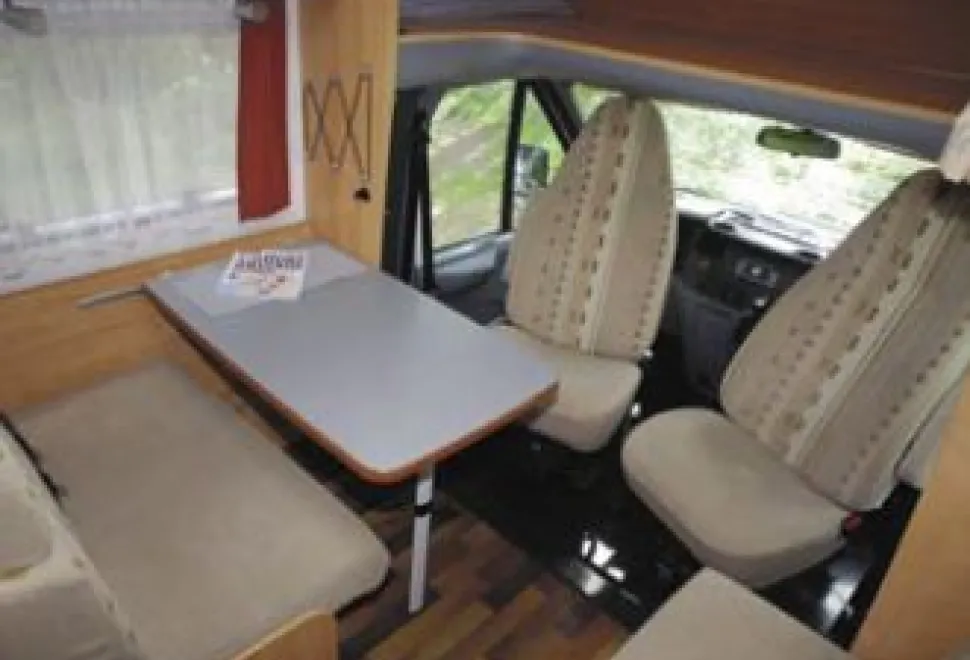
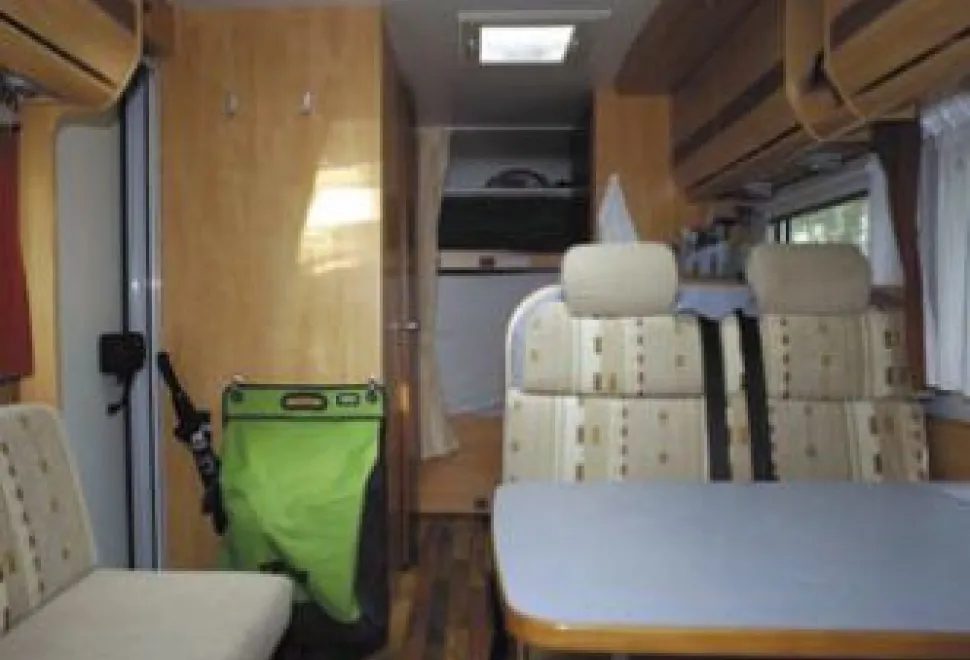
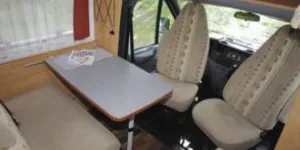
To form the lounge, the cab seats are swivelled to face the dining table and with the backrests reclined, these tend to be the seats of choice in the evening. The side settee is used mainly as a footrest, while the forward-facing travel seats are a bit upright for comfortable lounging, unless you lie along them and add a cushion on the wall.
We’ve had up to about six people all crammed around the dining table (on one rainy track day), but five can eat at it with plenty of room and comfort. There’s a table extender, to allow the dining surface to reach the side settee, which normally stows in the wardrobe. I intend to make a bag for this to avoid it getting chipped in transit, but it’s still on my ‘to do’ list.
EN ROUTE
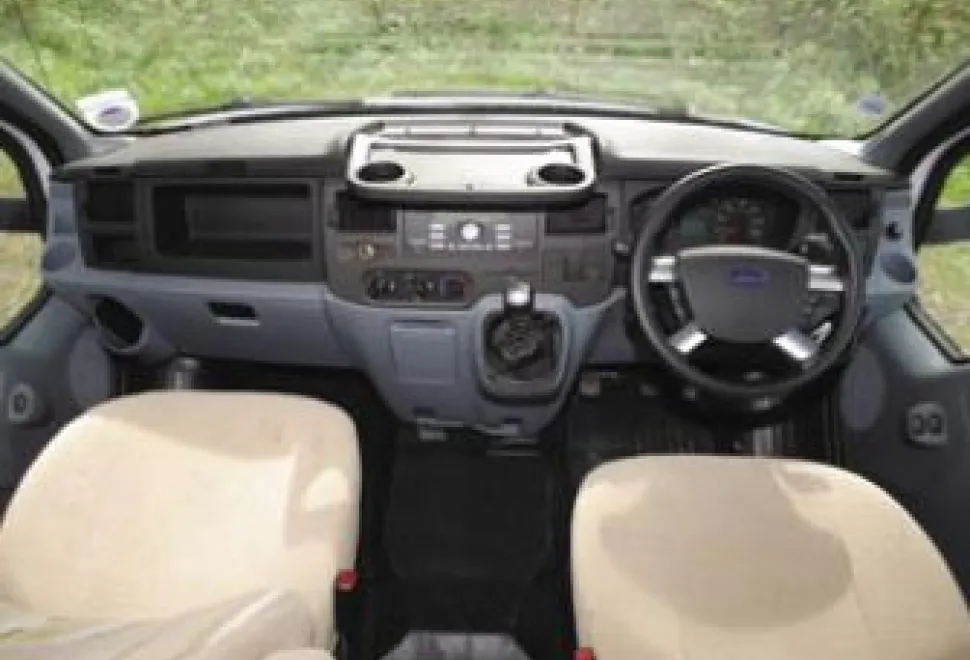
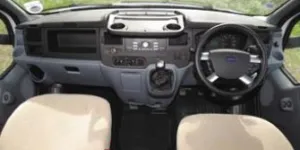
Probably the most annoying thing I find with the vehicle is the driving position. As with many ‘vans fitted with swivelling driver’s seats, I sit too high. Even with the seat in the lowest position, my legs are also quite close to the steering wheel (which has no form of adjustment in any direction). It’s not uncomfortable, but it’s not ideal. However, I’ve got used to it now, and even driving long distances in France hasn’t proved to be a problem.
The swivel mechanisms work really well and unusually, you don’t need to release the handbrake prior to moving the driver’s seat. I’ve lost count of the number of test vehicles on which, I’ve accidentally ground grooves into the handbrake shroud....
I like the Ford base vehicle and the engine pulls really well. It needs plenty of revs to avoid stalling it when pulling away, but you soon get used to this. The gearbox is smooth and all the pedals feel fine. The handling isn’t as sharp as a Fiat Ducato in the bends, but on the straights it seems to absorb bumps better. I plan to fit airbags to the rear suspension to try and have my cake and eat it: reduce bodyroll in corners (and swaying when on site)
without affecting straight-line comfort.
I prefer the Ford dash layout to the Fiat’s, as it has lots of handy cubbyholes and 12V power sockets, together with four cup-holders and two large bottle storage holes.
Mechanically, nothing has gone wrong and even during last winter (when left unattended for three weeks), the engine started at the first turn of the key.
LIFE SUPPORT
A basic LED-equipped control panel, above the caravan door, gives a rough indication of leisure and vehicle battery levels, together with the water level of the fresh and waste water tanks. As far as I can tell there are two base vehicle batteries (under the driver’s seat) and one 85 amp hr leisure battery under the kitchen. The system charges all three when on mains hook-up. How the batteries share their current I haven’t yet figured out, but so far (even wild camping for two days and using TVs, lights, radio, etc) they haven’t drained or prevented the vehicle starting. For an 85 amp hr battery this seems quite impressive, so it’s possible that one of the batteries under the driver’s seat is also plumbed into the habitation electrics. Either way, wild camping doesn’t seem to be
a problem so far.
CONCLUSION
Going from merely testing motorhomes to actually owning one has been brilliant, and now that I’ve had the A63 for over a year I still love it. There’s something about getting behind the wheel that I find incredibly relaxing. The smell of the fabrics and interior all get me in the holiday mode and I still like driving it.
Compared to the caravan I owned previously (I had a battered Dethleffs Nomad for five years), I much prefer the freedom of a motorhome. I have it pre-packed (apart from clothes) for rapid getaways on Friday evenings, and it really makes good use of my spare time. Compared to using hotels, it’s great not having to unpack. And don’t even get me started on budget airlines with baggage restrictions - 20kg in a small overhead locker? We’ve got 800kg of payload. And I’d like to see you try and take your bike to France, flying with ‘Difficult Jet!’
To read the full motorhome review in PDF format exactly as it appeared in the October 2011 issue of MMM, please click here
If you don't already have Adode Acrobat to be able to open a PDF, download it for free



Fifteen thousand pounds should get you a decent motorhome. Or so I thought.
This was in February 2009, and we’d finally decided to take the plunge and start looking for a used motorhome. At the time, two things were happening: the economy was in free-fall and used motorhomes were in short supply.
As one of my main hobbies is taking part in track days, sprints and hill-climbs in my kit car, the motorhome had to be good for towing and have a decent-sized garage, with sufficient payload for tools, jacks, spare wheels and jerry cans of fuel. I also had a strong preference for rear-wheel drive. This limited the choice of vehicles to secondhand Mercedes and Fords.
From my experience testing motorhomes, I also knew that vehicles with beds at either end of the vehicle (and central washrooms) would work best for the family. The trouble was, this further limited the choice.
A LOT OF MOTORHOME
After viewing various, frankly miserable, 10-year-old motorhomes that smelt of wet dog and had faded trim, we had all but given up hope of ever finding anything within budget.
It was on a trip to Lowdhams, looking at used stock, that we first saw the Eurostyle A63, having been recommended it by a salesman - it was one of a handful of oldstock, new ‘vans that Lowdhams was looking to move on at a discount. At £29,995, it seemed a heck of a lot of motorhome for the money (particularly as a few days earlier I’d been looking at a 10-year-old Hymer for £20,000). Plus, it was based on the twin rearwheel drive Ford Transit with cherries-on-the cake, 140 horsepower engine, air-conditioning, iPod connection, remote central locking and electric windows.
The ‘van was about £10,000 over our initial budget, but given that everything on it was new (and came with a full warranty) it made more sense to me. Sure, we’d lose money on depreciation, but we planned to keep it a good few years, so this shouldn’t be too painful.
Apart from opting for Paint Seal treatment to all the bodywork and interior, there were no other options specified.
At the time Lowdhams was offering the A63 (6.30 metres, with transverse rear bunks over a garage), A69 (6.90 metres, with longitudinal rear bunks and twin dinette) and A70 (7.0 metres, with large garage with double bed over and twin dinette) Eurostyle models for the same price. Although it was tempting to go for the most bang for my buck with the longer A70, I opted for the smallest of the trio, as I reckoned my son would prefer bunk beds, and the rear overhang was the stubbiest, making it set to be the best for towing.
TRAILS AND TROUBLES
Fast forward one year, and I’ve now covered over 9,000 miles - taking the ‘van to most of the UK, to France, Switzerland and as far as northern Italy. Although, I’ve tested all sorts of different motorhomes over the years, there’s something special about having your own ‘van. It’s like owning your first house after years of renting.
Since buying, I’ve had a towbar fitted (PWS, with a full-width protection beam), which is a really nicely made bit of kit and thoroughly recommended. I’ve also rolled up my sleeves to fit a Camos reversing camera (which is great when you’re reversing onto the trailer hitch). I’ve also added various extra shelves and hooks, together with rubber matting for the garage floor.
Given that this is a budget-priced motorhome, it would be reasonable to expect a few bits to have dropped off it in a year. So what has gone wrong?
To date, the only minor issue has been the sliding bolt that secures the lower bunk bed in either the ‘up’ position (when the garage is brimmed) or the ‘down’ position (when the bed is in use). The screw-in latch has always been loose and I’ve kept meaning to blob some threadlock on it, but never got around to it. So the bolt has dropped off and rolled into some crevice in the back. Not so much of a fault as poor maintenance - as Interchange editor, I hang my head in shame!
In terms of layout, we’ve had no real issues and overall the half-dinette-based lounge area works well. But how practical has it proved?
GALLEY
The kitchen area is quite small, and although the hob and sink both work well, the lack of cutlery drawers had been annoying (there’s a warming oven, rather than a couple of drawers). A loose plastic cutlery divider is provided for the overhead locker, but this is fiddly to use, so I’ve screwed a wire mesh cutlery holder to the side of the adjacent wardrobe and this works well (we just have to remember to remove the cutlery when on the move).
In a similar vein, I’ve added an extra, chromed wire shelf to the crockery cupboard, allowing plastic ‘glasses’ to be stored above the mugs.
WASHROOM
The washroom has proved fine, with plenty of storage and an adult-sized shower. This is plenty big enough for all six-foot-two of me and the 10- litre boiler will give two decent hot showers in a row. After that it needs a little time to catch up (about half an hour). The 125-litre water tank is usually good for at least two days’ worth of showers, washing-up and toilet flushing. Early on I added a SOG extractor fan/filter system and this has proved to work well. Six-year-old Sam can no longer ‘gas’ us out of the ’van - the SOG certainly does what it says on the tin. It was a nice thing to fit too - one of the best developed aftermarket kits I’ve come across.
Storage for three towels has proved tricky (there are only two towel rails), so I’ve been told I have to add extra hooks, but haven’t yet got round to it. I have added a chrome basket for toiletries above the toilet though - this was bought at a show and uses a clever two-part glue system (so it can be removed without leaving any holes). I recommend this highly and it’s lovely quality. Sadly, I’ve disposed of the box and can’t remember from whom I bought it - I think it was a German company.
With the towels in place, legroom, when you’re sat on the loo, is slightly limited, but you can still shut the door and this is something you just get used to. Overall the washroom works really well. The grey plastic washbasin is tricky to keep clean, as it shows up watermarks; I would have liked a Corian/porcelain version, but that’s just a compromise you have to make with a budget motorhome.
LOUNGE AND EAT
To form the lounge, the cab seats are swivelled to face the dining table and with the backrests reclined, these tend to be the seats of choice in the evening. The side settee is used mainly as a footrest, while the forward-facing travel seats are a bit upright for comfortable lounging, unless you lie along them and add a cushion on the wall.
We’ve had up to about six people all crammed around the dining table (on one rainy track day), but five can eat at it with plenty of room and comfort. There’s a table extender, to allow the dining surface to reach the side settee, which normally stows in the wardrobe. I intend to make a bag for this to avoid it getting chipped in transit, but it’s still on my ‘to do’ list.
EN ROUTE
Probably the most annoying thing I find with the vehicle is the driving position. As with many ‘vans fitted with swivelling driver’s seats, I sit too high. Even with the seat in the lowest position, my legs are also quite close to the steering wheel (which has no form of adjustment in any direction). It’s not uncomfortable, but it’s not ideal. However, I’ve got used to it now, and even driving long distances in France hasn’t proved to be a problem.
The swivel mechanisms work really well and unusually, you don’t need to release the handbrake prior to moving the driver’s seat. I’ve lost count of the number of test vehicles on which, I’ve accidentally ground grooves into the handbrake shroud....
I like the Ford base vehicle and the engine pulls really well. It needs plenty of revs to avoid stalling it when pulling away, but you soon get used to this. The gearbox is smooth and all the pedals feel fine. The handling isn’t as sharp as a Fiat Ducato in the bends, but on the straights it seems to absorb bumps better. I plan to fit airbags to the rear suspension to try and have my cake and eat it: reduce bodyroll in corners (and swaying when on site)
without affecting straight-line comfort.
I prefer the Ford dash layout to the Fiat’s, as it has lots of handy cubbyholes and 12V power sockets, together with four cup-holders and two large bottle storage holes.
Mechanically, nothing has gone wrong and even during last winter (when left unattended for three weeks), the engine started at the first turn of the key.
LIFE SUPPORT
A basic LED-equipped control panel, above the caravan door, gives a rough indication of leisure and vehicle battery levels, together with the water level of the fresh and waste water tanks. As far as I can tell there are two base vehicle batteries (under the driver’s seat) and one 85 amp hr leisure battery under the kitchen. The system charges all three when on mains hook-up. How the batteries share their current I haven’t yet figured out, but so far (even wild camping for two days and using TVs, lights, radio, etc) they haven’t drained or prevented the vehicle starting. For an 85 amp hr battery this seems quite impressive, so it’s possible that one of the batteries under the driver’s seat is also plumbed into the habitation electrics. Either way, wild camping doesn’t seem to be
a problem so far.
CONCLUSION
Going from merely testing motorhomes to actually owning one has been brilliant, and now that I’ve had the A63 for over a year I still love it. There’s something about getting behind the wheel that I find incredibly relaxing. The smell of the fabrics and interior all get me in the holiday mode and I still like driving it.
Compared to the caravan I owned previously (I had a battered Dethleffs Nomad for five years), I much prefer the freedom of a motorhome. I have it pre-packed (apart from clothes) for rapid getaways on Friday evenings, and it really makes good use of my spare time. Compared to using hotels, it’s great not having to unpack. And don’t even get me started on budget airlines with baggage restrictions - 20kg in a small overhead locker? We’ve got 800kg of payload. And I’d like to see you try and take your bike to France, flying with ‘Difficult Jet!’
To read the full motorhome review in PDF format exactly as it appeared in the October 2011 issue of MMM, please click here
If you don't already have Adode Acrobat to be able to open a PDF, download it for free
Our Verdict
With a layout that includes and large overcab bed and rear bunks, the A63 is not for everyone, but with a massive 800kg payload and twin-rear wheel chassis it’s great for those with hobbies (or lots of furniture or bikes!).
Advantages
Decent build quality for budget price
Ford Transit with twin-rear wheels
Large garage and 800kg payload
Sleeps five but only 6.3m long
Disadvantages
Bunk bed layout may not suit couples
Limited worktop space in kitchen and no drawers


