
Concorde Credo T 735L (2007)
Image
Image

Description
Concorde Credo T 735L 2007
Key Features
Model Year
2007
Product Class
Low Profile
Product Model Base
Mercedes Sprinter
Main Layout
Fixed Single Bed
Full Review
CREDO is the new baby of the Concorde motorhome family, taking the prestige marque into the 3.5-tonne coachbuilt sector with firstly a family of four low-profiles, then later an A-class.
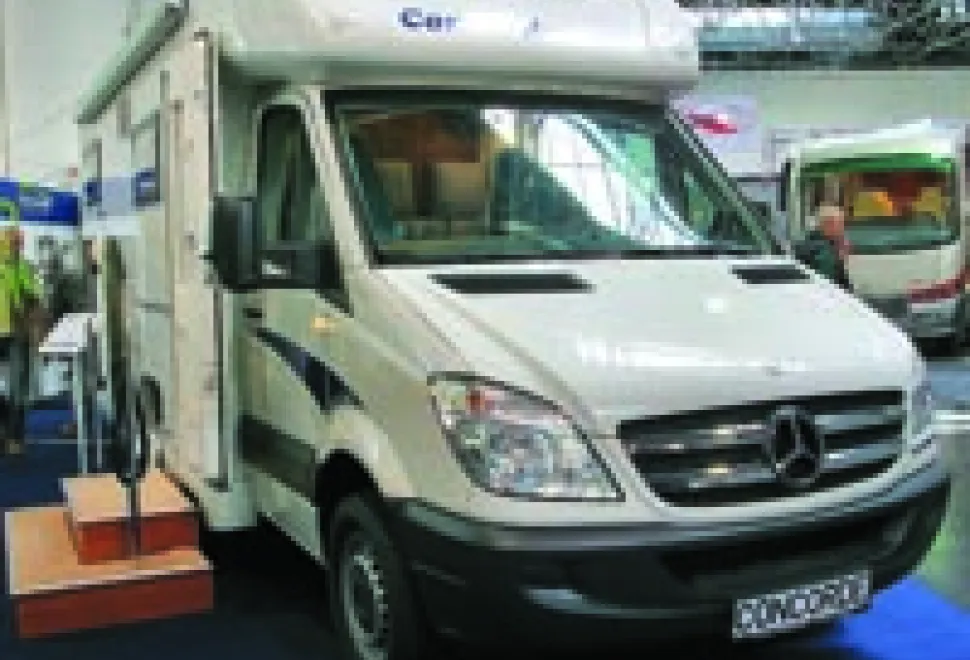
All models are built on the Mercedes Sprinter with AL-KO chassis, a rare combination.
The AL-KO chassis is better known in conjunction with the front-wheel drive Fiat Ducato, but AL-KO’s new rear-drive Mercedes derivative offers similar benefits of a wider rear track (up from 1716mm to 1890mm) and a 205mm lower floor height, both of which should benefit the handling.
Stylistically, the Credo is unadventurous but it manages to retain a Concorde family look as well as a high quality appearance – the rear overhang is considerable, though.
Production of the new range is due to start this month and four layouts will be offered.
The 675H has an L-shaped front lounge, a central washroom with kitchen opposite and a rear transverse double bed.
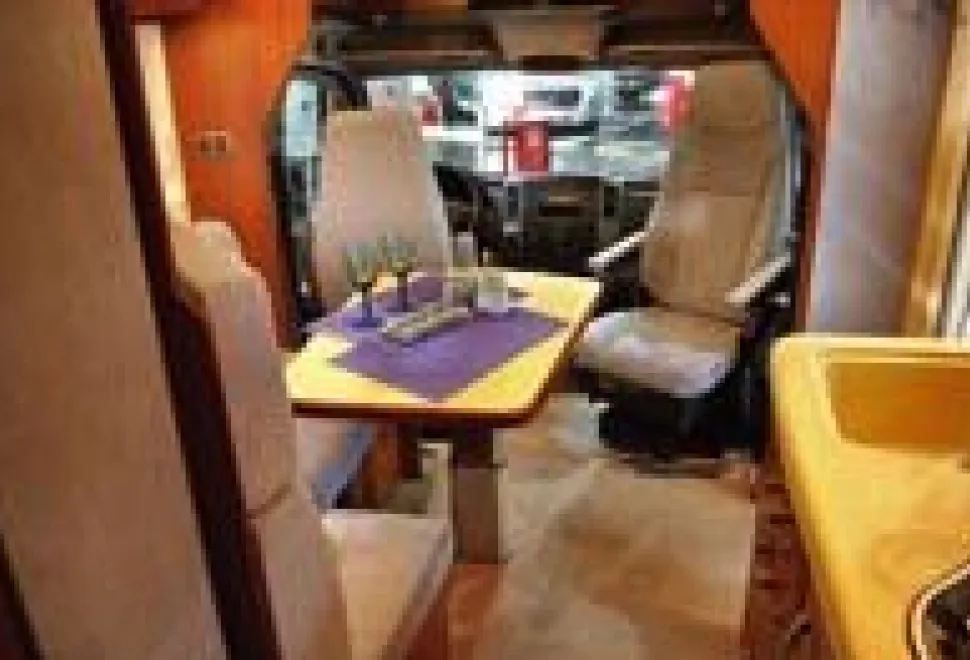
The 735L (as photographed here) is the same up front but has a more unusual rear bed arrangement that can be used as lengthways singles or a huge transverse double (while still retaining the garage).
If you want a bigger lounge and a better kitchen, the 715H has an extra side-facing seat up front and an L-shaped galley in the centre, while featuring the conventional transverse double bed of the 675H.
Final option in this mix ‘n’ match portfolio is the bigger lounge of the 715H with the more flexible sleeping arrangements of the 735L – thus creating the longest of the quartet, the 775L.
Overall lengths of the Credos stretch from 6.75m to 7.79m, with payloads of up to 380kg (for the 675H) when specified as a 3.5-tonne chassis. All models are built on the Sprinter 315 as standard (to save weight) but the more powerful 318 can be ordered if your driving licence doesn’t preclude a heavier chassis.
In any case, Concorde has worked hard to save weight, using a special vacuum injection construction for the rear panel.
But quality – and fittings such as Alde heating – remain, so the Credo will be high on the shortlist of those downsizing from prestige models.
A full version of this review first appeared in the November 2007 issue of Which Motorcaravan. To subscribe to the magazine, click here.
All models are built on the Mercedes Sprinter with AL-KO chassis, a rare combination.
The AL-KO chassis is better known in conjunction with the front-wheel drive Fiat Ducato, but AL-KO’s new rear-drive Mercedes derivative offers similar benefits of a wider rear track (up from 1716mm to 1890mm) and a 205mm lower floor height, both of which should benefit the handling.
Stylistically, the Credo is unadventurous but it manages to retain a Concorde family look as well as a high quality appearance – the rear overhang is considerable, though.
Production of the new range is due to start this month and four layouts will be offered.
The 675H has an L-shaped front lounge, a central washroom with kitchen opposite and a rear transverse double bed.
The 735L (as photographed here) is the same up front but has a more unusual rear bed arrangement that can be used as lengthways singles or a huge transverse double (while still retaining the garage).
If you want a bigger lounge and a better kitchen, the 715H has an extra side-facing seat up front and an L-shaped galley in the centre, while featuring the conventional transverse double bed of the 675H.
Final option in this mix ‘n’ match portfolio is the bigger lounge of the 715H with the more flexible sleeping arrangements of the 735L – thus creating the longest of the quartet, the 775L.
Overall lengths of the Credos stretch from 6.75m to 7.79m, with payloads of up to 380kg (for the 675H) when specified as a 3.5-tonne chassis. All models are built on the Sprinter 315 as standard (to save weight) but the more powerful 318 can be ordered if your driving licence doesn’t preclude a heavier chassis.
In any case, Concorde has worked hard to save weight, using a special vacuum injection construction for the rear panel.
But quality – and fittings such as Alde heating – remain, so the Credo will be high on the shortlist of those downsizing from prestige models.
A full version of this review first appeared in the November 2007 issue of Which Motorcaravan. To subscribe to the magazine, click here.
Our Verdict
Offers all the high qaulity fittings that Concorde are renowned for, but scaled down to a 3500kg chassis, but paylaod is limited.
Advantages
Mercedes base vehicle and Al-Ko chassis
Great build quality throughout
Flexibility of longitudinal singles or large transverse double bed
Alde wet central heating
Disadvantages
Payload is limited unless chassis upgraded


