
Carthago Chic C-line I 4.9

Description
Berths: 4 Travel seats: 4 Base vehicle: Fiat Ducato Al-Ko Gross weight: 3,500kg Payload: 285kg
Key Features
Full Review
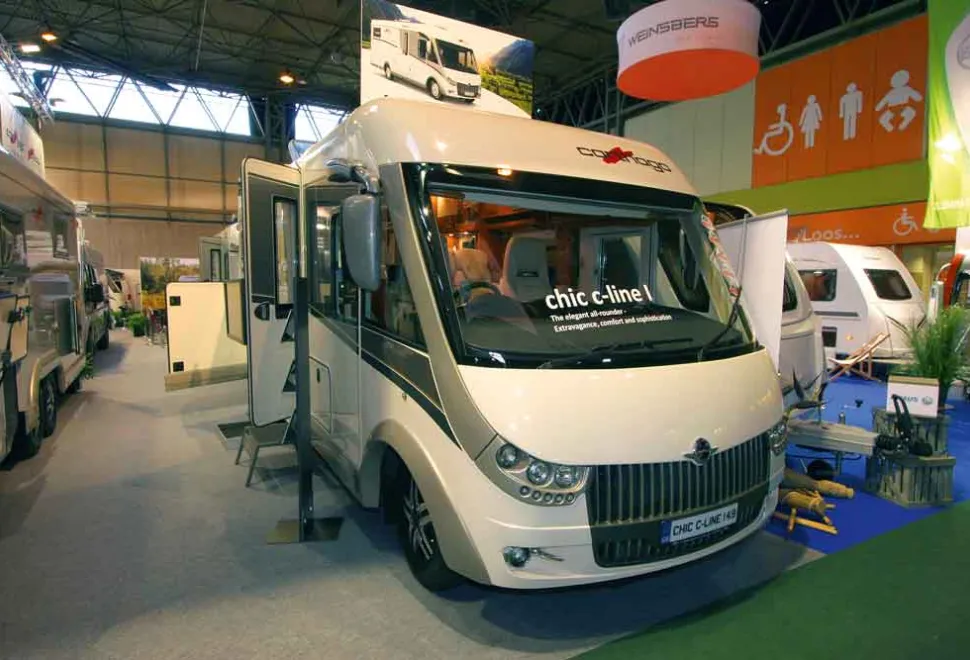
There’s no shortage of choice if you want a Carthago A-class motorhome.
The line-up starts with the 3.5-tonne C-compactline and C-tourer, before heading upmarket with the Chic C-line, Chic E-line and then the Iveco-based Chic S-plus and, finally, the Highliner. That’s 39 models in all, from 6.40m to 8.85m long – 14 of them with single beds at the rear.
This latest motorhome review is brought to you by the experts at What Motorhome magazine. If you like it, click here to see what else this leading motorhome magazine offers
Carthago describes its C-line range as “the elegant all-rounder”. All models are built on a Fiat Ducato with low-frame, wide rear axle Al-Ko chassis. Single rear axle versions can be plated from 3.5 to 4.5 tonnes. The standard model with 3,500kg gross weight offers just a 285kg payload, though, before options.
Being a German A-class, there are plenty of those. In fact, as seen here the price rises from £86k to £102,355.
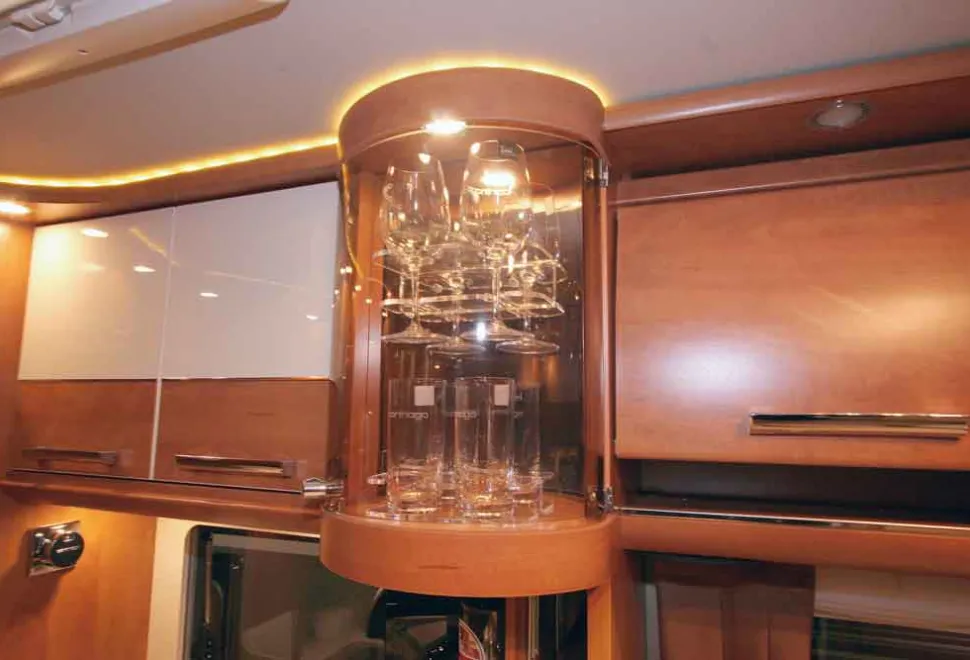
Included in that figure, the two priciest upgrades are the 177bhp engine (£3,755) and the Super Package (£3,670). The latter adds a whole list of features, including automatic cab air-con, central locking, bus-type mirrors, rear corner steadies, bar unit with glasses, SOG toilet vent, radio/DVD with touchscreen, reversing camera and more. Surely, most buyers will want this lot, but do note that it eats into the payload to the tune of 100kg.
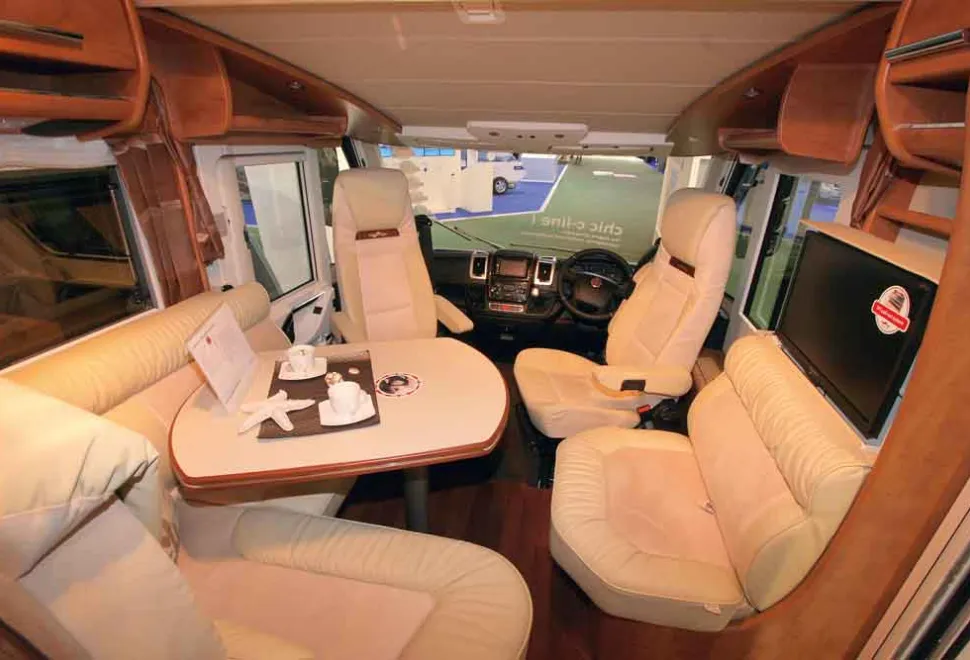
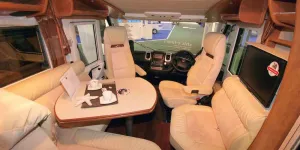
Not that the Chic C-line isn’t impressive already. The L-shaped lounge and high-backed captain’s chairs look just that bit more sumptuous than in many a lesser motorhome. There’s room for five to dine here, generous headroom (1.98m) and a pop-up 24in LED TV behind the offside seat – a very neat installation that adds £965. Oh, and another 15kg – the Carthago price list does an excellent job of not just guiding you through the cost of your dream ’van but also calculating your payload after all the options. Most buyers will need to opt for 3,850kg, or, more likely, 4,250kg or 4,500kg upgrades, especially if they wish to take advantage of the large rear garage with 1.20m interior height, two full-sized loading doors and the capacity to carry a motorbike weighing up to 350kg.
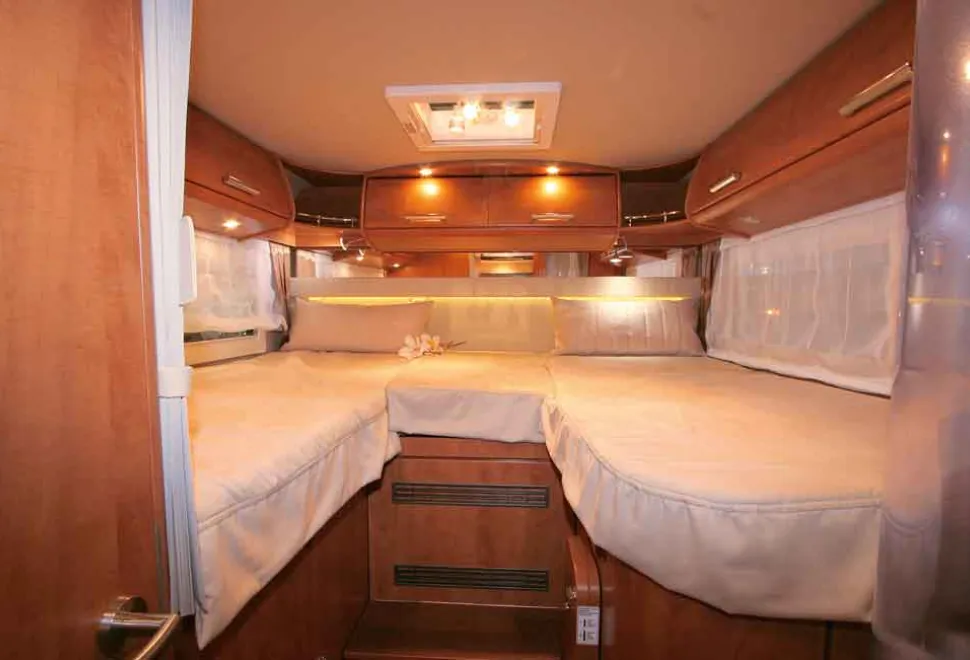
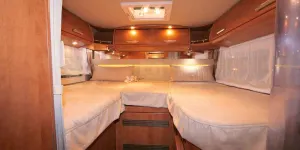
Over the garage are twin beds with the Carawinx system of springs under the mattresses and a clever slide-out unit that provides the necessary steps up, while over the cab the drop-down double is claimed to be the largest in its class.
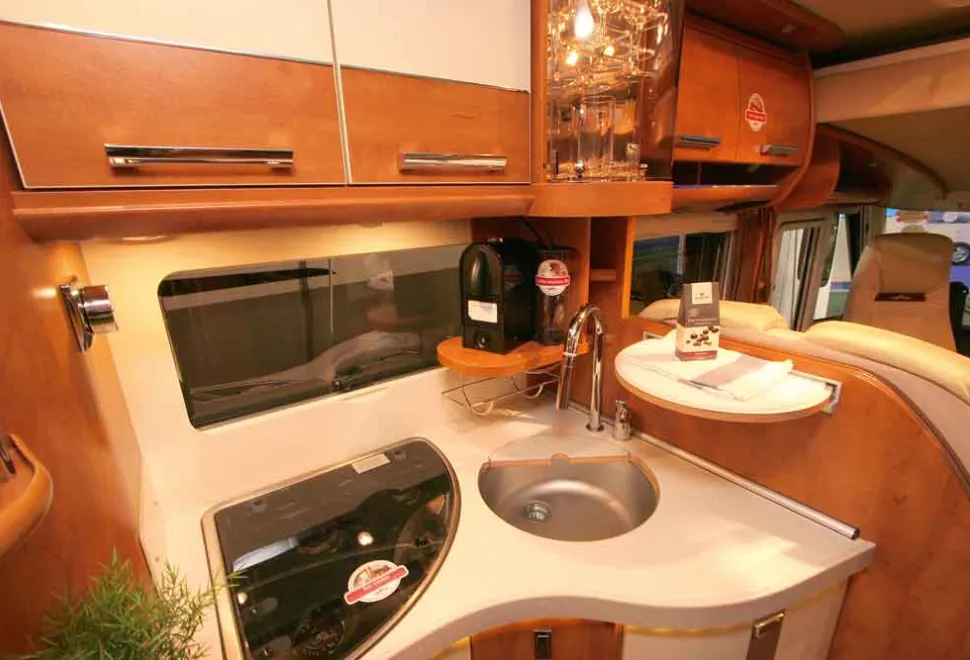
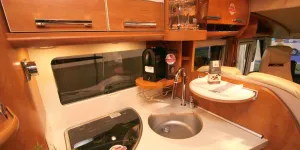
The kitchen is noteworthy, too. It may not have the full cooker of upmarket British ’vans (or some Hymers) but the unit has more curves than a Page 3 model. It also has a drop-down plinth for a coffee machine, a sink lid that doubles up as a shelf and a rather blingy cocktail cabinet up above.
If you enjoyed this review, you can read the full version and more in the June 2017 issue of What Motorhome magazine.
You can get a digital version of this latest issue of What Motorhome magazine here.


