
Auto-Sleeper Stanton
Image
Image
Image
Image
Image
Image

Description
PRICE FROM £53,995 PRICE AS TESTED £57,995 OPTIONS FITTED Premium Pack – seven-speed automatic gearbox, alloy wheels, cab air-conditioning, cruise control, awning, reversing camera, solar panel (£4,000)
Key Features
Model Year
2013
Product Class
Low Profile
Product Model Base
Mercedes Sprinter
Price from (£)
£53995
Length (m)
5.94
Berths
2
Belted seats
2
Main Layout
End Kitchen
Full Review
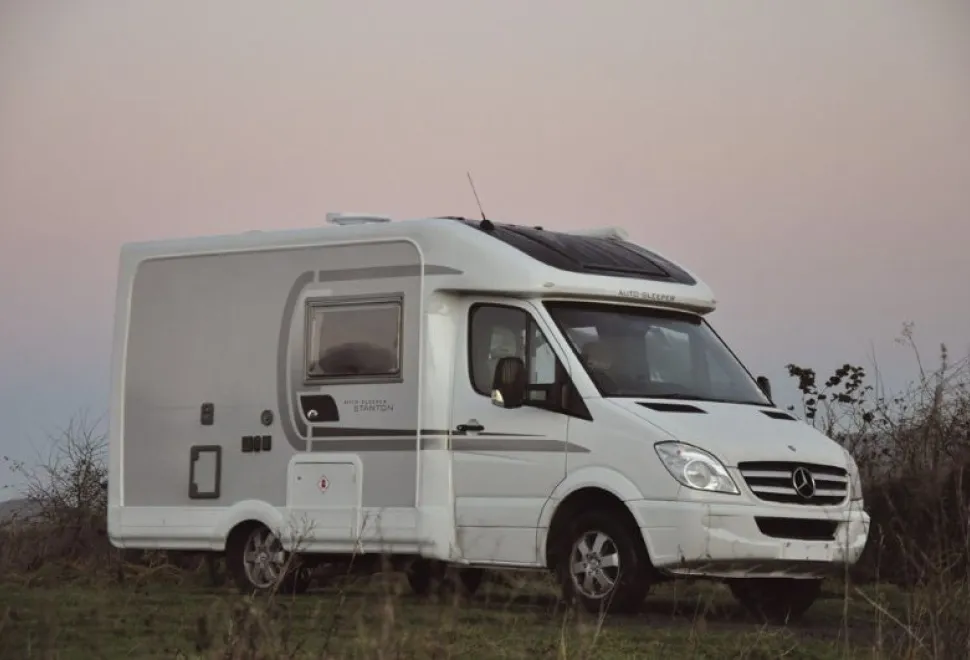
There is one base vehicle manufacturer capable of standing out from the conversion, and that’s Mercedes- Benz. With a Sprinter chassis under your motorhome you command a certain cachet at the campsite.
You clearly aren’t just trying this for a season and then going back to a tent. You appreciate great build quality and you know that a rear-wheel drive chassis is the thing to have when it comes to extricating a motorhome from a muddy pitch.
Oh, and you are prepared to pay a significant premium for all of this.
With no options boxes ticked, the Stanton comes in at £53,995. That’s £6,500 more than a Nuevo. The model on test here has the Premium Pack that features a seven- speed automatic gearbox, air-conditioning, cruise control and a reversing camera.
In other words, all the stuff you’d expect to find on a high-end base vehicle. This pack adds £4,000 to the price and I’m willing to bet that few Stantons (if any) will be ordered without it.
IN THE CAB
Where Boxer and Ducato cabs (and Ford Transits and Renault Masters) display their van roots with a utilitarian chunkiness, the Sprinter’s cab has a simple elegance.
The steering wheel is slender, the dashboard is uncluttered and the instruments are clearly defined in their binnacle. It’s redolent of a high-end saloon car interior from an age before complexity held sway – at least it is if you can ignore the garish Auto-Sleeper seat fabric.
The engine starts instantly and the engine settles into a quiet, smooth tickover that quickly reminds buyers why they have spent the extra money on a Mercedes.
It makes the Boxer’s engine seem crude by comparison. Automatic gearboxes should be a good fit for coachbuilt motorhomes, leaving the driver to concentrate on manoeuvring a larger vehicle, while the gearbox selects the right gear for the conditions.
Some automatics available on the more popular base vehicles (usually robotised manual gearboxes) actually frustrate progress, however, with clumsy controls and dubious gear selection ‘decisions’. Not so the Sprinter.
This is a straight-talking sevenspeed (torque convertor) automatic with no clever stuff beyond the fact that it is always in the right ratio and has a kickdown that works immediately.
The 163bhp engine is easily a match for the Stanton’s relatively light weight and it gives the option for strong acceleration if you need it. If you don’t go in for quick getaways, the Stanton will return mpg figures in the late 20s to very early 30s.
INSIDE
LOUNGE
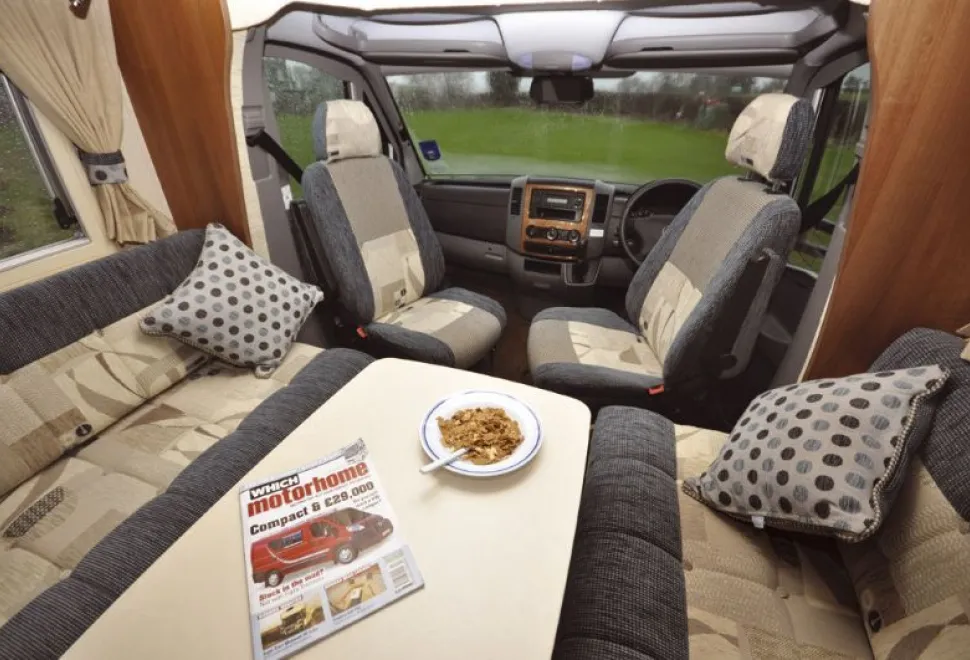
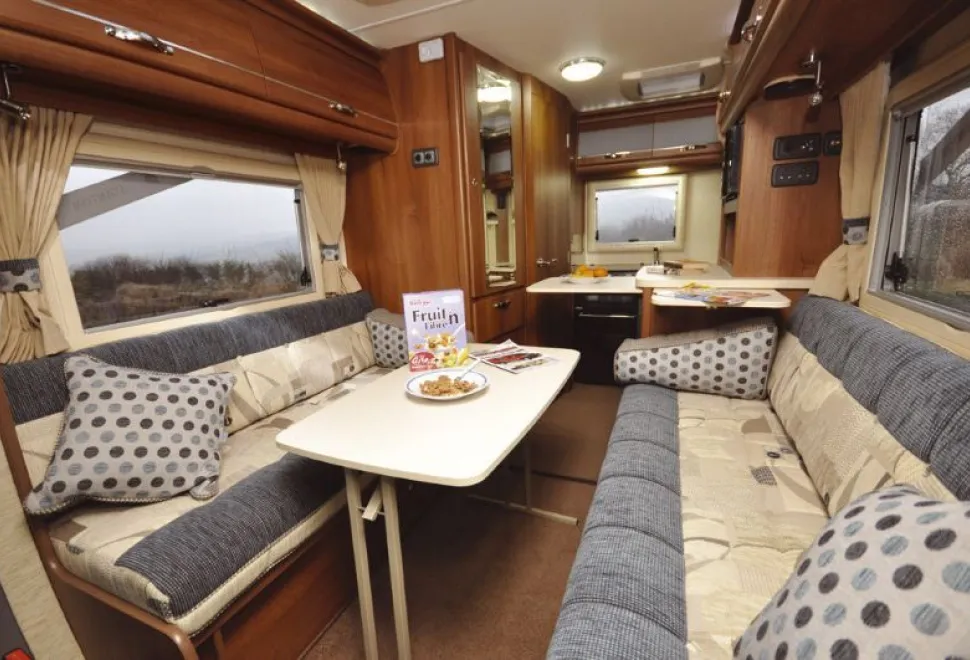
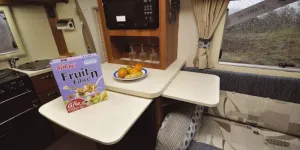
With an interior height scraping close to two metres and an enormous rooflight at the front (a 2013 addition for all Auto-Sleeper Mercs), the lounge area feels spacious.
The benches are firm but cushions and soft bolsters provide additional comfort. Putting the folding table up in the middle creates an instant, sturdy dining area for four, although the occasional table that slots in at the end of the nearside bench seat is one for perfectly flat pitches and un-brimmed glasses.
Both driver and passenger pews swivel to create extra seating for guests.
A clever feature is the central handbrake that can be laid flat while still engaged to allow the driver’s seat to turn without hindrance.
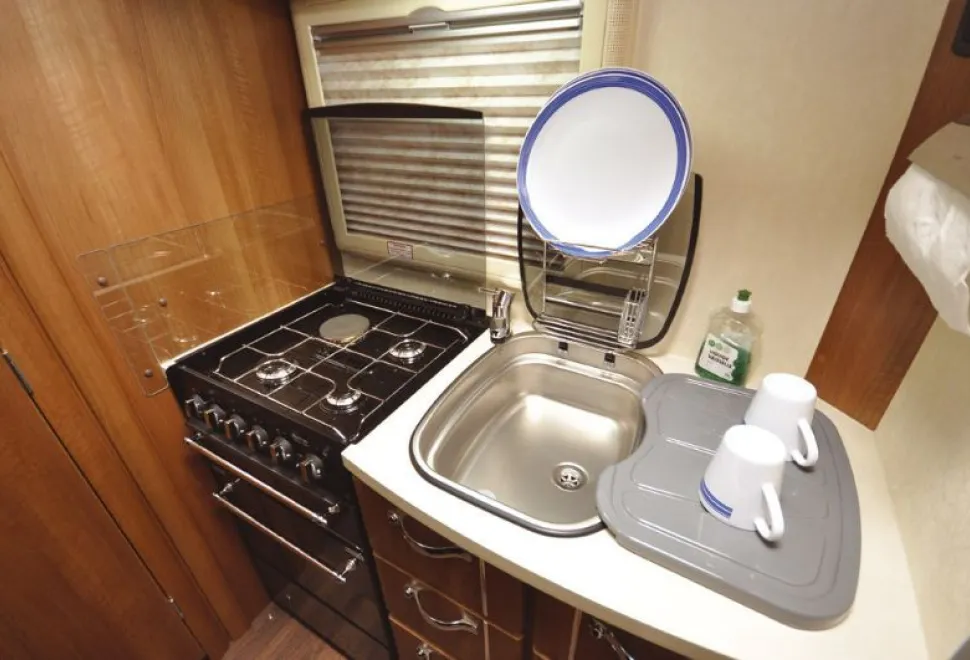
KITCHEN
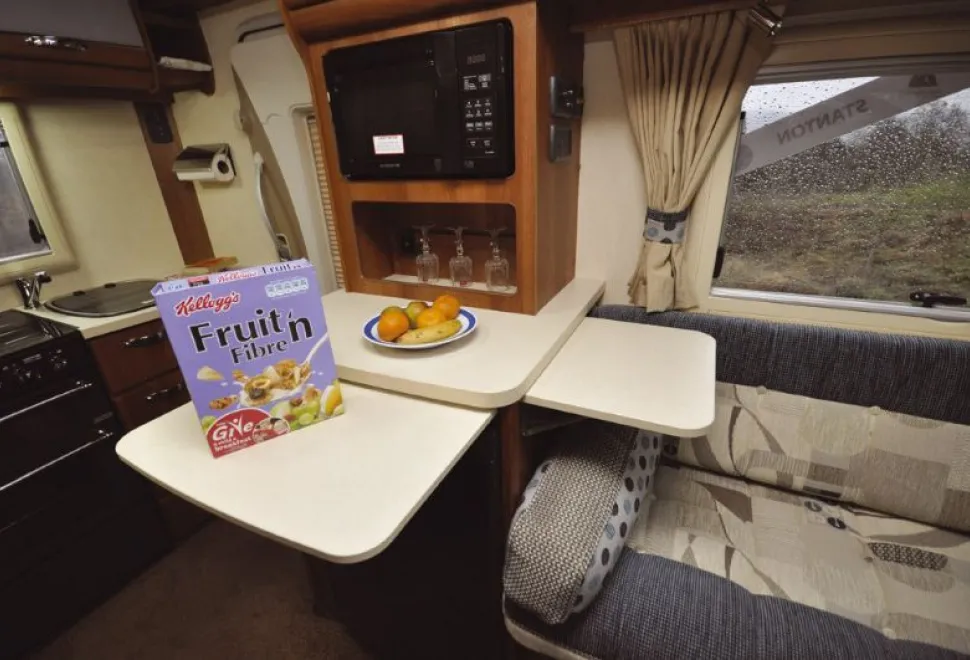
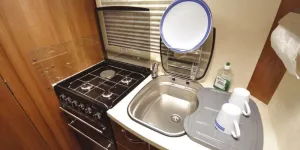
End kitchens, like the one in the Stanton, have a number of inherent benefits even before you consider the equipment included.
The very fact that oven, sink, drainer and drawers aren’t in a corridor in the main seating and eating spaces makes them a good choice for the pragmatic motorhomer.
And when they are as well equipped as the Stanton’s end kitchen, this layout takes some beating.
BED
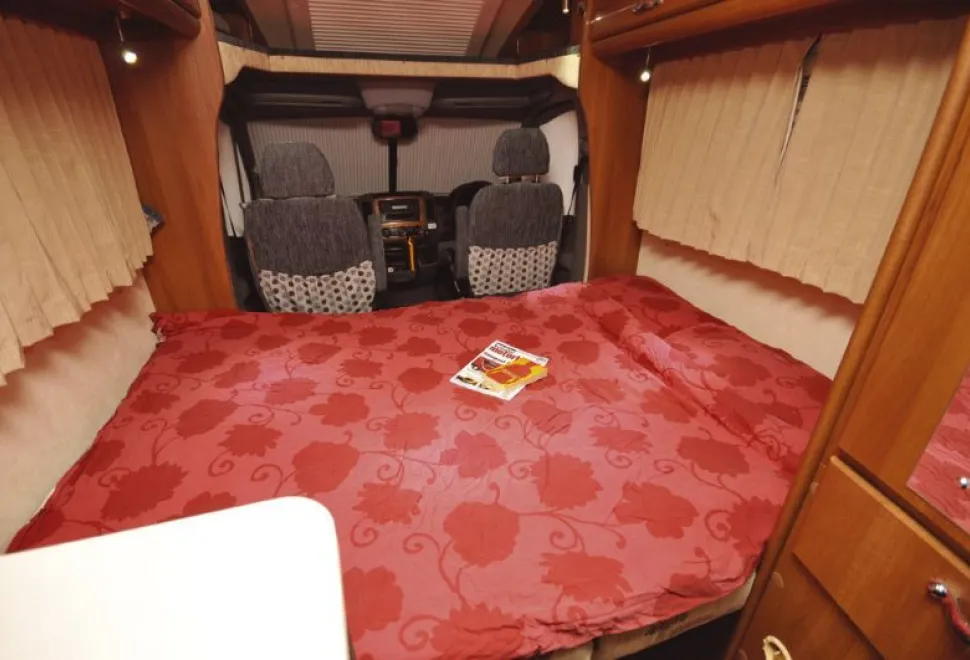
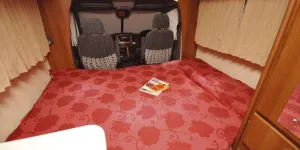
At bedtime, slatted extensions pull out from beneath each bench and the cushions lay flat to make a big, 2.09m long by 1.42m wide, double.
It takes less than a minute to make, but a little longer to get comfortable in – those firm bench cushions making their newness all too obvious. A few months use, or a suitable mattress topper, will improve matters I’m sure.
WASHROOM
The washroom takes up the offside corner of the conversion. It has a practical layout designed to match how people really use their motorhomes.
Loo and basin get the most use, so it’s loo and basin that are ready to use when you open the door. There’s loads of space around both and no damp and stinking shower curtain to get tangled up in.
If you want to shower, the washbasin wall folds 90 degrees towards the loo and a proper shower screen pulls across to create a large enclosure.
You clearly aren’t just trying this for a season and then going back to a tent. You appreciate great build quality and you know that a rear-wheel drive chassis is the thing to have when it comes to extricating a motorhome from a muddy pitch.
Oh, and you are prepared to pay a significant premium for all of this.
With no options boxes ticked, the Stanton comes in at £53,995. That’s £6,500 more than a Nuevo. The model on test here has the Premium Pack that features a seven- speed automatic gearbox, air-conditioning, cruise control and a reversing camera.
In other words, all the stuff you’d expect to find on a high-end base vehicle. This pack adds £4,000 to the price and I’m willing to bet that few Stantons (if any) will be ordered without it.
IN THE CAB
Where Boxer and Ducato cabs (and Ford Transits and Renault Masters) display their van roots with a utilitarian chunkiness, the Sprinter’s cab has a simple elegance.
The steering wheel is slender, the dashboard is uncluttered and the instruments are clearly defined in their binnacle. It’s redolent of a high-end saloon car interior from an age before complexity held sway – at least it is if you can ignore the garish Auto-Sleeper seat fabric.
The engine starts instantly and the engine settles into a quiet, smooth tickover that quickly reminds buyers why they have spent the extra money on a Mercedes.
It makes the Boxer’s engine seem crude by comparison. Automatic gearboxes should be a good fit for coachbuilt motorhomes, leaving the driver to concentrate on manoeuvring a larger vehicle, while the gearbox selects the right gear for the conditions.
Some automatics available on the more popular base vehicles (usually robotised manual gearboxes) actually frustrate progress, however, with clumsy controls and dubious gear selection ‘decisions’. Not so the Sprinter.
This is a straight-talking sevenspeed (torque convertor) automatic with no clever stuff beyond the fact that it is always in the right ratio and has a kickdown that works immediately.
The 163bhp engine is easily a match for the Stanton’s relatively light weight and it gives the option for strong acceleration if you need it. If you don’t go in for quick getaways, the Stanton will return mpg figures in the late 20s to very early 30s.
INSIDE
LOUNGE
With an interior height scraping close to two metres and an enormous rooflight at the front (a 2013 addition for all Auto-Sleeper Mercs), the lounge area feels spacious.
The benches are firm but cushions and soft bolsters provide additional comfort. Putting the folding table up in the middle creates an instant, sturdy dining area for four, although the occasional table that slots in at the end of the nearside bench seat is one for perfectly flat pitches and un-brimmed glasses.
Both driver and passenger pews swivel to create extra seating for guests.
A clever feature is the central handbrake that can be laid flat while still engaged to allow the driver’s seat to turn without hindrance.
KITCHEN
End kitchens, like the one in the Stanton, have a number of inherent benefits even before you consider the equipment included.
The very fact that oven, sink, drainer and drawers aren’t in a corridor in the main seating and eating spaces makes them a good choice for the pragmatic motorhomer.
And when they are as well equipped as the Stanton’s end kitchen, this layout takes some beating.
BED
At bedtime, slatted extensions pull out from beneath each bench and the cushions lay flat to make a big, 2.09m long by 1.42m wide, double.
It takes less than a minute to make, but a little longer to get comfortable in – those firm bench cushions making their newness all too obvious. A few months use, or a suitable mattress topper, will improve matters I’m sure.
WASHROOM
The washroom takes up the offside corner of the conversion. It has a practical layout designed to match how people really use their motorhomes.
Loo and basin get the most use, so it’s loo and basin that are ready to use when you open the door. There’s loads of space around both and no damp and stinking shower curtain to get tangled up in.
If you want to shower, the washbasin wall folds 90 degrees towards the loo and a proper shower screen pulls across to create a large enclosure.
Read the full review in the March 2013 issue of Which Motorhome
Our Verdict
The build quality on the Auto-Sleeper is excellent, and the attention to detail from the abundant, battery-saving low-voltage lighting through to the clever use of space in the washroom is impressive. It’s fair to say that the Auto-Sleeper Stanton has the right stuff to create badge envy on both counts – base vehicle and conversion.
Advantages
High-quality base vehicle and conversion
Superb automatic gearbox
Equipment levels
Neat washroom with swing-wall shower
Disadvantages
Expensive as standard
Inadequate payload in standard 3,200kg trim
Even more expensive with Premium Pack


