
Carlight Cosmopolitan 204
Image
Image
Image
Image
Image
Image
Description
Carlights went back into production in 2012 after a 10-year gap. They’re individually built, as they always have been – and traditional features have been retained
Key Features
Model Year
2012
Product Class
Twin Axle
Price from (£)
£46500
Berths
4
Full Review
Carlight, maker of hand-crafted caravans, is not out to rival the likes of Bailey or Swift when it comes to caravan construction methods. This small manufacturer sticks to tradition in its layouts and build processes. Walls are panelled in oak veneer. And furniture is hand-made, with mortise and tenon joints on drawers.
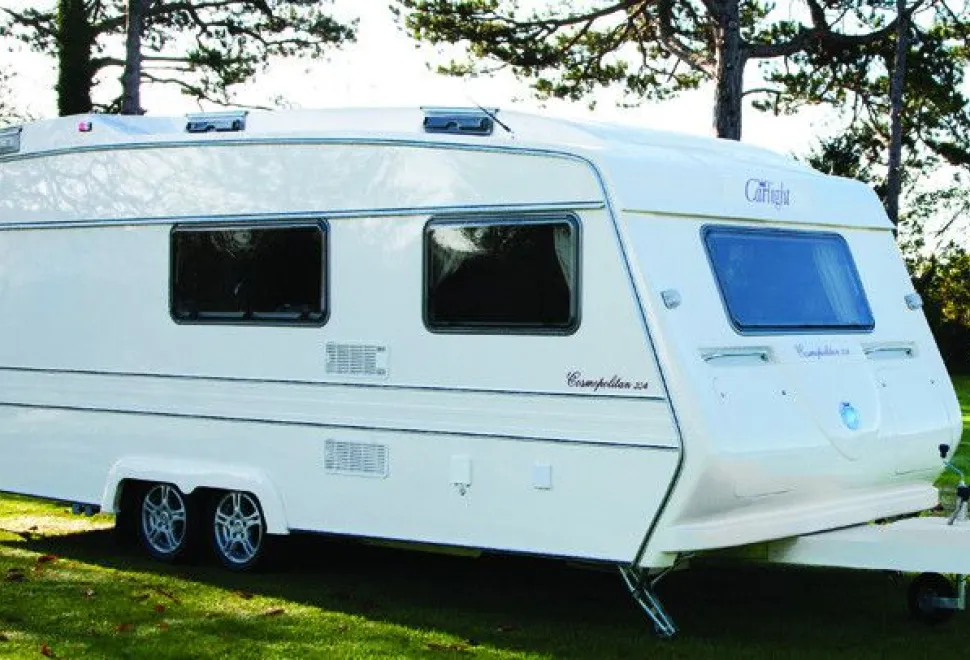
Carlights don’t have roof lights. But they do still have the lantern roofs that were once a hallmark of top-quality caravans; three slim opening windows are set into a dip in each side of the roofline.
Woods used in the construction of furniture are obeche, from tropical Africa, and jelutong, a tree that grows in Malaysia, Thailand and Borneo. These woods are chosen because they’re very light and strong, and have a fine grain. Upper locker doors have frames, and two layers of veneer. Between these layers is the same lightweight material that is used for exterior wall insulation. When the wood and insulation are bonded together the slight curve of the locker doors is created by pressing the doors in a jig that was made specially for this task by Carlight’s cabinetmakers.
The cupboard and wardrobe doors have piano hinges. Every piece of woodwork is hand crafted – and the precision is apparent.
The differences between Carlights and everything else extends to the carpet, which is fitted; it’s 10 or so years since carpet trends moved to the bound-edged style but Carlight sticks with tradition here, too.
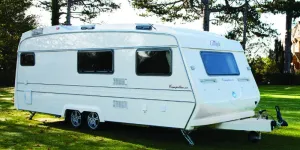
Our test caravan, the four-berth Cosmopolitan 204, departs from tradition in one big way – and we mean ‘big’ literally. It’s 2.4m wide, which is around 10cm wider than most caravans on the British market. Only in the last 12 months have towing width regulations changed to allow caravans of up to 2.5m wide to be towed by conventional towcars. The Cosmopolitan’s headroom departs from the norm, too; it’s 2.05m, making it the tallest caravan in Britain. You really feel the extra space; this caravan is wonderfully airy.
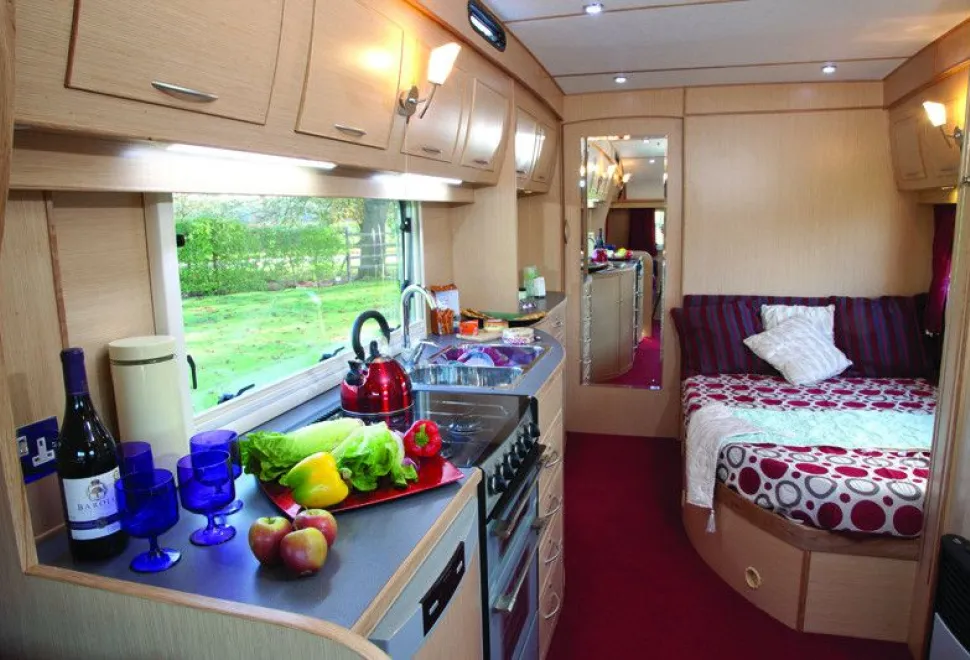
The Cosmopolitan’s layout gives you a lounge that makes a double bed, a fixed nearside bed and an end washroom.
Options are a key element of choosing a Carlight; for example, Truma blown air heating is standard but you can have your Carlight built with Alde heating if you wish. And you can opt for the Phantom Tracker security system instead of the standard Keen alarm system.
You make the front bed across the width of the caravan by rolling out slats from a wooden box that creates a useful ledge at the front of the caravan. At 2.3m long, this bed is perfect for tall people; that’s an advantage of a caravan 10cm wider than the majority. Although the centre section of the bed is slatted, the bed bases on either side are plywood, as is the base of the fixed double bed, whereas most UK-made caravans have slats
all round.
The wardrobe is in the centre of the caravan, with the Truma heater unit beneath it. The rail runs laterally; it’s 36cm wide, which is rather less hanging width than most caravans offer – and the wardrobe door is curved, so the hanging space varies between 30 and 40cm. This wardrobe intrudes less into the living space than may caravan wardrobes, because it’s so slim. There are pros and cons here depending on how many garments you usually take on holiday.
And that dressing table we mentioned earlier? With five drawers flanked by two cupboards, a large surface and a mirror above, this is a dressing table comparable with one you’d find in a house.
Inevitably, some purchasers would prefer a freestanding table that they could take outside and use in an awning; Carlight can provide that as an option if you wish.
Another difference between Carlights and almost all caravans is that there is no microwave (we had to take off a mark for this, bearing in mind the total price of the caravan). And have you ever seen a caravan with two sinks before? The Cosmopolitan has; they’re shiny steel, which looks fantastic. But there’s no draining board; we think a draining rack in the smaller sink would have been a useful asset.
So how does the new twin-axle Carlight feel on the hook of our Kia Sorento? The Cosmopolitan felt instantly well balanced and gave us the confidence it was built to be towed many miles of easy motoring. And when it comes to reversing onto a pitch, its twin-axle advantage that enhances road stability also makes manoeuvrability much easier than single-axles; the response is always more accurate, as we demonstrated as we reversed it into a space not much wider than the caravan at the entrance to Carlight’s workshop at the end of our test day. Its nose weight was comparatively light, at 45kg.
Carlights don’t have roof lights. But they do still have the lantern roofs that were once a hallmark of top-quality caravans; three slim opening windows are set into a dip in each side of the roofline.
Woods used in the construction of furniture are obeche, from tropical Africa, and jelutong, a tree that grows in Malaysia, Thailand and Borneo. These woods are chosen because they’re very light and strong, and have a fine grain. Upper locker doors have frames, and two layers of veneer. Between these layers is the same lightweight material that is used for exterior wall insulation. When the wood and insulation are bonded together the slight curve of the locker doors is created by pressing the doors in a jig that was made specially for this task by Carlight’s cabinetmakers.
The cupboard and wardrobe doors have piano hinges. Every piece of woodwork is hand crafted – and the precision is apparent.
The differences between Carlights and everything else extends to the carpet, which is fitted; it’s 10 or so years since carpet trends moved to the bound-edged style but Carlight sticks with tradition here, too.
Our test caravan, the four-berth Cosmopolitan 204, departs from tradition in one big way – and we mean ‘big’ literally. It’s 2.4m wide, which is around 10cm wider than most caravans on the British market. Only in the last 12 months have towing width regulations changed to allow caravans of up to 2.5m wide to be towed by conventional towcars. The Cosmopolitan’s headroom departs from the norm, too; it’s 2.05m, making it the tallest caravan in Britain. You really feel the extra space; this caravan is wonderfully airy.
The Cosmopolitan’s layout gives you a lounge that makes a double bed, a fixed nearside bed and an end washroom.
Options are a key element of choosing a Carlight; for example, Truma blown air heating is standard but you can have your Carlight built with Alde heating if you wish. And you can opt for the Phantom Tracker security system instead of the standard Keen alarm system.
Showering
The words “classic” and “traditional” sum up the Cosmopolitan 204 – except in one area: the shower room. A door with an enormous full-length mirror (50cm wide and 1.5m deep) slides out of sight into the wall that separates the bed from the washroom. A modern combination of pale and dark grey Formica covers the walls; sparkly silvery bits provide a pattern that gleams under six very bright LED clusters mounted in the roof. The toilet has a ceramic bowl. The shower is of fully domestic proportions, at 87cm by 83cm. The washbasin is shiny steel, set into a dark grey surface, with two large cupboards beneath. There’s a mirror above the basin and another on the wall opposite. We were reviewing the prototype and the towel loops and rails hadn’t arrived yet. But in a Carlight you can specify how many and where.Sleeping
Amid all the finesse and quality that’s obvious everywhere, there’s a surprise. The mattress is made of foam, rather than sprung, and it’s softer than average; at this price we think most caravanners would expect the extra firmness of springs. The bed base is solid wood, rather than today’s conventional slatted bases. You lift it up by inserting your fingers into one of several circular holes. There are no gas-filled struts or spring hinge-stays to keep the base up while you reach inside – just three straightforward plastic hinges. Again considering the caravan’s price, we think most people would want a bed that stays up on self-supporting hinges. On test we found raising the bed base was a task for two people – one to hold the base, the other to reach underneath.You make the front bed across the width of the caravan by rolling out slats from a wooden box that creates a useful ledge at the front of the caravan. At 2.3m long, this bed is perfect for tall people; that’s an advantage of a caravan 10cm wider than the majority. Although the centre section of the bed is slatted, the bed bases on either side are plywood, as is the base of the fixed double bed, whereas most UK-made caravans have slats
all round.
Storage
With 14 head-height lockers, a dressing table, two kitchen cabinets and four drawers, storage is impressive – until you realise that the bed and settee bases don’t have support hinges and there is no front access to the lounge under-seating storage area. For these reasons, we had to give a much lower storage mark than you’d expect in a caravan that has so many cupboards. Storage, though, isn’t just about space, it’s about convenience of access.The wardrobe is in the centre of the caravan, with the Truma heater unit beneath it. The rail runs laterally; it’s 36cm wide, which is rather less hanging width than most caravans offer – and the wardrobe door is curved, so the hanging space varies between 30 and 40cm. This wardrobe intrudes less into the living space than may caravan wardrobes, because it’s so slim. There are pros and cons here depending on how many garments you usually take on holiday.
And that dressing table we mentioned earlier? With five drawers flanked by two cupboards, a large surface and a mirror above, this is a dressing table comparable with one you’d find in a house.
Lounging
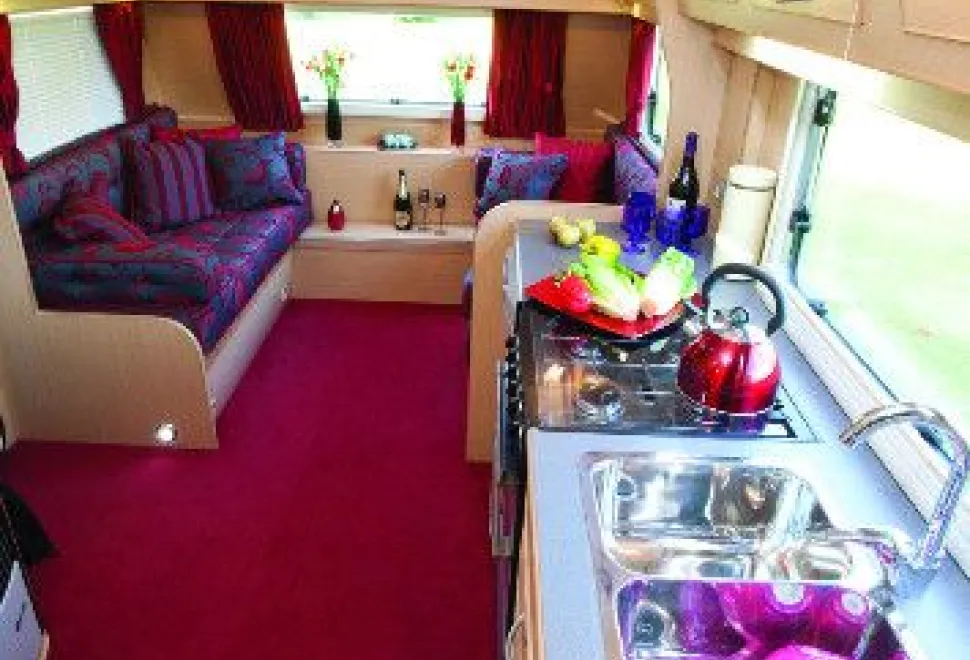
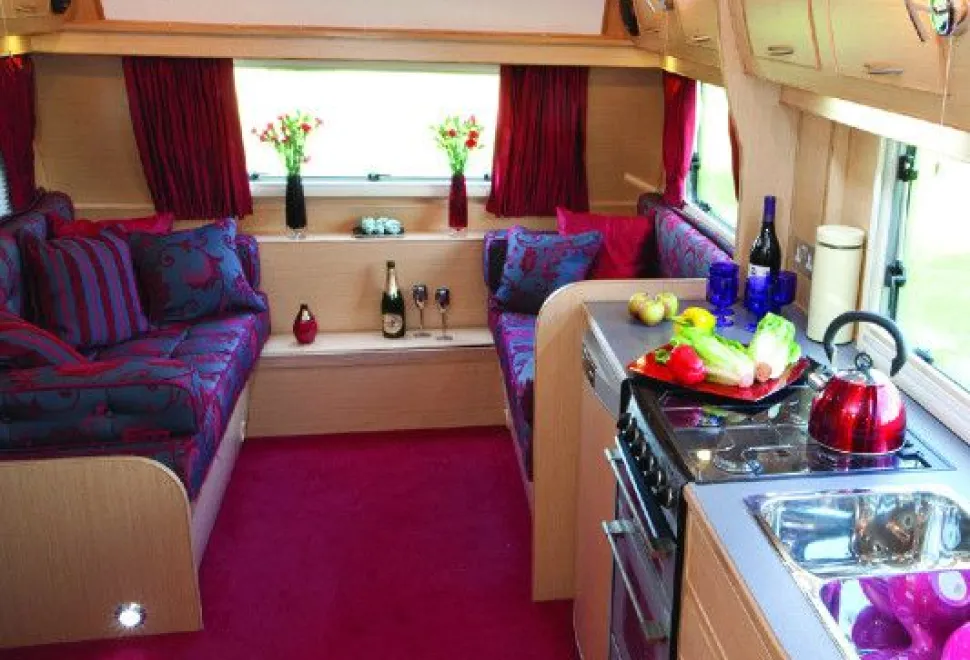
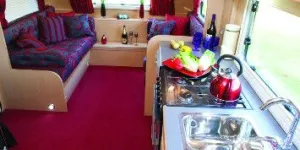
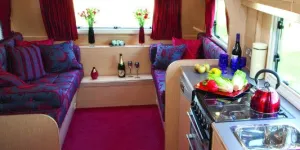
The upholstery is an exceptionally firm, dense foam; although it’s not sprung, we found it wonderfully comfortable and supportive. The backrests are only 8cm thick; that’s much less than those in some caravans – yet they, too, hold you comfortably. Four substantial armrests make this look and feel like domestic settees, and six scatter cushions take care of cosiness. Our review caravan’s rich red and black fabrics are simply gorgeous. Not to your taste? Not a problem. There are literally hundreds of fabric options from which you can choose, and 40 different carpets!Dining
The dining table attaches to clips on the front wall between the settees and stands on a single leg. It stores in a slim compartment alongside the wardrobe.Inevitably, some purchasers would prefer a freestanding table that they could take outside and use in an awning; Carlight can provide that as an option if you wish.
Kitchen
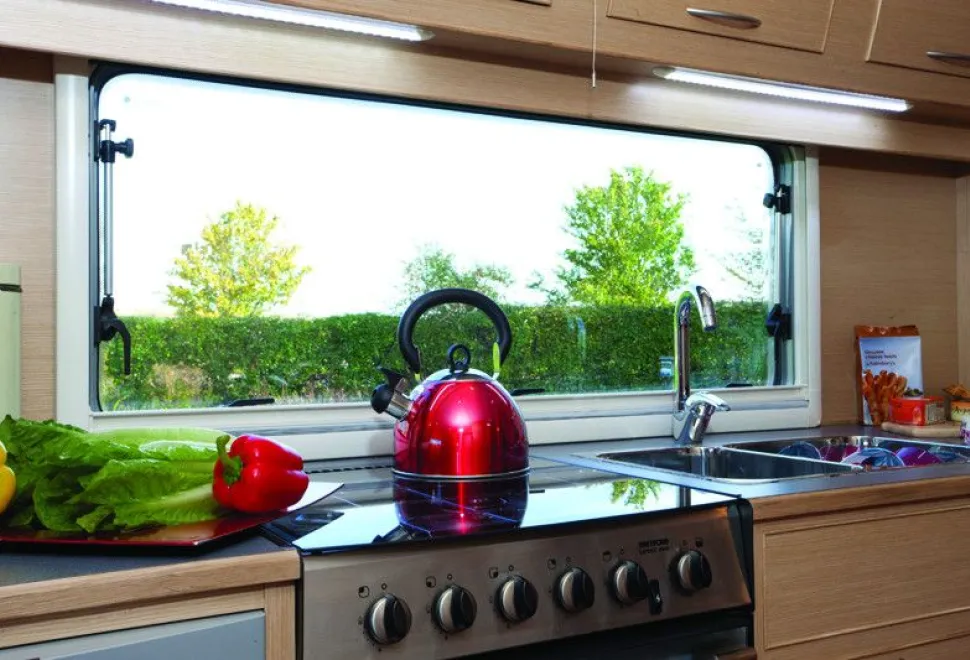
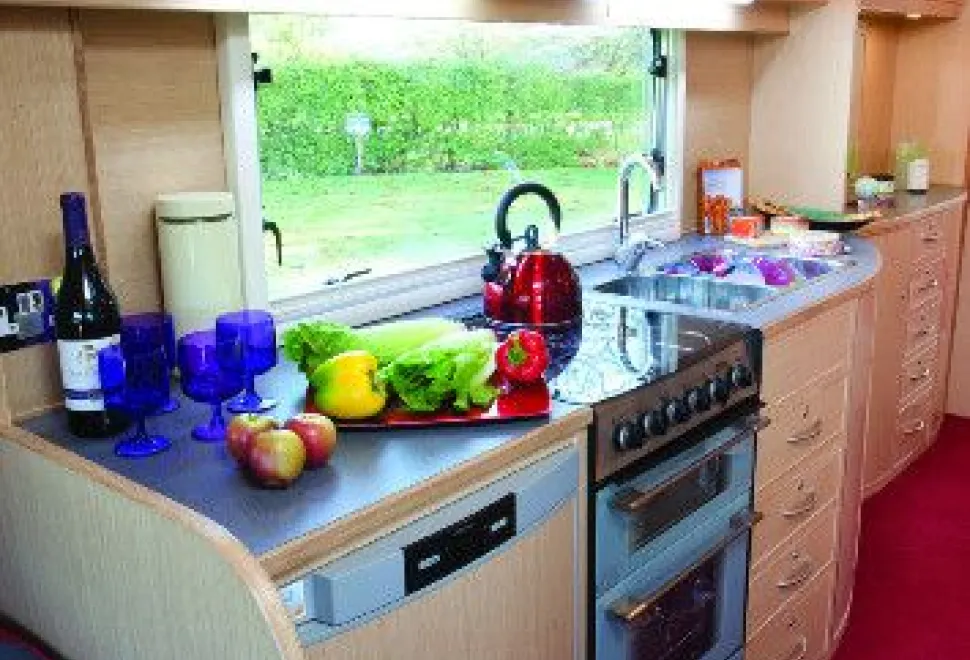
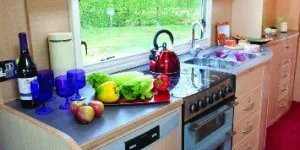
The kitchen stretches 2.22m along the offside. Under the smart plain grey surface are the fridge, the cooker with four-burner hob, four drawers and a 70cm-wide cabinet with double doors. This cabinet, at the rear end of the kitchen, is curved, to create corridor space, but still gives you loads of room inside. A shelf would have doubled the capacity, though.Another difference between Carlights and almost all caravans is that there is no microwave (we had to take off a mark for this, bearing in mind the total price of the caravan). And have you ever seen a caravan with two sinks before? The Cosmopolitan has; they’re shiny steel, which looks fantastic. But there’s no draining board; we think a draining rack in the smaller sink would have been a useful asset.
Towing
Our prototype Cosmopolitan wasn’t fitted with iDC, which is chassis manufacturer BPW’s anti-snaking device. But Carlight tells us that future models will have this safety enhancement device.So how does the new twin-axle Carlight feel on the hook of our Kia Sorento? The Cosmopolitan felt instantly well balanced and gave us the confidence it was built to be towed many miles of easy motoring. And when it comes to reversing onto a pitch, its twin-axle advantage that enhances road stability also makes manoeuvrability much easier than single-axles; the response is always more accurate, as we demonstrated as we reversed it into a space not much wider than the caravan at the entrance to Carlight’s workshop at the end of our test day. Its nose weight was comparatively light, at 45kg.
Our Verdict
The Carlight Cosmopolitan is a great classic with a long pedigree and many fine points
Advantages
Good headroom; spaciousness
Large, practical kitchen
Huge dressing table with a mains socket nearby
Pale woodwork
Disadvantages
We’d prefer Alde heating in a caravan of this price
Lack of TV aerial – you have to pay extra
Lack of TV aerial – you have to pay extra for this
Lack of TV aerial – you have to pay extra for this
The unsprung mattress
No self-supporting struts on the bedding lockers


