
Wellhouse Toyota Grand Hiace
Image
Image
Image

Image
Image



Description
Wellhouse Toyota Grand Hiace
Key Features
Model Year
2010
Product Class
Rising Roof
Product Model Base
Toyota Hiace
Price from (£)
£15000
Length (m)
4.67
Berths
3
Belted seats
5
Main Layout
Campervan
Full Review
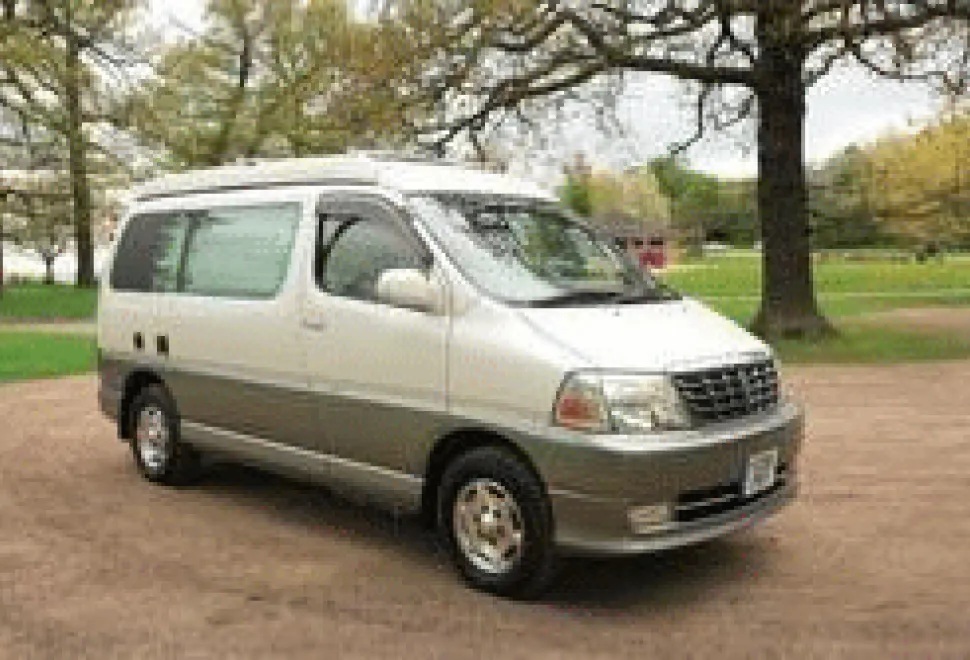
AFTER the distinctly underwhelming driving experience of the 2.5-litre diesel Toyota (converted by G&P Campervan) that we tested last month, you might expect more of the same with this Toyota camper from Wellhouse Leisure.
But Wellhouse are adamant that this 3.4-litre V6 petrol model is a joy to drive, despite being a bit thirsty. And an LPG conversion is fitted as standard to reduce running costs.
Despite the less efficient gas fuel increasing the consumption to a measly 20mpg (instead of a claimed 26mpg on unleaded), the ‘half price’ fuel makes a big petrol engine a practical proposition, with Wellhouse claiming fuel costs similar to a diesel-engined camper achieving around 40mpg.
We can’t help wondering just how gently you’d have to drive to get close to 26mpg from a big V6 motor, though – a heavy right foot might well drop that figure into the teens…
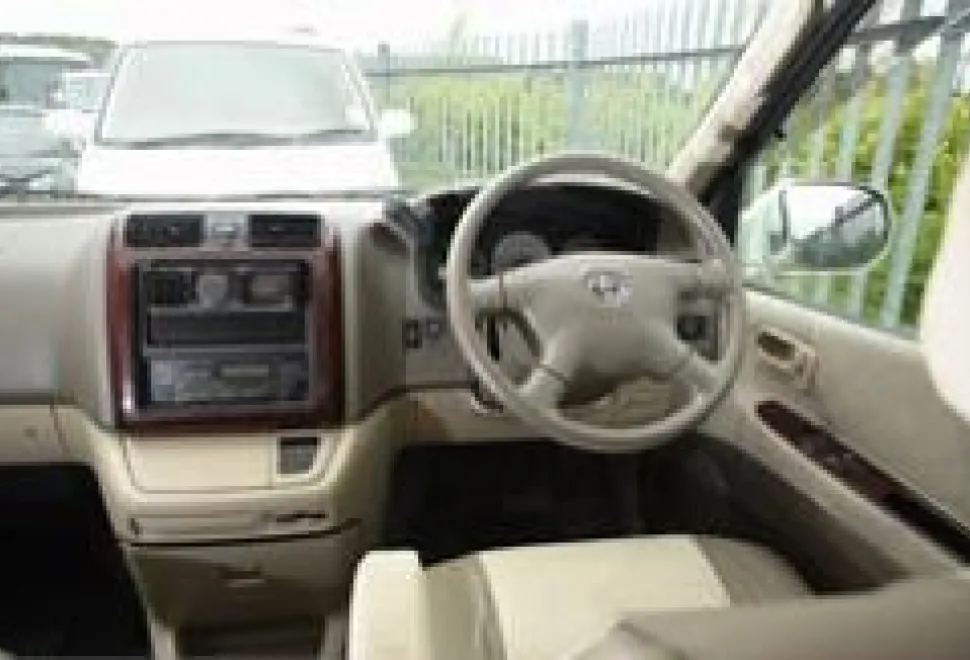
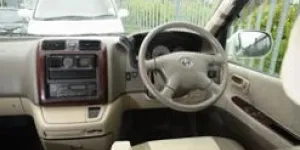
On settling into the cab’s leather-clad driver’s seat I was instantly reminded of how I wasn’t keen on the Toyota’s driving position – or the hefty, chunky steering wheel. These complaints soon melt away, though, as other aspects dominate.
Once the engine is started, and first gear selected on the column-mounted automatic gearshift, the roar from the engine is pure American muscle car and there’s satisfying grunt as you use your right foot.
Gearchanges are smooth, and with so much power on demand, the loss of performance that results from the use of LPG fuel is imperceptible.
This Toyota handles well too, thanks to its car-like height when fitted with a Reimo elevating roof, although there’s not much feel through the steering wheel; you’re in for a relaxing drive.
For peace of mind, there’s the Wellhouse-fitted alarm system and immobiliser button that’s cleverly hidden within the steering column.
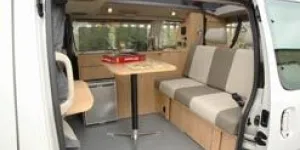
The conversion itself is well thought-out, although there isn’t nearly as much headroom with the roof raised as in a typical VW camper. This is partly because the Toyota is rear-wheel drive and in part due to the smaller roof cut-out. There’s no standing room at the sink, which is a bit of a pain if you’re washing up.
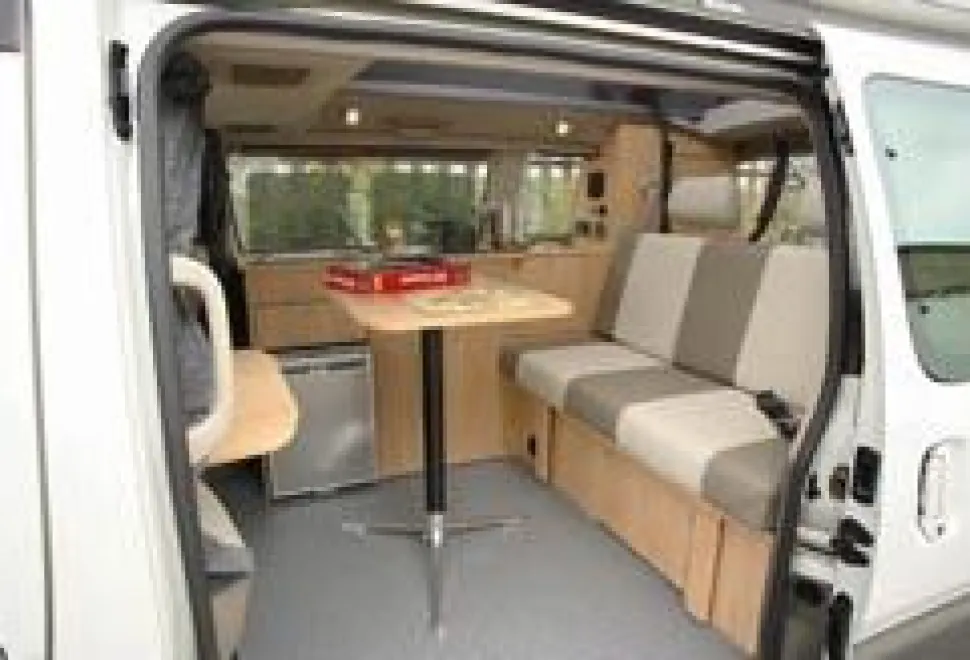
Hidden beneath recessed glass lids are a large, square sink and a two-burner hob. There’s an area of worktop space to the rear of the kitchen unit for your TV, with accompanying 230V and 12V sockets, as well as one of the two rear speakers and the Webasto heater control.
Below is a Waeco compressor fridge, plus a cutlery drawer, but the nearby large cupboard is partially filled by the heater. There’s a huge front-loading compartment beside the bench seat and a decent-sized wardrobe too (complete with mirror) above the rear shelf.
Four spotlights are mounted around the living quarters. A stalk light for the swivelled cab seat would be a valued addition, though there is one such fitting at the rear for bedtime reading.
Surrounding the living quarters are slatted blinds, and a thick curtain pulls across the cab, cutting off the swivel passenger seat from the living quarters. When facing rearwards this seat has its own island-leg table.
There’s also a free-standing table, which is practical as it can be used outdoors as well as in.
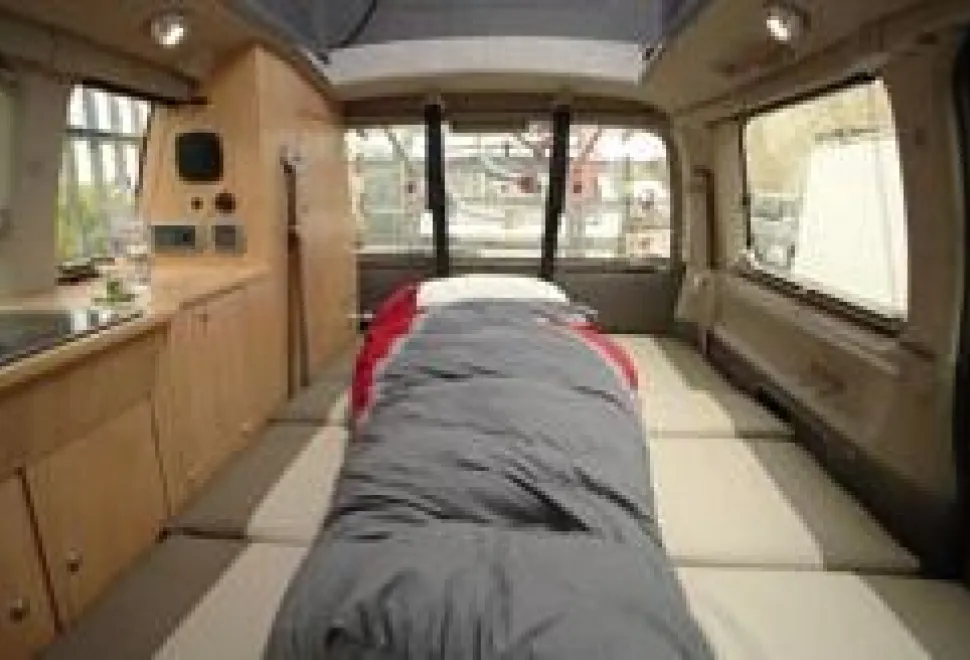
The table-top for this sits loose behind the bench seat but the island leg and tripod base both clip onto the front of the kitchen unit. Underneath the rear shelf is another storage area that you won’t have to clear when making the bed at night.
You can carry a Porta-Potti in its own cupboard beneath the bench seat, or alternatively use this as extra space for clothes etc.
There’s no standard price for all this, as Wellhouse build their campers on secondhand base vehicles which they import from Japan – so the cost is dependant on the age, spec and mileage of the van pre-conversion.
You can, however, expect to pay less than half the price of an equivalent all-new VW T5 camper. VW camper enthusiasts may recoil in horror at the thought of a different base vehicle, but by compromising in this way you can have a brand-new conversion built to your specification, with your upholstery choice, and you can go mad on the extras as well.
That was the decision the new owner of this Grand Hiace took – he was looking at VWs but decided that if he went with Wellhouse he could have the leather upholstery, big engine and LPG conversion, upmarket radio, roof-mounted awning, kiddy roof bed, Webasto heater, towbar, solar panel, rear shower (mounted inside the raising tailgate), roof bars, racing-style harness for a third bench-seat passenger and reversing sensors – and save himself £20,000 against the latest delivery mileage T5.
A longer version of this review was published in the July 2010 issue of Which Motorhome magazine.
But Wellhouse are adamant that this 3.4-litre V6 petrol model is a joy to drive, despite being a bit thirsty. And an LPG conversion is fitted as standard to reduce running costs.
Despite the less efficient gas fuel increasing the consumption to a measly 20mpg (instead of a claimed 26mpg on unleaded), the ‘half price’ fuel makes a big petrol engine a practical proposition, with Wellhouse claiming fuel costs similar to a diesel-engined camper achieving around 40mpg.
We can’t help wondering just how gently you’d have to drive to get close to 26mpg from a big V6 motor, though – a heavy right foot might well drop that figure into the teens…
On settling into the cab’s leather-clad driver’s seat I was instantly reminded of how I wasn’t keen on the Toyota’s driving position – or the hefty, chunky steering wheel. These complaints soon melt away, though, as other aspects dominate.
Once the engine is started, and first gear selected on the column-mounted automatic gearshift, the roar from the engine is pure American muscle car and there’s satisfying grunt as you use your right foot.
Gearchanges are smooth, and with so much power on demand, the loss of performance that results from the use of LPG fuel is imperceptible.
This Toyota handles well too, thanks to its car-like height when fitted with a Reimo elevating roof, although there’s not much feel through the steering wheel; you’re in for a relaxing drive.
For peace of mind, there’s the Wellhouse-fitted alarm system and immobiliser button that’s cleverly hidden within the steering column.
The conversion itself is well thought-out, although there isn’t nearly as much headroom with the roof raised as in a typical VW camper. This is partly because the Toyota is rear-wheel drive and in part due to the smaller roof cut-out. There’s no standing room at the sink, which is a bit of a pain if you’re washing up.
Hidden beneath recessed glass lids are a large, square sink and a two-burner hob. There’s an area of worktop space to the rear of the kitchen unit for your TV, with accompanying 230V and 12V sockets, as well as one of the two rear speakers and the Webasto heater control.
Below is a Waeco compressor fridge, plus a cutlery drawer, but the nearby large cupboard is partially filled by the heater. There’s a huge front-loading compartment beside the bench seat and a decent-sized wardrobe too (complete with mirror) above the rear shelf.
Four spotlights are mounted around the living quarters. A stalk light for the swivelled cab seat would be a valued addition, though there is one such fitting at the rear for bedtime reading.
Surrounding the living quarters are slatted blinds, and a thick curtain pulls across the cab, cutting off the swivel passenger seat from the living quarters. When facing rearwards this seat has its own island-leg table.
There’s also a free-standing table, which is practical as it can be used outdoors as well as in.
The table-top for this sits loose behind the bench seat but the island leg and tripod base both clip onto the front of the kitchen unit. Underneath the rear shelf is another storage area that you won’t have to clear when making the bed at night.
You can carry a Porta-Potti in its own cupboard beneath the bench seat, or alternatively use this as extra space for clothes etc.
There’s no standard price for all this, as Wellhouse build their campers on secondhand base vehicles which they import from Japan – so the cost is dependant on the age, spec and mileage of the van pre-conversion.
You can, however, expect to pay less than half the price of an equivalent all-new VW T5 camper. VW camper enthusiasts may recoil in horror at the thought of a different base vehicle, but by compromising in this way you can have a brand-new conversion built to your specification, with your upholstery choice, and you can go mad on the extras as well.
That was the decision the new owner of this Grand Hiace took – he was looking at VWs but decided that if he went with Wellhouse he could have the leather upholstery, big engine and LPG conversion, upmarket radio, roof-mounted awning, kiddy roof bed, Webasto heater, towbar, solar panel, rear shower (mounted inside the raising tailgate), roof bars, racing-style harness for a third bench-seat passenger and reversing sensors – and save himself £20,000 against the latest delivery mileage T5.
A longer version of this review was published in the July 2010 issue of Which Motorhome magazine.
Our Verdict
Don’t rule out an LPG-equipped petrol camper as they can be more cost-effective to run than a diesel (LPG is half the cost of diesel). Another great Wellhouse conversion.
Advantages
This version cost £20,000 less than an equivalent VW
Smooth V6 petrol and auto is a joy
LPG very cost effective and can be cheaper to run tha diesel
Good quality conversion works well
Disadvantages
Narrower than a VW camper


