Rimor Horus 38 campervan



Description
Berths: 3 Travel seats: 4 Base vehicle: Fiat Ducato Gross weight: 3,300kg Payload: 789kg
Key Features
Full Review
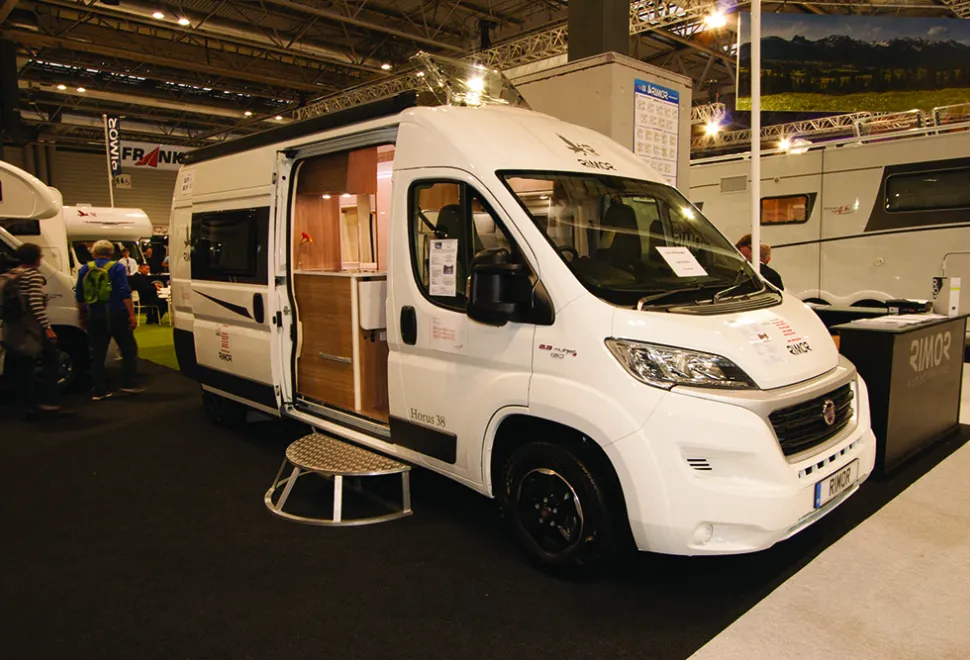
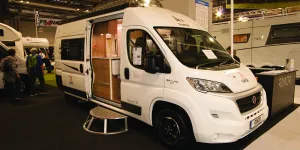
Rimor is best known for its budget-priced coachbuilts, especially low-cost low-profiles and overcabs for all the family. Now, for 2018, it’s offering a pair of fixed bed van conversions, one on the Renault Master and one on the ubiquitous Fiat. It’s the six-metre Ducato that forms the base for the Horus 38. It comes as standard with a 3,300kg gross weight, with the option to upgrade to 3,500kg. Not that you’ll need to as the payload is a mighty 789kg.
Under the bonnet is the 2.3-litre, 130bhp unit rather than the 2-litre, 115bhp motor that you’d expect on a budget-priced camper. Especially one as keenly priced as this – starting at a fiver below £40k. Also included in that price tag are cab air-conditioning, central locking, driver and passenger airbags and cruise control.
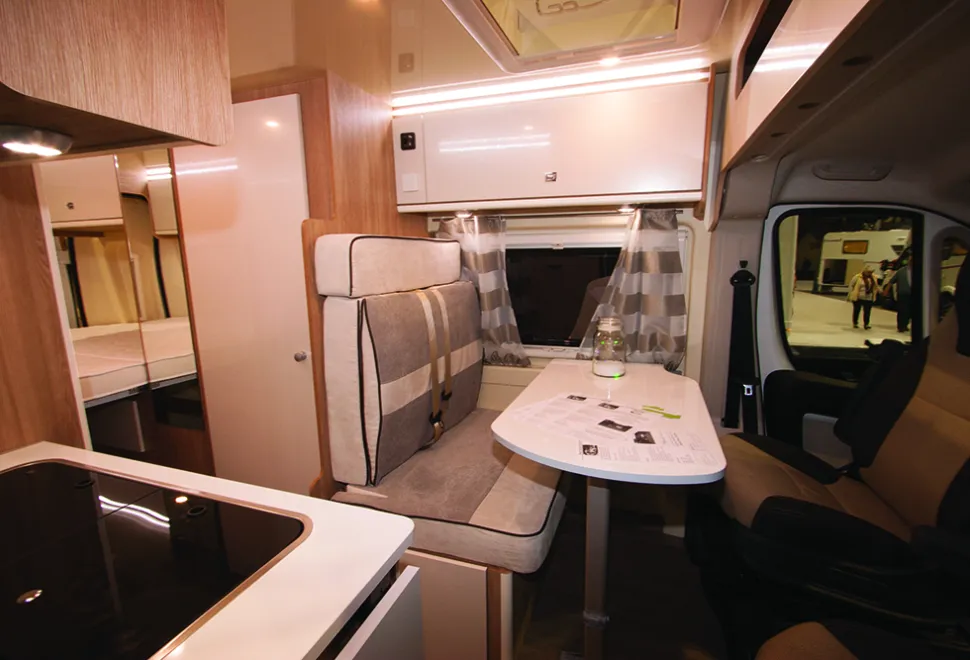
It’s a white body with a colour-coded front bumper. Options include alloy wheels (£695), a 3m awning (£675), a Category 1 alarm (£595), reversing camera (£395), bike rack (from £279) and a satellite dome (£995). The layout is the one you’d expect from a continental manufacturer, so there are swivel cab seats and a half-dinette up front, a washroom and kitchen in the middle and a transverse double bed at the rear. Right-hand drive models retain the side door on the UK offside.
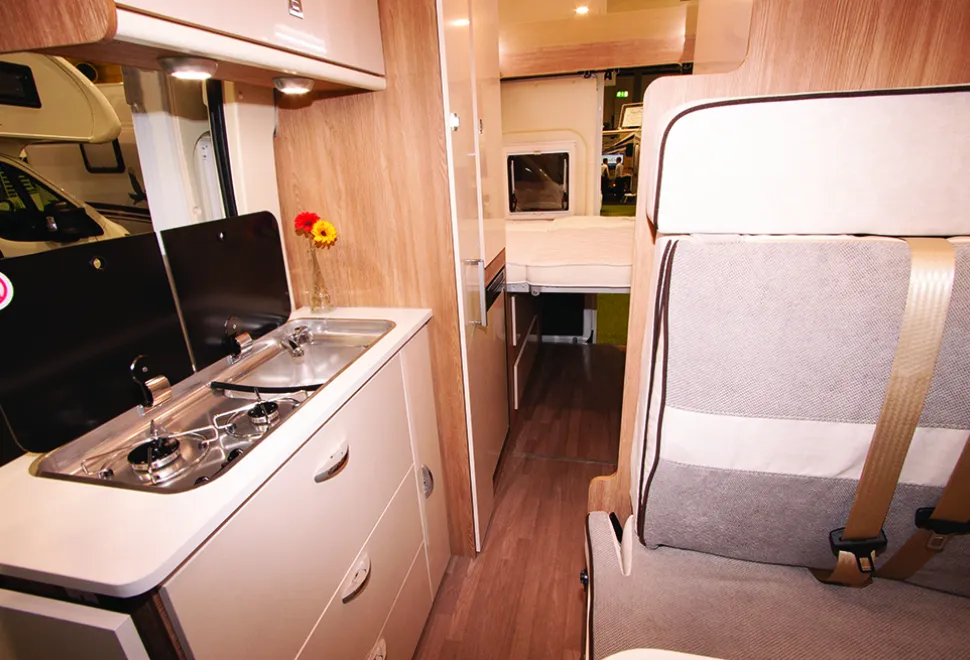
There aren’t many indications of cost-saving but one aspect that you’ll spot straight away is the cab seats in original Fiat van upholstery. Less noticeable is that the Heki sunroof over the lounge is the cheaper push-up type, not one with a winding handle. It’s not all austerity, though, as there are net curtains and the wall-mounted table can be repositioned on a rail on the back of the galley for easy al fresco dining. There’s no extension leaf on the table but it’s perfectly adequate in size for two. The offside galley has a flip-up worktop at the forward end for vital preparation space for the cook, who may also expand onto the nearby table if the meals are more adventurous. Keeping it simple might be the recipe, though, as (typical for the type) there’s just a two-burner hob.
While equipment might not be over-generous in the galley, storage is exceptional. Firstly, we really like the trio of large drawers but even more impressive is the floor-to-ceiling slide-out pantry unit for all your tins, packets, etc. Between that and the bed, and positioned under the wardrobe, is an 81-litre, three-way Thetford fridge.
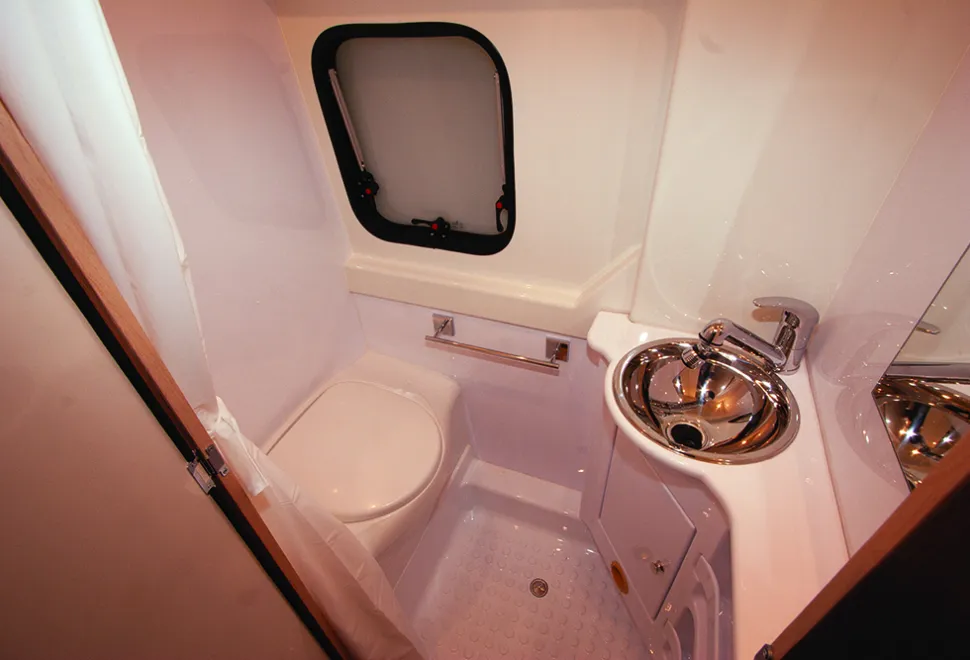
The washroom is fully GRP lined and looks like the little room from a more expensive model. It has a bench cassette loo (easier to clean), an opening window and a stainless-steel basin with a decent amount of worktop around it. Top marks!
The rear bed measures 1.92m by 1.35m and there are oddments pockets and reading lights at the head of the mattress, on the offside. Cupboards sit over both the head and foot of the bed, while opening windows in the rear doors provide ventilation. To maximise storage, the bed’s slatted base neatly folds away and the three sections of mattress all stack on the offside. Tie-down hooks cater for loading bicycles on board.
If you enjoyed this review, you can read loads more like it in What Motorhome magazine. You can get a digital version of this latest issue of What Motorhome magazine here.