
Nu Venture Nu Rio S/D campervan


Description
Berths: 2 Travel seats: 2-4 Base vehicle: Citroën Dispatch Gross weight: 3,100kg Payload: 600kg
Key Features
Full Review
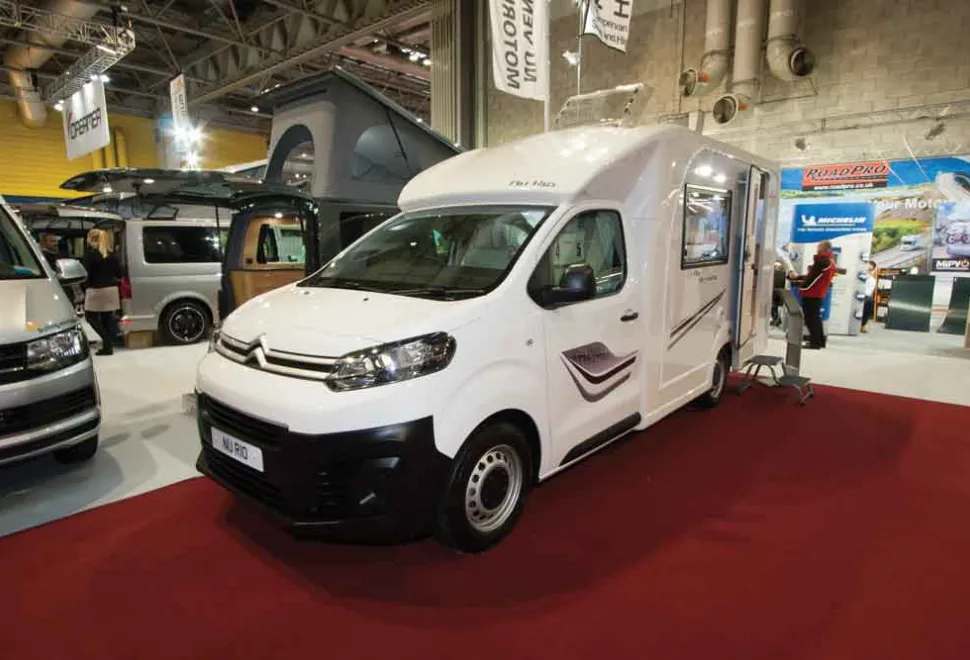
If you think six metres is the minimum length for a coachbuilt motorhome, then think again. The Nu Venture Nu Rio – recently launched on the new, err nu?, Citroën Dispatch is almost half a metre less. And it’s slightly slimmer than a Relay/Boxer/Ducato panel van, as well as being a similar height to a typical high-roof van conversion.
So, it’s small by motorhome standards, but the really important bit is that new cab. Looking much more people-carrier than Bob the Builder, the latest Dispatch is a joint venture that has also resulted in the new Peugeot Expert and Toyota Proace, all three of which are built in France. This is the first – and, so far, only – coachbuilt we’ve seen on the Franco-Japanese triumvirate but, as a van or campervan, the base has already received plenty of plaudits, even when compared against the much-loved VW Transporter.
The Nu Rio comes with a 2-litre 120bhp motor as standard, but an extra 60 horses and an automatic gearbox sounds like a very tempting combined option (albeit a pricey one, at £3,500). Things that aren’t options, but standard equipment, are cruise control, a passenger airbag and height-adjustable front seats, so that £42,995 price tag starts to look appealing when compared with many van conversions.
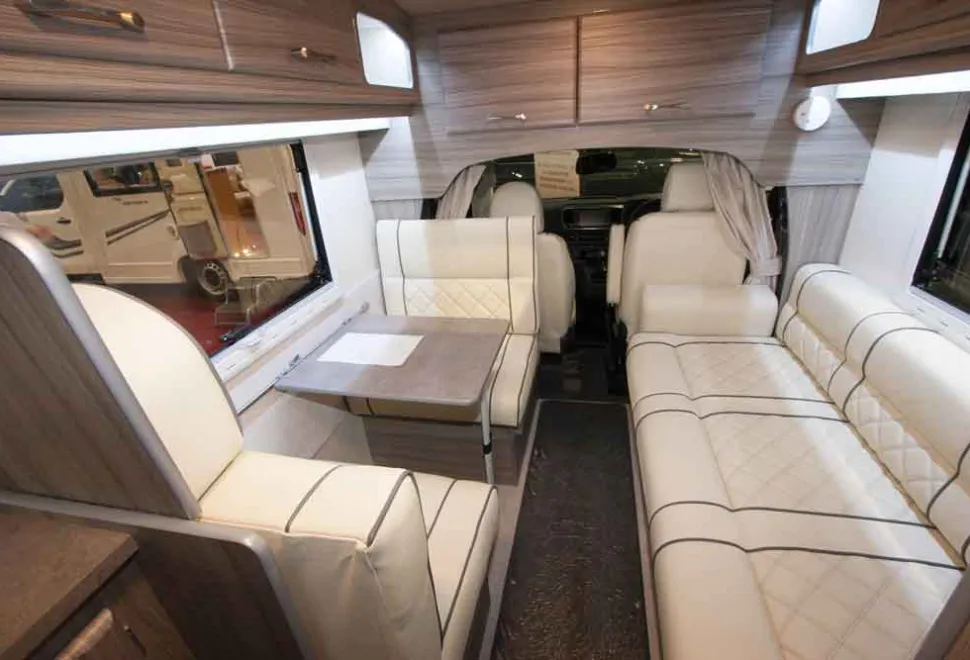
Inside, the layout is typical for a small, two-berth coachbuilt with a front lounge. There are various permutations offered by Nu Venture, though, including twin side-facing sofas in the lounge or derivatives offering one (as here) or two rear passenger seats. You can also have your Nu Rio with the habitation door in the centre of the rear wall, rather than as here in the S/D (that’s Side Door) model.
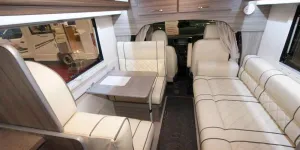
The lounge shown here has a long settee on the offside, opposite a two-seater dinette with small wall-mounted table. It’s a good compromise for couples, with room for one to really stretch out and an ever-ready diner. It’s worth noting, though, that the cab plays no role in your on-site living and access between cab and the coachbuilt body is for the slim and athletic only.
The low cab roof and lack of a cut-away for access does result in a large overcab locker, though. At night, the lounge converts into a large, lengthways double bed – 1.88m by 1.86m – or twin singles measuring 1.88m long and 0.71m and 0.86m wide. Bed make-up involves pushing the cab chairs forward and slotting in extension pieces but there’s plenty of room left to undress, and the kitchen and bathroom remain fully accessible.
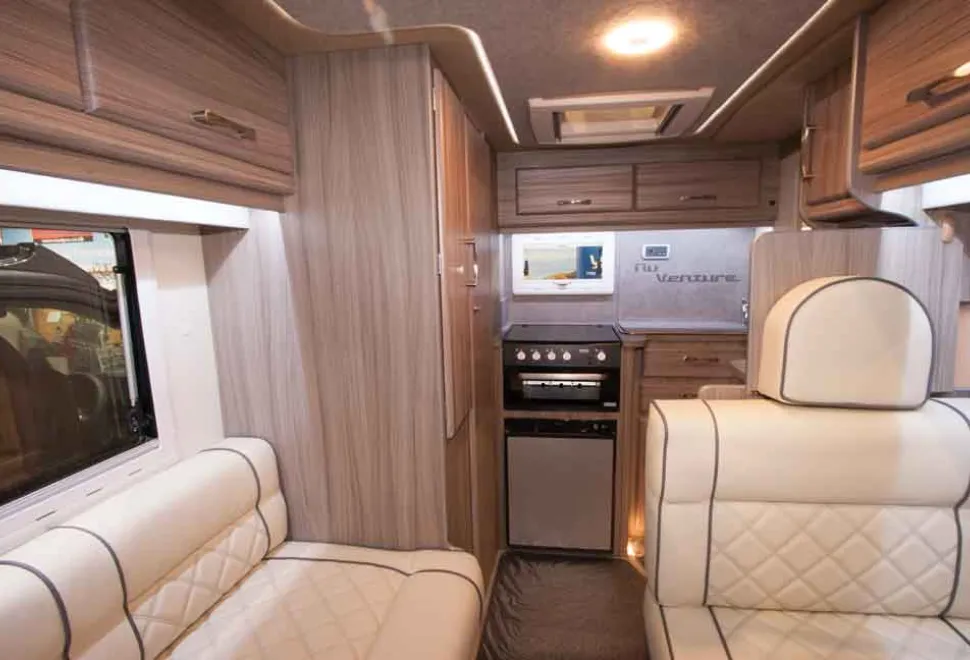
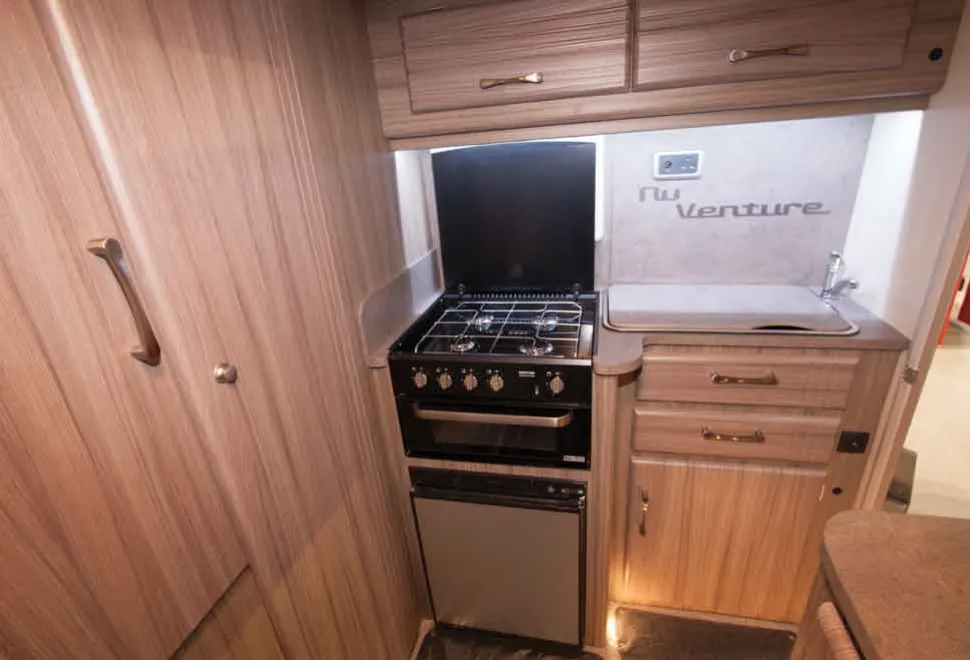
There’s a Truma Combi 4E gas/electric blown-air heater to keep you warm, too. The kitchen has a sink with integral drainer – a rare sight these days – and a four-burner hob with grill (three gas rings and a mains hotplate is an alternative that’s offered). Squeezed in below the grill is a small-by-today’s-standards 60-litre three-way fridge but across the other side of the entrance is useful extra worktop space.
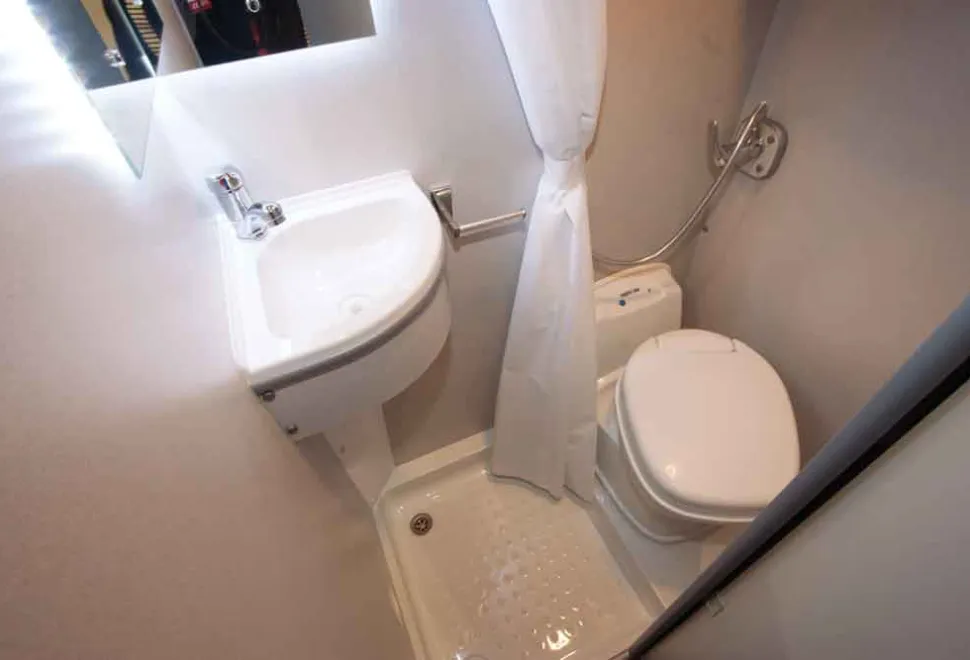
The corner washroom has everything you need – swivel cassette toilet and corner basin to the fore – but in this compact space you will have to deploy a curtain for showering.
If you enjoyed this review, you can read loads more like it in What Motorhome magazine. You can get a digital version of this latest issue of What Motorhome magazine here.


