
Murvi Morocco (2010)
Image

Image
Image
Image
Image
Key Features
Model Year
2010
Product Class
High top
Product Model Base
Fiat Ducato
Price from (£)
£43636
Length (m)
6.00
Berths
2
Belted seats
2
Main Layout
Front Lounge
Full Review
A LITTLE back-history, first. You’d imagine that it would take a very special sort of person to examine the terrific Murvi Morello inside and out, feel the quality, mutter an appreciative ‘ooh’ at the (usually) full-house base vehicle and marvel at the coachbuilt-that’s-shrunk-in-the-wash layout, only to later conclude ‘Mmm, yes, very nice. But it could be better.’
Amazing as it might seem, however, this is exactly what some prospective buyers have been doing in recent years, and Murvi, to their credit, have not only listened, they’ve sprung into action too.
The result, initially at least, was the offer of a Morello with a pair of single beds in lieu of the standard double, but this clearly got Murvi wondering whether they could come up with a design that offered BOTH types of bed.
Ultimately, this has given rise to an entirely separate model, dubbed ‘Morocco’. In essence, it’s a Morello that still sports a huge double bed, but also offers a pair of single beds should that be your preference.
And this is the vehicle whose keys are handed over to me at Murvi’s Ivybridge HQ. With the Morocco’s various controls explained to me by Murvi’s main man, Rex Kneebone, I squirrel away my mountain of camping and photographic gear in the Morocco’s profusion of cupboards and hit the road.
Comfort-Matic and 3.0-litre power
Like not a few Murvis, ‘ours’ sported the superb 157bhp 3-litre engine, but it was also allied to Fiat’s Comfort-Matic robotised manual gearbox. Or, to put it in layman’s terms, a non-torque-converter automatic.
And therein lies the rub, for me at least. Having sampled Comfort-Matic in pretty much everything from diddy van conversions to towering coachbuilts, I still can’t get entirely comfortable with it.
To be honest, I feel pretty mean beefing about this, because these niggles only reared their heads under reasonably strenuous (and occasionally unusual) circumstances, and in every other respect, the Murvi proved to be a superb on-road partner, the big engine making mincemeat of slower traffic and fading away to a barely-audible sotto-voce thrum at cruising speeds.
The handling/ride compromise is typically erred more towards the former, too, while I was endlessly grateful for the black cab-esque turning circle on tight and twisty back-roads.
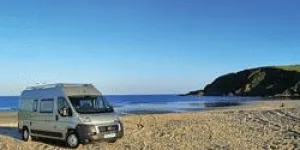
With set-up limited to priming the toilet tank and plugging into the mains (gas is supplied via a 10kg underfloor tank), and determined not to be outdone in the posing stakes, I immediately wound out the optional Fiamma awning (down to you for £764), raised the Teleco directional TV aerial (£229), hauled out the telescopically-legged table (no, that’s standard) and flicked out my trusty camping chair.
Chef's delight
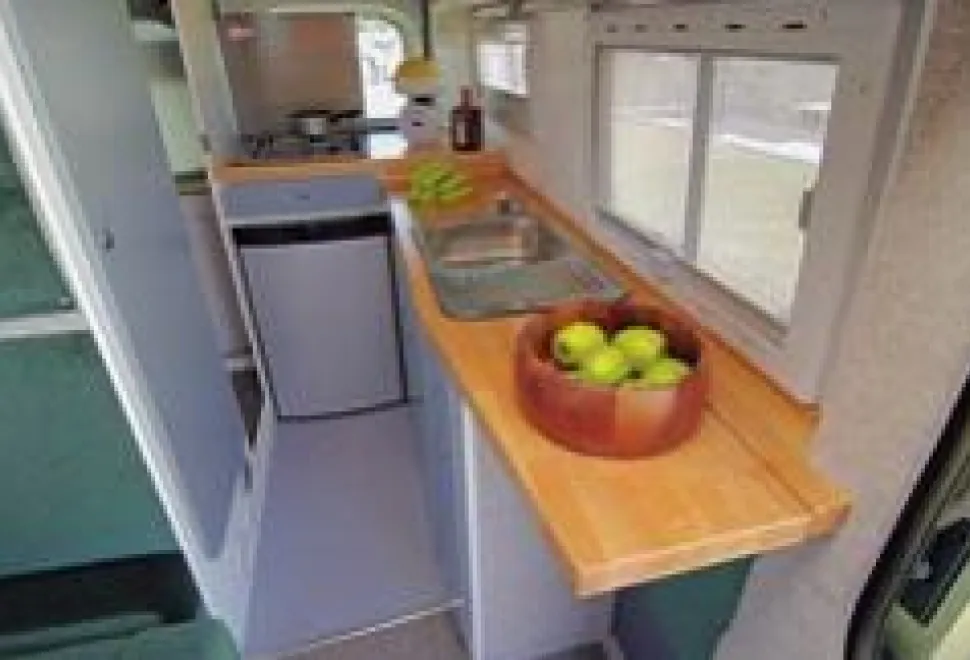
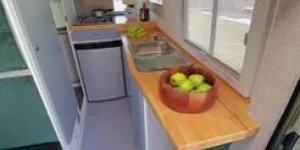
One of the many pluses of owning a Murvi Morello has always been the enormous L-shaped kitchen that borders almost on overkill, and while a little has been shaved off the galley during the transition from Morello to Morocco to facilitate the second single bed, Murvi have compromised by fitting a folding flap by the door, thereby restoring most of the lost acreage in day-mode.
Elsewhere, the cooking quarters are pretty much as before, with myriad drawer, locker and cupboard space at both high and low-level, fitted crockery and cutlery and an optional 106-litre three-way Dometic fridge.
Factor in the spark-ignition four-burner hob, separate grill and (optional, at £259) 800W microwave, together with the super-generous worktop provision and powerful ceiling extractor fan, and you’re left with cooking facilities that wouldn’t shame a coachbuilt. Daylight floods the area, too, thanks to the two large windows and a smaller one.
Getting the boiler stoked is kindergarten-simple with these new Webasto Dual-Top diesel/mains boilers, and involves nothing more than scrolling through the LCD control panel and choosing whether you want diesel or mains (or both) to heat your water. It can also provide heat and/or hot water while you drive.
Large washroom
The washroom, too, is all very familiar; in fact, it hasn’t changed at all from the Morello’s already very good corner affair, so it retains the Dometic 3110 ceramic bowl toilet, trigger shower riser (which employs a separate mixer tap) and a washbasin/vanity unit that manages to incorporate decent high and low-level storage.
Lighting is good whatever time of the day or night, thanks to the large LED strip light, opaque rear door window (which can be covered by a roller blind) and clear-pane opening rooflight, and the shower tray is surprisingly generous, given the Morocco’s size. Better still, you can open the rear door and use the shower head to sluice off muddy boots.
I do have one tiny criticism in here, though: in a vehicle that, as a whole, tends to re-define the word ‘quality’, the splash-backs on the rear door and behind the washbasin felt uncharacteristically flimsy and poorly attached on this (admittedly early) example.
Smelling much sweeter and feeling considerably revived after my much-needed shower, I folded away my chair, carried the table indoors and set to with the optional TV.
When not in use, this is covered neatly and discreetly by a press-stud-fit fabric cover to hide it from prying eyes, but I found it all very intuitive in use, with the self-seek/tune facility quickly homing in on a number of channels and the screen producing a crystal-clear picture.
Dining room
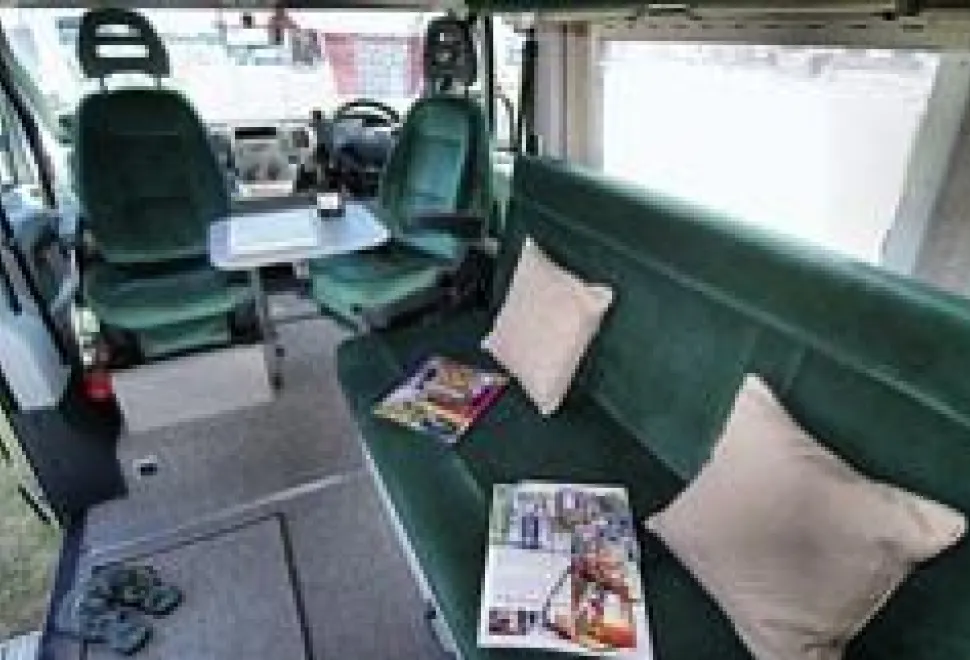
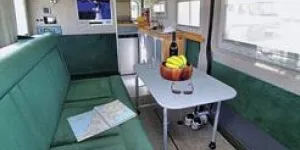
Given the generous size of the main table, I telescoped and folded it down before stowing it away in its home in the wardrobe, and replacing it with the smaller occasional table, which slots into a retainer by the passenger cab seat and provides an unobtrusive place on which to place your wine glass and nibbles.
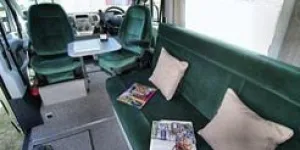
This done, I reclined in luxurious splendour on the settee, the profusion of cushions and bolsters making for a particularly comfy backrest against the back of the driver’s seat. Alternatively, you can use the cab seats and prop your feet on the settee (or, if there are two of you, the two single beds).
Making up the beds
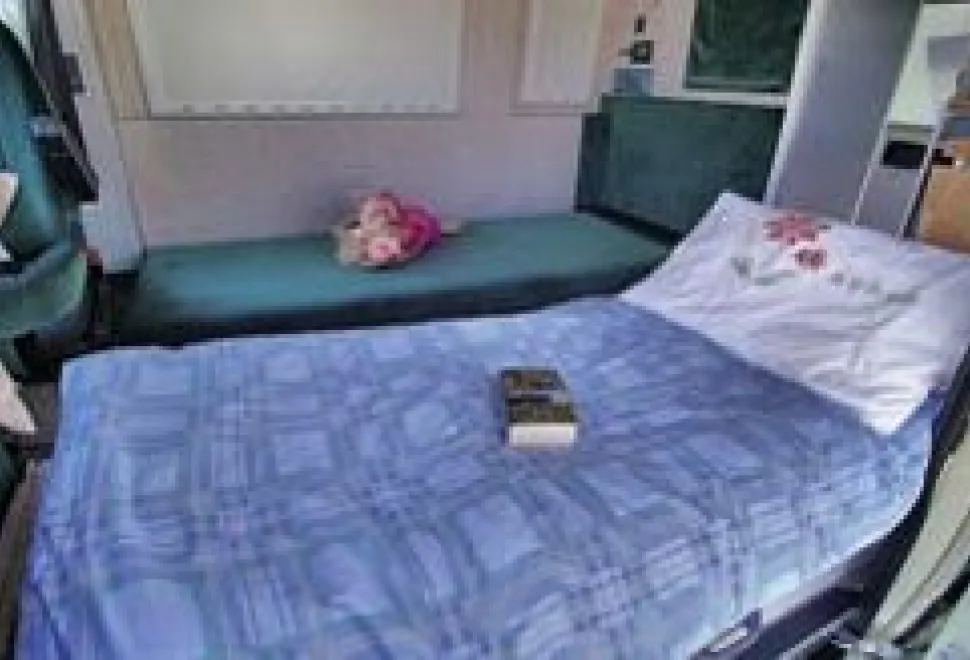
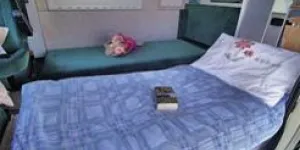
Then I turned my attentions to settling down for the night. I could have opted for the full-fat double bed, which would have given me a full 5ft 9in by 4ft 7½in in which to sprawl, but instead I decided to see what all the fuss was about and set about turning the double into a pair of singles.
Much to my relief, this turned out to be the work of a matter of seconds: simply open the little door to the right of the settee, release the catch therein, and then haul the settee base out, lock, stock and barrel, all the way out to the main sliding door. Then release the backrest, fold it over, and there you have it: twin single beds.
Interestingly, the bed that makes up from the settee base is slightly bigger than its backrest counterpart, but I sampled both beds, and couldn’t really detect much in the way of difference.
If you activate all the lights in the Morocco, you’ll be squinting in the glare of fully 17 separate lights, 15 of the LED variety. As for privacy, you’ve nothing to worry about: the windscreen blind is a single, pleated affair that rises from the base of the screen, while the cab door windows are covered by neat blinds that attach magnetically to the frames. Elsewhere, each window and rooflight can be covered over by a cassette blind and flyscreen.
The biggest and best stowage area is found beneath the settee, and is where most of my camping gear ended up, but the wardrobe is mighty big for such a little motorhome, and my bedding stuffed easily into the void over the cab with room to spare.
There are a couple of extra stowage pods sunk into the wall that are well-hidden during the day by the settee, plus a further lockable area beneath the passenger cab seat: ideal for keeping valuables out of sight.
A longer version of this review was published in the September 2010 issue of Which Motorhome magazine.
Amazing as it might seem, however, this is exactly what some prospective buyers have been doing in recent years, and Murvi, to their credit, have not only listened, they’ve sprung into action too.
The result, initially at least, was the offer of a Morello with a pair of single beds in lieu of the standard double, but this clearly got Murvi wondering whether they could come up with a design that offered BOTH types of bed.
Ultimately, this has given rise to an entirely separate model, dubbed ‘Morocco’. In essence, it’s a Morello that still sports a huge double bed, but also offers a pair of single beds should that be your preference.
And this is the vehicle whose keys are handed over to me at Murvi’s Ivybridge HQ. With the Morocco’s various controls explained to me by Murvi’s main man, Rex Kneebone, I squirrel away my mountain of camping and photographic gear in the Morocco’s profusion of cupboards and hit the road.
Comfort-Matic and 3.0-litre power
Like not a few Murvis, ‘ours’ sported the superb 157bhp 3-litre engine, but it was also allied to Fiat’s Comfort-Matic robotised manual gearbox. Or, to put it in layman’s terms, a non-torque-converter automatic.
And therein lies the rub, for me at least. Having sampled Comfort-Matic in pretty much everything from diddy van conversions to towering coachbuilts, I still can’t get entirely comfortable with it.
To be honest, I feel pretty mean beefing about this, because these niggles only reared their heads under reasonably strenuous (and occasionally unusual) circumstances, and in every other respect, the Murvi proved to be a superb on-road partner, the big engine making mincemeat of slower traffic and fading away to a barely-audible sotto-voce thrum at cruising speeds.
The handling/ride compromise is typically erred more towards the former, too, while I was endlessly grateful for the black cab-esque turning circle on tight and twisty back-roads.
With set-up limited to priming the toilet tank and plugging into the mains (gas is supplied via a 10kg underfloor tank), and determined not to be outdone in the posing stakes, I immediately wound out the optional Fiamma awning (down to you for £764), raised the Teleco directional TV aerial (£229), hauled out the telescopically-legged table (no, that’s standard) and flicked out my trusty camping chair.
Chef's delight
One of the many pluses of owning a Murvi Morello has always been the enormous L-shaped kitchen that borders almost on overkill, and while a little has been shaved off the galley during the transition from Morello to Morocco to facilitate the second single bed, Murvi have compromised by fitting a folding flap by the door, thereby restoring most of the lost acreage in day-mode.
Elsewhere, the cooking quarters are pretty much as before, with myriad drawer, locker and cupboard space at both high and low-level, fitted crockery and cutlery and an optional 106-litre three-way Dometic fridge.
Factor in the spark-ignition four-burner hob, separate grill and (optional, at £259) 800W microwave, together with the super-generous worktop provision and powerful ceiling extractor fan, and you’re left with cooking facilities that wouldn’t shame a coachbuilt. Daylight floods the area, too, thanks to the two large windows and a smaller one.
Getting the boiler stoked is kindergarten-simple with these new Webasto Dual-Top diesel/mains boilers, and involves nothing more than scrolling through the LCD control panel and choosing whether you want diesel or mains (or both) to heat your water. It can also provide heat and/or hot water while you drive.
Large washroom
The washroom, too, is all very familiar; in fact, it hasn’t changed at all from the Morello’s already very good corner affair, so it retains the Dometic 3110 ceramic bowl toilet, trigger shower riser (which employs a separate mixer tap) and a washbasin/vanity unit that manages to incorporate decent high and low-level storage.
Lighting is good whatever time of the day or night, thanks to the large LED strip light, opaque rear door window (which can be covered by a roller blind) and clear-pane opening rooflight, and the shower tray is surprisingly generous, given the Morocco’s size. Better still, you can open the rear door and use the shower head to sluice off muddy boots.
I do have one tiny criticism in here, though: in a vehicle that, as a whole, tends to re-define the word ‘quality’, the splash-backs on the rear door and behind the washbasin felt uncharacteristically flimsy and poorly attached on this (admittedly early) example.
Smelling much sweeter and feeling considerably revived after my much-needed shower, I folded away my chair, carried the table indoors and set to with the optional TV.
When not in use, this is covered neatly and discreetly by a press-stud-fit fabric cover to hide it from prying eyes, but I found it all very intuitive in use, with the self-seek/tune facility quickly homing in on a number of channels and the screen producing a crystal-clear picture.
Dining room
Given the generous size of the main table, I telescoped and folded it down before stowing it away in its home in the wardrobe, and replacing it with the smaller occasional table, which slots into a retainer by the passenger cab seat and provides an unobtrusive place on which to place your wine glass and nibbles.
This done, I reclined in luxurious splendour on the settee, the profusion of cushions and bolsters making for a particularly comfy backrest against the back of the driver’s seat. Alternatively, you can use the cab seats and prop your feet on the settee (or, if there are two of you, the two single beds).
Making up the beds
Then I turned my attentions to settling down for the night. I could have opted for the full-fat double bed, which would have given me a full 5ft 9in by 4ft 7½in in which to sprawl, but instead I decided to see what all the fuss was about and set about turning the double into a pair of singles.
Much to my relief, this turned out to be the work of a matter of seconds: simply open the little door to the right of the settee, release the catch therein, and then haul the settee base out, lock, stock and barrel, all the way out to the main sliding door. Then release the backrest, fold it over, and there you have it: twin single beds.
Interestingly, the bed that makes up from the settee base is slightly bigger than its backrest counterpart, but I sampled both beds, and couldn’t really detect much in the way of difference.
If you activate all the lights in the Morocco, you’ll be squinting in the glare of fully 17 separate lights, 15 of the LED variety. As for privacy, you’ve nothing to worry about: the windscreen blind is a single, pleated affair that rises from the base of the screen, while the cab door windows are covered by neat blinds that attach magnetically to the frames. Elsewhere, each window and rooflight can be covered over by a cassette blind and flyscreen.
The biggest and best stowage area is found beneath the settee, and is where most of my camping gear ended up, but the wardrobe is mighty big for such a little motorhome, and my bedding stuffed easily into the void over the cab with room to spare.
There are a couple of extra stowage pods sunk into the wall that are well-hidden during the day by the settee, plus a further lockable area beneath the passenger cab seat: ideal for keeping valuables out of sight.
A longer version of this review was published in the September 2010 issue of Which Motorhome magazine.
Our Verdict
Based on the Murvi Morello but with a revised lounge offering a choice of a (shortish double) or two singles, this is a well developed conversion with a great kitchen and washroom.
Advantages
Signature Murvi massive kitchen
Excellent washroom with rear access
Spacious lounge
Flexibility of two singles or a double bed
Disadvantages
Flimsy splashbacks and trim on rear doors


