
Jerba Tiree (2011)
Image
Image
Image
Image
Image
Image
Image
Image
Image
Image
Image



Description
Jerba Tiree 2011
Key Features
Model Year
2011
Product Class
Rising Roof
Product Model Base
Volkswagen T5
Price from (£)
£35950
Length (m)
4.89
Berths
4
Belted seats
4
Main Layout
Campervan
Full Review
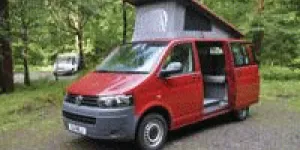
Externally, the Tiree doesn’t look a campervan - maybe a people carrier. Its lines, and lack of graphics, simply flag up its base vehicle, the VW window van. Don’t bother waving to motorhomers as you pass - they won’t realise you’re one of them.
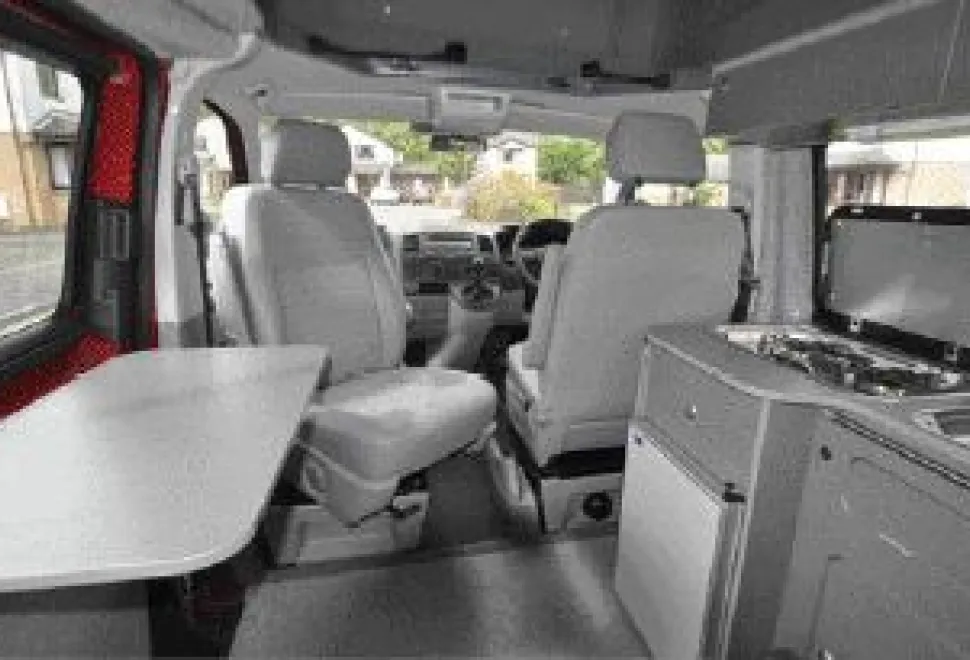
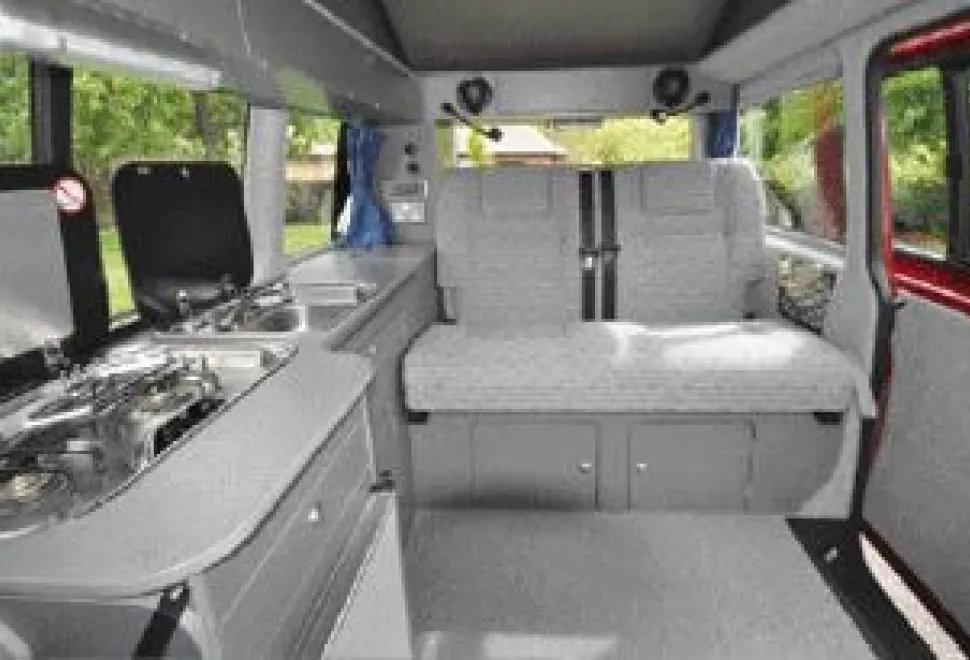
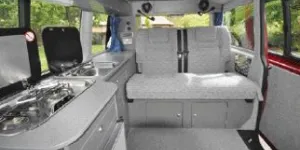
The first impression, when you push your head and shoulders into the low interior space, is that this is very much an austere and even minimalist model. Grey bench seat and two swivelling cab seats, in hard-wearing, but understated fabric, grey decor for roof and walls.
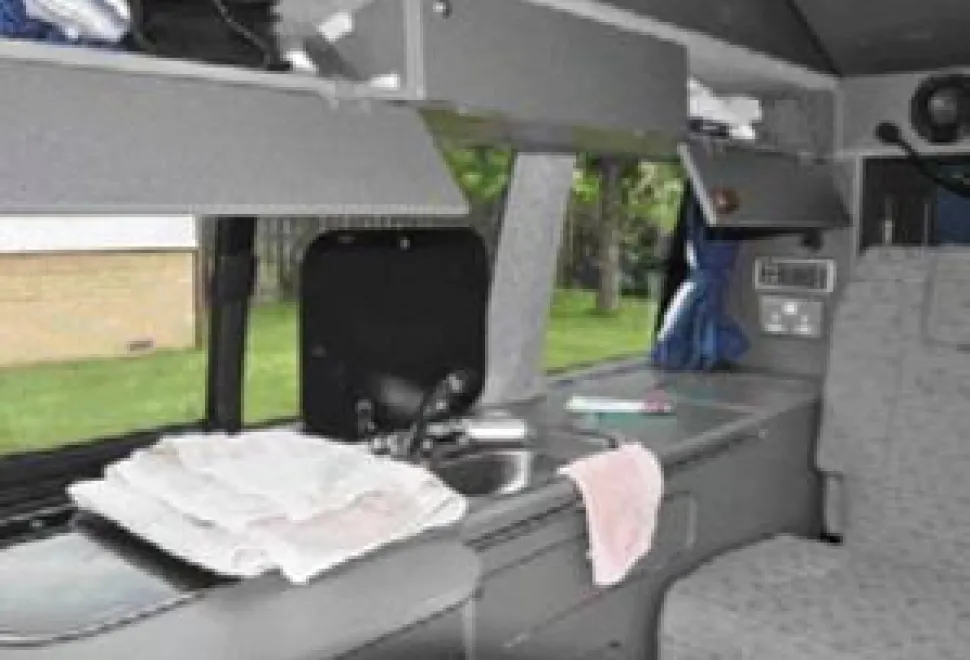
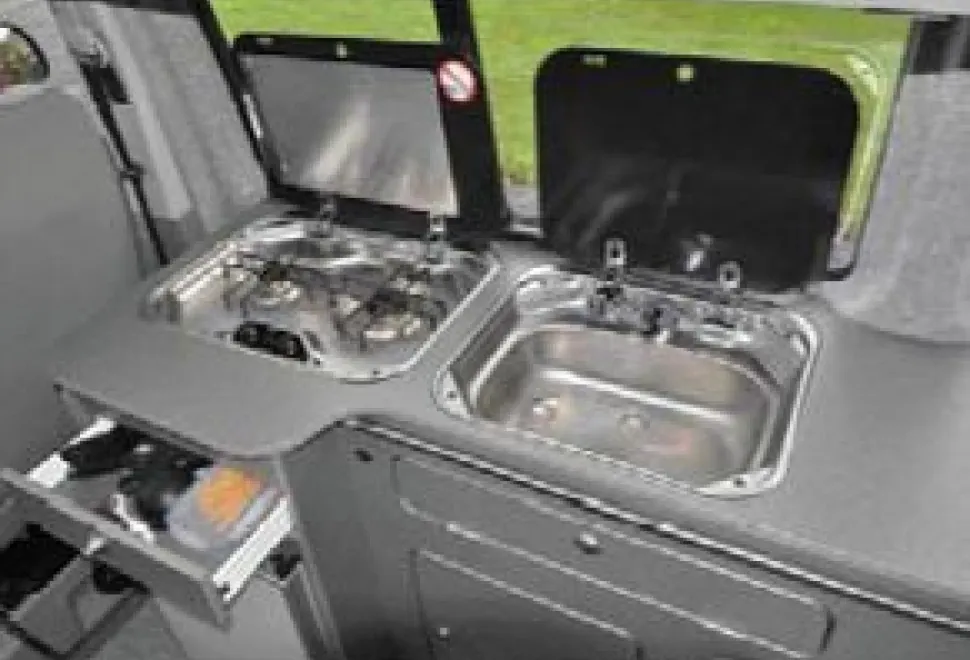
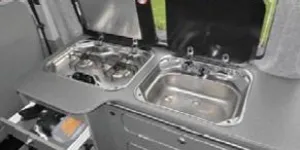
A small grey kitchen unit holding a two-burner hob, stainless steel sink, plus a variety of shallow drawers and floor (or underseat) cupboards. Neat, dark blue (cream-lined) curtains are gathered sternly back.
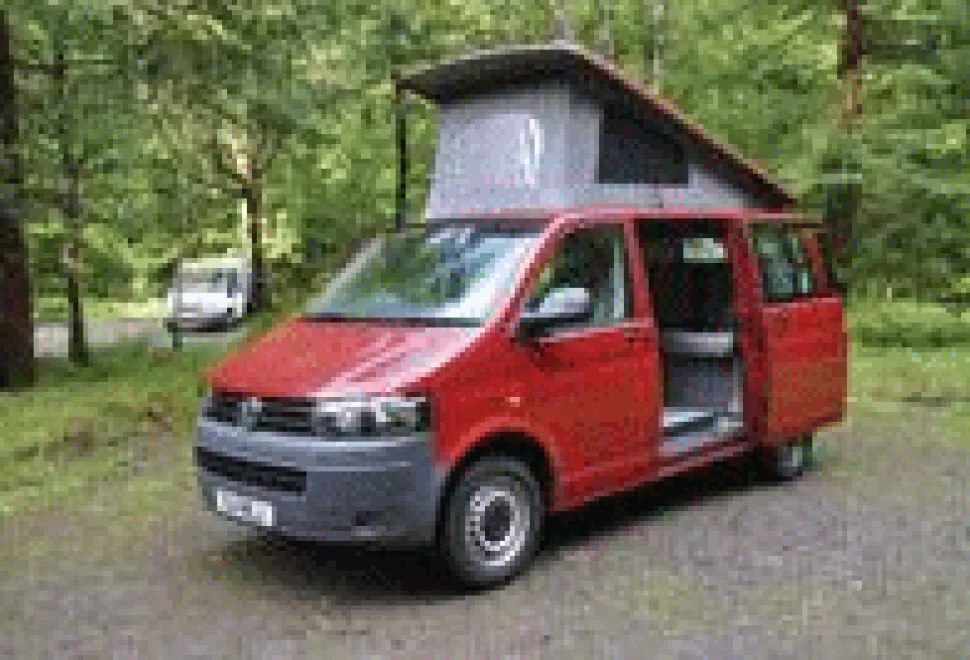
Everything changes when you raise the roof. This simple operation transforms both the exterior look and the interior space. You find yourself looking at a tough little cookie of a camper - oozing VW class and confidence - that turns heads on any campsite, or slips solo into a forest track to wild-camp for the night.
On the inside, there is room to stand and move about. With the passenger seat turned to face the (high-ish) rear bench, the curtains drawn, the LED reading lights on and the blown-air heater purring, you could face down an Arctic blizzard.
Likewise, when you raise the tailgate, not only does this provide an instant awning under which to sit and sip your brew, but you also reveal a cavernous storage area, which holds bedding and leisure gear.
This little ‘van has heaps of rugged home-base appeal for active walkers/cyclists/windsurfers/hang-gliders, who will spend lots of time outside - coming back to close the sliding door only when they are shattered after a day’s sport.
MOTIVE POWER
The test ‘van had the 2.0-litre turbo-diesel, which delivers 102bhp. On motorways, it effortlessly maintained 60 or 70mph - uphill and into headwinds. On busy and twisty non-motorway trunk roads, the lively German horses will zoom you out and past any lumbering lorry, quickly and safely.
For the test, the Tiree was taken into the merciless West Highland road network, where midges come even denser than falling rain. Over a week’s driving, there was no hill that left the ‘van struggling - not even on rough single-track roads, where the ride was still smooth and easy.
The Tiree handles like a dream - steering's light, the fascia-mounted gear lever almost car-like. Brakes (discs all round) will throw you through the windscreen if you’re too heavy-footed.
The centrally-mounted commercial-sized handbrake was the only issue, from a week’s hard labour. This didn’t only wait to trip the unwary watching their headroom, it had a nasty habit of feeling released, when it wasn’t. A problem defused both by the normal warning light and a carillon of musical chimes, until you released the handbrake fully.
The sweetest news about this engine is that it is even more frugal with diesel than my wife is with my pocket money. In a week where the ‘van seldom saw 5th gear, and the diesel-powered space heater was on most evenings (indeed, throughout one night), the ‘van returned 40mpg over 386 miles. On a motorway, cruising at 65mph, you could expect up to 44mpg.
LIVING AND DINING
The traditional panel van format of two cab seats, rotating to face two bench seat places, across a large space in the middle, isn’t really meant to be lived in from dawn to dusk. It is a place to which you retreat after a hard
day’s activities.
Seating is firm, with the captain’s seats easily winning the support-and-comfort stakes. The bench seat at the back has to double-up as a bed, which carries two downsides for the vertically challenged. First, the seat bases are pretty high relative to the floor, so little legs may dangle without reaching a solid surface. Second, as one-third of a six-foot bed, the seat base is about two feet wide, so some people’s spines will also struggle to reach the support of the - fairly vertical - seatback comfortably.
It follows, in a ‘van which is only six feet wide, and has a kitchen unit running down its offside, that finding feet-up lounging space becomes a major challenge - surmountable if you jam a pillow into the corner of seat and kitchen cupboard, and sit diagonally. A second person can claim the cab passenger seat, drop its back to a comfortable angle, and stick their feet out.
Two can co-habit in comfort - but the test ‘van had seatbelts and beds for four. This leaves a stark choice: four either sit primly at night, or take turns to go out for a last walk.
Once everyone sorts themselves out, there is an excellent flexible LED reading light above each seat and, in the test ‘van, two good quality rear speakers plus a very acceptable radio/CD player. There’s no place for a TV, but if you are real campers, would you really expect one?
The lounge is at its cosiest at night, with curtains drawn (studded into place, for the windscreen). Given discrete lighting, a decent CD playing and the blown-air heating burbling round your ankles, this is a decent home-from-home.
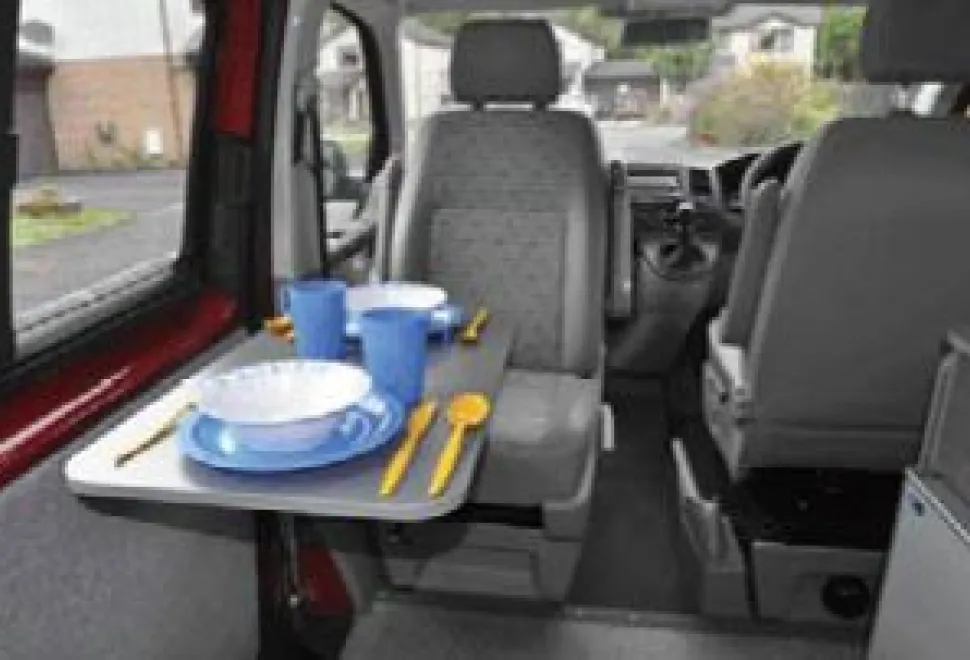
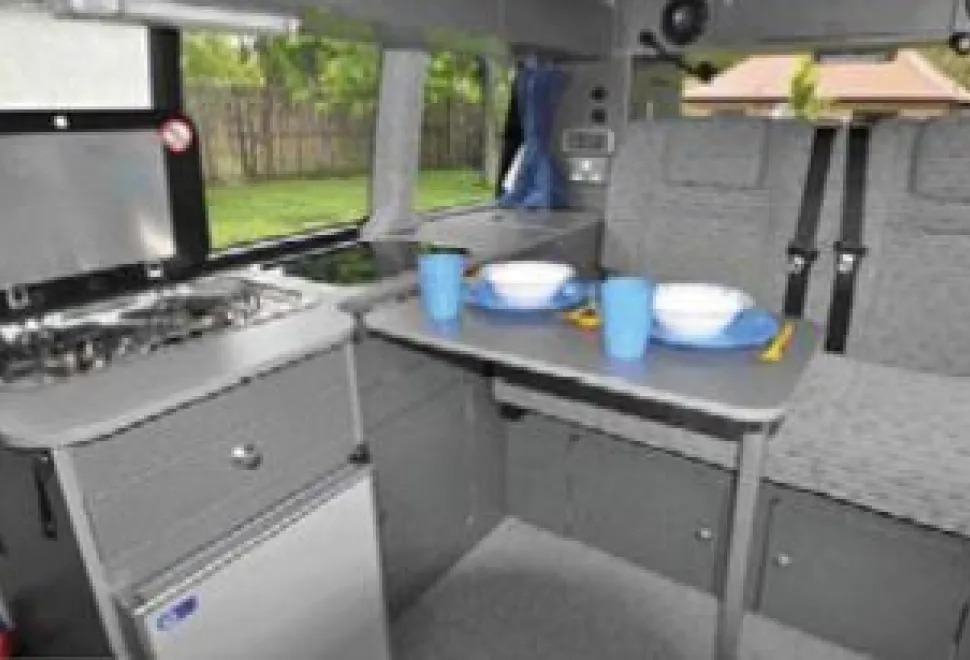
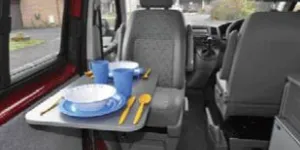
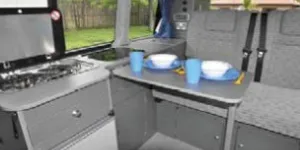
The charm of smaller ‘vans is how the designer can transform a single space into one which has many uses. Bring out the concealed tables and the lounge becomes a dining room. The sturdier of the two, was clipped onto the kitchen unit behind the driver’s seat. With one folding leg and two strong plastic hooks, it hangs onto a chrome rail running along the sink unit. The second is a rotating table, which fits snugly into a bracket just inside the sliding door. This can be rotated to serve as either an indoor table for the cab seats, or an external one for picnics.
BATHROOM SUITE
There is no washroom. We are in ‘Porta Potti’ country, meaning that curtains must be drawn even in daylight, and for any mid-night tinkle, an aptitude for limbo dancing helps enormously. For ablutions inside the ‘van, you have the kitchen sink. However, there’s a shallow, but very hard and sharp, bank of three overhead lockers only 18 inches above both this and the hob. Bend over to wash your face, or brush your teeth and there is a loud bang and a large number of ‘stars’. You quickly learn to spit toothpaste from one metre, thus avoiding more of the same.
Once more, you’re camping! Use the site facilities or, if wild camping, remind yourself of the joys of brushing teeth, washing faces or bathing in a nearby brook.
DESIGNER BEDROOMS
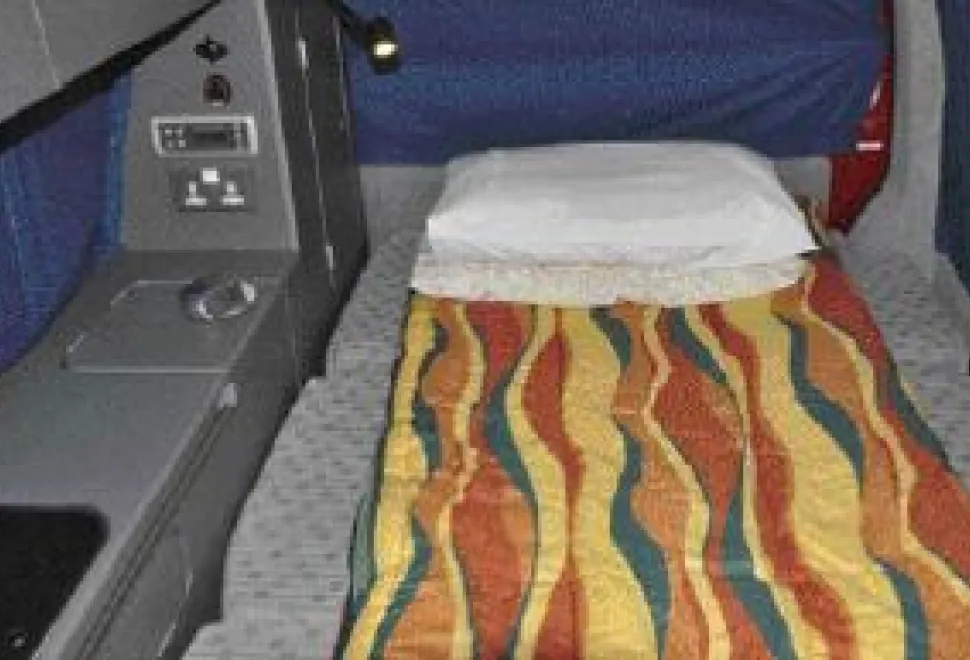
In the Tiree, you are given the main rock-and-roll bed. You pull a loop to release a catch, then rotate the seat base forward and over until flat. Next, reach down into the exposed space and pull a bar to release another catch, and drop the seatback down into the space. Finally, unroll your sleeping bag, and the 6ft by 3ft 11in bed is waiting.
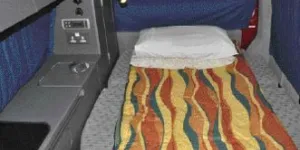
The test ‘van offered the optional extra of a roof bed. This fits under the rising roof and drops down to make another 5ft 10in x 3ft 8in bed, designed primarily for kids, and with a rail and safety netting. Having to climb up via a cab seat base and backrest will only add to their fun. Its mattress is thin-ish - okay for young kids caught up in the adventure of a camping holiday, but less so for a heavier adult.
THE COOKING EXPERIENCE
Forget cordon bleu. You have two burners, no oven, no grill and no microwave. But check out your mum’s old recipe book and you’ll be surprised at what you can cook with such primitive equipment. Or for the culinary challenged, like this tester, re-experience living out of a can. There are some very interesting meals contained in cans. Some of them are even edible.
The fridge is a 51-litre, 12V compressor-type, and it seems small on the outside. However, it reaches well back inside and holds a lot more than you might think - there’s even a small freezer compartment, to make ice cubes if nothing else. Its noise, however, might disturb light sleepers.
Don’t try to wash your dishes at the kitchen sink - or if you do, be careful, those overhead lockers will eat you alive. The sink drains directly (no waste tank, although you can have one as an optional extra), and a small plastic pail catches the grey water happily.
STORAGE SPACE
Every square inch of each nook and cranny is designed to hold something. The three offside overhead lockers are limited, but hold their share of smalls. Above the rear seatback, there is a useful long locker, which holds the windscreen curtains, a couple of pairs of jeans and a folded jacket.
Beneath the sink, a deep cupboard swallows dishes, pots and washbowl. Beneath the rear bench seat, there are two very deep cupboards - one holds the portable loo, the other holds all manner of bulkier things. Abandon the toilet and you liberate a second large-and-useful cupboard.
In the boot, there’s a good side locker, which holds mains hook-up cable, fresh water hose (you take on fresh water by clipping the hose to a concealed over-bumper inset at the rear) and has space for wedges, or boots.
The more you search, the more usable space you find.
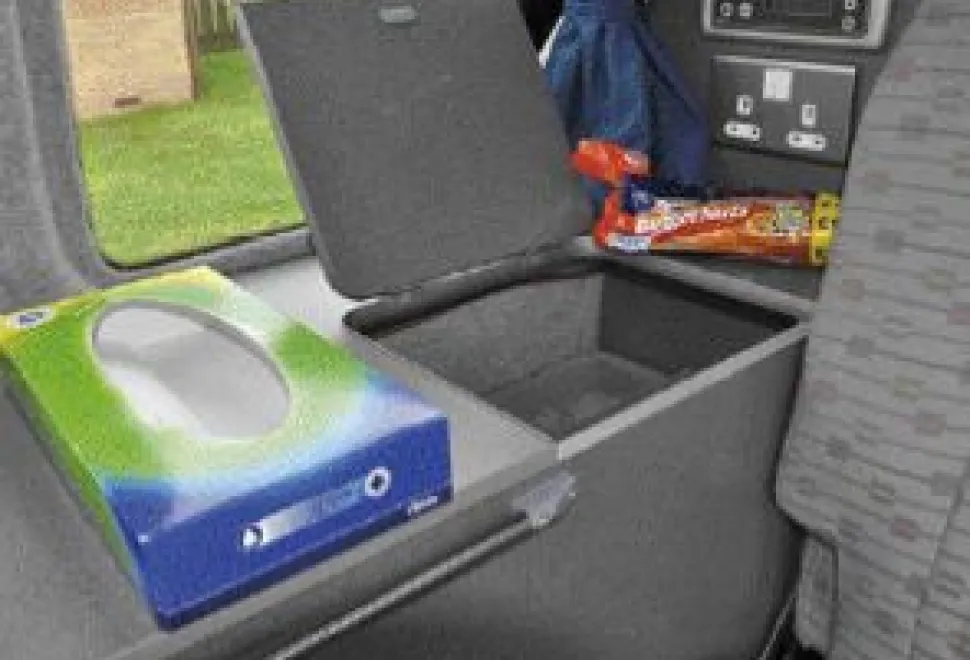
The best cupboard of all is a huge larder under a hatch in the surface beside the sink; this seems as though it could hold provision an army.
BITS AND BOBS
The fresh water tank holds 38 litres and the menu on the control panel can be set to let you see how much is left. The 125 amp hr leisure battery is cunningly set in a steel cage, and hung beneath the floor. This frees up internal space, and it drops easily to check the levels at a service. If you plan to go wild camping, you’d be advised to take the option of a second leisure battery - that 12V-powered fridge eats juice.
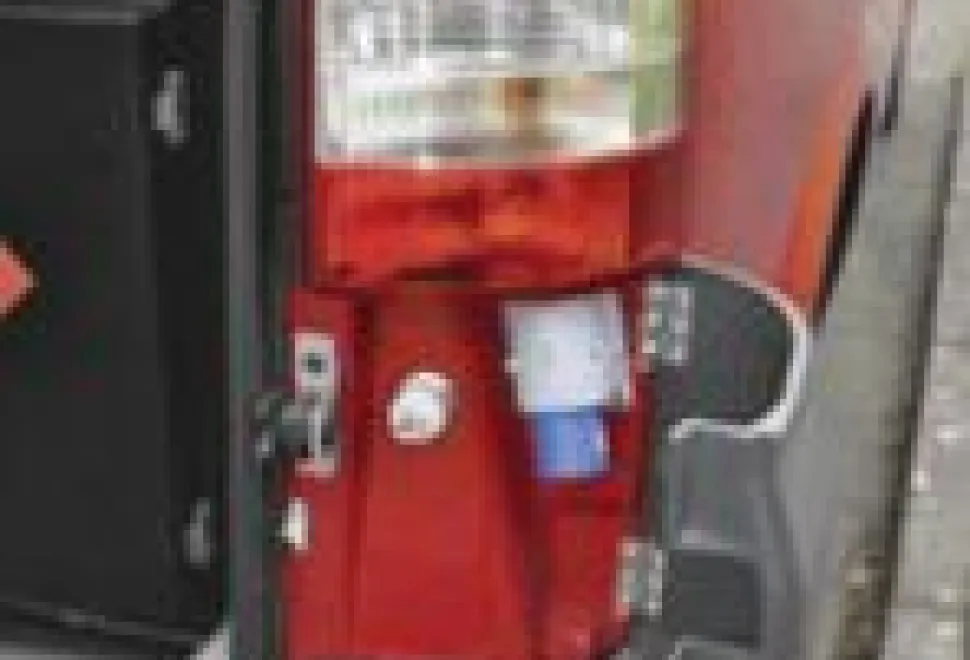
The mains hook-up socket is revealed when you pull away the offside corner panel, below the rear light, but take care to properly push this closed: the rising roof sheds water backwards - to run down the side of the van, straight into the clip-on female socket, if you leave a gap.
There is no water heater (an option is available), while the Webasto blown-air space heater (if a little noisy) soon creates a homely fug on a wet night, or keeps temperature comfortable during a cold one. The heater runs on diesel from the vehicle’s tank, so saves gas supplies.
CONCLUSION
For its target camper clientele, this sturdy little workhorse of a camper does exactly what it says on the tin, and that’s why it continues to be successful. It will take its active camper/owners anywhere, to work or play - delivering them safely and cheaply to wherever they want to go.
However, unless you are - or were - a dedicated tent camper, your initial reaction will be one of culture shock. Too small, too austere, where’s the loo?
In the context of current prices, £35,950 represents decent value for money. This little ‘van is a cracker, the high build quality of the conversion living up to the reputation set by the almost indestructible VW van it inhabits.
To download the full motorhome review in PDF format exactly as it appeared in the Summer 2011 issue of MMM, please click here.
If you don't already have Adode Acrobat to be able to open a PDF, download it for free
The first impression, when you push your head and shoulders into the low interior space, is that this is very much an austere and even minimalist model. Grey bench seat and two swivelling cab seats, in hard-wearing, but understated fabric, grey decor for roof and walls.
A small grey kitchen unit holding a two-burner hob, stainless steel sink, plus a variety of shallow drawers and floor (or underseat) cupboards. Neat, dark blue (cream-lined) curtains are gathered sternly back.
Everything changes when you raise the roof. This simple operation transforms both the exterior look and the interior space. You find yourself looking at a tough little cookie of a camper - oozing VW class and confidence - that turns heads on any campsite, or slips solo into a forest track to wild-camp for the night.
On the inside, there is room to stand and move about. With the passenger seat turned to face the (high-ish) rear bench, the curtains drawn, the LED reading lights on and the blown-air heater purring, you could face down an Arctic blizzard.
Likewise, when you raise the tailgate, not only does this provide an instant awning under which to sit and sip your brew, but you also reveal a cavernous storage area, which holds bedding and leisure gear.
This little ‘van has heaps of rugged home-base appeal for active walkers/cyclists/windsurfers/hang-gliders, who will spend lots of time outside - coming back to close the sliding door only when they are shattered after a day’s sport.
MOTIVE POWER
The test ‘van had the 2.0-litre turbo-diesel, which delivers 102bhp. On motorways, it effortlessly maintained 60 or 70mph - uphill and into headwinds. On busy and twisty non-motorway trunk roads, the lively German horses will zoom you out and past any lumbering lorry, quickly and safely.
For the test, the Tiree was taken into the merciless West Highland road network, where midges come even denser than falling rain. Over a week’s driving, there was no hill that left the ‘van struggling - not even on rough single-track roads, where the ride was still smooth and easy.
The Tiree handles like a dream - steering's light, the fascia-mounted gear lever almost car-like. Brakes (discs all round) will throw you through the windscreen if you’re too heavy-footed.
The centrally-mounted commercial-sized handbrake was the only issue, from a week’s hard labour. This didn’t only wait to trip the unwary watching their headroom, it had a nasty habit of feeling released, when it wasn’t. A problem defused both by the normal warning light and a carillon of musical chimes, until you released the handbrake fully.
The sweetest news about this engine is that it is even more frugal with diesel than my wife is with my pocket money. In a week where the ‘van seldom saw 5th gear, and the diesel-powered space heater was on most evenings (indeed, throughout one night), the ‘van returned 40mpg over 386 miles. On a motorway, cruising at 65mph, you could expect up to 44mpg.
LIVING AND DINING
The traditional panel van format of two cab seats, rotating to face two bench seat places, across a large space in the middle, isn’t really meant to be lived in from dawn to dusk. It is a place to which you retreat after a hard
day’s activities.
Seating is firm, with the captain’s seats easily winning the support-and-comfort stakes. The bench seat at the back has to double-up as a bed, which carries two downsides for the vertically challenged. First, the seat bases are pretty high relative to the floor, so little legs may dangle without reaching a solid surface. Second, as one-third of a six-foot bed, the seat base is about two feet wide, so some people’s spines will also struggle to reach the support of the - fairly vertical - seatback comfortably.
It follows, in a ‘van which is only six feet wide, and has a kitchen unit running down its offside, that finding feet-up lounging space becomes a major challenge - surmountable if you jam a pillow into the corner of seat and kitchen cupboard, and sit diagonally. A second person can claim the cab passenger seat, drop its back to a comfortable angle, and stick their feet out.
Two can co-habit in comfort - but the test ‘van had seatbelts and beds for four. This leaves a stark choice: four either sit primly at night, or take turns to go out for a last walk.
Once everyone sorts themselves out, there is an excellent flexible LED reading light above each seat and, in the test ‘van, two good quality rear speakers plus a very acceptable radio/CD player. There’s no place for a TV, but if you are real campers, would you really expect one?
The lounge is at its cosiest at night, with curtains drawn (studded into place, for the windscreen). Given discrete lighting, a decent CD playing and the blown-air heating burbling round your ankles, this is a decent home-from-home.
The charm of smaller ‘vans is how the designer can transform a single space into one which has many uses. Bring out the concealed tables and the lounge becomes a dining room. The sturdier of the two, was clipped onto the kitchen unit behind the driver’s seat. With one folding leg and two strong plastic hooks, it hangs onto a chrome rail running along the sink unit. The second is a rotating table, which fits snugly into a bracket just inside the sliding door. This can be rotated to serve as either an indoor table for the cab seats, or an external one for picnics.
BATHROOM SUITE
There is no washroom. We are in ‘Porta Potti’ country, meaning that curtains must be drawn even in daylight, and for any mid-night tinkle, an aptitude for limbo dancing helps enormously. For ablutions inside the ‘van, you have the kitchen sink. However, there’s a shallow, but very hard and sharp, bank of three overhead lockers only 18 inches above both this and the hob. Bend over to wash your face, or brush your teeth and there is a loud bang and a large number of ‘stars’. You quickly learn to spit toothpaste from one metre, thus avoiding more of the same.
Once more, you’re camping! Use the site facilities or, if wild camping, remind yourself of the joys of brushing teeth, washing faces or bathing in a nearby brook.
DESIGNER BEDROOMS
In the Tiree, you are given the main rock-and-roll bed. You pull a loop to release a catch, then rotate the seat base forward and over until flat. Next, reach down into the exposed space and pull a bar to release another catch, and drop the seatback down into the space. Finally, unroll your sleeping bag, and the 6ft by 3ft 11in bed is waiting.
The test ‘van offered the optional extra of a roof bed. This fits under the rising roof and drops down to make another 5ft 10in x 3ft 8in bed, designed primarily for kids, and with a rail and safety netting. Having to climb up via a cab seat base and backrest will only add to their fun. Its mattress is thin-ish - okay for young kids caught up in the adventure of a camping holiday, but less so for a heavier adult.
THE COOKING EXPERIENCE
Forget cordon bleu. You have two burners, no oven, no grill and no microwave. But check out your mum’s old recipe book and you’ll be surprised at what you can cook with such primitive equipment. Or for the culinary challenged, like this tester, re-experience living out of a can. There are some very interesting meals contained in cans. Some of them are even edible.
The fridge is a 51-litre, 12V compressor-type, and it seems small on the outside. However, it reaches well back inside and holds a lot more than you might think - there’s even a small freezer compartment, to make ice cubes if nothing else. Its noise, however, might disturb light sleepers.
Don’t try to wash your dishes at the kitchen sink - or if you do, be careful, those overhead lockers will eat you alive. The sink drains directly (no waste tank, although you can have one as an optional extra), and a small plastic pail catches the grey water happily.
STORAGE SPACE
Every square inch of each nook and cranny is designed to hold something. The three offside overhead lockers are limited, but hold their share of smalls. Above the rear seatback, there is a useful long locker, which holds the windscreen curtains, a couple of pairs of jeans and a folded jacket.
Beneath the sink, a deep cupboard swallows dishes, pots and washbowl. Beneath the rear bench seat, there are two very deep cupboards - one holds the portable loo, the other holds all manner of bulkier things. Abandon the toilet and you liberate a second large-and-useful cupboard.
In the boot, there’s a good side locker, which holds mains hook-up cable, fresh water hose (you take on fresh water by clipping the hose to a concealed over-bumper inset at the rear) and has space for wedges, or boots.
The more you search, the more usable space you find.
The best cupboard of all is a huge larder under a hatch in the surface beside the sink; this seems as though it could hold provision an army.
BITS AND BOBS
The fresh water tank holds 38 litres and the menu on the control panel can be set to let you see how much is left. The 125 amp hr leisure battery is cunningly set in a steel cage, and hung beneath the floor. This frees up internal space, and it drops easily to check the levels at a service. If you plan to go wild camping, you’d be advised to take the option of a second leisure battery - that 12V-powered fridge eats juice.
The mains hook-up socket is revealed when you pull away the offside corner panel, below the rear light, but take care to properly push this closed: the rising roof sheds water backwards - to run down the side of the van, straight into the clip-on female socket, if you leave a gap.
There is no water heater (an option is available), while the Webasto blown-air space heater (if a little noisy) soon creates a homely fug on a wet night, or keeps temperature comfortable during a cold one. The heater runs on diesel from the vehicle’s tank, so saves gas supplies.
CONCLUSION
For its target camper clientele, this sturdy little workhorse of a camper does exactly what it says on the tin, and that’s why it continues to be successful. It will take its active camper/owners anywhere, to work or play - delivering them safely and cheaply to wherever they want to go.
However, unless you are - or were - a dedicated tent camper, your initial reaction will be one of culture shock. Too small, too austere, where’s the loo?
In the context of current prices, £35,950 represents decent value for money. This little ‘van is a cracker, the high build quality of the conversion living up to the reputation set by the almost indestructible VW van it inhabits.
To download the full motorhome review in PDF format exactly as it appeared in the Summer 2011 issue of MMM, please click here.
If you don't already have Adode Acrobat to be able to open a PDF, download it for free
Our Verdict
With keen pricing, a decent elevating roof and a durable yet practical interior, the Jerba Tiree is worth a closer look.
Advantages
Great economy and drive of base vehicle
Good value for money at £35,000
Spacious pop-up roof with bed
LED lighting and blown-air heating
Disadvantages
Easy to crack head on cabinets when using sink


