Cambee Classic campervan
Description
Berths: 4 Travel seats: 4/6 Base vehicle: VW Transporter T5/T6 Gross weight: 2,800kg Payload: 600kg
Key Features
Full Review
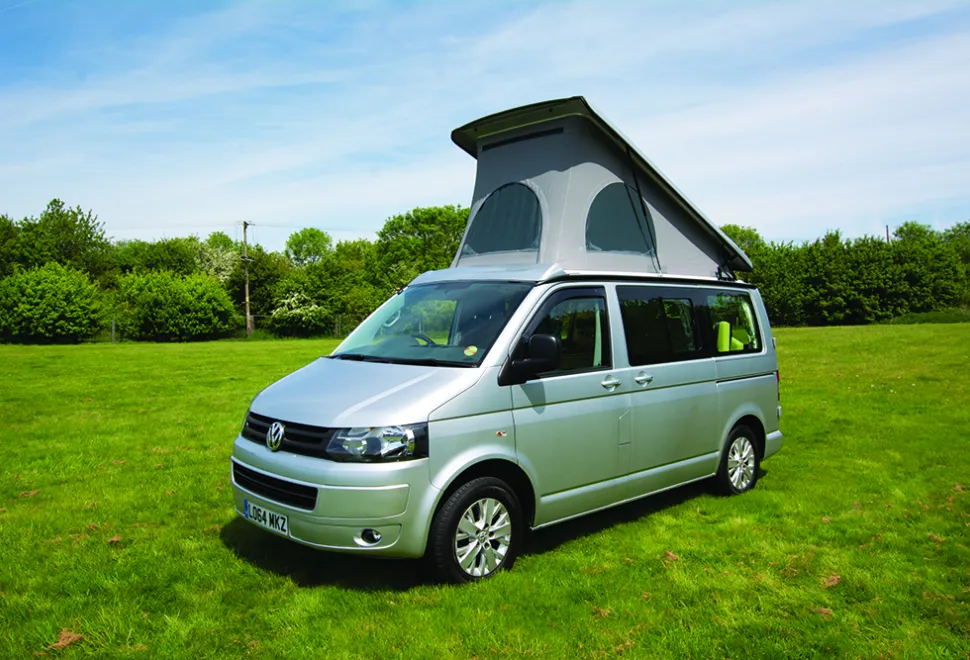
Cambee’s original concept was to produce a classic camper in a modern, safe base vehicle, says Matthew Burgon, founder and owner of this Devon-based converter. The firm was born out of a desire to own a campervan, but Matthew’s wife had only just passed her driving test, so the vagaries of piloting a classic Type 2 were out of the question. Then, as with other brands before him, Matthew’s own conversion lead to a business…
But, in what is an exceptionally crowded marketplace, Cambee’s campers do still manage to stand out. Matthew’s love of birch plywood is the key as he wanted a material that is practical and could last for 25 years. All the fixings in the furniture are timber, too, with no flimsy plastic catches to break. Any decent carpenter can repair a Cambee conversion is the claim, so you’ll never be at the mercy of parts supply from a long-dead source or scouring eBay for secondhand components.
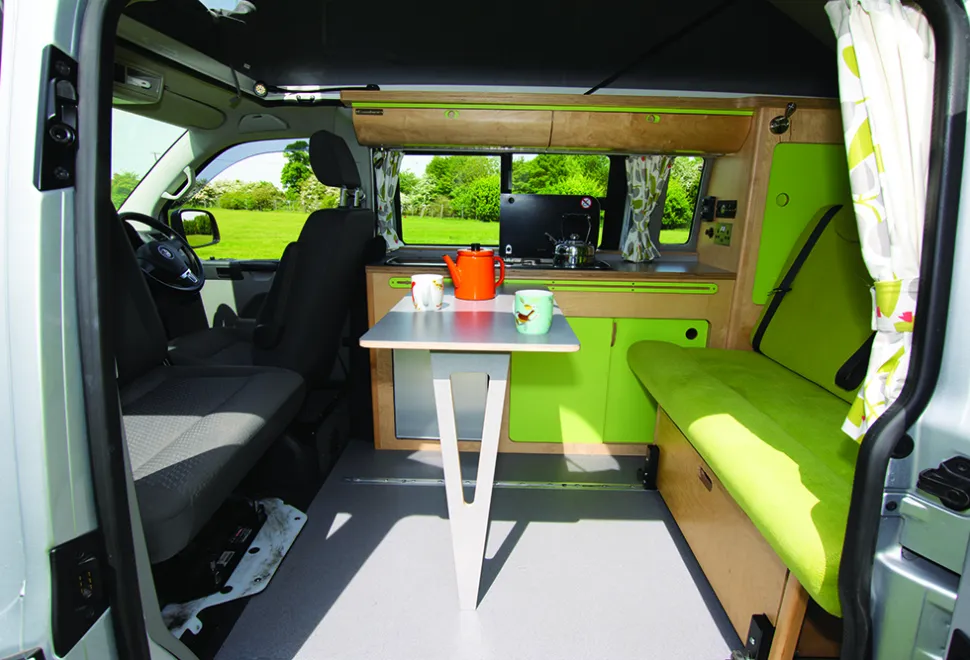
Cambee’s first conversion, the Grand Tour, takes this ethos to its highest level, with handpicked ply that’s sanded by hand and even varnished by hand. Of course, there’s a cost implication to that, so the Classic followed as a more affordable alternative using factory-finished plywood. Here, it’s the Classic of customers, Paddy Woodman and Mark Lake, that we’re examining.
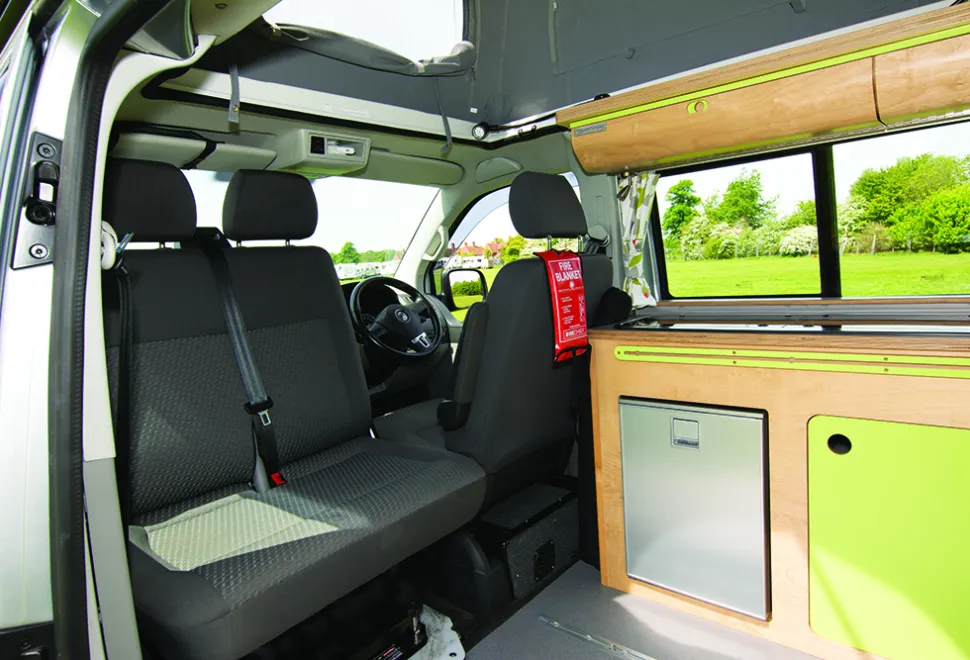
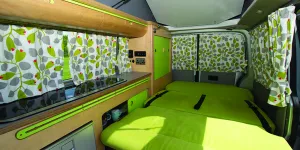
Built on a used T5 Transporter which Paddy and Mark sourced themselves, it introduces a bit of bold colour for a fun look, but more sober alternatives are available. It also shows the bespoke nature of Cambee’s conversions. No mains hook-up is fitted, for example, which suits a lot of customers and saves money. Instead, a solar panel tops up the battery to keep the compressor fridge running when camping off-grid.
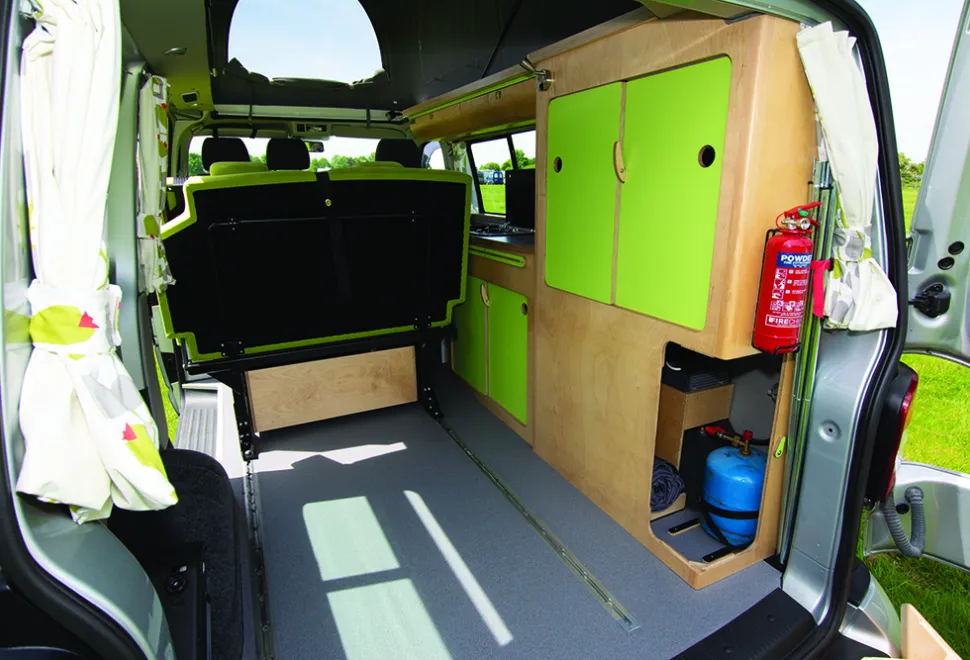
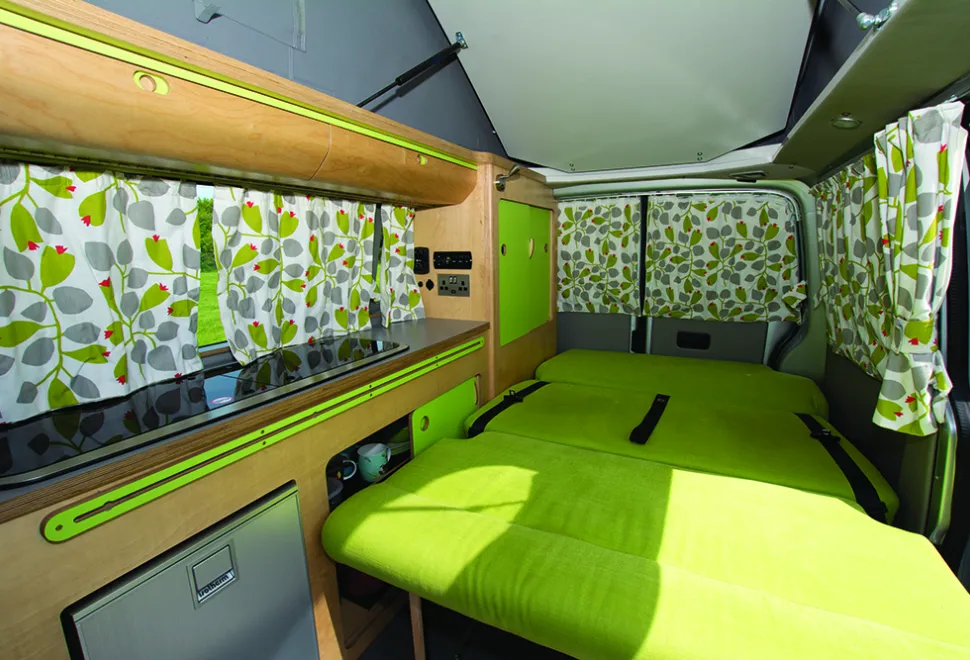
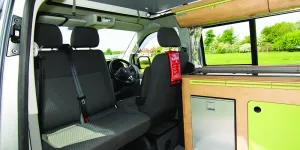
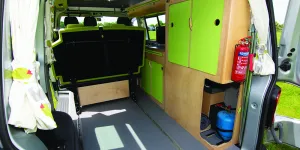
Paddy and Mark also specifically needed a six-seater camper with four berths. They chose the popular, German SCA roof for its strong, welded frame and resultant structural integrity, and a swivel double passenger seat was a must, too. Another important feature was a rail-based seat system with a variety of travelling positions for the rear bench. The seat is Cambee’s own Flex (Reimo or RIB seats are also offered) which has been bench-tested and uses VW fixing points. It has a more comfortable seat height and rake than many rival seats, but can only be fitted in used or pre-registered base vehicles as it hasn’t – yet – been safety tested in situ. The extra-large drawer under the seat (removable, so a surfboard or other long load can be carried) is a big plus of the Cambee unit.
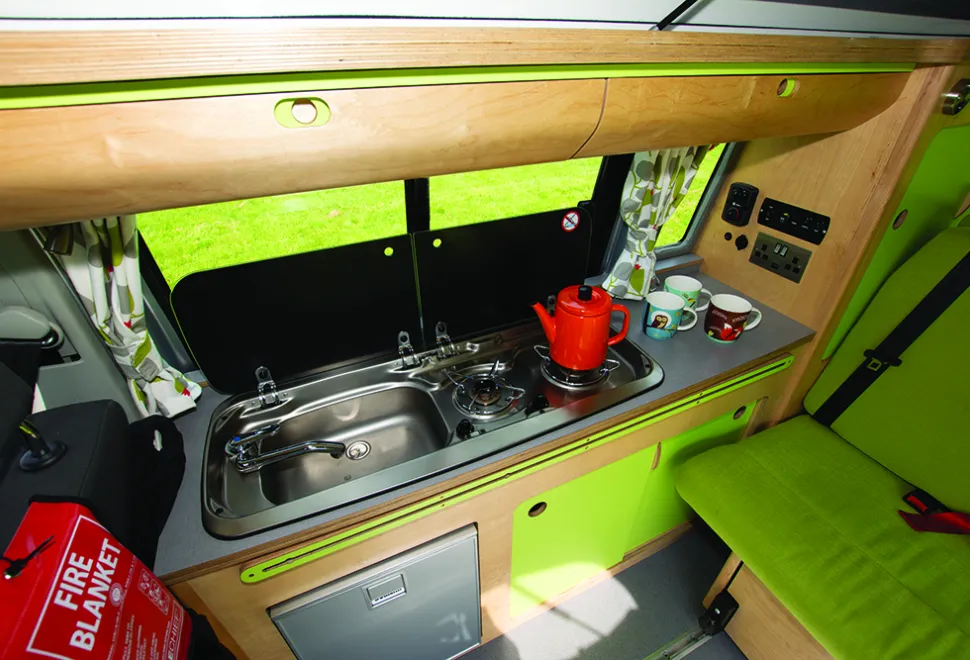
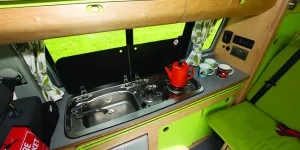
As well as the sliding seat (a £1,550 option), Cambee’s Classic also takes ideas from the California – and reinvents them in birch ply. The cupboard doors are all sliders, so access is easy (irrespective of the seat position), while the top lockers over the galley take inspiration from the rear roof cupboard in the Cali. Shaped to be practical and capacious, they don’t block your view of the hob when standing up, but add a surprising amount of vital extra stowage.
In fact, Paddy comments that having plenty of storage was another factor in choosing the Cambee, along with tailoring the spec to suit their budget. For example, the cab seats haven’t (yet) been retrimmed as this is something that could be done later. More money was saved by buying a VW panel van with barn doors, rather than a tailgate (used T5 or T6 vans so equipped can fetch an extra £1,500), and the company’s online guides provide useful tips on aspects like this.
If you enjoyed this review, you can read loads more like it in What Motorhome magazine. You can get a digital version of this latest issue of What Motorhome magazine here.