
Autocruise Rhythm v Timberland Destiny

Key Features
Full Review
This motorhome review of the Autocruise Rhythm and the Timberland Destiny XI was published in the June 2012 issue of MMM. You can download a full copy of the magazine HERE
Both motorhomes in this head-to-head test come from established British convertersHere we compare two rear lounge models, with Timberland's Destiny XI pitted against its Swift Group rival, the Autocruise Rhythm.
This highly specified Destiny costs nearly £53,000 on the road – £10,000 more than its competitor.
As tested: £42,770 Prices are OTR
Fiat Ducato LWB
Engine: 2.3-litre Euro 5 turbo-diesel 130bhp
(150bhp upgrade)
Berths 2
Travel seats 2
L 5.99m W 2.05m
Height 2.72m
MTPLM 3,500kg
Payload 635kg
Comfort Pack £1,395; awning £660;
alloy wheels £630
150bhp engine with Comfort-Matic auto gearbox – only on Fiat and with Comfort Pack (£2,995)
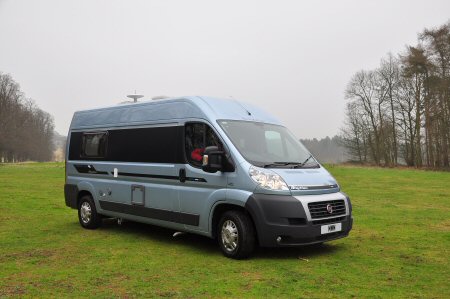
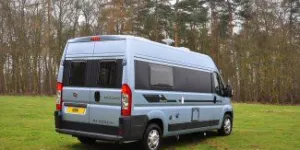
AUTOCRUISE RHYTHM
As Tested: £52,815 All prices OTR
Fiat Ducato LWB van
2.3-litre Euro 4 turbo-diesel 120bhp
Berths 2
Travel seats 2
L 5.99m W 2.05m
Height 2.72m
MTPLM 3,500kg
Payload 650kg
Exec Pack £4,995, Cruise control (£495), Automatic headlights and windscreen wipers (£345),
Cab blinds (£595), Sat-nav and rear camera (£1,995)
Comfort-matic auto gearbox £1,695
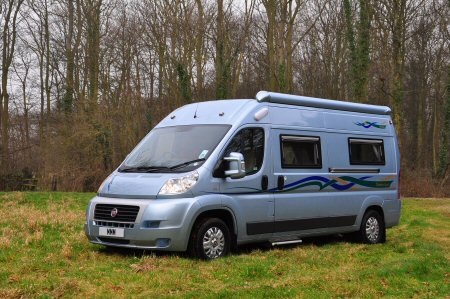
TIMBERLAND DESTINY XI
Are these two identical ‘vans, with, presumably, identical power plants? Not quite. The test Destiny had the ‘old’ Euro 4 engine (2.3 litres and 120bhp) and previous-model cab. Production models will come with the new version. The Rhythm boasted the new version: a Euro 5 motor (also 2.3 litres, but producing 130bhp) and the new-model cab.
To meet new Euro 5 emissions standards, the main changes are the fitting of an exhaust particulate filter and new (Multijet II) higher pressure fuel injection system. Fiat has also taken the opportunity to tweak the motors, for greater power, better fuel consumption and quieter running.
The new cab’s distinguishing feature is the dark, nearly black, plastics. If ‘wood’ trim is specified, it’s no longer the glossy trim of yesteryear. Instead, it’s a semi-matt finish looking even more naff than before, especially round the cup-holders.
Both cabs have Fiat’s excellent seating position (though the Rhythm had two armrests per seat, against the Destiny’s one) and ergonomic controls. Neither had interior mirrors, as both base panel vans unconverted, have solid rear doors. The Destiny will have one fitted before handover. Both had reversing sensors.
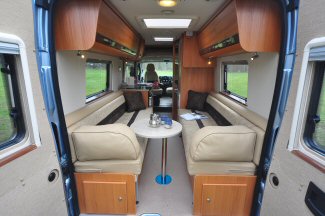
AUTOCRUISE RHYTHM TIMBERLAND DESTINY XI
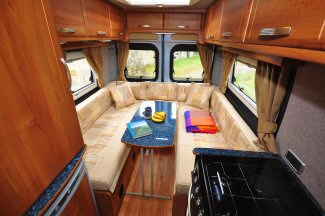
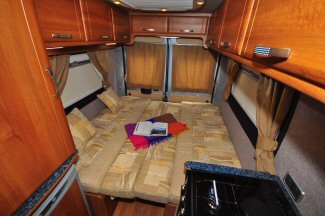
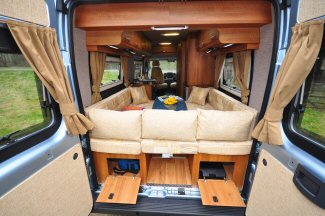
The Rhythm’s settees are very long, but the Destiny’s shorter ones also proved excellent for feet-up lounging. However, reclining on the removable cushions against the rear door, you must take care; you’d fall out if they were opened! There’s room aplenty for entertaining; six of you – if squeezed – in the Rhythm or four in the Destiny. Both ’vans featured flat settee base cushions - congratulations to both converters!
Both ’vans have Heki rooflights in their lounges. The Destiny’s was really posh (part of the Executive Pack), having integral lighting and electric operation with manual override. Other lighting comes from five overhead LED strip-lights, but we preferred the Rhythm’s fully-adjustable LED reading lights (augmented by an LED ceiling disc). We particularly liked the flexi-stalk reading lights over the Rhythm’s cab; very useful.
AUTOCRUISE RHYTHM TIMBERLAND DESTINY XI
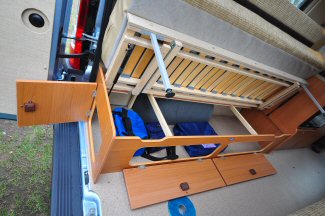
The Rhythm scores by fitting, as standard, a dedicated TV cupboard to the rear wall of the wardrobe, where Timberland would fit just an (optional) bracket there.
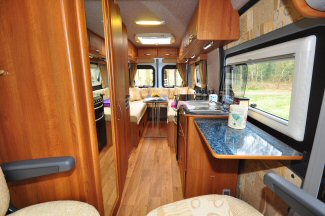
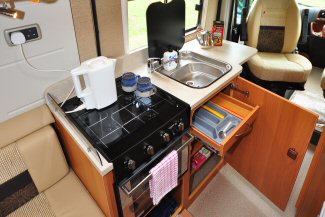
The kitchens have very similar layouts, but as the Destiny has the shorter lounge, it has a longer kitchen unit. Opposite, beneath the wardrobe, the Thetford three-way fridge has auto-power selection and 96 litres capacity. This is a great kitchen, but we had quibbles. Two mains sockets on the wall behind the hob were difficult to access with the glass lid raised: Timberland acknowledges the problem and will move the sockets in production.
AUTOCRUISE RHYTHM TIMBERLAND DESTINY XI
The Rhythm’s kitchen unit has the same basic layout, but everything’s smaller. The sink has no drainer, the Thetford Triplex cooker has three (auto-ignition) gas burners, plus there’s a combined grill/oven and the lift-up work surface on the end is smaller too. The Rhythm’s sockets are identically located, but are protected by perspex screen. The Waeco compressor-type fridge is smaller at 80 litres, but more space-efficient.
Timberland provides a very large basin (with plug-hole) in the front wall, above an excellent Thetford C402 bench-type toilet, with its own flush-water supply. There’s a Fiamma rooflight with fan, ceiling LED strip-light and robust (commodious, mirrored) high-level cupboard. The walls are glossy wipe-clean plastic and board. However, the shower disappoints and there's no wall bracket.
The Rhythm has its drop-down basin and toilet on the rear (right-hand) wall, where we’d guess there’s insufficient width for a bench-type toilet. Instead, Thetford’s swivel-bowl C250 loo is fitted (getting its flush-water from the main fresh-water tank). Lighting is provided by a ceiling-mounted LED disc and a rooflight.
AUTOCRUISE RHYTHM TIMBERLAND DESTINY XI
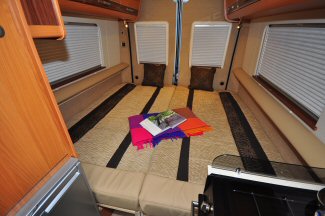
The Rhythm’s seat base frames are wooden with metal legs; they come out to the centre, but must be pulled out/pushed in carefully, or they jam. We preferred the Destiny’s strong all-metal frames, which slid in and out with ease. The Rhythm provides two longish single beds of adequate width, which are simply made: just remove seatback cushions to the cab. Alternatively, a longitudinal double is formed by squashing backrest cushions in with the seat cushions. It’s flat, well-supported and comfortable.
The Destiny single and double beds are made in exactly the same way, but the singles would be short for most – at 1.77m (5ft 9.5in) – and the transverse double is almost square, at 1.81m (5ft 11.5in) x 1.77m. The bases are sprung and the bed looks flat and comfortable - if you’re of suitable stature, it should be great.
This motorhome review of the Autocruise Rhythm and the Timberland Destiny XI was published in the June 2012 issue of MMM. You can download a full copy of the magazine HERE


