
Autocruise Accent (2010)
Image
Image
Image
Image
Image
Key Features
Model Year
2010
Product Class
High top
Product Model Base
Peugeot Boxer
Price from (£)
£39095
Length (m)
6.00
Berths
3
Belted seats
4
Main Layout
Rear Lounge
Full Review
AUTOCRUISE'S recent van conversions have often seemed better than most of the mainstream opposition, and they’ve been adding new models to the ranks almost as quickly as they’ve been deleting under-performing coachbuilts from their other line-ups.
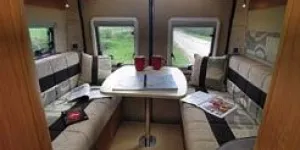
Accent is one of the newest, its role in life being to squeeze two lounges and four travel seats into a 6m-long high-top.
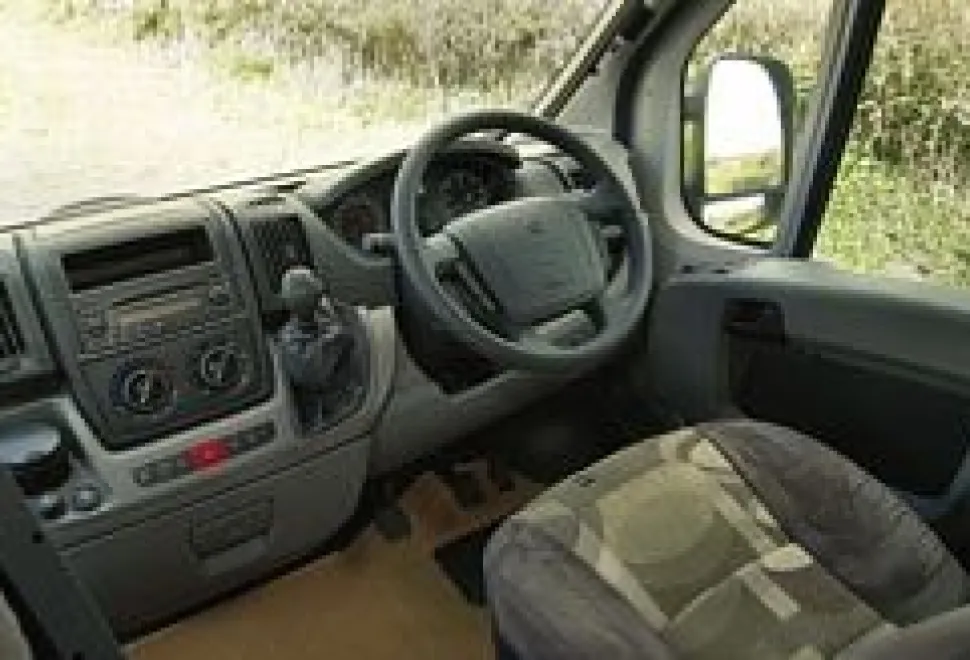
Good grief, this thing is quick. Suspecting that the standard 120HDi engine’s electronic brain must have been tickled by Swift Group in order to release a bit more get-up-and-go, I pulled over and straightaway clocked the discreet little badge on the bonnet bearing the legend ‘HDi 3.0’.
Unfortunately, this prototype’s engine/gearbox combination is a one-off (you can have the big engine, but only in Fiat guise, and allied to the Comfort-Matic auto).
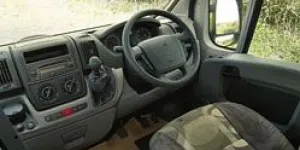
This example was also bereft of the nigh-on essential Comfort Pack. Costing a reasonable £1195, this brings with it reverse parking sensors, an alarm, cruise control... and the blessed relief of cab air-con.
Back on the road, while the Accent was largely – and impressively – hushed out on the road, the rear island table (which lives beneath the elevated floor in the rear lounge) isn’t secured into position for travel, nor is its attendant metal post, so each slides merrily around in the unlined locker as soon as you hit the twisty stuff.
A simple clip and transit catch would sort out that little problem. The incessant rattles from the kitchen worktop extension are less obviously fathomable, although I discovered that lifting it into the raised position silenced it nicely.
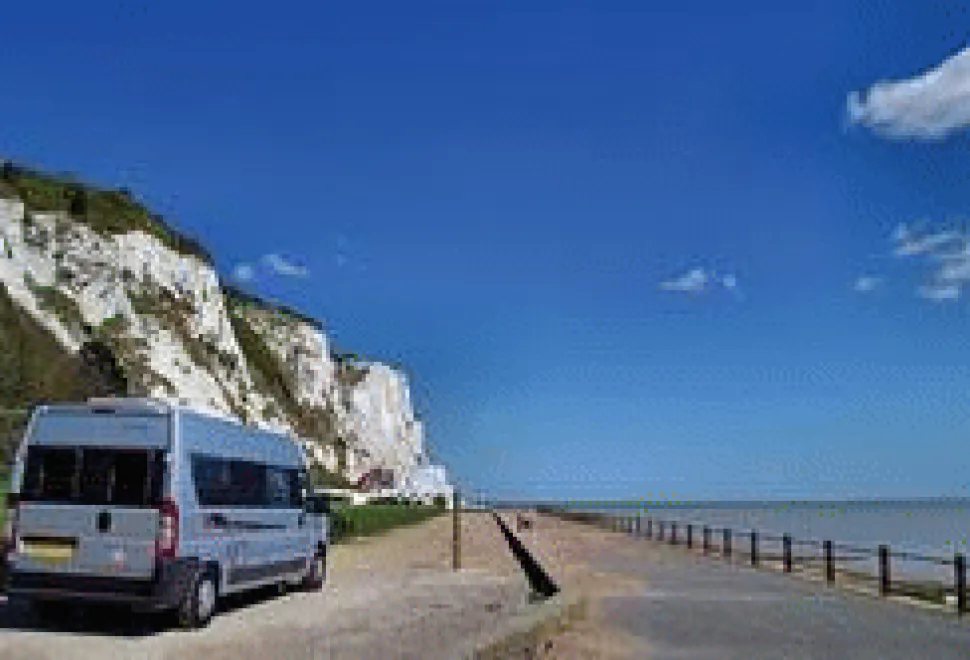
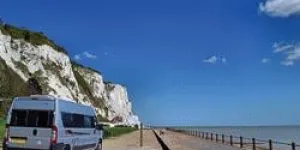
Elsewhere, I discovered that I was struggling to fault the Accent. There’s something inherently wonderful about van conversions when the weather’s glorious, so the Accent covered itself in glory once I’d hauled back the sliding door to allow the sea breezes and full-blown panorama to flood in.
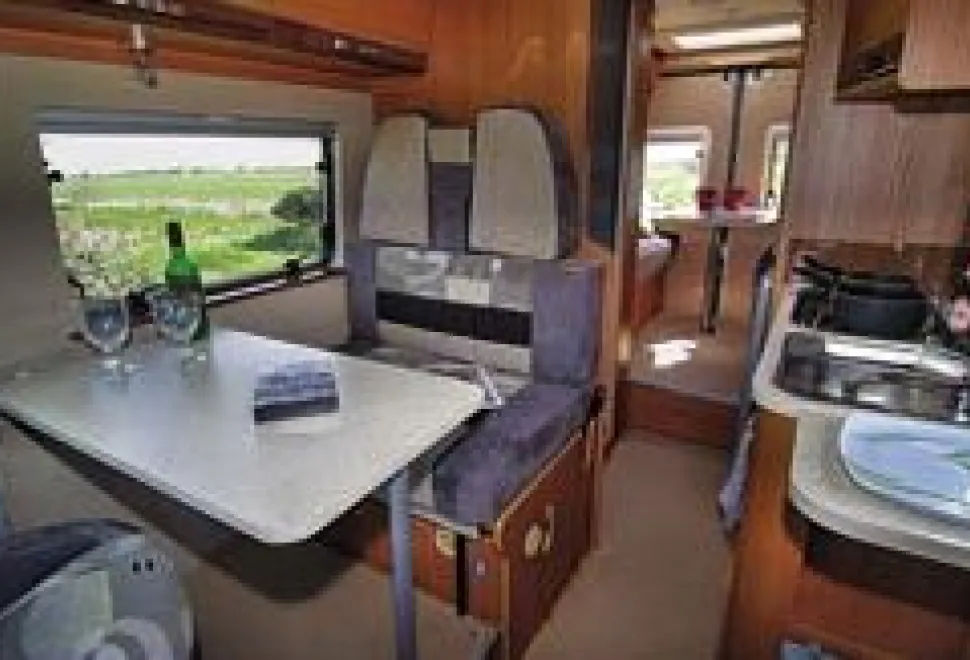
With the cab seats swivelled and the front table retrieved from its transit hidey-hole over the cab (where it’s secured firmly in place when not in use), I decided the Editor wouldn’t mind if I took half an hour out to kick back for a while and take in my surroundings.
I certainly approve of the new sprung clips which marry table with sidewall, and the table itself is substantial enough to handle up to three diners at a time.
Seatbelts can be hidden almost completely away, and their upper mountings are neatly (and safely) covered by thick fabric padding. Those enormous head restraints are impressive, too.
Later that evening, I would decide that a second LED swivel light in there would have been ideal, but I suppose the ceiling dome light (also LED) almost directly overhead goes some way to making up for this.
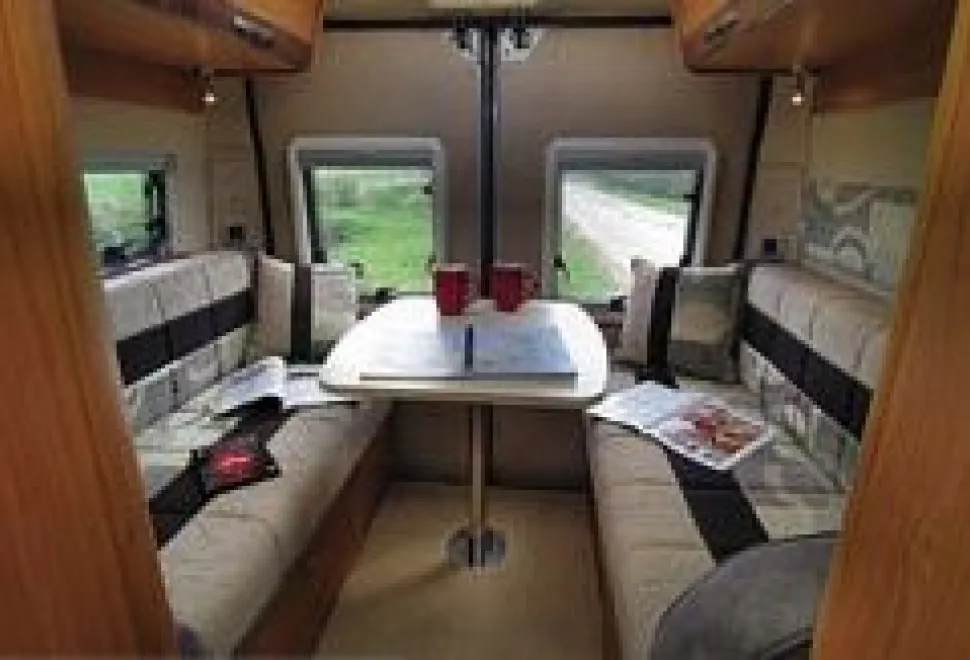
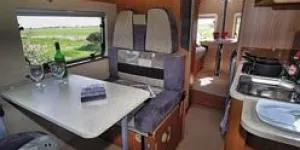
Satisfied that the transition from Pace to Accent hasn’t had any unpleasant repercussions on the half-dinette, I migrated to the rear lounge, where the floor is a good 10 inches higher.
The forward lounge, which sits on a sort of curved dais, is also raised, but only by six inches or so above central floor level.
Accepting that shoe-horning an extra lounge into the same van has seen settee lengths drop from 6ft 2in in the Rhythm to 4ft 5in in the Accent, this is actually still a pleasantly spacious area in which to relax.
Autocruise have, however, elected to fit an unusually shallow side window (just 10in deep) on the offside rear sidewall, and omit the expected nearside rear sidewall window altogether. This is fine from a sleeping perspective, but does make the lounge darker and more hemmed-in.
In pretty much every other respect, however, the Accent’s end lounge ticks most of the boxes. The seats on our test example were still quite firm, but we suspect a few months’ worth of use will soon break them in, while lighting is more than adequate.
The raised floor also improves storage, even allowing for the presence of the boiler under the nearside settee and the mains/charger system and battery opposite. A false floor on each side also opens up a modicum more storage at lower level, although retrieving items can prove tricky.
The underfloor void may be taken up mostly by the table and post, but I still managed to get a couple of levelling wedges, hook-up cable and sundry toilet chemicals in there, too.
Roof lockers are never as generous in van conversions as they are in coachbuilts, but the Accent’s rear quartet is generous enough. It was good to see a mains socket back here to go with the three in the kitchen, too.
All of which leaves two areas unexplored. The washroom is better suited to the swinging of a goldfish than a cat, but it’s still a decent affair. That said, the lofty Thetford loo found little favour. The washbasin is a good size, though, and the mixer tap/shower riser works well and develops good pressure.
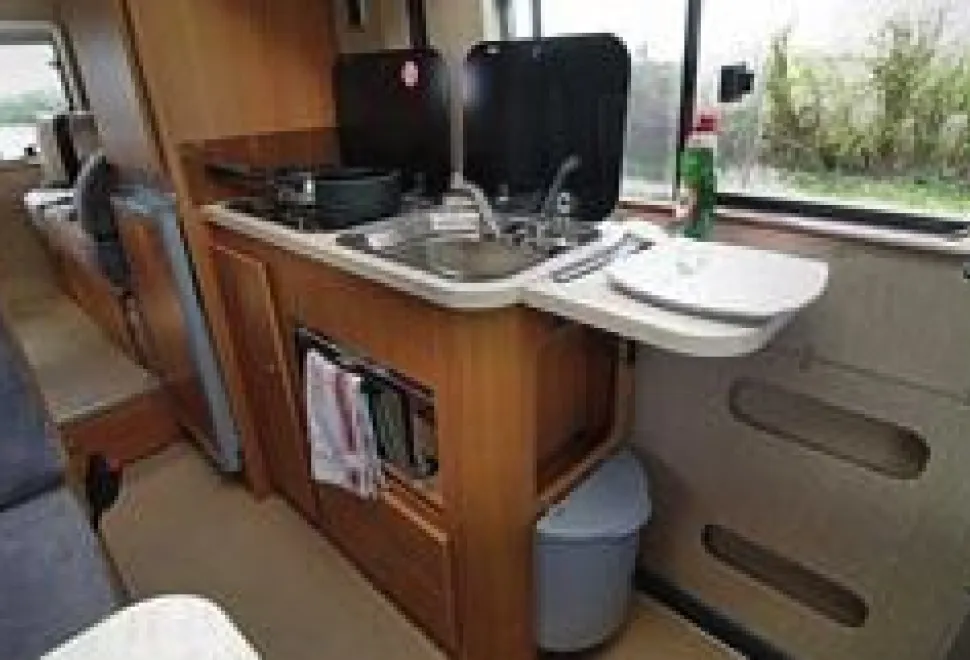
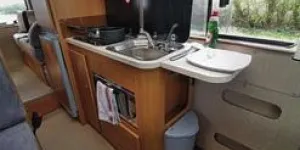
And so to the galley. If you were hoping for culinary magnificence, then you’re going to be disappointed. However, the two-burner spark ignition hob, separate Smev grill and good-sized sink provided are not to be sniffed at, nor are the deep storage pods below the hob or the two large drawers beneath the grill.
Marks are earned by the fold-up worktop extension, fitted waste bin and twin mains sockets, but there’s no dedicated light.
Initially, I couldn’t figure out how to make up the rear bed. In my defence, it was late and the various photographic props I’d stuffed into the wardrobe concealed the two all-important bed bases that are clipped to the forward wall.
Stir into this mix the fact that I didn’t think to try the rear table across the ’van, and my blushes were certainly not spared. However, while this approach works well enough, I’m surprised the bed doesn’t make up via a simple pair of sliding extensions that meet in the middle.
As it stands, making up the rear bed cannot be done without exiting the motorhome to retrieve the table from its underfloor home.
Up front, the occasional single bed makes up easily: release a catch, slide the extension forward, flip over the bed base and arrange both the driver’s seat and the seat cushions to suit.
A longer version of this review was published in the July 2010 issue of Which Motorhome magazine.
Accent is one of the newest, its role in life being to squeeze two lounges and four travel seats into a 6m-long high-top.
Good grief, this thing is quick. Suspecting that the standard 120HDi engine’s electronic brain must have been tickled by Swift Group in order to release a bit more get-up-and-go, I pulled over and straightaway clocked the discreet little badge on the bonnet bearing the legend ‘HDi 3.0’.
Unfortunately, this prototype’s engine/gearbox combination is a one-off (you can have the big engine, but only in Fiat guise, and allied to the Comfort-Matic auto).
This example was also bereft of the nigh-on essential Comfort Pack. Costing a reasonable £1195, this brings with it reverse parking sensors, an alarm, cruise control... and the blessed relief of cab air-con.
Back on the road, while the Accent was largely – and impressively – hushed out on the road, the rear island table (which lives beneath the elevated floor in the rear lounge) isn’t secured into position for travel, nor is its attendant metal post, so each slides merrily around in the unlined locker as soon as you hit the twisty stuff.
A simple clip and transit catch would sort out that little problem. The incessant rattles from the kitchen worktop extension are less obviously fathomable, although I discovered that lifting it into the raised position silenced it nicely.
Elsewhere, I discovered that I was struggling to fault the Accent. There’s something inherently wonderful about van conversions when the weather’s glorious, so the Accent covered itself in glory once I’d hauled back the sliding door to allow the sea breezes and full-blown panorama to flood in.
With the cab seats swivelled and the front table retrieved from its transit hidey-hole over the cab (where it’s secured firmly in place when not in use), I decided the Editor wouldn’t mind if I took half an hour out to kick back for a while and take in my surroundings.
I certainly approve of the new sprung clips which marry table with sidewall, and the table itself is substantial enough to handle up to three diners at a time.
Seatbelts can be hidden almost completely away, and their upper mountings are neatly (and safely) covered by thick fabric padding. Those enormous head restraints are impressive, too.
Later that evening, I would decide that a second LED swivel light in there would have been ideal, but I suppose the ceiling dome light (also LED) almost directly overhead goes some way to making up for this.
Satisfied that the transition from Pace to Accent hasn’t had any unpleasant repercussions on the half-dinette, I migrated to the rear lounge, where the floor is a good 10 inches higher.
The forward lounge, which sits on a sort of curved dais, is also raised, but only by six inches or so above central floor level.
Accepting that shoe-horning an extra lounge into the same van has seen settee lengths drop from 6ft 2in in the Rhythm to 4ft 5in in the Accent, this is actually still a pleasantly spacious area in which to relax.
Autocruise have, however, elected to fit an unusually shallow side window (just 10in deep) on the offside rear sidewall, and omit the expected nearside rear sidewall window altogether. This is fine from a sleeping perspective, but does make the lounge darker and more hemmed-in.
In pretty much every other respect, however, the Accent’s end lounge ticks most of the boxes. The seats on our test example were still quite firm, but we suspect a few months’ worth of use will soon break them in, while lighting is more than adequate.
The raised floor also improves storage, even allowing for the presence of the boiler under the nearside settee and the mains/charger system and battery opposite. A false floor on each side also opens up a modicum more storage at lower level, although retrieving items can prove tricky.
The underfloor void may be taken up mostly by the table and post, but I still managed to get a couple of levelling wedges, hook-up cable and sundry toilet chemicals in there, too.
Roof lockers are never as generous in van conversions as they are in coachbuilts, but the Accent’s rear quartet is generous enough. It was good to see a mains socket back here to go with the three in the kitchen, too.
All of which leaves two areas unexplored. The washroom is better suited to the swinging of a goldfish than a cat, but it’s still a decent affair. That said, the lofty Thetford loo found little favour. The washbasin is a good size, though, and the mixer tap/shower riser works well and develops good pressure.
And so to the galley. If you were hoping for culinary magnificence, then you’re going to be disappointed. However, the two-burner spark ignition hob, separate Smev grill and good-sized sink provided are not to be sniffed at, nor are the deep storage pods below the hob or the two large drawers beneath the grill.
Marks are earned by the fold-up worktop extension, fitted waste bin and twin mains sockets, but there’s no dedicated light.
Initially, I couldn’t figure out how to make up the rear bed. In my defence, it was late and the various photographic props I’d stuffed into the wardrobe concealed the two all-important bed bases that are clipped to the forward wall.
Stir into this mix the fact that I didn’t think to try the rear table across the ’van, and my blushes were certainly not spared. However, while this approach works well enough, I’m surprised the bed doesn’t make up via a simple pair of sliding extensions that meet in the middle.
As it stands, making up the rear bed cannot be done without exiting the motorhome to retrieve the table from its underfloor home.
Up front, the occasional single bed makes up easily: release a catch, slide the extension forward, flip over the bed base and arrange both the driver’s seat and the seat cushions to suit.
A longer version of this review was published in the July 2010 issue of Which Motorhome magazine.
Our Verdict
With two lounges, four berths and four travel seats the Autocruise Accent crams in a lot in its 6m length. And it works pretty well, with only a few minor niggles.
Advantages
Superb grunt of the 3.0-litre engine
Two useful lounges
Good kitchen works well
Four travel seats and four berths in compact van
Disadvantages
Rear table needs securing latches for travel
Kitchen worktop leaf rattled


