
Park home and holiday home chassis: everything you need to know
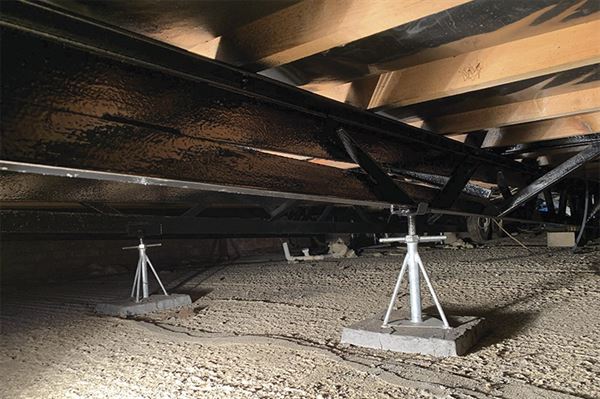
A park home or holiday home chassis is, in many ways, the most important part of the structure. It’s the foundation upon which the home relies
The chassis and supports are central to the structural stability and the long life of the home, and need to be inspected regularly for signs of any problems.
A park home or holiday home is one of the most important investments you will ever make; a purchase that you hope will bring many years of trouble-free living. So it is vitally important that you’re aware of all of the facts you may need to safeguard your investment and keep any maintenance and repair work in the future to a minimum.
Page contents
- What is a park home or holiday home chassis?
- Different types of chassis
- Caring for your park home or holiday home chassis
- Park home or holiday home chassis refurbishment
- About our magazines
Words by Val Chapman
What is a park home or holiday home chassis?

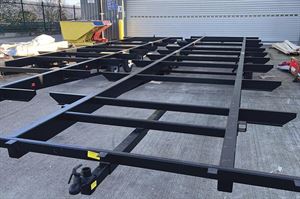
(Photo courtesy of Prestige Developments)
It’s the foundation of your home! The chassis is constructed of two main beams that run the entire length of the home with outriggers to provide support and structural strength.
The chassis is the only part of a park or holiday home's structure that can’t be replaced. It is essential, therefore, that you keep it in tip-top condition. Rust is the biggest potential problem with steel, of course, causing deterioration and, eventually, weakening of the steel structure. With good maintenance, though, it’s an easy issue to keep on top of.
Fortunately, there are several park home or holiday home chassis refurbishment and maintenance companies who specialise in this work.
Different types of park home or holiday home chassis
When you are buying a holiday home, there are different considerations regarding the chassis from those for residential park homes. The difference – apart from the size; park homes can be much larger than holiday homes – is in the treatment of the chassis during manufacture. Most holiday home manufacturers offer a choice of chassis finishes, some with greater protection capability than others.
Painted chassis have basic protection; fully galvanised chassis are the ones that offer great protection from rust. These are specifically recommended if you are buying a holiday home or park home to be sited in a coastal area, where salty air can accelerate the rust process.
Fully galvanised chassis
Fully hot-dipped galvanised chassis have been treated to provide enhanced protection from erosion. This is the highest level of protection. It is the one that requires the least maintenance. Chassis manufacturer, Bankside Patterson, provides its Fusion ProTech fully galvanised chassis with a 12-month anti-corrosion warranty. Bankside Patterson’s painted finish chassis are only recommended for inland sites where high rust protection is not a major factor.
Part or pre-galvanised chassis
This is the mid-range option. The chassis is made of galvanised steel that was coated before the chassis was constructed. Steel edges can be exposed, and it is possible that rust can appear here.
Painted chassis
The most cost-effective type of chassis, it is also the type that requires the most regular maintenance. Standard recommendation is that you have the chassis painted once a year.
Caring for your park home or holiday home chassis
(Photo courtesy of Prestige Developments)
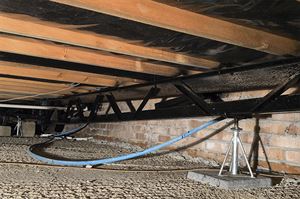
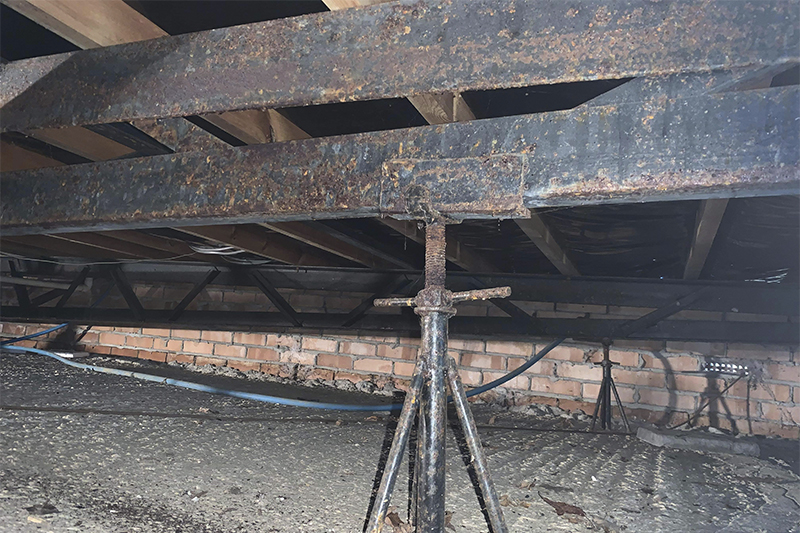
Caring for your park home or holiday home chassis means having it inspected regularly by one of the companies that offer this service.
You should regularly inspect the chassis for corrosion. However, we do not recommend that you go under the home yourself, but to contact specialist contractors to carry out this inspection, ensuring that your home is well-supported and the chassis is free from corrosion.
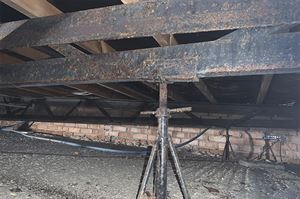
Without adequate protection, the steel frame can corrode and rust, making it brittle and prone to cracking or buckling under the weight of the home and its contents. This is especially true if the support jacks are corroded. Early signs of damage could include squeaky or uneven floors. More serious symptoms include floor movement, or dampness leading to heat loss. The most severe cases could lead to the roof cracking or the park home floor subsiding.
If you live in an area where there is extreme moisture, such as near to the coast, you should increase the frequency of your inspections. Also have the supports checked regularly to ensure that they are not corroding.
Park home or holiday home chassis refurbishment
(Photo courtesy of Prestige Developments)
Whatever the type of chassis on the home you opt for, it will need some maintenance and regular checks over its lifetime, and that process starts right from the time your home arrives on a park.
As well as regular inspections for signs of rust, it is recommended that you have the chassis thoroughly checked if your home is over 10 years old, or has undergone any major refurbishment, or had significant additions. Basically, anything that has altered the weight distribution of the home could have an impact on the chassis.
If the floor feels bouncy, you have creaky floorboards or gaps appear below the skirting, or the floor doesn’t seem to be level, you should have the chassis and supports examined.
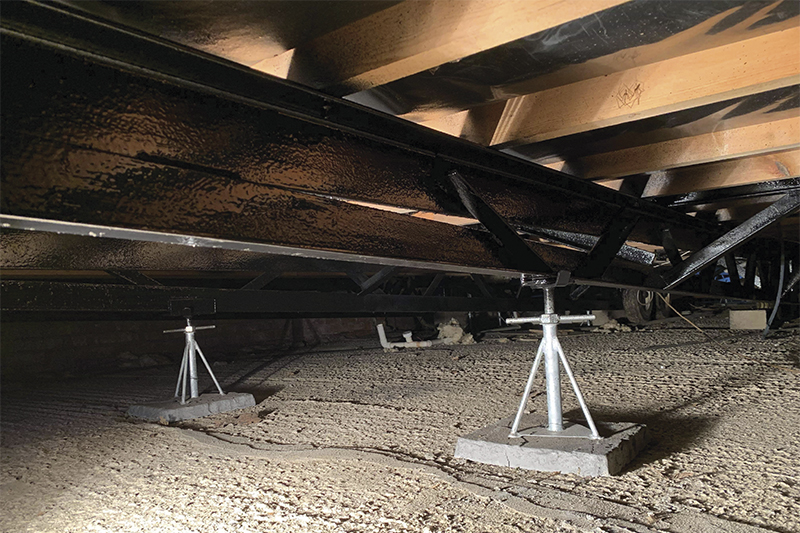
Several specialist companies offer chassis maintenance services. Among them is Park Home Chassis Services. Another is Prestige Developments, whose ‘Ultimate’ Chassis Services includes rubbing down any surface rust and loose paint on the chassis, recoating the metalwork with a rust-resistant paint, tightening bolts, where applicable, and fitting new galvanised steel tripod jacks throughout, to stabilise and strengthen the home. Park home manufacturer, Omar has a division that offers park home and lodge refurbishment called Omar Refurbishment Services.
How much does it cost to repair a park home chassis?
Naturally, this depends not only on the size of the park home but the amount of work that is required. Specialist companies will inspect and then give a quote.
Where is the chassis number on my park home?
Most likely, this will be on the paperwork that you get when you buy the home. Locations within the home may include the central heating boiler cupboard, on a chassis cross member, or possibly on the rear outside panel.
Next Shows

The Big Land Rover Fest 11th - 12th July 2026
Experience The Big Land Rover Fest – a weekend of off-roading, live music, club displays and family fun at Newbury Showground, 11–12 Ju...

The Norfolk Motorhome & Campervan Show 17th - 19th July 2026
Join The Norfolk Motorhome & Campervan Show, 17-19 July 2026, for the Out & About Live Summer Party! Explore motorhomes, live demos, an...

Retro Festival 7th - 9th August 2026
Retro Festival celebrates timeless hits, vintage vehicles, fashion shows, and fairground fun.