
Park home construction: everything you need to know
Everything you need to know about how park homes are constructed
Park home construction: everything you need to know
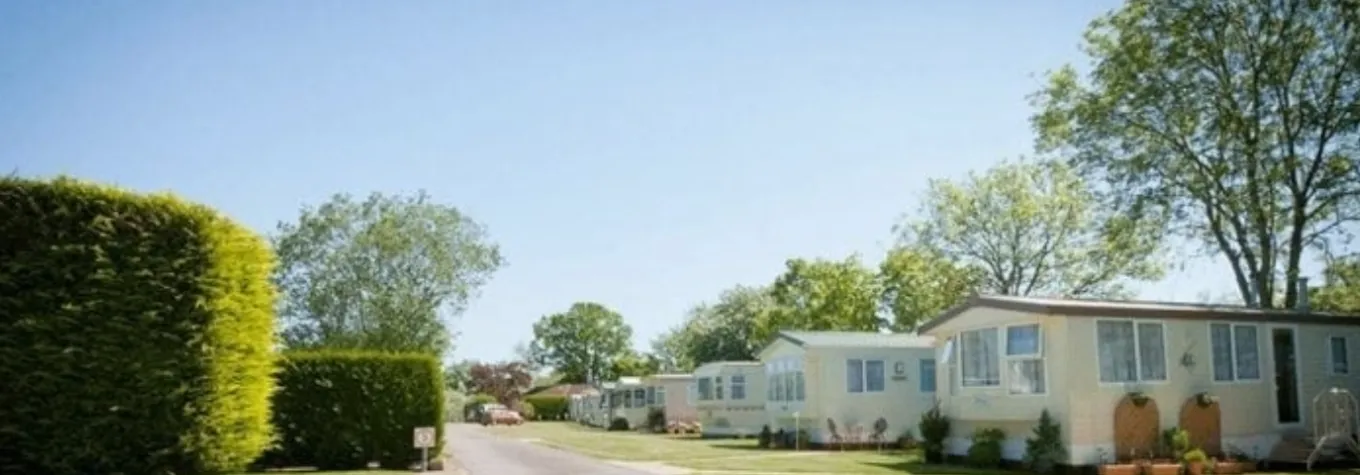
Park home construction is a fascinating subject. With features such as pitched roofs, double glazing and patio doors, on the surface, there is not a lot to set them apart from a bricks and mortar dwelling.
Behind the scenes
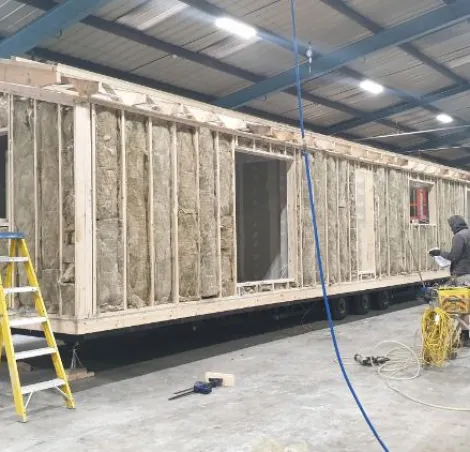
Behind the scenes, though, park home construction is very different from what might be termed ‘conventional’ house building. Park homes are made from different materials and they are constructed in a completely different way.
Park home construction has evolved over the past few decades to become much more advanced than the methods once used to build what were termed by some as ’mobile homes’.
How is a new park home made?
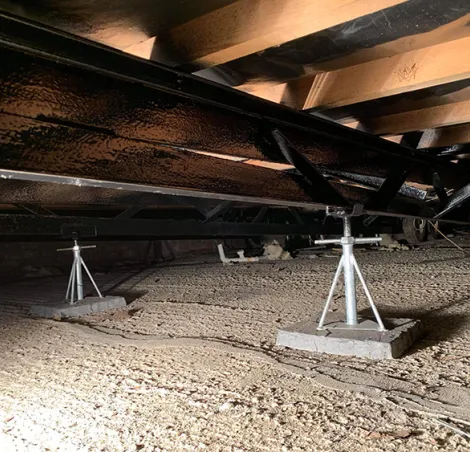
First, the chassis – the base of the park home. The number of axles on the chassis relates to the length of the park home. The purpose of the wheels is simply to facilitate movement through the factory, onto lorries, and into position on a park. The chassis structure incorporates levelling supports. After that, in the course of siting, axle stands are used at the corners and at intervals; how many are used relates to the size of the park home.
There are specialist park home chassis manufacturers – and some park home manufacturers make their own chassis. One of these is Omar. The company explains, “The chassis is constructed of two main beams that run the entire length of the home, with outriggers to provide support and structural strength.
The main lengthwise beams are constructed as a two-tier, hot-rolled steel channel beam frame, 300mm deep. Hot-rolled steel angle ladder frames are welded above and braced to the channel beam. The longitudinal steel angle components of the ladder frame provide additional support to the floor joists. Steel members of the ladder frame are located adjacent to, and bolted to, several of the floor joists.
What are park homes made of?
The floor
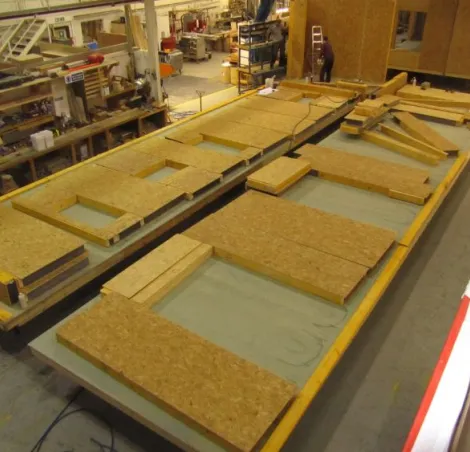
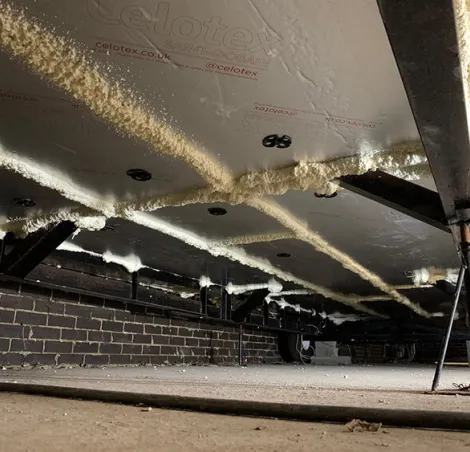
Once the chassis is in the park home factory, the next job is to create the floor. High-density wooden boards are attached to timber joists that are bolted to the frame. Insulation is added to protect the pipework that runs in the floor space. In its floor construction, Omar, for example, uses 18mm-thick tongue-and-groove board screwed and nailed to stress-graded timber floor joists. These beams are securely bolted to the steelwork at regular intervals.
The floor deck of Omar homes is insulated with rigid polystyrene, which is held in position between joists with a fire-retardant, micro-perforated barrier.
Some floors are constructed using quality timber joists that are treated against fungicides and insects.
The walls
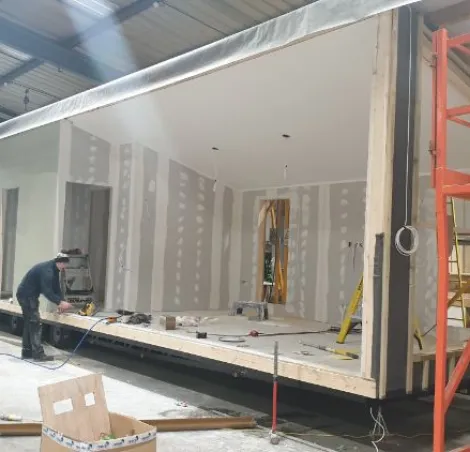
Broadly, a frame is created using timber studwork. This is combined with plasterboard interior walls and external cladding to create a sturdy, weatherproof shell. The space between the upright joists is filled with insulation.
Pathfinder Homes’ walls, for example, are constructed from 140mm by 35mm timber with a 140mm fibre wool insulation between the uprights. The interior of the walls is boarded in either 12.5mm plasterboard, or 9mm MDF, depending on the model. The exterior can be clad in a range offered by cladding manufacturer, CanExel, or can have a painted stucco finish, or a timber tongue-and-groove option.
The roof
Park home roof covering normally consists of lightweight metal roofing tiles fixed to wooden joists. The strength of the overall building comes from the strong bonds between the roof, walls and floor.
Omar says, “The roof uses the preformed aggregate coated Metrotile steel tile system, available in several colours, fixed to 50mm by 25mm treated timber battens over a breather membrane. Battens are secured to nail-plated timber roof trusses. They are positioned at 400mm or 600mm centres. Twin homes [those that are 20ft or 22ft wide] provide central support to the roof trusses via proprietary ‘I’ beams. Ceiling decks are either foil backed plasterboard, or ‘V’ groove board, glued and screwed to roof trusses, insulated with 250mm Earthwool mineral wool insulation. Earthwool is made from recycled materials.”
Pathfinder Homes places 200mm fibre-based insulation into the roofs of its park homes.
Lissett homes says, “Our roof is constructed using trussed rafters to various designs to enable both flat ceiling roofs and vaulted (or cathedral type) roofs. The strength of the overall building comes from the strong tying between the roof, walls and floor. Our structure is all tied together using fixings, glue and cross-bonding with structural external plywood. This results in an immensely strong structure capable of withstanding huge strain and loads. It is with experience of building and transporting exceptionally large park homes that we have understood the importance of an integrated structure.”
What is the lifespan of a park home?
Compared to bricks and mortar houses, one of the main questions is, how long does a park home last for?
Goldshield, which operates the Goldshield 10-year Park Home Warranty scheme, says park homes are expected to last 70-80 years if maintained correctly.
Stately-Albion, the oldest park home manufacturer in Europe, says, “We know that some Stately-Albion park homes built over 50 years ago are still going strong today.
As with any home, good maintenance plays a part in helping to ensure long life. Park homes built nowadays use greatly improved materials designed for better performance, durability and minimum maintenance.
These modern homes also have the benefit of improved timber treatments, UPVC windows, better roof tiles and exterior render, so there is every reason to suppose they will last even longer than the earlier models.”
How long does it take to build a park home?
That depends on factors including the scale of operation in any one factory. Some are small-scale operations in which park homes are built individually, sometimes to order, and sometimes with bespoke alterations to the standard plan, specified by the customer. In other, larger-scale park home factories, building takes place on a production-line basis.
Kingston Park and Leisure Homes, for example, says, "As soon as you sign off the final specification of your new lodge, we will provide a guaranteed delivery date so you know exactly when your new lodge will be arriving. On average this takes 10-12 weeks.”
Park home manufacturers in the UK
Park home manufacturers in the UK are all specialists in constructing park homes that are appealing, well insulated and comfortable.
Park home manufacturers
There are a number of major park home manufacturers, plus smaller-scale park home manufacturers.
Among park home manufacturers in the UK are:
- Kingston Park Leisure Homes
- Lissett Homes
- Oakgrove Lodges & Park Homes
- Oakwood Park & Leisure Homes
- Omar Group
- Pathfinder Homes
- Pemberton Park & Leisure Homes
- Prestige Homeseeker Park & Leisure Homes
- Stately-Albion
- Tingdene Homes
- Willerby.
Latest park & holiday home articles


Next Shows

The Big Land Rover Fest 11th - 12th July 2026
Experience The Big Land Rover Fest – a weekend of off-roading, live music, club displays and family fun at Newbury Showground, 11–12 Ju...

The Norfolk Motorhome & Campervan Show 17th - 19th July 2026
Join The Norfolk Motorhome & Campervan Show, 17-19 July 2026, for the Out & About Live Summer Party! Explore motorhomes, live demos, an...

Retro Festival 7th - 9th August 2026
Retro Festival celebrates timeless hits, vintage vehicles, fashion shows, and fairground fun.