
Motorhome fridges: here's what you need to know
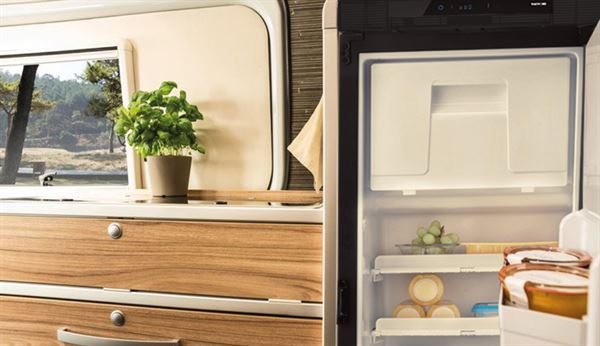
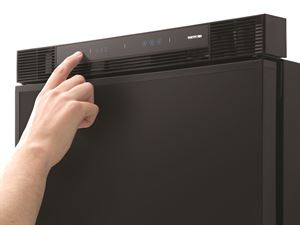
Whether your idea of heaven at the end of the day is a cold beer or fresh food for a barbecue, there’s not much chance unless your motorhome has an efficient refrigerator
In years past, the standard motorhome fridge was a three-way absorption fridge, which works on alternative power sources, but, in recent years, compressor fridges have become increasingly common in mainstream motorhomes.
Here, we delve into the detail on motorhome fridges and provide some recommended products from Thetford, an industry-leading brand for leisure vehicle equipment.
Page contents
- How motorhome fridges work
- Absorption fridges
- Compressor fridges
- Thermoelectric fridges
- What's the best fridge for your motorhome?
- How to look after your fridge
- About our magazines
Words by Barry Norris
How motorhome fridges work

(Photo courtesy of Thetford)
We all know how essential a fridge is to a motorhome, but if you're interested in upgrading to a better option then you need to know how they work, and in slightly more detail than "they keep things cold".
Permit us to get a bit technical here, but below is exactly how motorhome fridges work.
Absorption and compressor fridges work on broadly similar principles utilising latent heat, which is taken up when a liquid vaporises into a gaseous state.
Many campers will have noticed this principle when using gas cylinders and find the top half of their cylinder cold, often with condensation formed around the outside. In this situation it’s the liquid butane or propane vaporising within the cylinder to form gas and taking in heat from its surroundings.
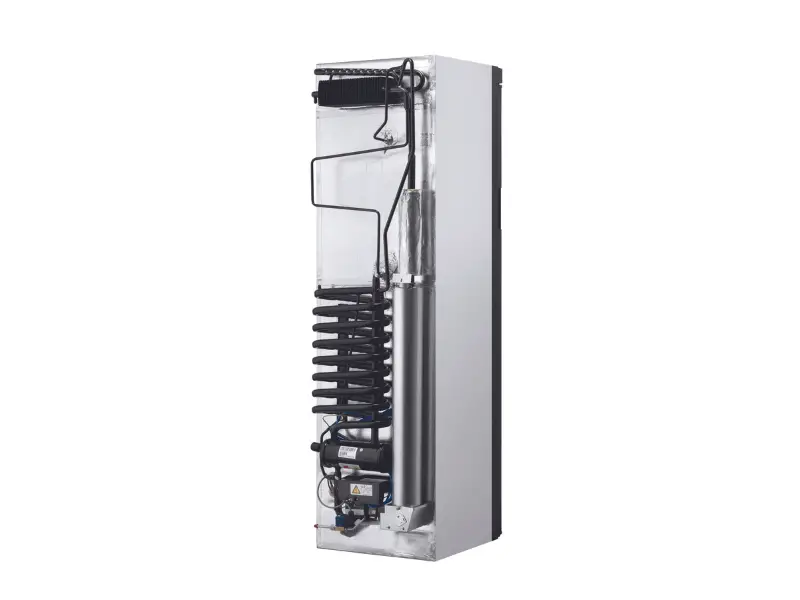
Absorption fridges are powered by application of heat to provide gravity circulation of a liquid known as refrigerant through a series of pipes. The cooling process is aided by the use of different chemicals in the refrigerant.
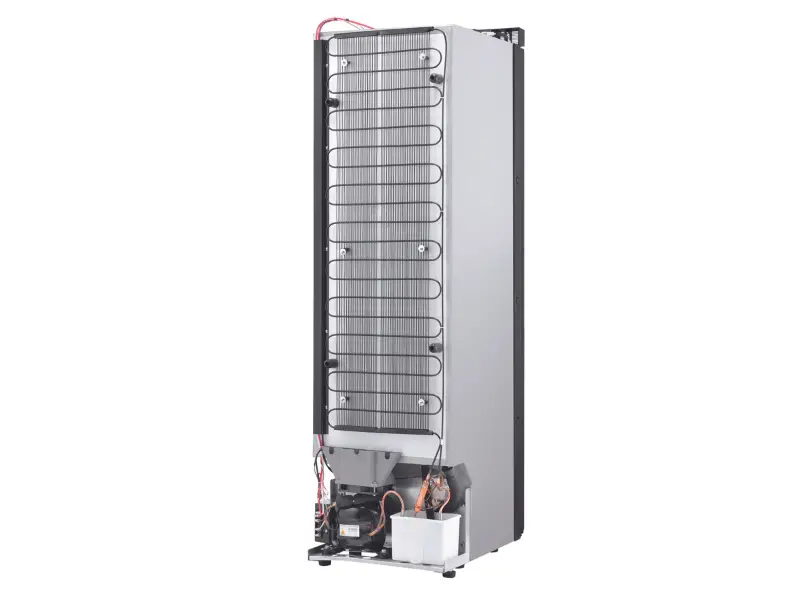
Compression fridges use a single refrigerant chemical, which changes from a gaseous state to a liquid state and back to a gas aided by the use of an electrically powered compressor.
Absorption fridges
(Photo courtesy of Thetford)
Absorption fridge popularity comes from the flexibility of utilising three power sources, encompassing travel mode (12V), on the campsite with electric hook-up and gas when off-grid.
Many modern absorption fridges use automatic energy source technology to switch between the three sources. But the main advantage of an absorption system is how quiet it runs as it has no moving parts.
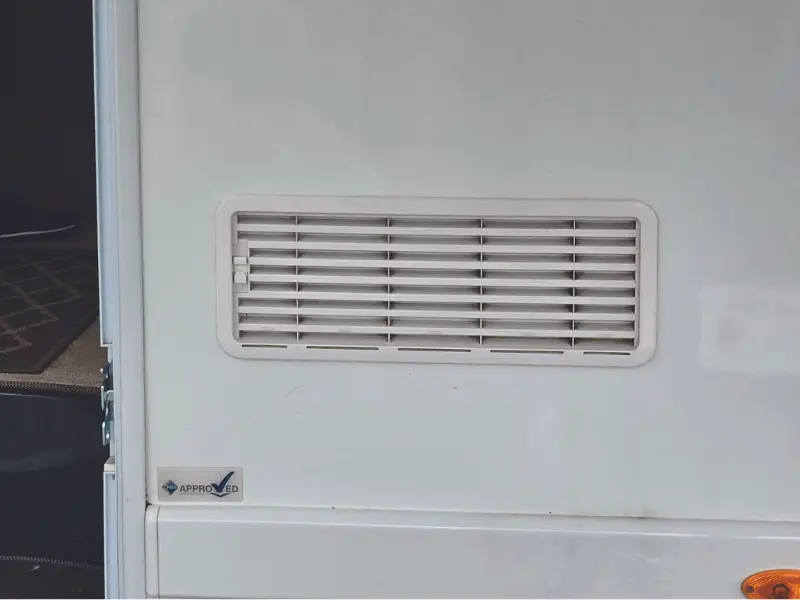
One drawback, though, is the heat produced, which necessitates good external ventilation. Use of gas as a fuel also requires good external ventilation and for the fridge to be sealed from the habitation area. Particularly at higher ambient temperatures, performance is strongly dependent on the airflow along the rear of the fridge, necessitating two vents with cold air coming in at the bottom vent and hot air venting at the top.
Many motorhomes do feature these vents already and they can be installed by an approved technician, so this shouldn't be a barrier to getting an absorption fridge.
Although an absorption fridge works well, it can take up to eight hours to get down to temperature and it performs best at medium and lower ambient temperature (10 to 32˚C).
At the higher end of temperatures, performance can be enhanced with a fan to boost ventilation. Absorption fridges are also sensitive to tilting and need to be levelled so not more than 2.5 degrees out of level.
Compressor fridges
(Photo courtesy of Thetford)
Two of the main reasons for the lack of compressor fridges in motorhomes until recently has been noise and power consumption.
Most domestic refrigerators are compressor fridges, which use an electrical compressor with accompanying noise particularly on start-up and stopping.
In a domestic situation this noise is lost among ambient daytime kitchen noise and at night-time it’s usually isolated from the sleeping areas, which isn’t practical in a motorhome.
In recent years, compressor fridge technology has moved on and noise levels are much more minimal. Some even have a night-time mode, which reduces noise further at night and conserves power.
A compressor fridge cools down more quickly and performs better in higher ambient temperatures (up to 40˚C) than an absorption fridge. Less heat is created with compressor fridges, which means internal ventilation can be used, lowering the need to cut more holes in the bodywork.
Despite the development of more efficient compressor fridges using less power than an absorption fridge working on electricity, they still result in a considerable drain on the battery. However, with the advent of large-capacity lithium batteries, economical solar panels and battery-to-battery (B2B) chargers, the use of compressor fridges has become more attractive.
In addition, modern technology is such that compact compressors and fans enable compressor fridges to be lighter than their absorption competitors and they can, size for size, provide up to 10% more usable internal space.
Thermoelectric fridges
(Photo courtesy of Barry Norris)
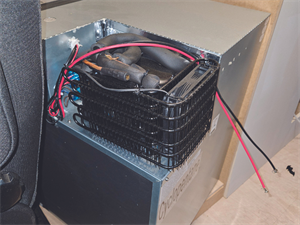
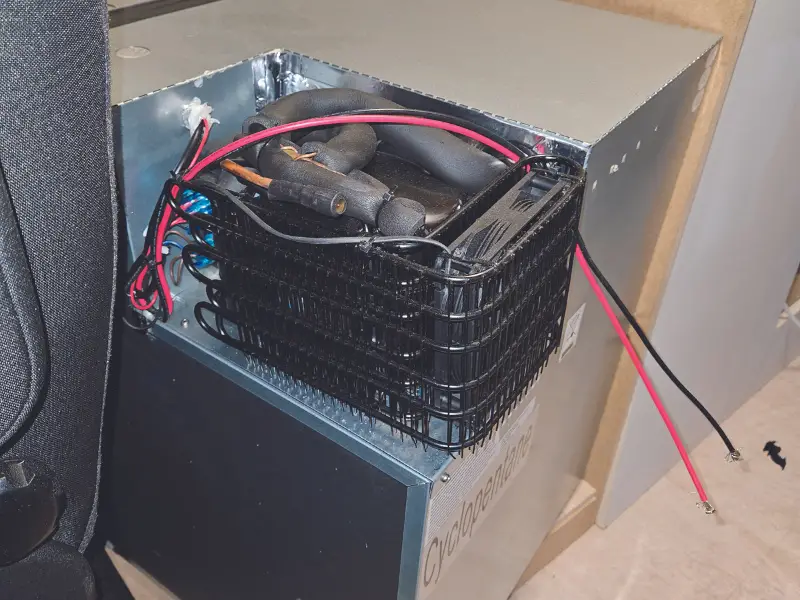
There’s also a thermoelectric system, which doesn’t use any refrigerant or have any moving parts, but works by electricity flowing through two different types of metal conductor. This is also known as the Peltier effect.
Unfortunately, when this is scaled up it becomes uneconomical. Campers tend to find this system used in some portable coolers where they can only cool down to about 20˚C below ambient temperatures.
What's the best fridge for your motorhome?
(Photo courtesy of Thetford)
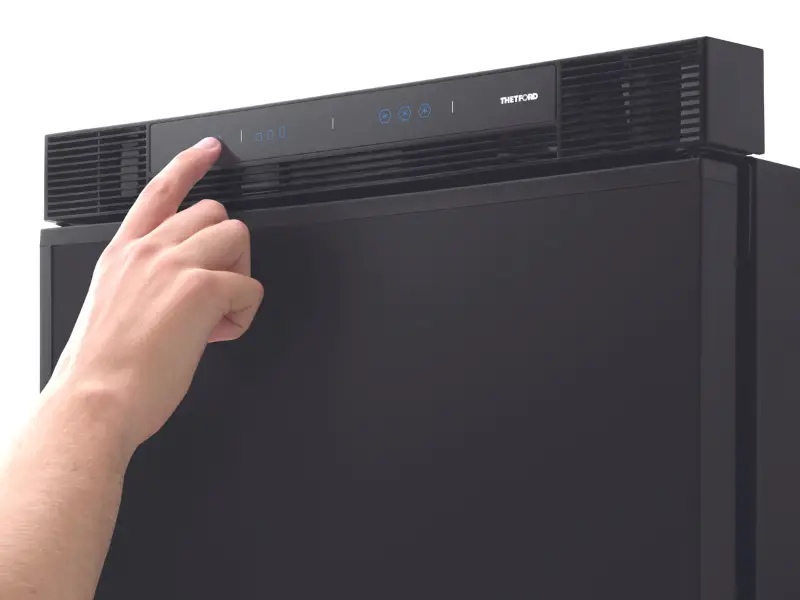
In short, it depends on how you camp and the power set-up in your motorhome.
For smaller units you are likely to find there’s more choice of compact compressor fridges available as it’s easier to locate a space for a fridge that doesn’t need external ventilation.
With a mainstream motorhome, if you carry a good supply of gas and like to spend time off-grid, then an absorption fridge could be good for you. An 81-litre fridge will empty a 6kg gas cylinder approximately every three weeks and a 150-litre fridge/freezer will last about two weeks.
An absorption fridge of any size working on gas will only consume about 60mA or 1.44Ah per 24 hours of electricity for the control system.
An 85-litre compressor fridge will use around 25Ah per 24 hours at ambient temperature of 20˚C to power the controls and compressor. As the ambient temperature increases, so does the compressor electricity consumption increase. After three days such a fridge would consume 75Ah, which is as much as you would wish to take out of a 150Ah lead acid battery and this is assuming there is no other drain on the battery.
However, if you have good off-grid kit and/or you tour a lot, then a compressor fridge could be ideal. Remember with a B2B charger coupled to a lithium battery, an hour or so of driving will give a substantial boost to a battery.
Lithium batteries also allow you to take them down to around 10% of full capacity with minimal long-term detrimental effect. If you spend a lot of time in the south of France or Spain in summer, you may prefer a compressor fridge to cope with higher ambient temperatures and there’s the bonus that a solar panel could supply much of the fridge’s power.
If you’re looking for the most efficient fridge, check if the freezer compartment temperature is individually controlled. Freezers use more energy than equivalent fridge volume so the ability to turn down the freezer temperature when not in use is worthwhile.
Here's the best Thetford fridges for motorhomes
Thetford is renowned as producing some of the best utilities for motorhomes, caravans, campervans and tents, including fridges. Here's our pick of the best!
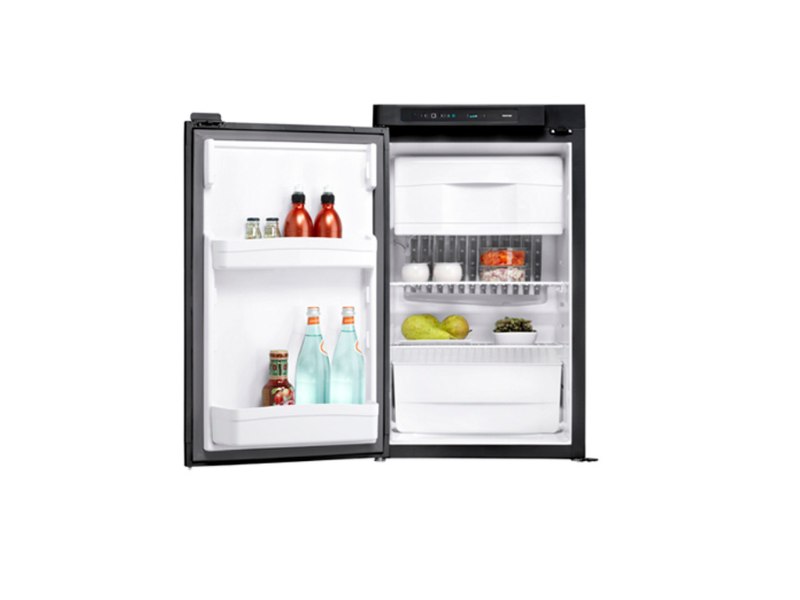
N4080
(Photo courtesy of Thetford)
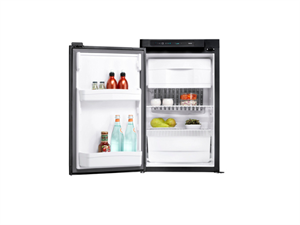
This tabletop absorption fridge from Thetford has a total volume of 71 litres, giving you plenty of storage for your food and drink. The matte black door panel and LED display create a sense of sophistication, and the 82cm height ensures that this fridge will fit securely within the kitchen of most motorhomes.
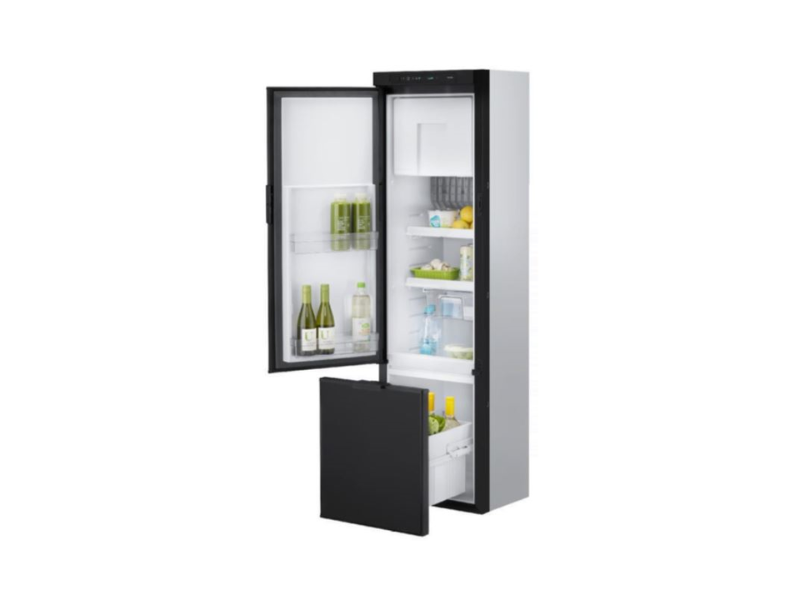
N4141
(Photo courtesy of Thetford)
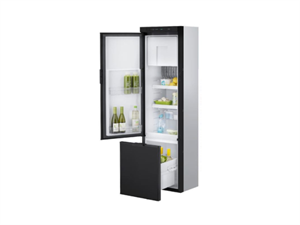
A slim absorption fridge, the N4141 features a distinctive pull-out tray at the bottom with enough space to house two-litre bottles (and wine, of course). It has a 141-litre capacity, including a 15-litre frozen food section. While this is a tall fridge and won't fit all motorhomes, it is a high-performing and stylish option for those with the space.
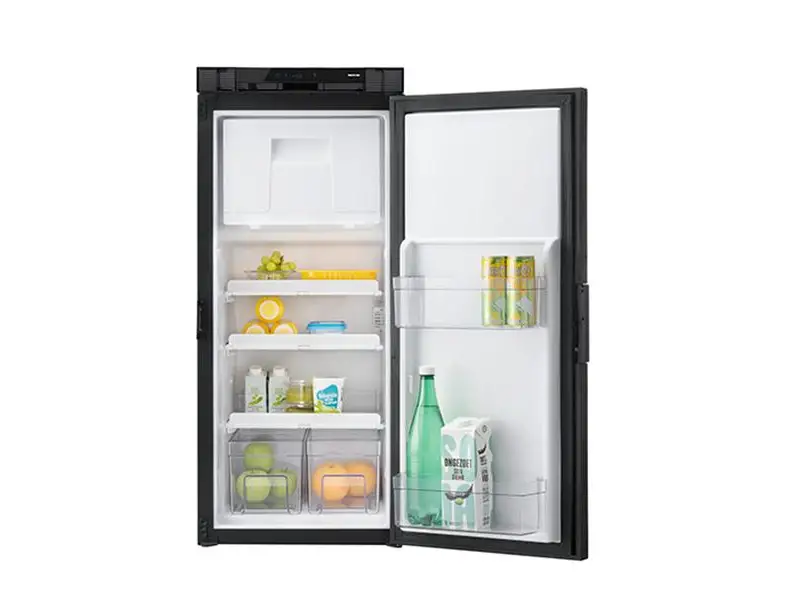
T2090
(Photo courtesy of Thetford)
At just over 97cm tall and with an 84-litre capacity, this compressor fridge from Thetford is large enough to provide for a family on holiday without taking over the limited space in your motorhome's kitchen. It features a high-tech capacitive touchscreen and sleek exterior, too.
How to look after your fridge
(Photo courtesy of Barry Norris)
An absorption fridge needs to be switched on up to eight hours before you load it; it’s better if the food and drink you’re packing is pre-cooled. With either type of fridge, don’t pack too tightly to allow some room for cool air to circulate between items and around the cooling fins.
If you are going on a ferry with an absorption fridge where gas power will not be permitted, ensure that the fridge is fully cooled before embarking and, if there’s empty space, fill with bottles of chilled water.
Try not to open the fridge door too often when in use.
If a thick layer of ice builds up on a long trip, defrost for optimum performance. Where possible, ventilate your motorhome to keep the inside temperature as low as possible.
Cleaning and maintenance is important for all types of fridge and, particularly at the end of a trip, defrost the fridge, not forgetting to put dry towels down to catch any water.
Ensure the fridge is dry and the door is left on a latch setting to let air to circulate to prevent mould growth. Clean the interior from time to time with a mild cleaner, preferably sodium bicarbonate, which will not harm the plastic nor taint food.
Fridges must be serviced in accordance with the manufacturer’s recommendations. Absorption fridges need an annual service to check for soot build-up inside the chimney and that the flame is burning correctly. Note, a fridge service is not normally included in the annual motorhome service offered by most workshops.
Ventilation is important but, during the winter, for optimum performance (winter) vent covers are recommended for absorption fridges.


