
Motorhome advice: How to re-register a van conversion as a campervan
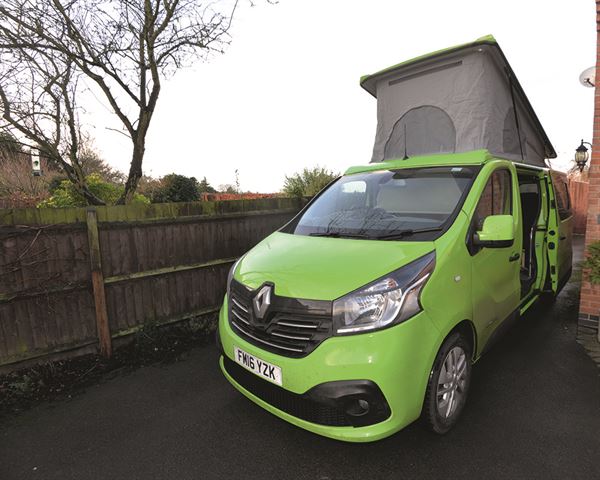
Now that my Renault Trafic conversion was finally complete, there was the thorny issue of getting the body type on the V5C logbook reclassified from ‘van’ to ‘motor caravan’. Why re-register? As soon as you modify a van into a campervan – meeting the DVLA criteria – you need to inform it of the change. If you don’t, you risk invalidating your insurance or having issues with the police. It is a legal requirement so you must do it.
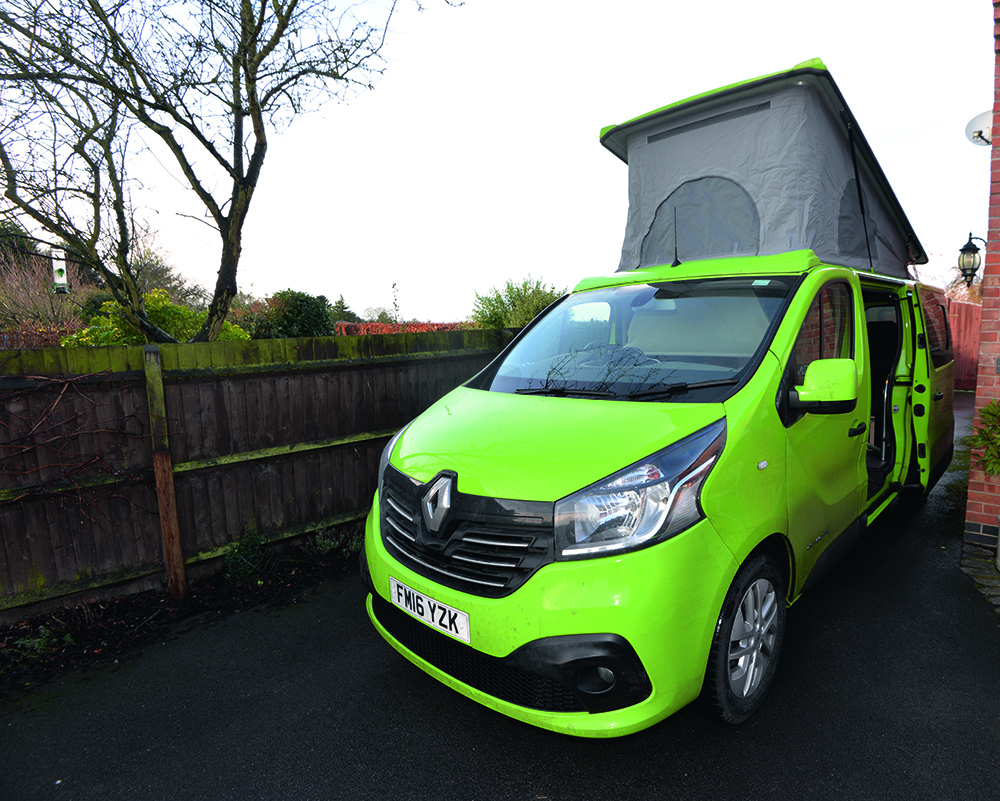
The big issue for me was insurance. I’d had to insure it as a ‘modified van’ prior to reclassification, so the insurance was epic (Class 1 business use, a daily driver and a £40,000 valuation didn’t help, either). I couldn’t wait to get it reclassified. Also, with a van, you’re restricted to 50mph on single carriageways and 60mph on dual carriageways. Motor caravans under 3.05 tonnes unladen weight (my Renault’s revenue weight is 2,960kg) can travel at 60mph on single carriageways and 70mph on dual carriageways.
The road fund licence will transfer over from the existing vehicle – the body type does not affect the taxation class (Light Goods Vehicle in this case and under 3,500kg). To re-tax my Renault under it’s new classification (Motor Caravan, 2016 register Euro V engine) will cost £245 from 1 April 2018 (up £5 from its current £240).
Online there’s a lot of information on re-registering a van. Rather than trawl endless forums, go direct to the government’s own website, so take the advice as gospel and follow it to the letter. You may read conflicting advice elsewhere but you can trust what is on this website.
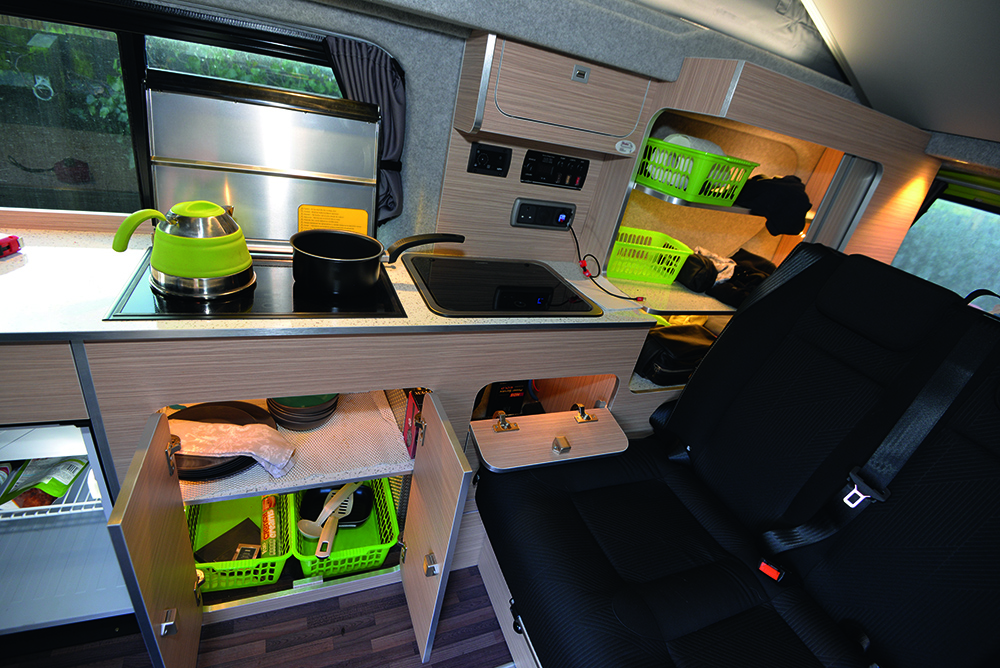
Before you can have a van reclassified, there is a list of criteria to be met:
- A door that gives access to the living areas (sliding door in my case)
- A bed, with a minimum length of 1800mm or six feet – this can be converted from seats used for other purposes during the day but must be permanently fixed within the body of the vehicle
- A water storage tank or container on, or in, the vehicle (a removable 20-litre tank in my vehicle)
- A seating and dining area, permanently attached to the vehicle – the table may be detachable but must have some permanent means of attachment to the vehicle. It is not good enough to have a loose table (I had a Reimo table leg bolted to a Reimo sliding seat base)
- A permanently fixed means of storage: a cupboard, locker or a wardrobe
- A permanently fixed cooking facility within the vehicle, powered by gas or electricity
- At least one window on the side of the accommodation.
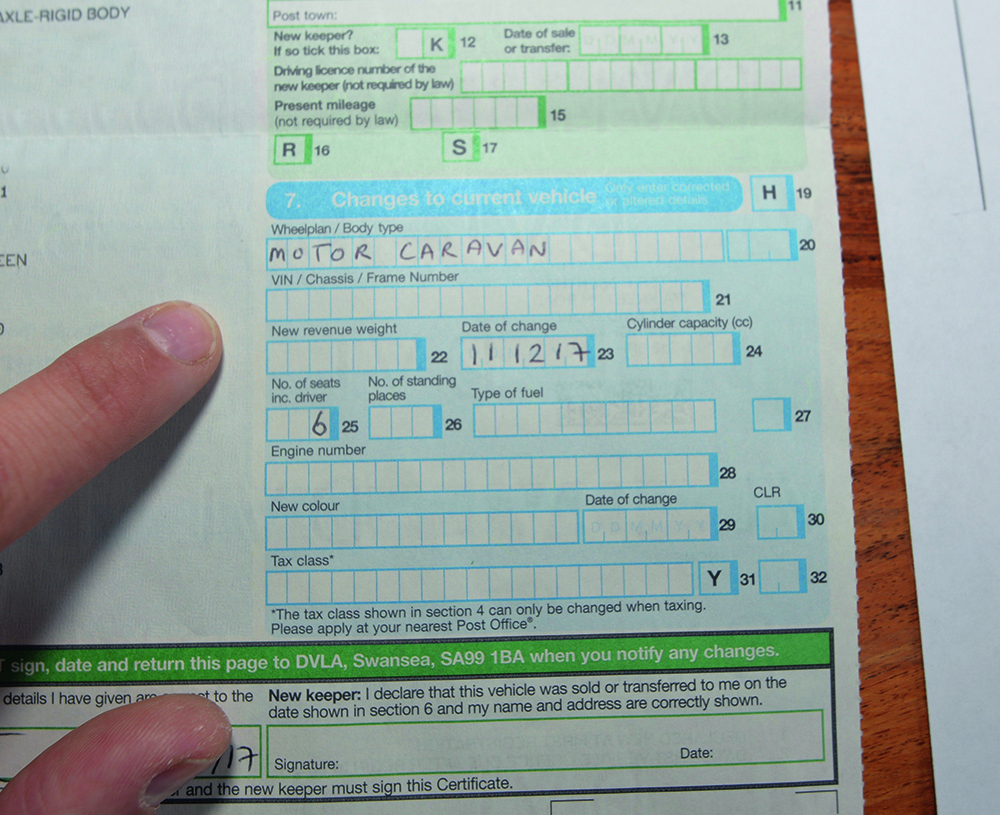
My van ticked all the boxes, so it was simply a case of filling in box 7 ‘Changes to current vehicle’ on the V5C logbook and writing in the changes. In the section labelled ‘Wheelplan/Body Type’ I wrote ‘Motor Caravan’ (don’t write any other term, as this is what the DVLA uses – writing ‘motorhome’ or ‘campervan’ risks a rejection). As my new rear seat system also adds three extra belted travel seats, I also changed the number in the seats box to ‘six’. Simply sign and date the V5C form in the appropriate boxes.
A template letter can be downloaded from the government website as an RTF file (a basic text document compatible with most computers, even elderly ones!). Don’t embellish this, or add lots of unnecessary detail. The DVLA office is busy and just wants to see the correct terms used in a simple way. They don’t want your life story and details of every screw you’ve attached!
Finally, take six clear photos of the items the DVLA wants to see. These are itemised on the template letter and include:
- Exterior showing numberplate (front and rear)
- Interior with seats and table; cooker; storage cupboard
- Bed over 6ft long and water tank.
While you could send the photos on a USB stick or CD, it’s safer to send hard copies. Either print these out at home (on photopaper, as regular paper will go blurry) or use a photo shop to print them for you.
The only item I was slightly worried about was the Wallas XC Duo diesel hob. The exact government wording specifies a twin-ring gas hob or an electric cooker (a permanently fixed 240V microwave will suffice). I decided to write that ‘the two-ring hob is fuelled by electricity and diesel supplied from the vehicle’s fuel tank with permanently attached piping’. As the hob needs a 12V supply to work, this is entirely true, but it also means that the word ‘electricity’ is in there!
The only other paperwork needed was the receipt for any relevant work. I photocopied the receipt for the Reimo sliding seat base, which had been fitted by CMC Reimo.
Together with the amended logbook, the photos carefully numbered (and address stickers and the reg number written on the reverse just in case) and the letter (signed and dated), the whole lot was sent first class to the DVLA. Success! I needn’t have worried about the hob, as the corrected V5C was returned to me in just under two weeks. As well as ‘6’ listed under the number of seats, the magic words of ‘Motor Caravan’ were also emblazoned across the body type section!


