
Restoring a retro caravan: time to modernise
Words and photos: Lee Davey
Here's the story of the caravan restoration project, so far – stage by stage:
Part 1
Lee introduces his Bailey Maru caravan, which cost him just £5.99
Read it here
Part 2
After considering the damage to the caravan, Lee shares his big plan for renovating it and transforming it
Read it here
Part 3
Lee shows us how to repair the rotten framework of the caravan
Read it here
Part 4
Lee and his son, Charlie, tackled the state of the flooring
Read it here
The phrase ‘Perfect Planning Prevents Poor Performance’ had to be written by someone familiar with older caravans.
In the previous part of this series, we repaired and replaced rotten sections of framework that form the caravan’s skeleton, and with this all-important structure rigid once more, now’s the time to map out wire runs, equipment locations, and anything else you may be planning to add.
Equipment levels in modern caravans are considerably different to those in vintage caravans. In 1970s Britain, gas-powered appliances were considered cutting edge and heaters were becoming mainstream, allowing folks to explore the UK and beyond during the cooler months.
Looking alarmingly similar to a doner kebab heating element, these devices must have branded many a 1970s caravanner, singeing platform shoes or flares with comparative ease.
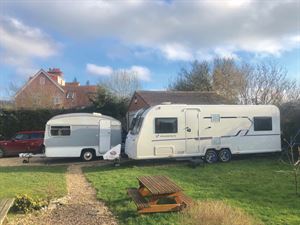
However, with a few carefully chosen modifications, it’s possible to introduce 2021 levels of comfort, and safety, to a budget caravan.
We equipped our previous project – a 1967 Bailey Maestro – with a flexible solar panel, a Whale heating and hot water system, external shower socket, etc, but we’re hoping to keep the costs relatively low on the 1977 Bailey Maru, splashing the cash on just one or two ‘must have’ items.
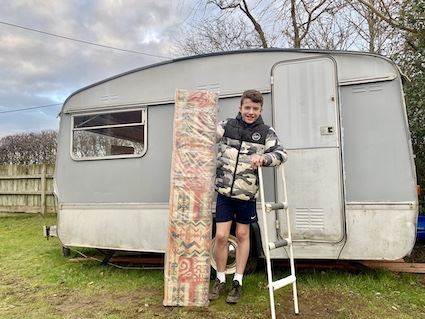
Our Maru left the factory as a two-berth caravan but adding a bunk would make it a bit more family-friendly. I found a folding bunk for sale locally that the seller had removed from his seasonal caravan.
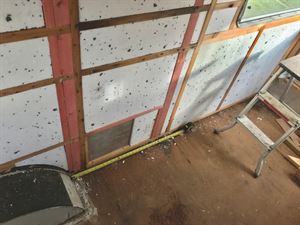
With the wallboard stripped and frame repairs carried out, adding 50mm by 25mm strengthening beams will, hopefully, allow me to mount the new bunk to the nearside (left-hand side when facing forwards) of the caravan.
I’ll need to refit the bed boxes before attempting to add Charlie’s new bunk bed, but the tape measure suggests it’ll be a three-berth soon.
External connection points in an older caravan
Equipping an older caravan with an electric hook-up point, a pump capable of drawing water from an Aquaroll, or an external shower point, etc, requires the fitment of suitable connection points and these require a firm base beneath the caravan’s outer skin.
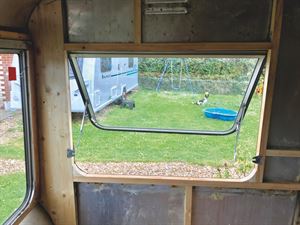
Unbraced aluminium is wibbly-wobbly at best, so these locations need to be carefully planned. With the framework exposed, a mounting box can be crafted from off-cuts of ply or batten, the dimensions of which can be taken from the connection point itself.
As with the frame, these mounting boxes need to fit flush against the inside of the aluminium skin, reducing any flex in the panel. Placing the Aquaroll and hook-up point on the offside (right-hand side when facing forwards) keeps cables and clutter away from the door, awning, etc.
Electrical wiring in a caravan
Regardless of DIY competence, unless you have the correct certification, rewiring your caravan requires a degree of intervention from a certified electrician and Caravan magazine would always recommend you seek professional advice.
Our Bailey Maru has had various cables spliced into its original harness, most of which looks like multicoloured spaghetti. During our last project I asked an electrician for advice before running the cables, and with the wiring routed as per instruction, he simply connected everything as per regulation, and gave it the thumbs-up. Cable runs should be well-planned and hidden from view.
Gas connections in a caravan
Gas connections are not to be trifled with and, much like any electrical work, will need to be carried out by a certified installer. Luckily, my brother-in-law is a certified gas engineer, so I’ll be speaking to him about terminating a line to the (missing) fridge and renewing the rest. Thankfully, existing pipe runs will be used.
With so much work having gone into the frame and associated cable runs, it seems a shame to cover it up, but next month we’ll be refitting the wallboard and showing you how to replace soggy sections with brand-new boards.
In the next part of our restoring a retro caravan series...
We’ll be seeing if it’s possible to retrofit equipment from a newer caravan, something that will require reinforcing beams to be fitted before the wallboard hides it from view. Wish us luck!


