
DJI Power 500 power bank


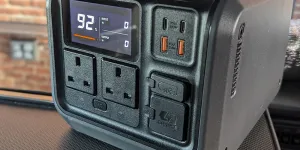
Description
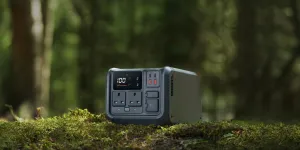
Going off-grid is the dream for many campers, whether that’s in a tent, campervan, motorhome or caravan. But being self-sufficient doesn’t mean completely disconnecting from the rest of the world. Most of us still want to be able to use our devices and gadgets even if we’re not hooked up to the mains on a campsite, so a power source of some sort is essential to keep them running. That’s where portable power stations like this come in. There are lots available and they come in a variety of sizes, capacities and run times... not to mention prices. To be honest, some perform better than others, but the DJI Power 500 is actually one of the best I’ve tried, and it’s by no means the most expensive. I’ve been using this on my travels for a couple of months now, but I really put it through its paces at a festival, where there was no electric hook-up available and I had a stack of electronic gadgets I needed to keep topped up throughout the weekend. Here’s how I got on with the DJI Power 500.
Full Review
If the DJI name sounds familiar it’s because the company is the market leader in drone cameras. Drones are great pieces of kit, but users will testify that one of the most frustrating things about them is how quickly the batteries run out.
So, there’s definitely some logic in a company whose products are so power hungry, moving into the business of power generation. And with the aid of an optional charging cable, you can use the Power 500 to fast-charge certain DJI drone batteries.
Coincidentally, the length of time it takes to charge a battery (around half an hour) is roughly the same as the run-time of a battery in use. So, if you have a couple of batteries, you can charge one while you’re flying the drone and then seamlessly switch them over when the power runs out. That means no more time wasted sitting around twiddling your thumbs, waiting for the battery to charge. Incidentally, if you’re a DJI drone user you’ll recognise the jingle when you hit the on button – it’s the same welcome sound you get when you switch on the power on one of the brand’s airborne cameras.
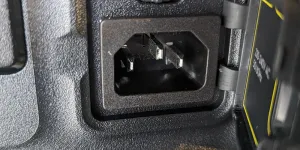
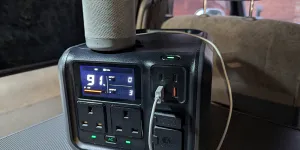
However, if you think that the Power 500 is no use to you if you don’t own a drone, think again. In fact, drone battery charging is a very small part of what it does. The power station has a pair of AC output sockets, two USB-C ports and two USB-A ports, so it offers up plenty of options for powering lots of different types of products. It’s rugged enough for off-grid camping trips, and while it’s not the sort of thing you can pop in your rucksack for a day on the hills, it’s certainly compact enough for basecamp, whether that’s in a tent, campervan, motorhome or caravan.
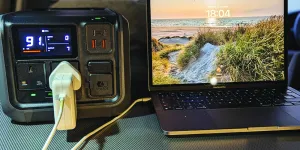
A maximum output of 1,000W means the Power 500 is potentially capable of powering high-wattage appliances such as an electric camping kettle. That would not be a particularly clever use of energy, though, especially in a tent or campervan where you’re likely to have a gas stove to boil water. In fact, it would also see the Power 500 run out of juice pretty swiftly. But where the DJI really comes into its own is keeping your devices running. During my time testing the power bank, I mainly used it to keep my phone, laptop and camera equipment topped up, and for that it did a great job. I also used it to charge a small USB-powered camping lantern, a portable speaker and even a mini power bank. If you want to be a bit more adventurous with your off-grid power use, fans, fridges and even projectors can also be used with the Power 500, but make sure to check the appliance’s wattage before trying it.
The Power 500 can be fully charged up in just over an hour on the mains at home before you set off on a road trip, and, depending on what you will use it for, that full charge will keep it going for two or three days. Mains charging is by far the quickest and most effective way to charge it, but is by no means the only method. Solar panels are also available for longer off-grid trips, and you can buy an optional car charging cable, which means you can recharge while you’re on the road, too. While this is a great feature, I don’t think it’s unreasonable to expect that cable to be included with the power bank.
A major plus point is that, compared to pretty much every other power bank I’ve ever tested, the Power 500 is super-quiet when being charged and while it’s being used to charge up devices. According to DJI the noise generated by the Power 500 is as low as 25dB during charging, and they say that’s quieter than most household refrigerators. Now, I don’t carry a sound level meter around with me – or a household refrigerator for that matter – I so can’t verify the accuracy of this claim, but I can confirm that it is extremely quiet – in fact almost silent. That makes it ideal for using if you have a night on a campsite in a tent or campervan and want to charge it up from the mains hook-up before going back off grid. The last thing you want in an enclosed space like that is a fan whirring loudly and keeping you awake.
Because I was going to be on a pitch without electric hook-up, I decided I would test the Power 500 over a weekend at the Campervan Campout festival, (which is a great weekend by the way, check it out in 2025!). I charged it up from 0 to 100% on the house mains before setting off, and that took just over an hour to complete. It performed admirably, keeping my phone and all my content creation equipment topped up throughout the weekend, with power to spare. DJI reckon you could charge a phone 28 times from a fully charged power bank, but thankfully my phone use is not quite that prolific. The easy-to-read LED screen on the front keeps you fully informed of the unit’s status – including how much power is left and how long it will be before it runs out and the input and output wattage.
The Power 500 is slimline, so will easily stash away in the corner of your ’van or tent, although it does seem surprisingly heavy for its size, weighing in at 7.3kg. Helpfully, it has a handle incorporated into the design so you can easily lift it with one hand.
If there’s something missing, I’d say a wireless charging panel for phones would be handy but, overall, this is a great piece of kit. At £459 it’s not the cheapest on the market but there are many others out there that cost more and perform less well in my view, so in many ways this a decent price.
Where to buy the DJI Power 500
We're huge fans of the DJI Power 500 and will definitely be using it on future camping trips. To bag one for yourself, click below!
Our Verdict
Unless you are a full-on Luddite, you are going to want a reliable power source to keep you connected on your camping trips, even if you choose to go off-grid. The DJI Power 500 is a sturdy power bank that holds enough energy to keep all your devices running for two or three days. With multiple ports and an easy-to-understand LED screen, this is a powerful unit that operates effectively and in near silence.
Disadvantages
Next Shows

Retro Festival 7th - 9th August 2026
Retro Festival celebrates timeless hits, vintage vehicles, fashion shows, and fairground fun.

The Western Motorhome & Campervan Show 21st - 23rd August 2026
Join The Western Motorhome & Campervan Show in Malvern, 21-23 August 2026, for live country music, 450+ motorhomes, and a weekend of ca...

The South West Motorhome & Campervan Show 11th - 13th September 2026
Camp in Somerset’s scenic Bath and West Showground for The South West Motorhome & Campervan Show, 11-13 September 2026, with expert adv...