
Top tips on campsite cooking
Most features on cooking dive into the relative merits of a variety of fuels, usually focusing on performance. Most of my conversations with other campers centre on convenience – in use, cleaning and packing away. Then there is opportunism in acquiring a stove.
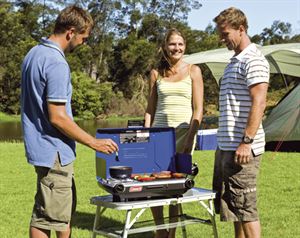
For many years, I used a single burner Camping Gaz (sic) picnic stove because a friend had given it to me. Later, I made the step up to a two-burner stove bought for a couple of pounds at a car boot sale. The difference in organisation and quality of meals was significant so the next logical step was a two-burner with grill. Talking with others on site helped to develop perspectives on meals and how to produce them with some style and efficiency.
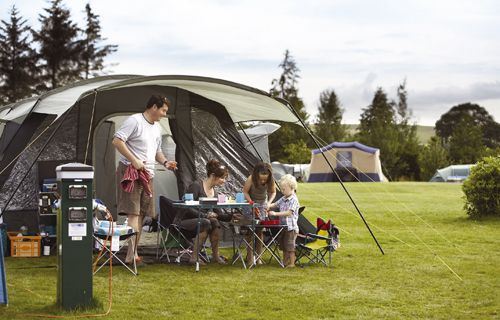
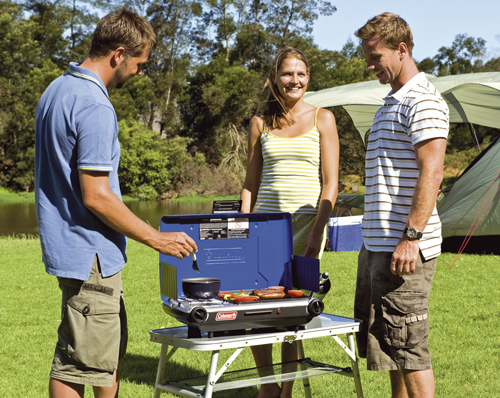
With the wide range of camp furniture on offer there is no shortage of options to base your culinary efforts. Setting up on the ground can lose its appeal after a while and there’s an obvious progression from ground through a table to a unit with stove windshield, space for plates and utensils as well as pan and food storage shelves underneath. A table transforms the food preparation and cooking experience as well as consuming the results; a couple of chairs help. Even touring around with a small car, there should be room for a small table and folding chairs.
Two other key bits of kit are a windbreak for privacy as well as a degree of shelter, and good lighting. That lighting needs to cope with the needs of food preparation, cooking and eating so a general area lantern combined with a chef’s head torch should do the trick. Having scoffed a cracking meal, a washing up bowl is a useful reminder to get the clearing up done promptly and an easy way to get pans and plates to the washblock.
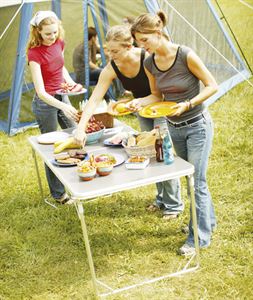
The usual assumption about camp cooking is that it’s main meals that matter but breakfast, lunch, tea breaks, snacks and picnics are always on the agenda. Totting up the variety of meals and ingredients needed brings us to food storage. Fridges (gas or electric), cool boxes and insulated bags all have their uses for perishables and a couple of large plastic boxes should swallow up other items. Tight lids help to ensure that the wee creatures of the night don’t enjoy sneaky feasts.
What a world of delights awaits the keen barbecuer – all that fun getting started and fussing around for a while before producing burnt offerings. With gas, electric and charcoal as fuel alternatives, barbecuing is great fun and a theme that fits perfectly with living outdoors. Try to break away from just bangers and burgers into more interesting meals with fish, ribs and veggies. So many barbecues focus on meat leaving out potato salad, green salad, marinated tomatoes, pasta and so on. It pays to experiment at home and crack barbecue cooking rather than join the ranks of the enthusiastic failures. As skill develops, a barbecue outfit might become your sole means of camp cooking.
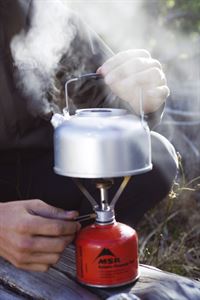
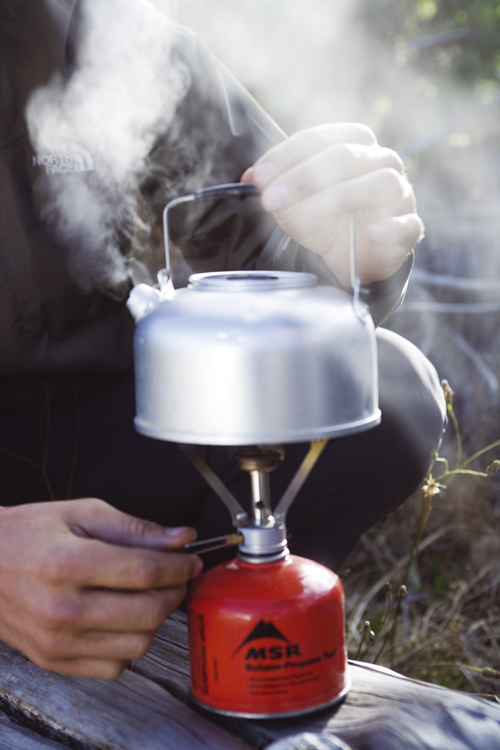
Backpacking, pedaling or paddling or any self-powered camping options limit the options available for cooking even if stove/s and pan/s are split between members of a group. The emphasis has to be on weight, bulk, speed of cooking, availability of fuel and, vitally, stove stability. There is no scope for table, chairs and the other niceties of car camping. At the other end of the spectrum from multi-burners stoves, dining tables and comfortable chairs, I’ve just bought a White Box Duo meths stove. It’s simple with no moving parts and, being made from recycled beer cans, eases my eco-conscience; check out backpackinglight.co.uk for this and other ultralight cooking options.
I was given one of these by a concerned aunt when I was a student. She was concerned about my maintaining a healthy balanced diet with plenty of veggies - sweet. After one use, I was very concerned about the contraption exploding and never used it again. They make sense when camping, using one heat source to cook several items quickly and economically. Sadly, there is no chance of following my own advice.
We’ve been experimenting with a Judge induction hob and have sorted a few new meals in preparation for this spring and summer. On the few occasions we camped, it allowed us to cook safely in the tent when we had an electric hookup - a real bonus. Induction hobs, powered by electricity, work by an electro-magnet heating the pan sitting on a ceramic plate. As if by magic, the pan contents heat up but the ceramic plate stays cool. Safe, reliable, efficient and cheap to use, they have a big future in camp cooking.
Not everybody wants to cook on holiday and there is certainly no shortage of eating outlets in popular holiday areas. There is neither shame nor harm in picking a site as a base that has a good range of pubs, restaurants, cafés and takeaways nearby and turning on the camping stove only for tea or coffee and, perhaps, the odd Pot Noodle.
 TOP TIPS
· Shop each day for fresh food rather than try to run your tent like your house.
· Visit farmers’ markets and farm shops for local specialties.
· Check out tourist information centres and local papers for discount offers at pubs and restaurants.
· Save money by taking crockery, cutlery and pans from home.
· Work out a number of meals that you know you can make reliably on site.
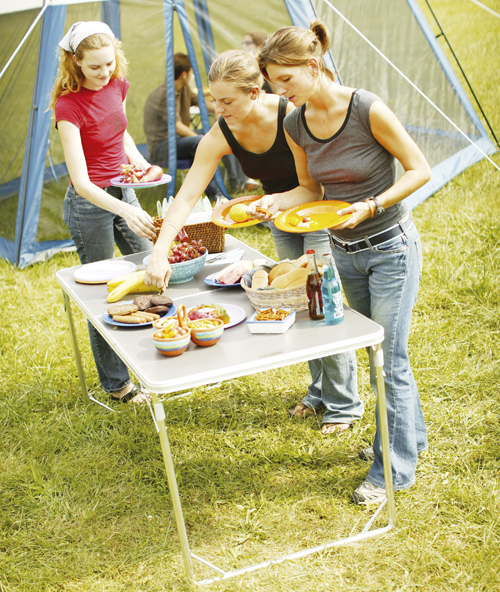
· Mix up cooking meals, eating out, picnics and barbecues for variety.
· Don’t let one person take on the whole burden of shopping and cooking.
· Kitchen roll mops up spills and is great for use as napkins.
· Be very keen on personal hygiene when preparing and cooking food. It’s easy to let standards slip and ‘holiday tummy’ to ruin the trip.
Next Shows

Retro Festival 7th - 9th August 2026
Retro Festival celebrates timeless hits, vintage vehicles, fashion shows, and fairground fun.

The Western Motorhome & Campervan Show 21st - 23rd August 2026
Join The Western Motorhome & Campervan Show in Malvern, 21-23 August 2026, for live country music, 450+ motorhomes, and a weekend of ca...

The South West Motorhome & Campervan Show 11th - 13th September 2026
Camp in Somerset’s scenic Bath and West Showground for The South West Motorhome & Campervan Show, 11-13 September 2026, with expert adv...